Question 67
FA student measured the rate of blood flow through the leg muscles of a person at four different exercise intensities.
Table: The rate of blood flow through the leg muscles of one person at four different exercise intensities
| Exercise intensity | Rate of blood flow / dm3 per minute |
|---|---|
| at rest | 1.2 |
| light | 4.5 |
| moderate | 8.0 |
| vigorous | 12.5 |
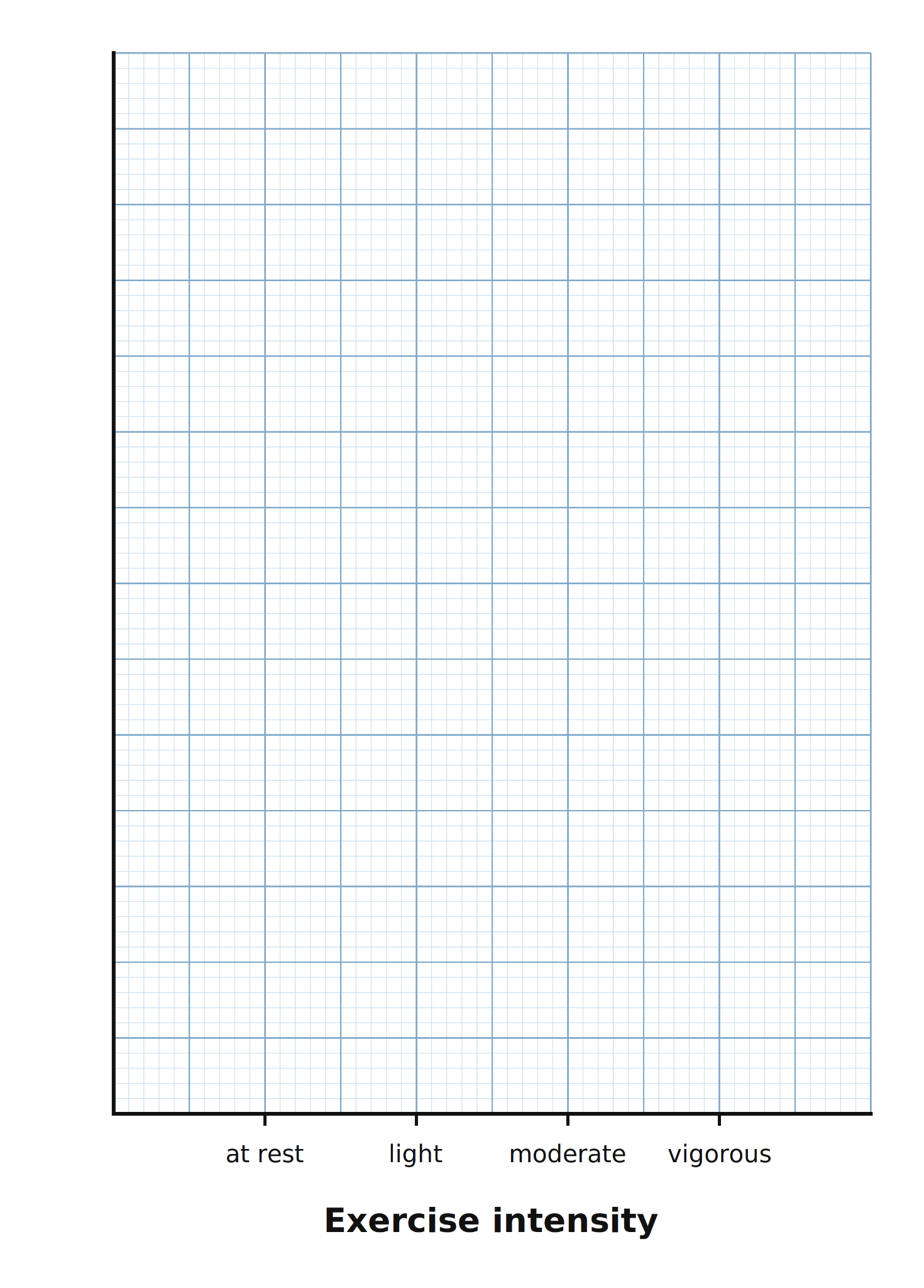
Figure: Grid for plotting the data in the table
a.[3]
Complete the figure. You should:
- label the y-axis
- add a suitable scale to the y-axis
- plot the data from the table.
b.[2]
Calculate how many times greater the rate of blood flow is during vigorous exercise than at rest.
c.[2]
Explain why the rate of blood flow through the leg muscles increases during exercise.
2.2 Animal tissues, organs and organ systems Questions
179 exam-style questions on AQA GCSE Biology 2.2 Animal tissues, organs and organ systems, covering 2.2.1 The human digestive system, 2.2.2 The heart and blood vessels, 2.2.3 Blood, 2.2.4 Coronary heart disease: a non-communicable disease, 2.2.5 Health issues, 2.2.6 The effect of lifestyle on some non-communicable diseases, and 2.2.7 Cancer. Each one has a worked solution and a mark scheme showing where the marks go.