Skip to content

Course home

2.2 Animal tissues, organs and organ systems

2.2 Animal tissues, organs and organ systems

EasyMediumHard
1234567891011121314151617181920212223242526272829303132
Question 11
57%

Amylase is an enzyme that digests carbohydrates in the human body.

a.

Amylase is a biological polymer. Name the monomer (smaller molecule) that forms this polymer.

[1]
b.

Name two organs in the human digestive system that produce amylase.

[2]
c.

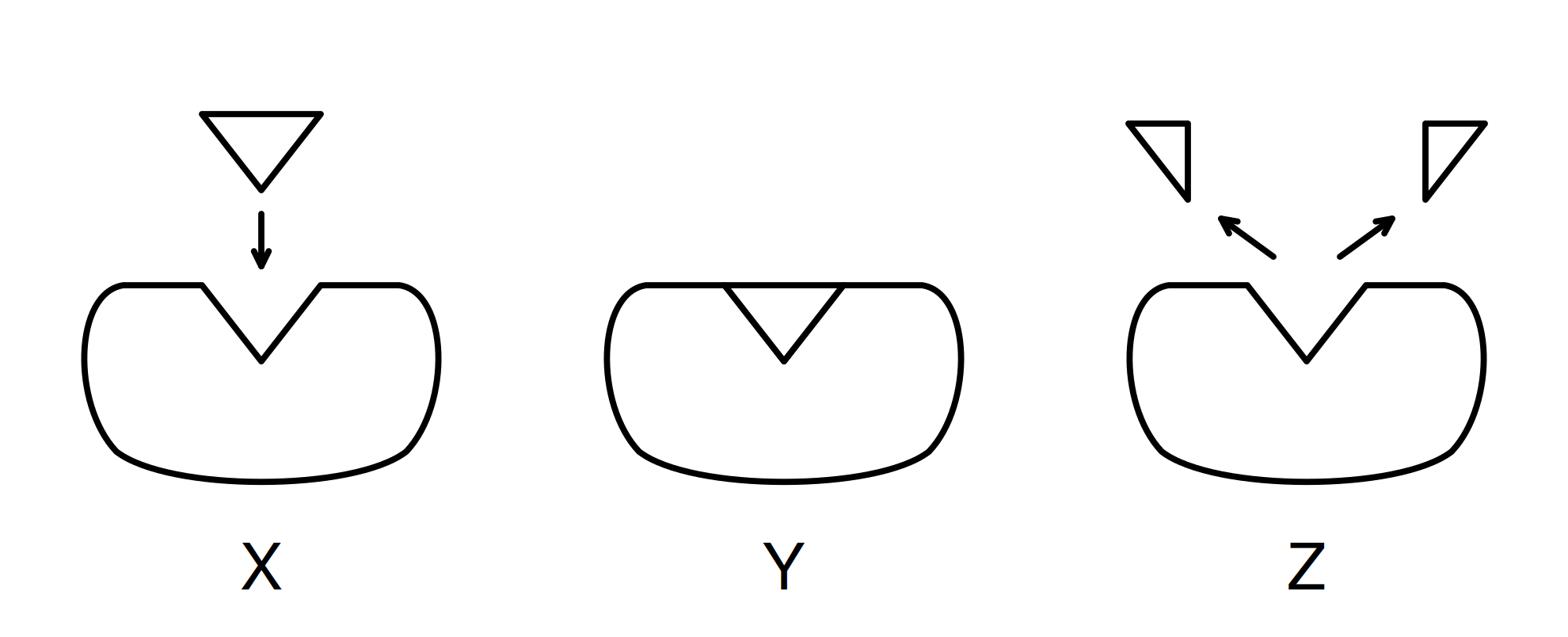
Explain how amylase breaks down starch. Answer in terms of the 'lock and key theory'.

[3]
d.

A student investigated the effect of temperature on the activity of amylase.

The student used the following method:

  1. Measure 5 cm35\text{ cm}^35 cm3 of starch suspension and 2 cm32\text{ cm}^32 cm3 of a pH 7 buffer solution into a test tube.
  2. Place this test tube and a separate tube containing 2 cm32\text{ cm}^32 cm3 of amylase solution into a water bath at 40∘C40^\circ\text{C}40∘C for 5 minutes.
  3. Add the amylase solution to the starch mixture, stir, and start a stopwatch.
  4. Every 30 seconds, use a pipette to add one drop of the mixture to a drop of iodine solution in a well on a spotting tile. Iodine is normally yellow-brown, but turns blue-black in the presence of starch.
  5. Record the time taken for the iodine solution to remain yellow-brown.
  6. Repeat the experiment using water baths maintained at different temperatures.

Why did the student leave the tubes in the water bath for 5 minutes before mixing them?

[1]
e.

Name two control variables the student kept constant in this investigation.

[2]
f.

Explain why the iodine solution remains yellow-brown after a certain time has passed.

[2]
Markscheme

2.2 Animal tissues, organs and organ systems Questions

  1. GCSE
  2. /Biology
  3. /2.2 Animal tissues, organs and organ systems

44 exam-style questions on AQA GCSE Biology 2.2 Animal tissues, organs and organ systems, covering 2.2.1 The human digestive system, 2.2.2 The heart and blood vessels, 2.2.3 Blood, 2.2.4 Coronary heart disease: a non-communicable disease, 2.2.5 Health issues, 2.2.6 The effect of lifestyle on some non-communicable diseases, and 2.2.7 Cancer. Each one has a worked solution and a mark scheme showing where the marks go.

Question bank