2.2 Animal tissues, organs and organ systems
Question 96
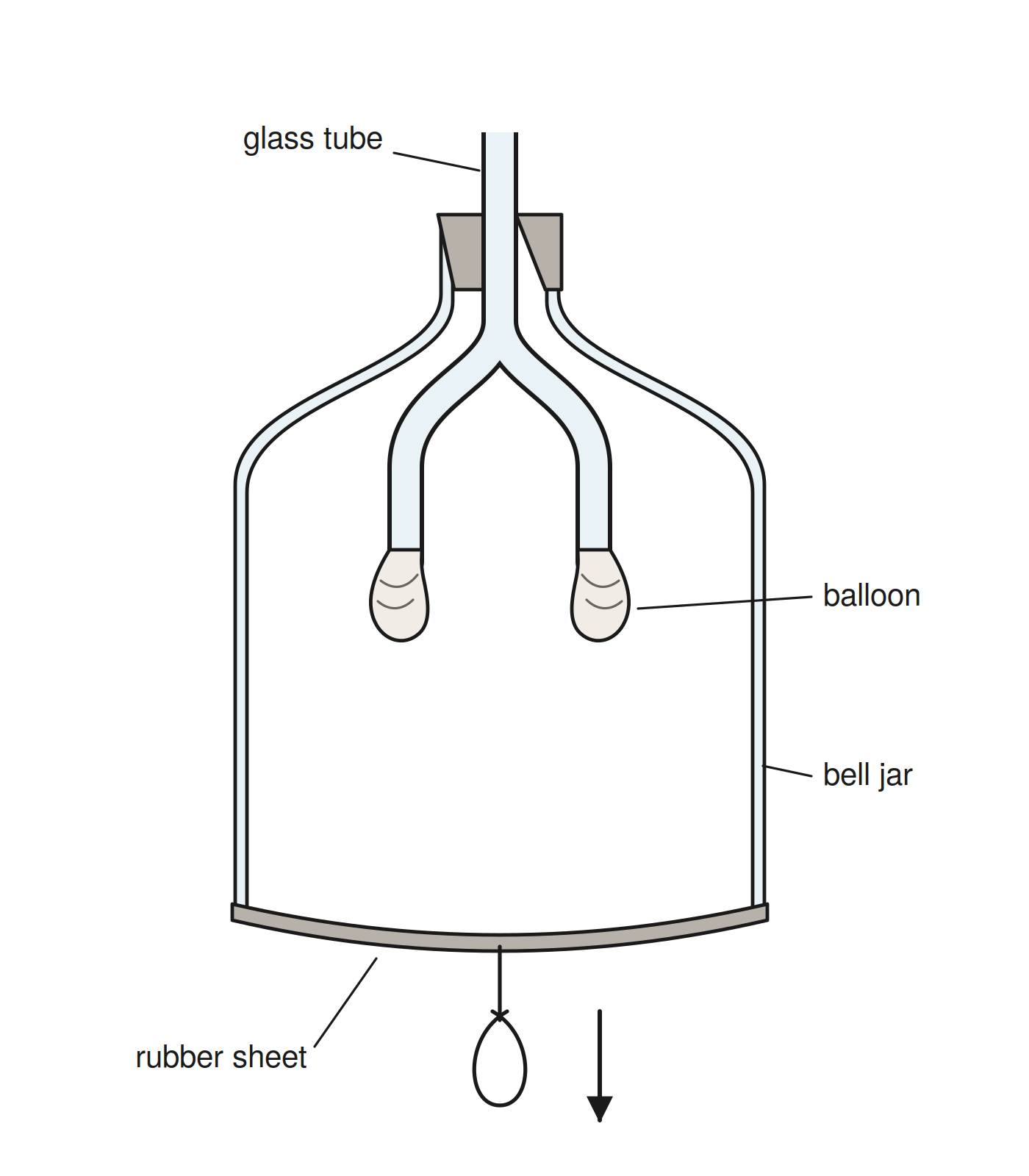
FA student uses the model shown in Figure to investigate breathing.
Figure: A model of the human breathing system made from a bell jar, a Y-shaped glass tube and two balloons
a.[2]
Give the part of the human breathing system that is represented by each of the following parts of the model.
- the glass tube
- the rubber sheet
b.[3]
The student pulls the rubber sheet downwards and the balloons inflate.
Explain why the balloons inflate.
c.[1]
Give one way in which this model is not a good representation of the human breathing system.
2.2 Animal tissues, organs and organ systems Questions
304 exam-style questions on AQA GCSE Biology 2.2 Animal tissues, organs and organ systems, covering 2.2.1 The human digestive system, 2.2.2 The heart and blood vessels, 2.2.3 Blood, 2.2.4 Coronary heart disease: a non-communicable disease, 2.2.5 Health issues, 2.2.6 The effect of lifestyle on some non-communicable diseases, and 2.2.7 Cancer. Each one has a worked solution and a mark scheme showing where the marks go.