An apparatus can be used to prepare a sample of hydrogen gas by reacting magnesium with dilute hydrochloric acid.
Write a chemical equation for the reaction between magnesium and hydrochloric acid. Include state symbols.
State two observations you would make when hydrochloric acid reacts with magnesium ribbon in the flask.
A student carries out two experiments to find the volume of dilute hydrochloric acid required to completely react with 0.4 g of magnesium ribbon.
Experiment 1
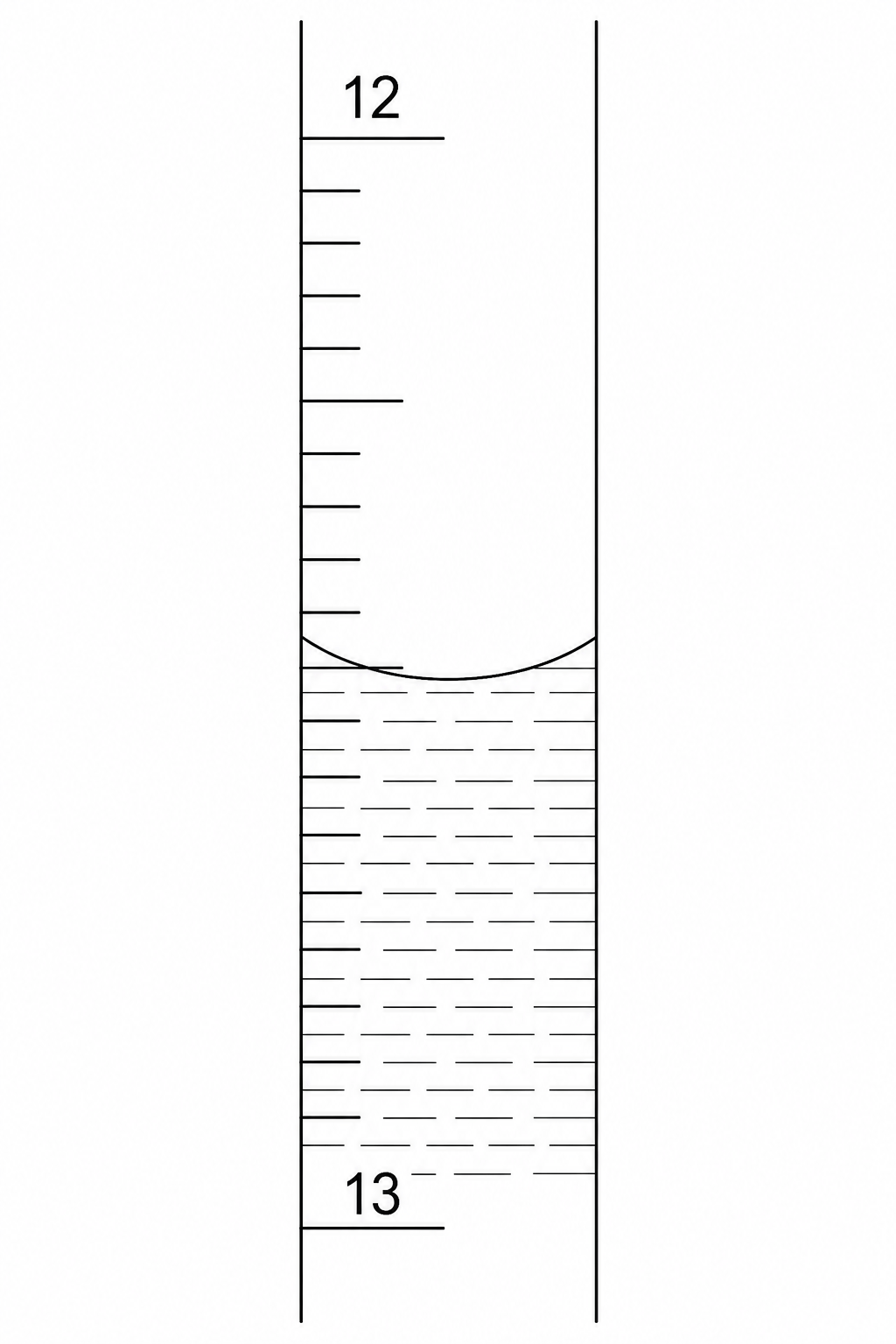
She fills a burette to the 0.00 cm3 mark with dilute hydrochloric acid. She places 0.4 g of magnesium ribbon into a conical flask and then slowly adds the acid to the magnesium until the reaction is complete.
The diagram shows the final reading on the burette.
Experiment 2
She then repeats the experiment with 0.4 g of magnesium ribbon from the same source, but with a different sample of dilute hydrochloric acid.
The diagram shows the initial and final burette readings for this experiment.
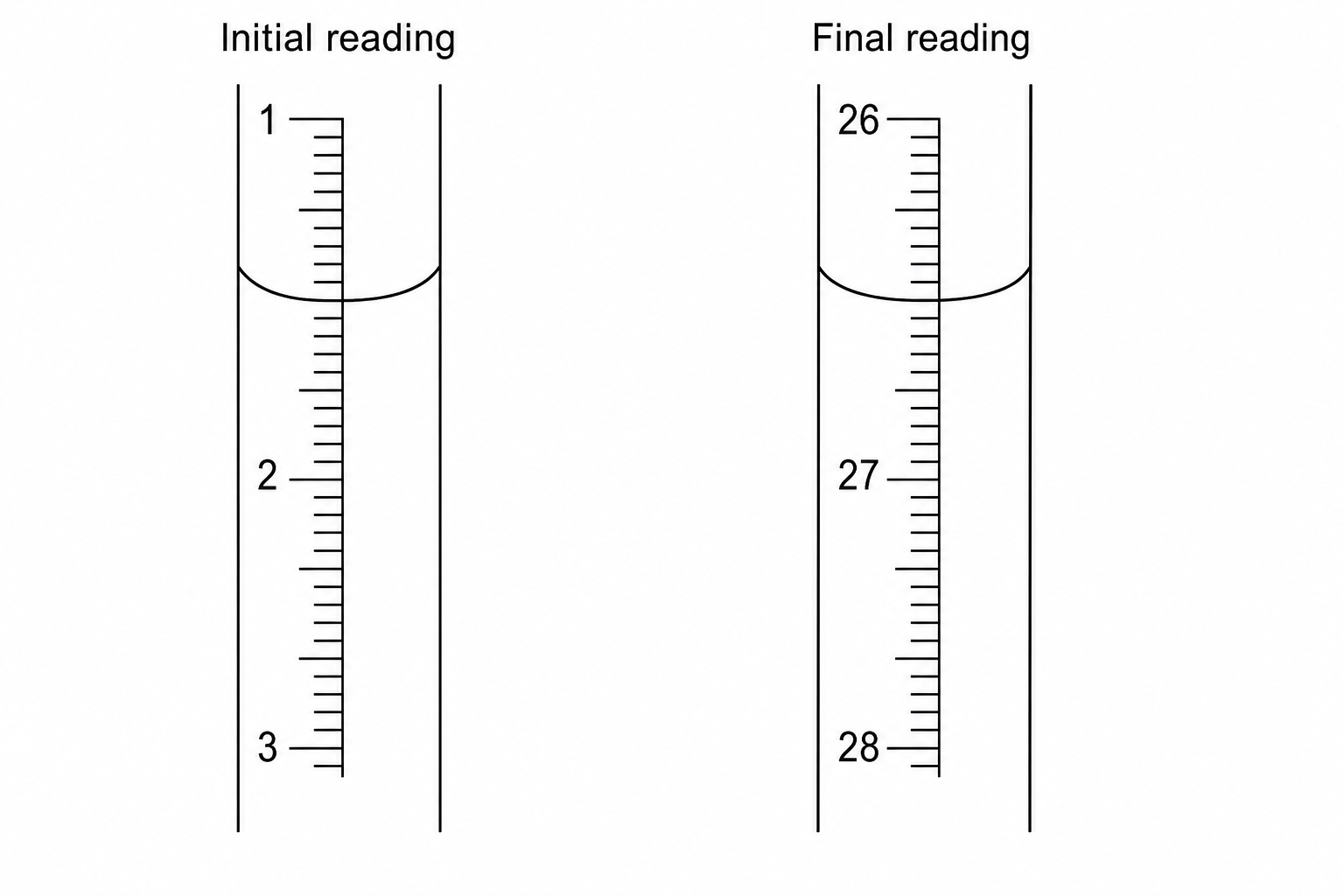
Use the burette readings to complete the table, recording all volumes to the nearest 0.05 cm3.
| Experiment 1 | Experiment 2 | |
|---|---|---|
| final burette reading in cm3\text{cm}^3cm3 | ||
| initial burette reading in cm3\text{cm}^3cm3 | ||
| volume in cm3\text{cm}^3cm3 of acid added |
The concentration of the acid in experiment 1 was 0.60 mol/dm3. Explain how the concentration of the acid in experiment 2 can be calculated.

