Skip to content
MathsGenie logo
Open app

Course home

  1. GCSE
  2. Biology Edexcel
  3. Question bank

Antibiotics, culturing microorganisms and monoclonal antibodies

EasyMediumHard
123456789101112131415161718192021222324252627282930313233343536373839404142434445464748495051525354555657585960616263646566
Question 65

A student investigated the antimicrobial effectiveness of different concentrations of a newly synthesized antibiotic, Cephalexin, on the growth of Streptococcus pneumoniae.

They prepared three separate agar plates, each inoculated with a uniform lawn of Streptococcus pneumoniae bacteria. They placed a paper disc soaked in a different concentration of Cephalexin at the center of each plate. The plates were then incubated at 30 ∘C30\space^{\circ}\text{C}30 ∘C for 24 hours.

The concentrations of Cephalexin used were 0.05 mg/cm3, 0.25 mg/cm3, and 1.00 mg/cm3.

The results are shown in the diagram below:
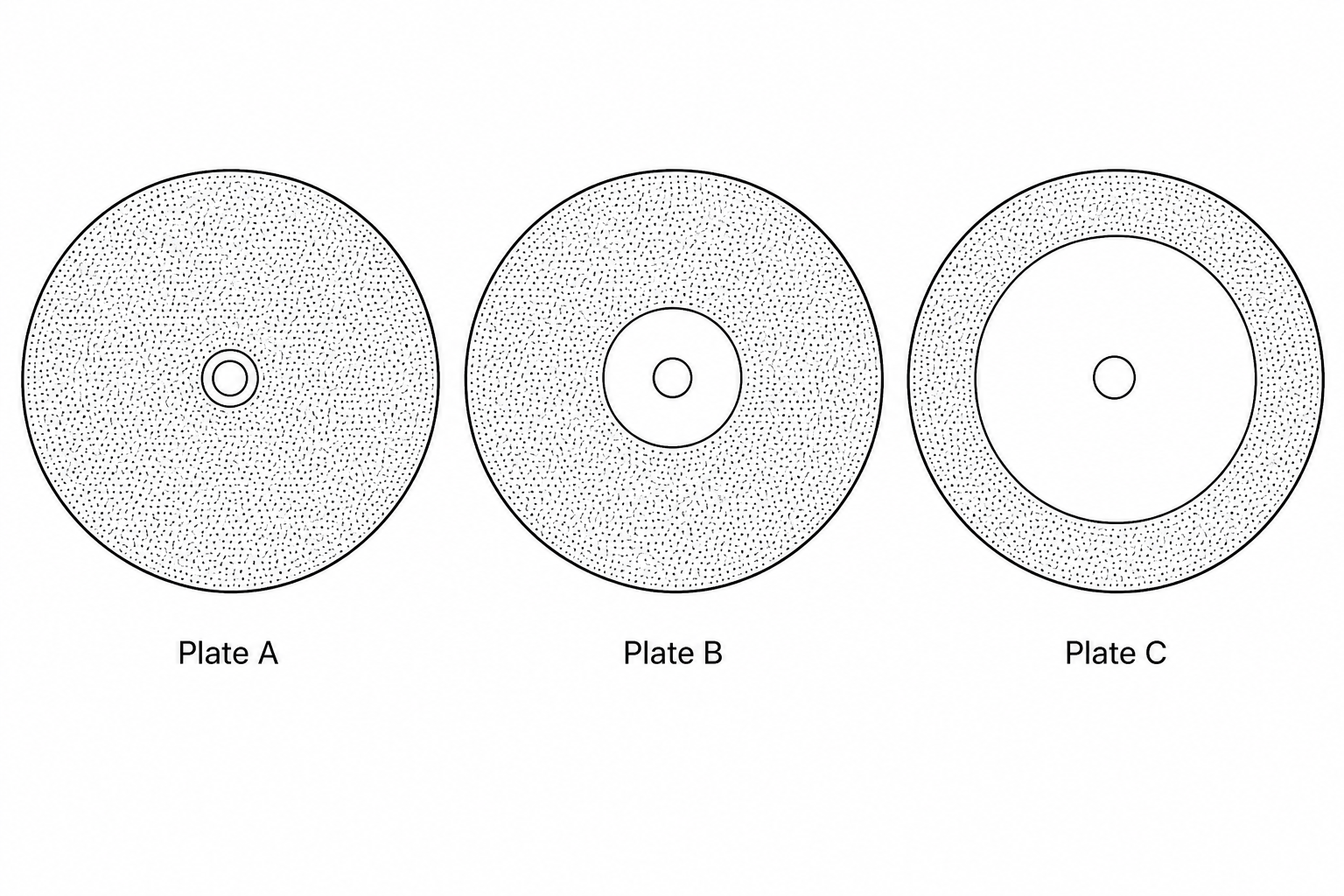
Three petri dishes representing agar plates inoculated with bacteria, labelled Plate A, Plate B, and Plate C. Plate A has a very small clear zone of inhibition around the central disc. Plate B has a medium-sized clear zone. Plate C has a very large clear zone.

Explain which agar plate (Plate A, Plate B, or Plate C) contains the paper disc soaked in the 0.05 mg/cm3 Cephalexin solution.


[2]

Antibiotics, culturing microorganisms and monoclonal antibodies Questions

  1. GCSE
  2. /Biology
  3. /Antibiotics, culturing microorganisms and monoclonal antibodies