An oncology researcher investigated the antibacterial efficacy of four novel antimicrobial peptides (A, B, C, and D) synthesized from marine organisms against a multi-drug resistant strain of Pseudomonas aeruginosa.
The researcher prepared a nutrient agar plate, inoculated it uniformly with the bacterial strain, and placed four identical paper discs, each impregnated with a standard concentration of one of the peptides, onto the agar surface.
The plate was incubated under aerobic conditions at 37∘C37^\circ\text{C}37∘C for 24 hours. The resulting agar plate is shown below:
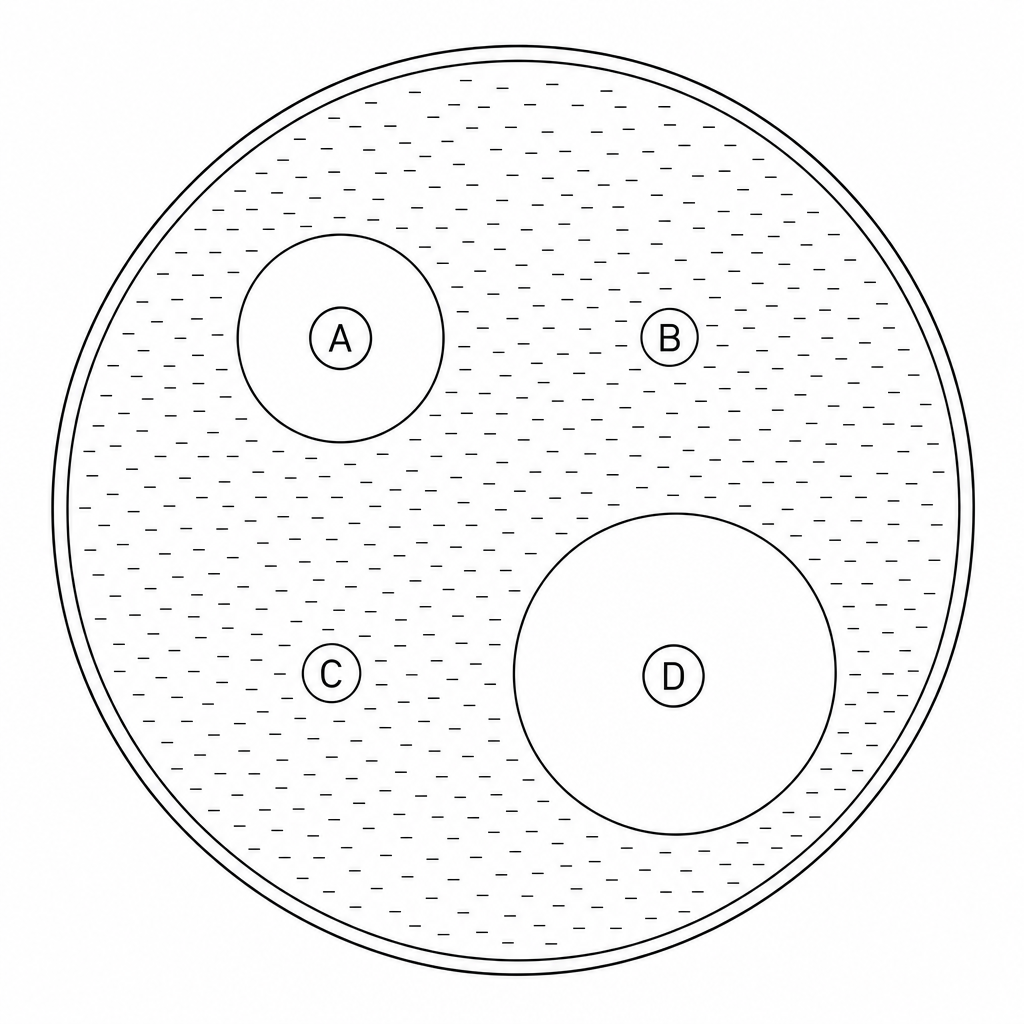
State which antimicrobial peptide was the most effective at inhibiting the growth of Pseudomonas aeruginosa.

