Skip to content
MathsGenie logo
Open app

Course home

  1. GCSE
  2. Biology Edexcel
  3. Question bank

Antibiotics, culturing microorganisms and monoclonal antibodies

EasyMediumHard
123456789101112131415161718192021222324252627282930313233343536373839404142434445464748495051525354555657585960616263646566
Question 58

A student investigated the antimicrobial effects of tea tree oil on bacterial growth.

They prepared three separate agar plates inoculated with E. coli bacteria and placed a paper disc soaked in a different concentration of tea tree oil at the center of each plate. The plates were then incubated at 25 ∘C25\space^{\circ}\text{C}25 ∘C for 48 hours.

The concentrations of tea tree oil used were 5%, 15%, and 40%.

The results are shown in the diagram below:
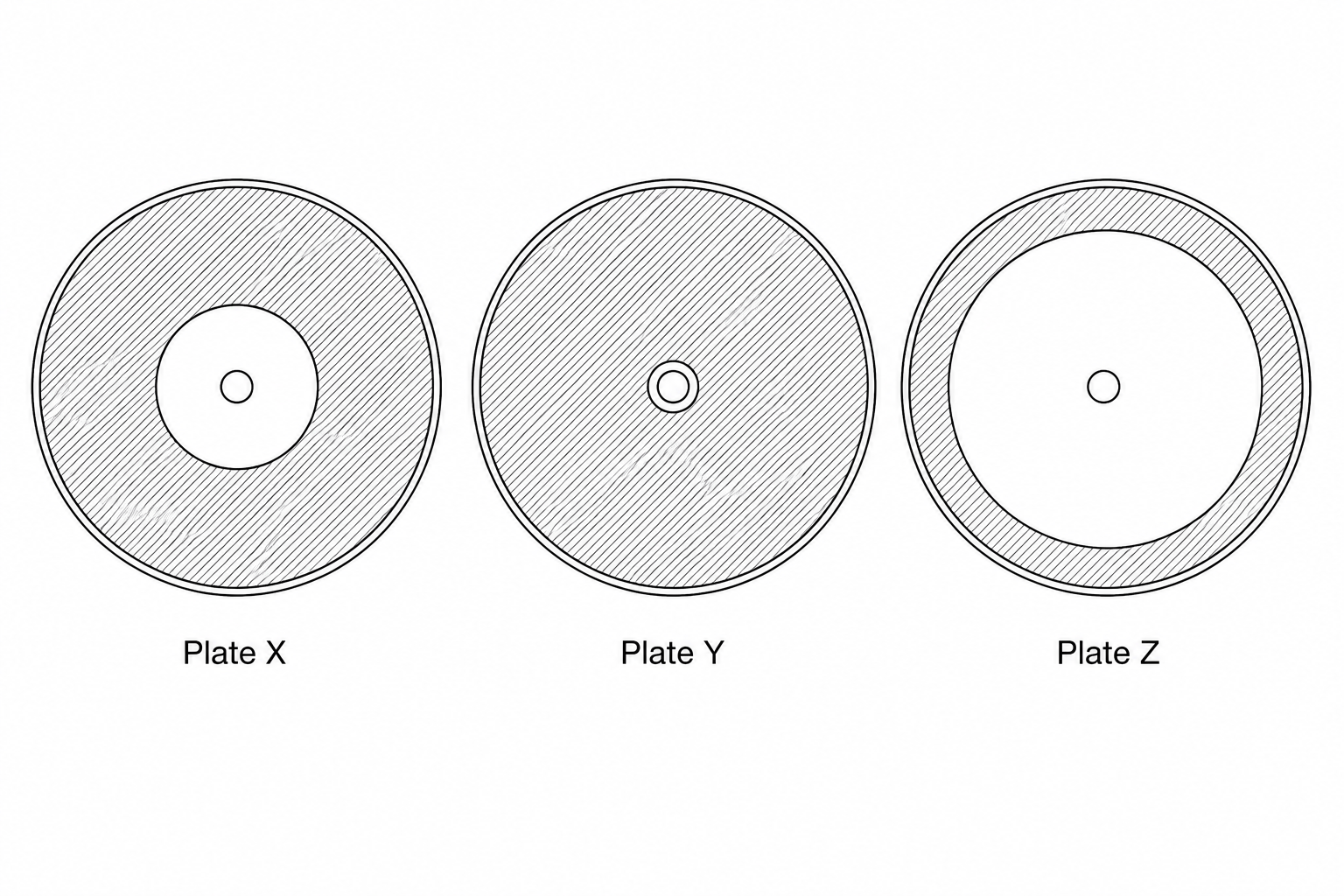
Three petri dishes representing agar plates inoculated with bacteria. Dish X has a medium-sized circular clear zone of inhibition around the central paper disc. Dish Y has a very small clear zone of inhibition around the central paper disc. Dish Z has a very large clear zone of inhibition around the central paper disc. The rest of the agar on each dish is shaded grey to show uniform bacterial growth.

Explain which agar plate (X, Y, or Z) contains the paper disc with the 40% tea tree oil solution.


[2]

Antibiotics, culturing microorganisms and monoclonal antibodies Questions

  1. GCSE
  2. /Biology
  3. /Antibiotics, culturing microorganisms and monoclonal antibodies