Simple circuits

EasyMediumHard
123456789101112131415161718192021222324252627282930313233343536373839404142434445
Question 30
Medium

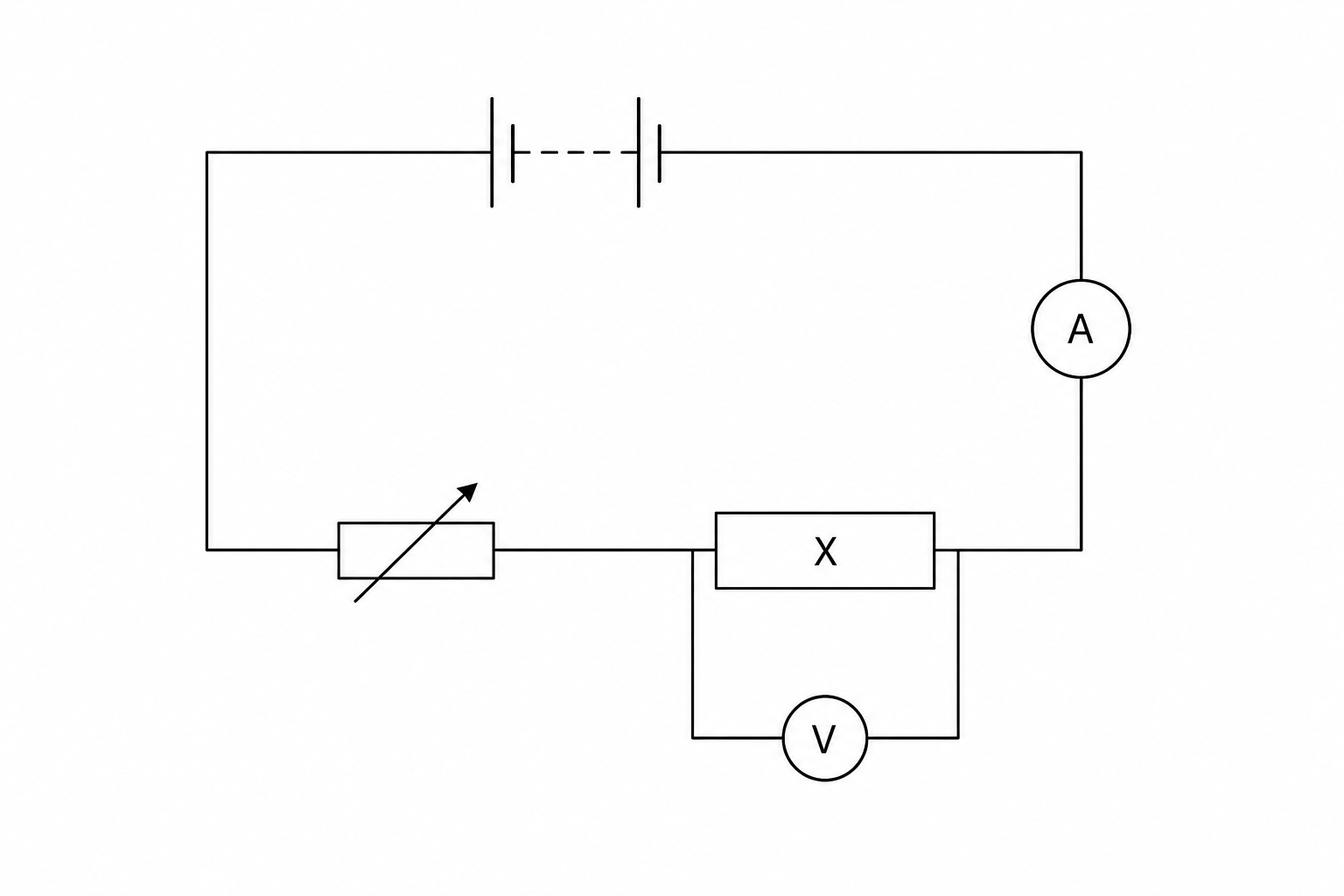
A student builds a circuit to investigate how the current through component X\textbf{X}X changes with potential difference. A circuit diagram containing a battery of cells connected in a loop with a variable resistor, an ammeter, and a component X. A voltmeter is connected in parallel across component X. Symbolic representations are used: a rectangle with a diagonal arrow for the variable resistor, a circle with an 'A' for the ammeter, a blank rectangle for component X, and a circle with a 'V' for the voltmeter.
a.

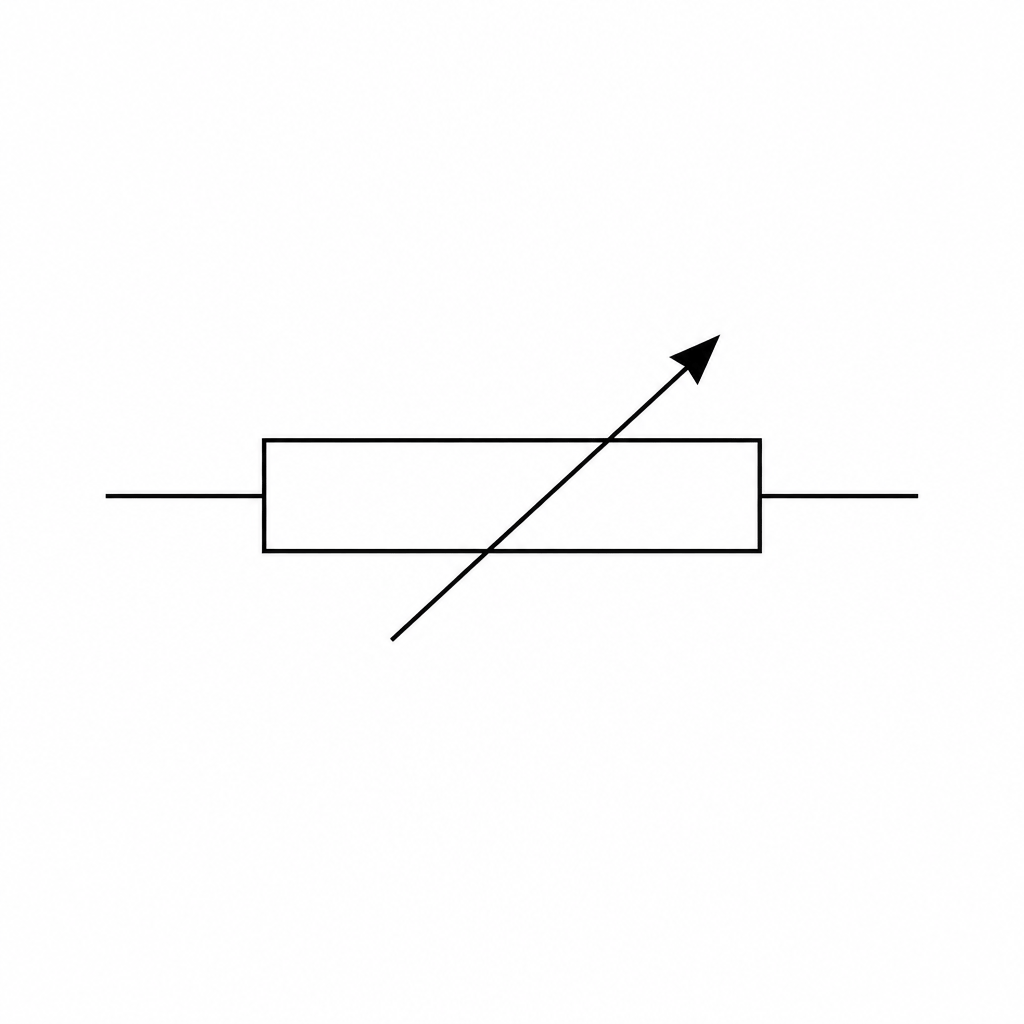
What is the name of the component represented by this symbol? A symbol consisting of a rectangle with a diagonal arrow pointing upwards and to the right through it.
[1]
b.

Why is this component needed in this circuit?

[1]
c.

The student uses the circuit to take current and potential difference readings. The student plots a graph of her results. An I-V graph with Current on the vertical axis and Potential difference on the horizontal axis. The curve starts in the third quadrant, curves upwards to pass through the origin (0,0), and then continues into the first quadrant, bending to become shallower (less steep) as potential difference increases.
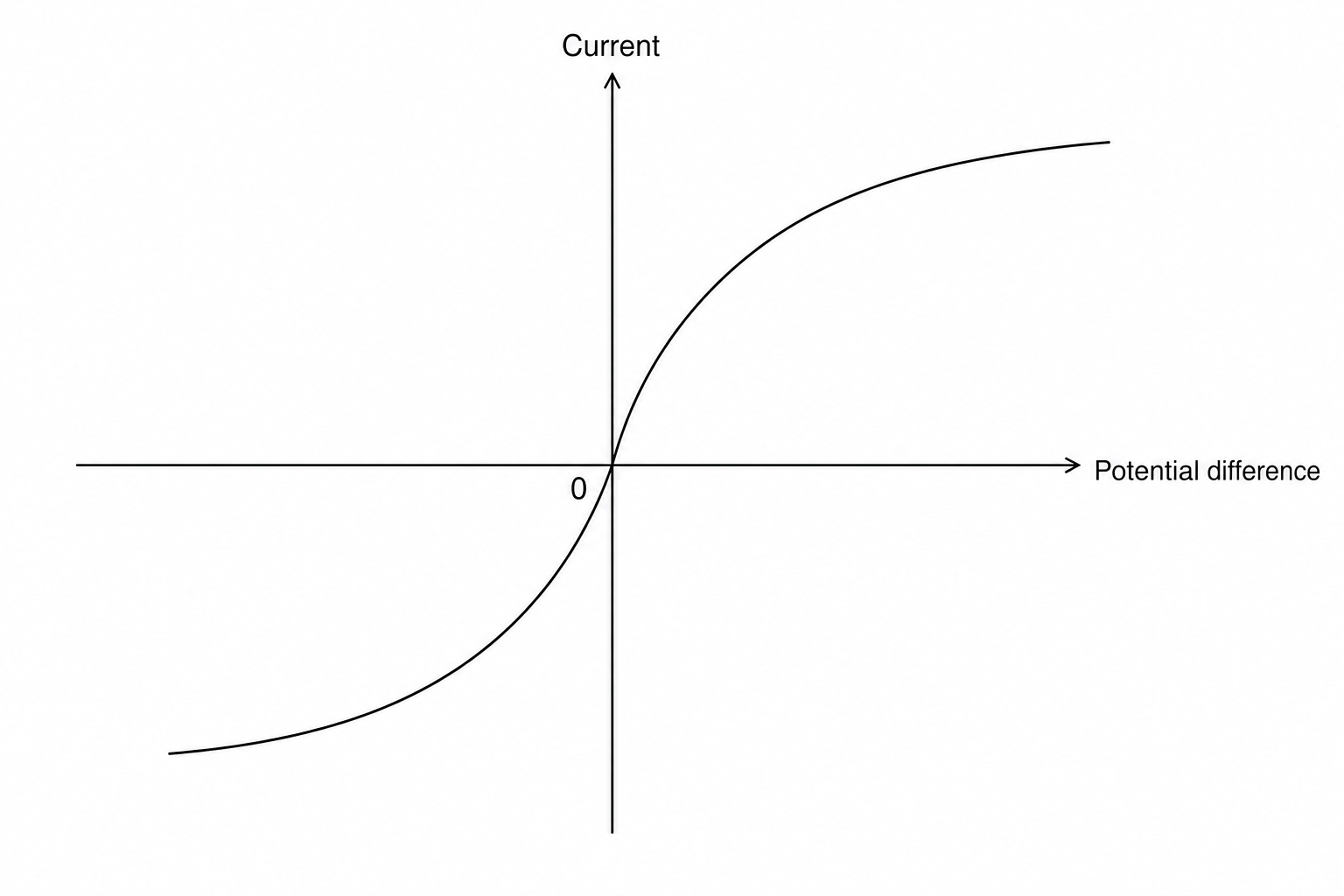
Look at the graph. What is component X\textbf{X}X in the circuit?

[1]
d.

Describe how the graph shows that the resistance of component X\textbf{X}X varies as the potential difference increases, and explain why this behavior occurs in this component.

[3]
e.

Component \textbf{X} has a resistance of 15 Ω15\ \Omega15 Ω when a current of 0.40 A0.40\text{ A}0.40 A flows through it.

Calculate the potential difference across component \textbf{X}. Use the equation: $\text{Potential difference} = \text{Current} \times \text{Resistance}$

[1]
f.

Calculate the power dissipated by component X\textbf{X}X when a current of 0.40 A0.40\text{ A}0.40 A flows.

[2]

Simple circuits Questions

  1. GCSE
  2. /Physics
  3. /Simple circuits