Question 15
FFigure: Simple insulated-cup calorimeter
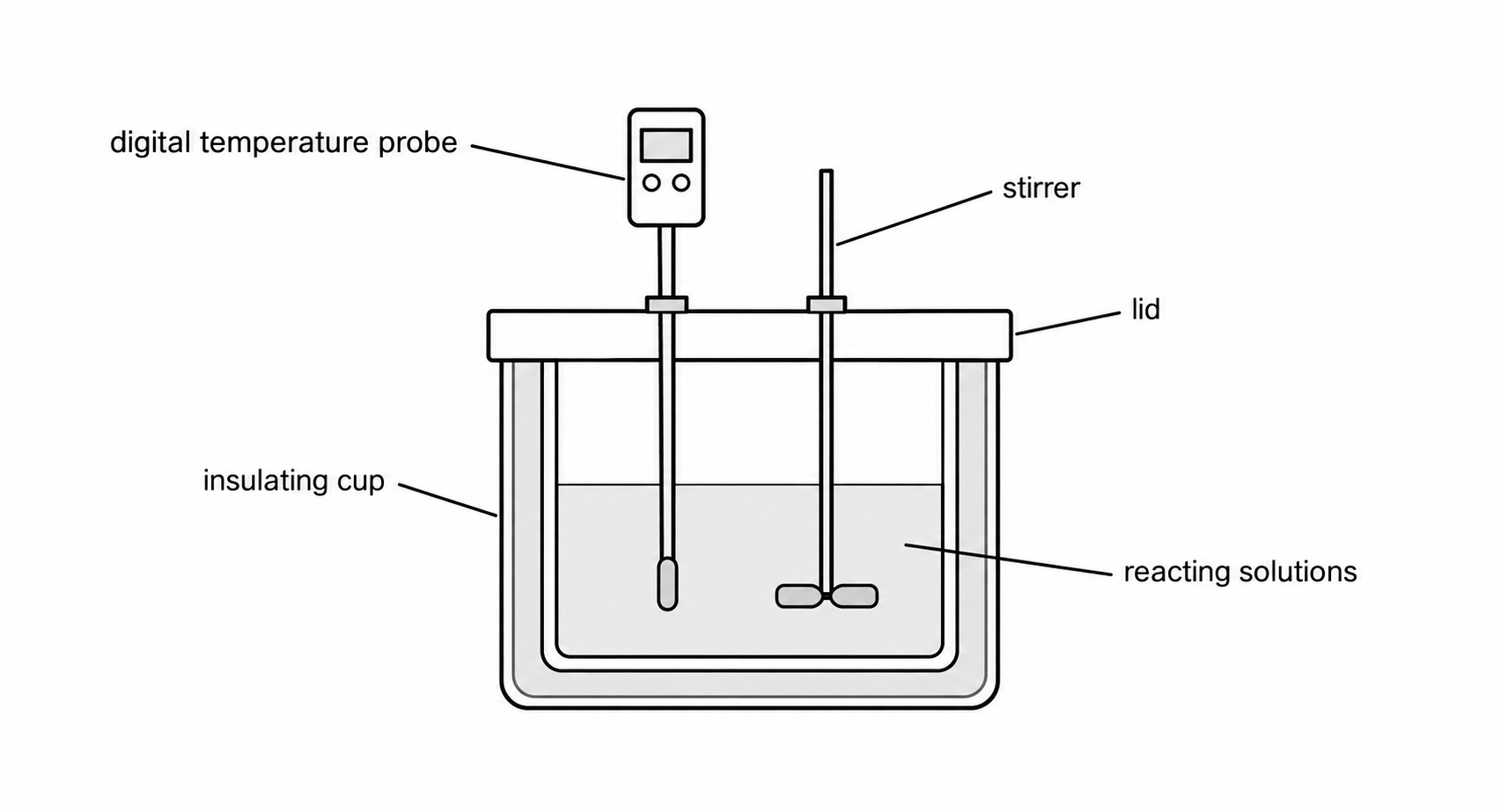
The figure shows a cup calorimeter. Why should the reactants be stirred?
To stop the temperature rising too quickly to read
To make the reaction release more energy
To make the temperature even throughout the mixture
To stop heat escaping to the surroundings from the cup
8.2 Heat energy changes in chemical reactions Questions
53 exam-style questions on Edexcel GCSE Chemistry 8.2 Heat energy changes in chemical reactions, covering 8.2.1 Exothermic and endothermic changes, 8.2.2 Bond breaking, bond making and overall energy change, 8.2.3 Calculating energy change from bond energies, and 8.2.4 Activation energy and reaction profiles. Each one has a worked solution and a mark scheme showing where the marks go.