Question 8
FFigure: Reaction profiles for exothermic and endothermic reactions
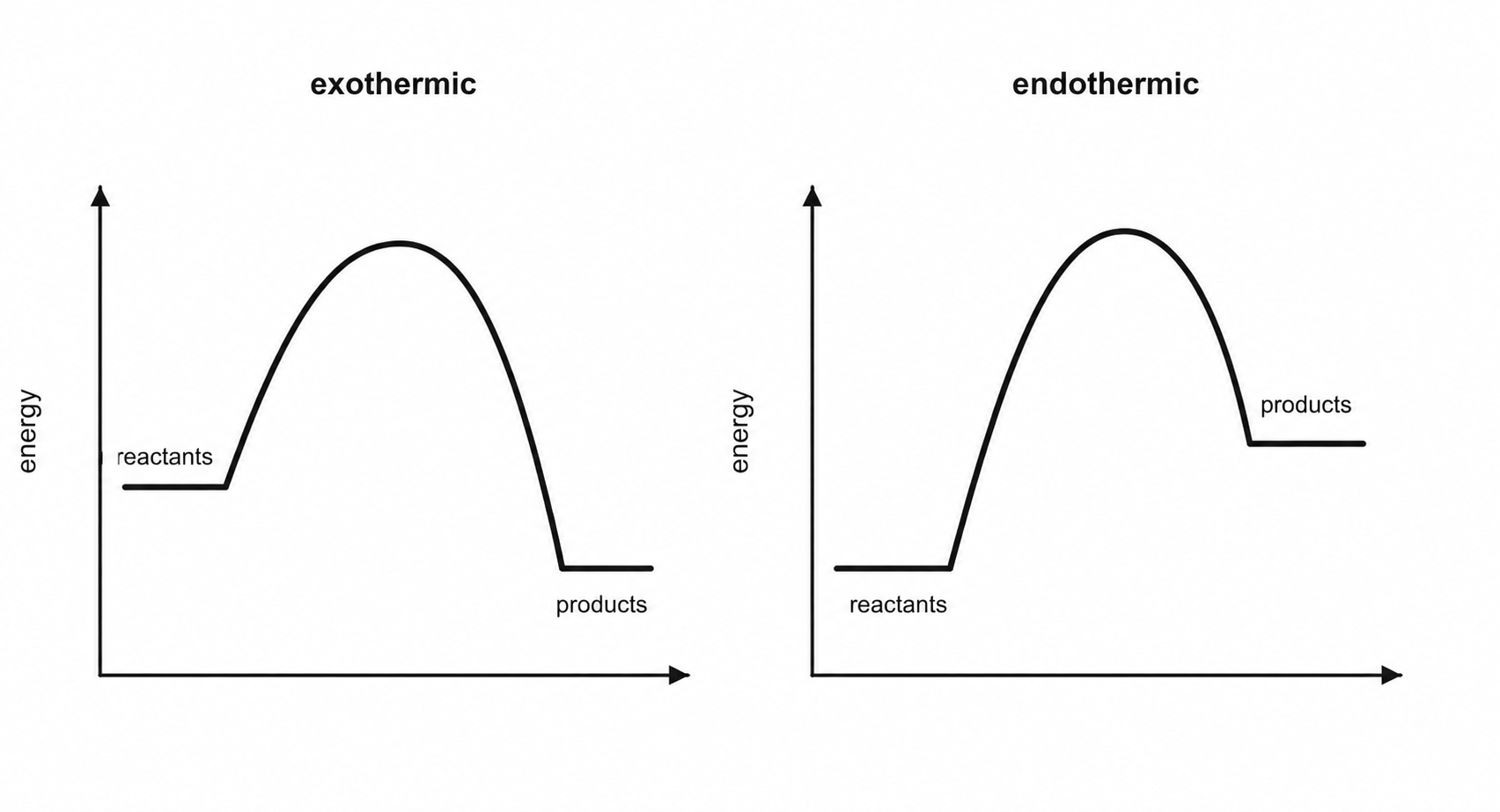
The reaction-profile figure shows products below reactants. What type of reaction is shown?
Endothermic, because the products have less energy
Endothermic, because energy is taken in to reach the peak
Exothermic, because energy is given out overall
Exothermic, because the activation energy is small
8.2 Heat energy changes in chemical reactions Questions
53 exam-style questions on Edexcel GCSE Chemistry 8.2 Heat energy changes in chemical reactions, covering 8.2.1 Exothermic and endothermic changes, 8.2.2 Bond breaking, bond making and overall energy change, 8.2.3 Calculating energy change from bond energies, and 8.2.4 Activation energy and reaction profiles. Each one has a worked solution and a mark scheme showing where the marks go.