A student dissolves a sample of ammonium chloride (NH4Cl\text{NH}_4\text{Cl}NH4Cl) in water inside an insulated container. The temperature of the water decreases from 294.5 K to 289.2 K as the salt dissolves.
The reaction's progress is illustrated by the enthalpy profile diagram below:
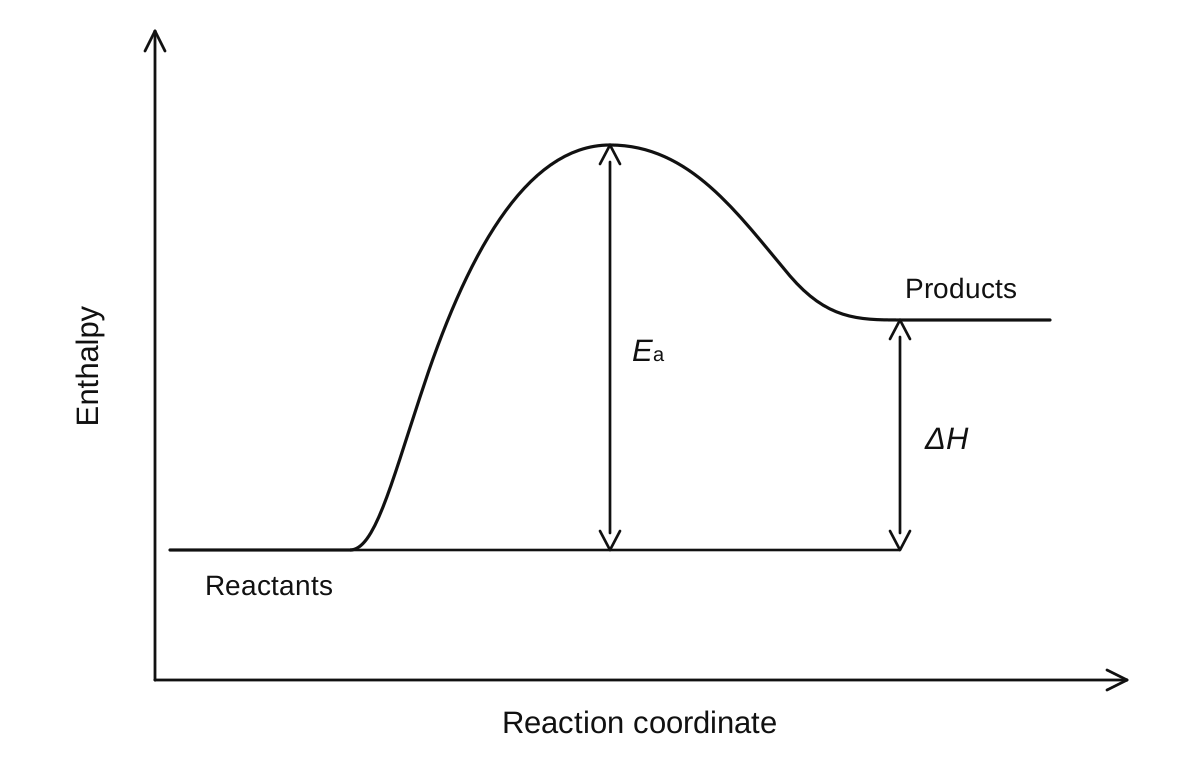
Which of the following correctly describes the thermodynamic changes and the energy balance during this process?
The process is exothermic, ΔH\Delta HΔH is negative, and the total energy released when new interactions are formed is greater than the total energy absorbed to break existing interactions.
The process is endothermic, ΔH\Delta HΔH is negative, and the total energy absorbed to break existing interactions is greater than the total energy released when new interactions are formed.
The process is endothermic, ΔH\Delta HΔH is positive, and the total energy absorbed to break existing interactions is greater than the total energy released when new interactions are formed.
The process is exothermic, ΔH\Delta HΔH is positive, and the total energy released when new interactions are formed is greater than the total energy absorbed to break existing interactions.
Practise Edexcel GCSE Chemistry Heat energy changes in chemical reactions with exam-style questions for Foundation and Higher tier. 130 questions, matched to the Edexcel GCSE Chemistry (1CH0) specification and written in Paper 1 and Paper 2 style. Every question includes a full worked solution and mark scheme, so you can see where marks are awarded rather than just whether you got the answer right.

