Question 27
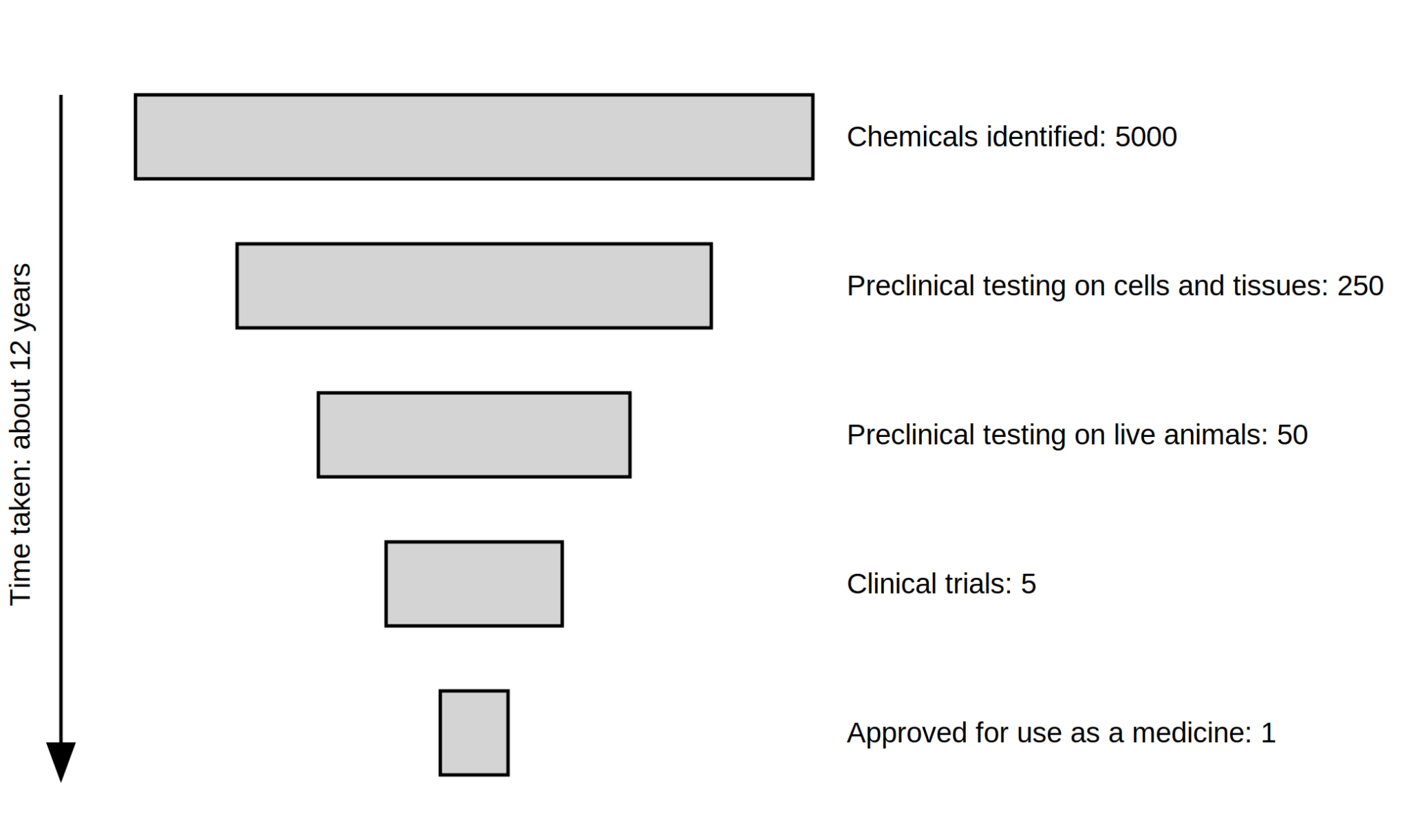
FThe figure shows what happens to the chemicals that a pharmaceutical company starts to develop into a new medicine.
Figure: The number of potential new drugs remaining at each stage in the development of a new medicine
a.[2]
Calculate the percentage of the chemicals identified at the start that reach clinical trials.
b.[2]
Use the figure to suggest two reasons why a new medicine is expensive to buy.
c.[2]
A newspaper reports that a chemical which killed cancer cells in a laboratory is a new cure for cancer. Use the figure to explain why this claim should not be made.
3.1 Communicable diseases Questions
176 exam-style questions on AQA GCSE Biology 3.1 Communicable diseases, covering 3.1.1 Communicable (infectious) diseases, 3.1.2 Viral diseases, 3.1.3 Bacterial diseases, 3.1.4 Fungal diseases, 3.1.5 Protist diseases, 3.1.6 Human defence systems, 3.1.7 Vaccination, 3.1.8 Antibiotics and painkillers, and 3.1.9 Discovery and development of drugs. Each one has a worked solution and a mark scheme showing where the marks go.