Question 49
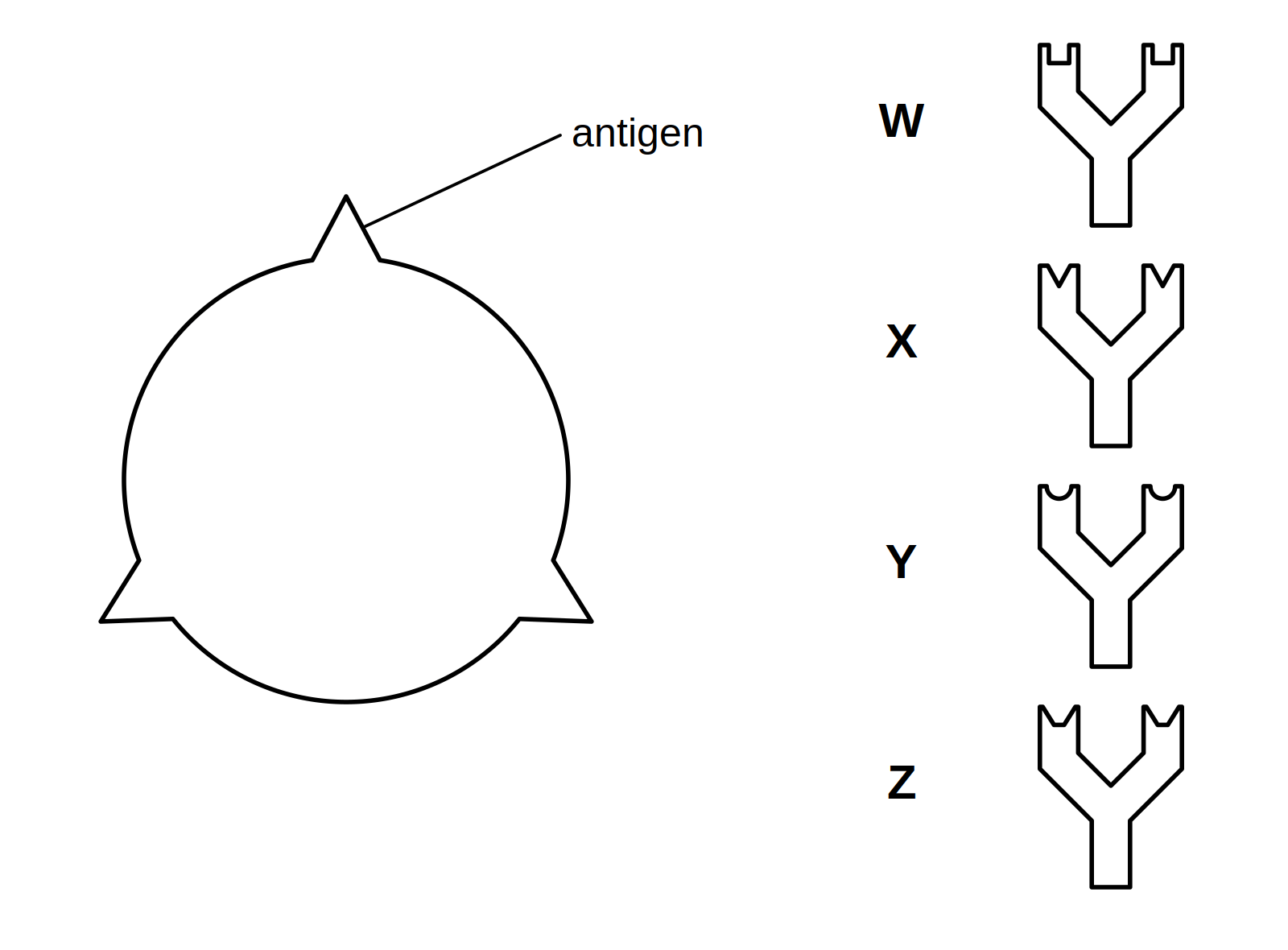
FFigure 4 shows a pathogen and four antibodies, W, X, Y and Z.
Figure: A pathogen with three identical surface antigens, shown next to four antibodies whose binding sites are different shapes
a.[2]
Give the letter of the antibody in Figure 4 that will attach to this pathogen. Explain your answer.
b.[2]
The person is later infected by a different pathogen. Explain why the antibodies made against the first pathogen give no protection against the second pathogen.
c.[2]
Suggest why a person needs a new influenza vaccine each year.
3.1 Communicable diseases Questions
176 exam-style questions on AQA GCSE Biology 3.1 Communicable diseases, covering 3.1.1 Communicable (infectious) diseases, 3.1.2 Viral diseases, 3.1.3 Bacterial diseases, 3.1.4 Fungal diseases, 3.1.5 Protist diseases, 3.1.6 Human defence systems, 3.1.7 Vaccination, 3.1.8 Antibiotics and painkillers, and 3.1.9 Discovery and development of drugs. Each one has a worked solution and a mark scheme showing where the marks go.