Question 10
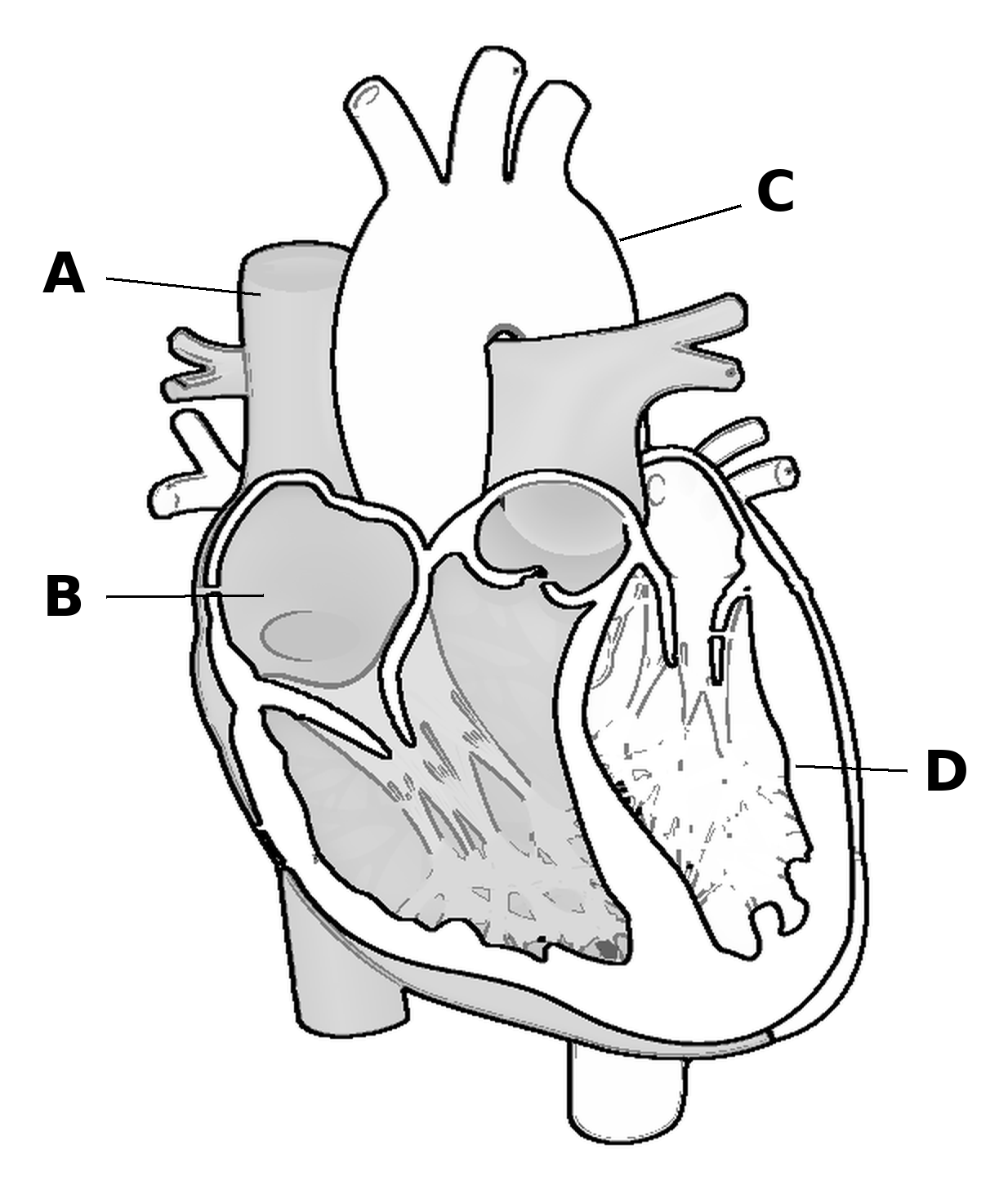
FThe figure shows a diagram of a section through the human heart. Four structures are labelled A, B, C and D.
Figure: A section through the human heart, seen from the front, with four structures labelled A, B, C and D
a.[1]
Give the letter of the blood vessel that carries blood from the heart to the whole of the body.
b.[1]
Give the letter of the chamber that pumps blood into this blood vessel.
c.[1]
Give the letter of the blood vessel that brings blood back to the heart from the body.
d.[1]
Name the structures inside the heart that stop blood from flowing backwards.
2.2 Animal tissues, organs and organ systems Questions
179 exam-style questions on AQA GCSE Biology 2.2 Animal tissues, organs and organ systems, covering 2.2.1 The human digestive system, 2.2.2 The heart and blood vessels, 2.2.3 Blood, 2.2.4 Coronary heart disease: a non-communicable disease, 2.2.5 Health issues, 2.2.6 The effect of lifestyle on some non-communicable diseases, and 2.2.7 Cancer. Each one has a worked solution and a mark scheme showing where the marks go.