A student conducts an experiment to investigate the reflection of light using a plane mirror. 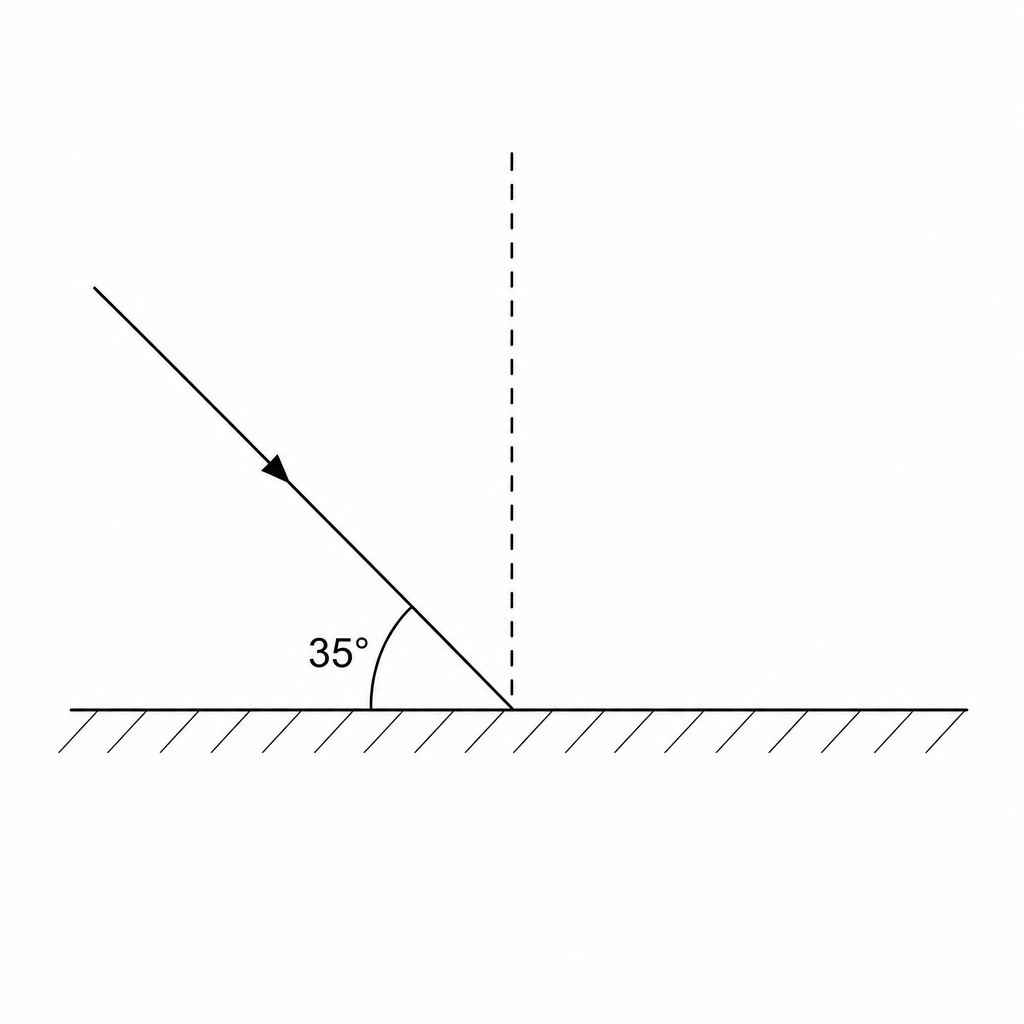
a.[2]
Calculate the angle of incidence of the light ray, showing your working.
b.[1]
Under the law of reflection, state the angle of reflection.
c.[2]
The student compares two methods of producing the light ray: Method A uses a standard ray box with a single slit, which produces a diverging beam of light. Method B uses a laser diode, which produces a very narrow, collimated beam of light. Explain two reasons why Method B provides more accurate measurements of the angles than Method A.