What to Eat Before a GCSE Chemistry Exam
What to eat before GCSE chemistry exam day: balanced meal ideas, hydration guidance and practical ways to support steady energy and focus.
The paper is approaching, your notes are open, and suddenly breakfast feels like another question you could get wrong. If you are wondering what to eat before GCSE chemistry exam day, the useful answer is reassuringly simple: choose a familiar meal containing a starchy carbohydrate, some protein and fruit or vegetables, then drink water regularly.
Porridge with fruit and yoghurt, eggs on wholemeal toast, or a lower-sugar cereal with milk and a banana can all work. For an afternoon paper, choose a balanced lunch such as a wholemeal sandwich with a protein filling, fruit and yoghurt. You do not need a fashionable supplement or a so-called brain food. You need reliable fuel that leaves you comfortably satisfied rather than hungry, overfull or jittery.
Your quick pre-exam food checklist
Before sitting GCSE Chemistry, aim to:
- eat a familiar, balanced meal rather than experimenting;
- combine a starchy carbohydrate with a source of protein;
- include fruit or vegetables where practical;
- drink water steadily through the morning or afternoon;
- avoid relying on sweets, highly caffeinated energy drinks or an enormous meal;
- allow enough time to eat without rushing;
- prepare your food, water and exam equipment in advance.
Food cannot insert electrolysis, quantitative chemistry or bonding into your memory. What it can do is remove avoidable distractions. Hunger, thirst and an unsettled stomach all compete for attention that would be better spent interpreting command words and checking units.
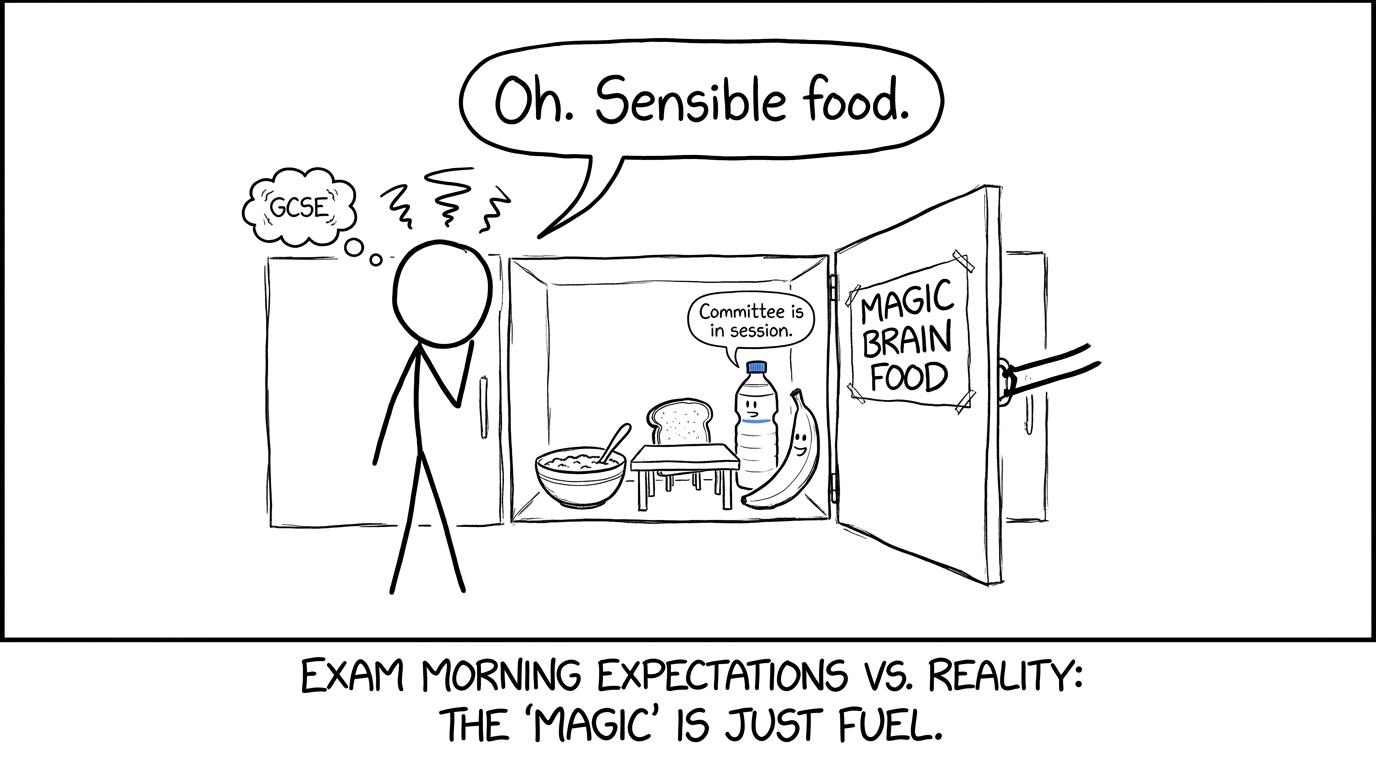 A GCSE student discovers that the magic brain-food cupboard contains ordinary breakfast
What actually supports focus and steady energy?
The best exam meal is not defined by one miraculous ingredient. Its value comes from balance.
Start with a starchy carbohydrate
Foods such as oats, wholegrain bread, potatoes, rice, pasta and lower-sugar breakfast cereals provide carbohydrate, an important energy source for the body. Wholegrain and higher-fibre choices are often practical because they tend to be more filling than a meal based mainly on sweets or pastries.
Useful options include:
- porridge or overnight oats;
- wholemeal toast;
- a lower-sugar wholegrain cereal;
- a wholemeal wrap or sandwich;
- rice, pasta or potatoes as part of lunch.
There is no need to chase a perfectly calculated glycaemic index. Exam morning is not the time to redesign your entire diet. Choose a carbohydrate you already eat and digest comfortably.
Add protein for a more satisfying meal
Protein helps make a meal more substantial. Depending on your preferences and dietary needs, you might choose eggs, yoghurt, milk, cheese, beans, hummus, tofu, fish, chicken or nut butter.
This creates simple combinations such as porridge with milk and yoghurt, wholemeal toast with eggs, or a wrap filled with hummus and vegetables. The combination matters more than finding the supposedly perfect food.
If you have an allergy, intolerance, diabetes, a gastrointestinal condition or another medical requirement, follow the advice given by your clinician, dietitian, parent or carer. Generic exam tips should never replace an individual care plan.
Include fruit or vegetables
Fruit is portable, familiar and easy to add to breakfast. A banana beside toast, berries on porridge or an apple with lunch can round out the meal. Vegetables may fit more naturally into an omelette, sandwich, wrap or rice dish.
This is ordinary balanced eating, not a last-minute performance trick. One blueberry cannot rescue an unrevised specification, just as one biscuit cannot ruin a well-prepared paper.
Breakfast ideas for a morning Chemistry exam
A morning examination makes breakfast especially important because you have gone several hours without eating. UK nutrition guidance for teenagers recommends not skipping breakfast and suggests combinations involving wholegrains, fruit and protein-containing foods.
Practical choices include:
- porridge made with milk or a fortified alternative, topped with banana;
- wholemeal toast with eggs and a piece of fruit;
- lower-sugar cereal with milk and berries;
- yoghurt with oats, fruit and seeds;
- wholemeal toast with nut butter, if nuts are safe and permitted for you;
- beans on wholemeal toast;
- a small smoothie alongside toast or another solid food if drinking is easier when nervous.
Try to eat with enough time to avoid rushing. There is no universally perfect interval because appetite, travel and digestion differ. Many students find eating roughly one to two hours beforehand comfortable, but familiarity is more useful than obeying an exact clock.
If nerves reduce your appetite, make the meal smaller and manageable rather than abandoning it altogether. Toast and yoghurt, a banana with milk, or a small bowl of porridge may feel more realistic than forcing down a large breakfast.
What to eat before an afternoon GCSE Chemistry exam
For an afternoon paper, breakfast still matters, but lunch becomes the final substantial meal before the exam. Choose something filling enough to prevent hunger without making yourself uncomfortably full.
Reasonable lunches include:
- a wholemeal sandwich with egg, tuna, chicken, cheese, tofu or hummus;
- a rice or pasta salad containing vegetables and a protein source;
- a baked potato with beans, tuna or cheese;
- soup with wholegrain bread and yoghurt;
- leftovers from a familiar balanced evening meal.
If there is a long gap between lunch and the paper, pack a modest snack. Fruit, yoghurt, oatcakes, wholegrain crackers or a small handful of nuts can work where allergies and school rules allow them.
Avoid turning lunch into a reward banquet. An unusually rich or very large meal may leave you uncomfortable at precisely the moment you need to compare data, balance an equation or explain a chemical trend clearly.
Hydration matters more than a last-minute sugar rush
Water is the simplest exam drink. NHS guidance advises drinking regularly through the day and commonly uses six to eight cups or glasses as a broad daily guide, although individual needs vary with body size, activity, weather and health.
Do not attempt to catch up by drinking a huge amount immediately before the paper. Drink normally and steadily instead. This supports hydration without creating an urgent need to leave the exam room.
Your school or examination centre may permit water in the room under particular conditions, commonly involving a clear bottle. Check its current instructions in advance rather than assuming. Exam arrangements are controlled by your centre.
Fruit juice and smoothies can contribute fluid, but UK guidance recommends limiting them to a small serving of about 150 ml150\text{ ml}150 ml a day because they contain free sugars. They are not a substitute for drinking water regularly.
Why energy drinks are a poor exam strategy
An energy drink can look like confidence in a can. In reality, high caffeine intake may leave a young person feeling shaky, restless or anxious, and it can interfere with sleep. UK nutrition guidance does not recommend energy drinks for teenagers, while drinks containing more than 150 mg150\text{ mg}150 mg of caffeine per litre must carry a high-caffeine warning stating that they are not recommended for children.
Caffeine affects people differently. Exam morning is therefore a bad time to increase your usual intake or try a new high-caffeine product. If you already drink tea or coffee, keep your routine modest and familiar rather than using caffeine to compensate for poor sleep.
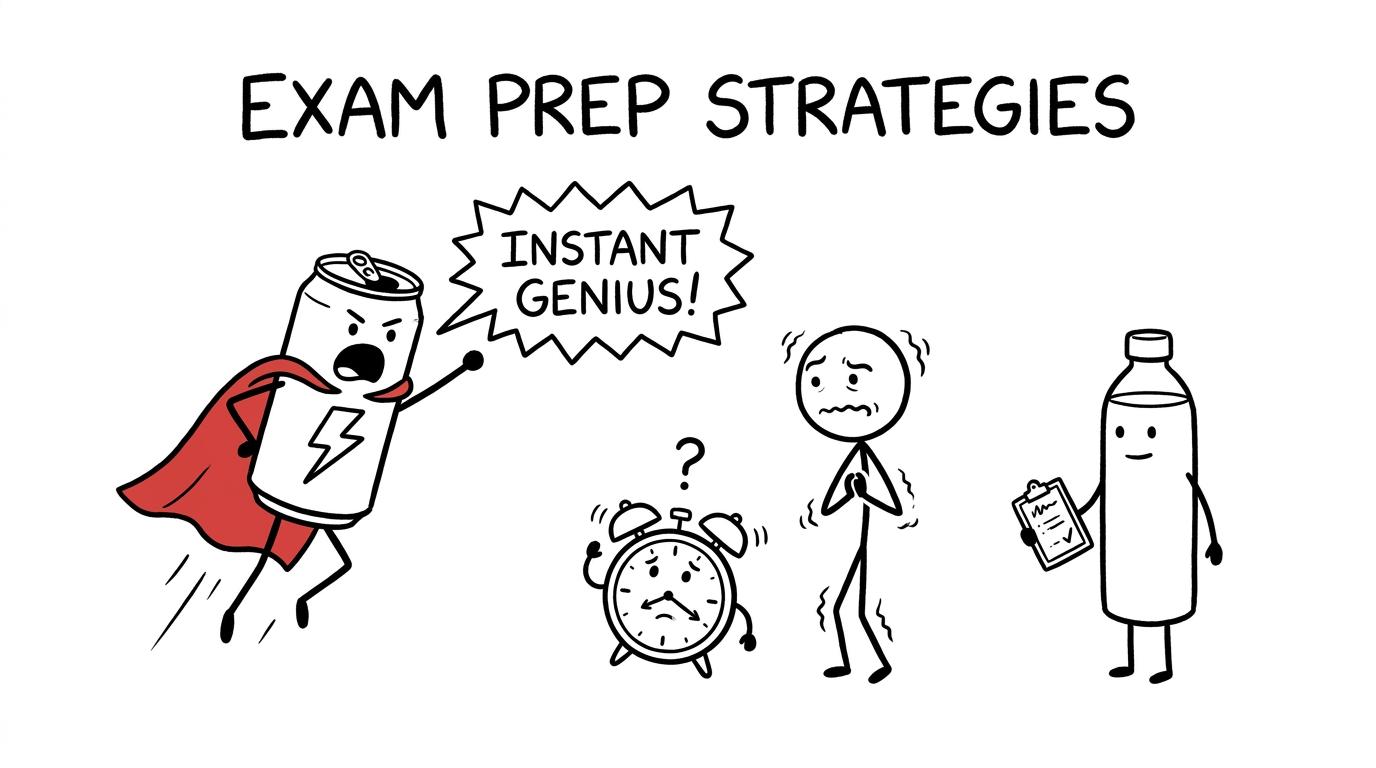 An overconfident energy drink meets a calm water bottle and an unconvinced student
Sugary drinks and sweets may provide energy quickly, but they are not a balanced meal and may not keep hunger away through a full paper. There is nothing wrong with enjoying sweet food in an ordinary diet. The mistake is expecting it to replace breakfast, lunch, water or preparation.
What helps beyond ordinary exam-day advice?
The quiet advantage is reducing decisions. Decide on breakfast the night before. Check that the food is available. Fill your bottle, confirm your exam time and pack your equipment.
Then protect sleep. Food cannot fully compensate for a night spent cramming. If another maths paper is approaching, use a short, purposeful session rather than continuing until exhaustion. MathsGenie's GCSE maths night-before plan explains how to prioritise a few weaknesses and stop at a sensible time.
The same principle applies to Chemistry: briefly retrieve key facts, complete a small number of familiar questions, check errors and finish. Do not use breakfast time for a frantic tour of the entire specification.
Students balancing several subjects can use the free GCSE Maths revision hub to keep maths preparation organised around their exam board and tier. If your next paper is Edexcel maths, the Edexcel GCSE Maths revision area brings lessons, questions and revision tools together, leaving fewer resources to search for when time is limited.
Match your food plan to your revision plan
A useful routine has three parts: prepare, perform and recover.
The evening before, prepare a familiar meal and pack what you need. On the morning itself, eat, hydrate and complete only a light recall activity. After the Chemistry paper, have a normal meal, take a short break and then turn towards the next subject.
For maths, that could mean using short Edexcel mini tests rather than attempting a full paper when tired. When you have more time and energy, follow the diagnostic approach in MathsGenie's guide to finding your weakest GCSE topics. The aim is not endless effort. It is choosing the next useful action.
A structured one-week GCSE maths revision plan can also help during a crowded science-and-maths exam week. Students with longer to prepare can read when to start GCSE past papers and build timed practice gradually.
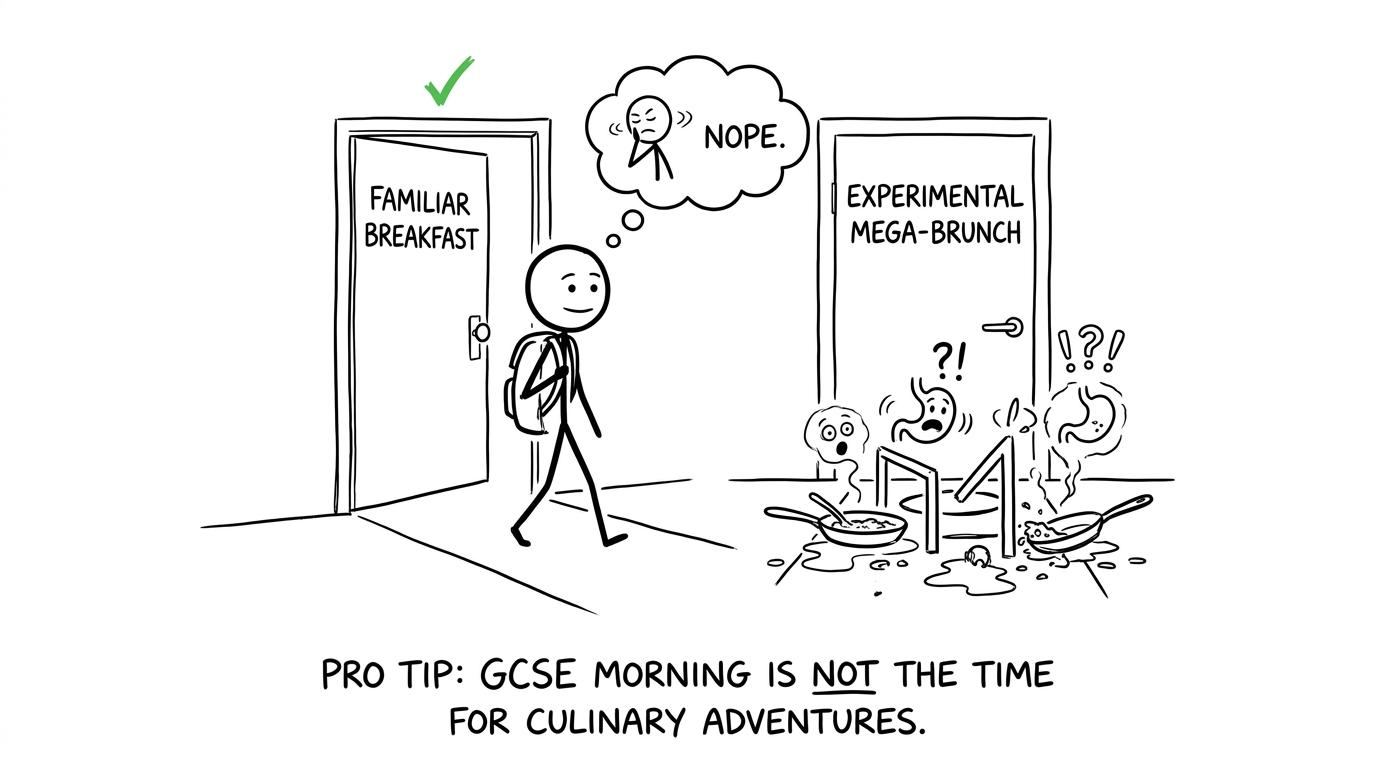 A student chooses the calm familiar-breakfast door instead of the experimental mega-brunch obstacle course
Common mistakes before a GCSE Chemistry exam
Skipping food because you feel nervous
Anxiety can reduce appetite, but arriving hungry may create another distraction. Try a smaller familiar option and eat slowly. If exam anxiety regularly prevents you from eating or affects daily life, speak to a parent, carer, teacher, school pastoral lead or healthcare professional.
Trying a new food or supplement
A new protein shake, supplement or unusually rich breakfast introduces uncertainty without guaranteeing any benefit. Familiarity is an underrated exam strategy.
Eating an enormous meal
More food does not mean more concentration. Aim to feel comfortably satisfied, not painfully full.
Using caffeine instead of sleep
Caffeine cannot recreate the benefits of adequate rest and may worsen shakiness or anxiety. Avoid high-caffeine energy drinks and do not suddenly increase your normal intake.
Drinking everything at the last minute
Steady hydration is more practical than rapidly drinking a large bottle just before entering the hall.
Believing food can replace revision
Breakfast supports the conditions in which you think; it does not supply the knowledge. The dependable route remains learning, retrieval, practice, marking and correction. Maths students can build that cycle with MathsGenie's guide to efficient GCSE maths revision.
A calm meal, then a clear next step
The best answer to what you should eat before a GCSE Chemistry exam is not dramatic: familiar carbohydrate, useful protein, fruit or vegetables, and water. Eat enough to feel comfortable, avoid experiments and let breakfast be one less decision to make.
Once Chemistry is finished, bring the same calm structure to maths. Open MathsGenie, choose your exam board and foundation or higher tier, then work through free revision lessons and practice questions. Use mini tests to find gaps, past papers and mark schemes to sharpen exam technique, and predicted papers with video solutions to guide your final preparation.
Food supports the morning. Deliberate practice builds the grade. Start your next focused revision session with MathsGenie's free GCSE maths resources.