

University GCSE English Literature Requirement Guide
University GCSE English Literature requirement explained: when the grade matters, when English Language counts instead, and what applicants should check.
A GCSE grade can feel strangely permanent. You sit the exam at 151515 or 161616, then wonder whether an admissions tutor might inspect it years later. The direct answer to the university GCSE English Literature requirement question is reassuring: universities can see and consider your GCSE results, but most courses do not set a specific minimum grade in English Literature. They are much more likely to require GCSE English Language and maths.
There are exceptions. English-related degrees may expect English Literature at A Level, highly competitive courses can consider your overall GCSE profile, and a small number of universities may accept Literature as evidence of general literacy. The decisive detail is always the published requirement for the exact course and entry year.
The quick answer
Use this checklist before worrying about one grade:
- Universities may review all qualifications declared in your application, including GCSE English Literature.
- Most general GCSE entry conditions name English Language, not English Literature.
- English Literature usually cannot automatically replace English Language.
- An English degree may require English Literature at A Level without demanding a particular GCSE Literature grade.
- Selective courses may assess your wider GCSE profile, even when they do not specify Literature individually.
- Requirements vary by university, course and admissions cycle.
- Always read the course page and general admissions policy, then contact admissions if the wording is unclear.
That distinction between being visible and being required matters. A university may see a grade without using it as a formal threshold.
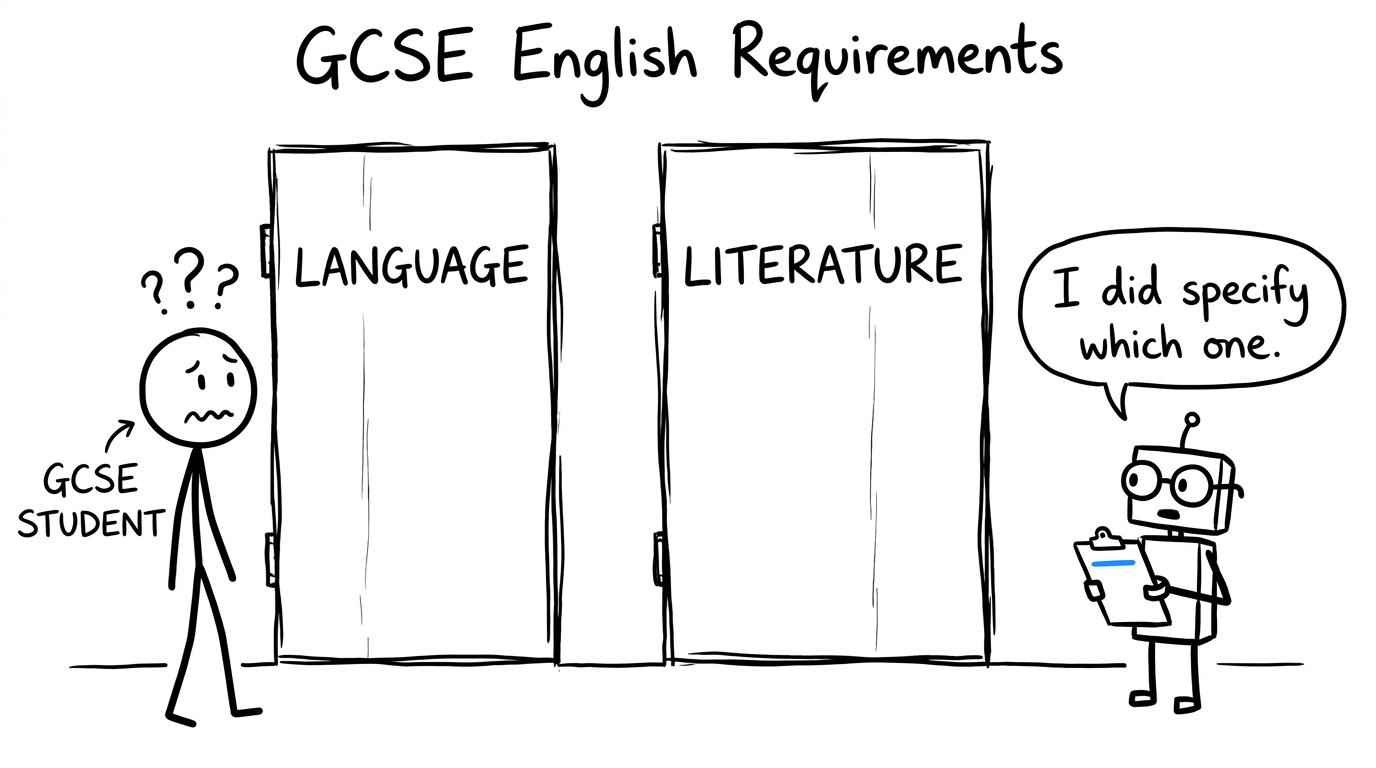 A student discovers that English Language and English Literature are different admissions doors
English Language and English Literature are not interchangeable
This is the source of most confusion.
GCSE English Language assesses reading, writing and communication. Universities commonly use it as evidence of literacy. GCSE English Literature focuses on the study and analysis of texts. It develops valuable skills, but it is a separate qualification with a different purpose.
Current university requirements illustrate the distinction. Published entry information for some English degrees asks for GCSE English Language at grade 444 or 666, while explicitly stating that GCSE English Literature will not be accepted instead. Other institutions define literacy more broadly and may accept either Language or Literature for particular admissions profiles.
Neither policy is universal. The safe rule is simple: if a requirement says GCSE English Language, do not assume your Literature result satisfies it.
The same principle applies to maths. A course asking for GCSE maths at grade 555 or 666 is setting a subject-specific threshold, not merely expressing a preference for numeracy. This is one reason to keep strengthening your maths while choices remain open. The GCSE Maths revision hub lets you choose your exam board and find relevant lessons, questions and papers.
When your GCSE English Literature grade may matter
When the course publishes a specific requirement
The clearest case is also the least ambiguous: the course page names GCSE English Literature and states a grade.
This is less common than an English Language condition, but course requirements are set independently by universities. UCAS guidance confirms that providers decide their own entry criteria, which can include particular subjects and grades. A broad university policy therefore does not override a stricter course requirement.
Check both levels of information:
- the university's general undergraduate requirements;
- the page for the exact course;
- any departmental admissions statement;
- the requirements for your intended year of entry.
A condition written as “English at GCSE” also deserves clarification. It may include both qualifications, or it may refer specifically to Language.
When universities assess your overall GCSE profile
Some competitive courses use GCSE performance during shortlisting. Medicine is the familiar example: certain medical schools consider the number or proportion of high GCSE grades alongside other evidence such as admissions-test performance. Policies differ substantially, and several medical schools instead publish fixed minimum grades in subjects such as English Language, maths and science.
In profile-based selection, English Literature may contribute because it is one of your GCSEs, not because Literature carries a unique requirement. One lower grade is then part of a larger record rather than an automatic rejection.
This distinction prevents two opposite mistakes: believing that Literature never matters, or believing that one result determines your future. Admissions decisions may also involve Level 333 qualifications, predicted or achieved grades, contextual information, written work, tests, interviews and other course-specific evidence.
When you apply for English or another essay-based subject
English degrees commonly require English Literature, or combined English Language and Literature, at A Level or an equivalent Level 333 qualification. Oxford, UCL, Manchester and Cambridge currently publish this kind of subject requirement for their English courses.
That does not automatically create a GCSE Literature threshold. For example, a course can require A Level English Literature while listing GCSE English Language and maths as its specific GCSE conditions. Your later qualification is the stronger evidence that you are prepared for degree-level literary study.
Nevertheless, your GCSE result can help schools and colleges decide whether you may take English Literature at A Level. Sixth-form entry policies are separate from university requirements, so check them before choosing your post-161616 subjects.
When Literature is accepted as evidence of literacy
Some universities accept GCSE English Literature within a general literacy profile. Bristol, for instance, currently lists reformed GCSE English Language or Literature among the ways applicants may meet its standard literacy requirement, although individual courses can impose different or higher conditions.
This is useful flexibility, not a national rule. Manchester currently states on relevant English course pages that Literature is not accepted in place of GCSE English Language. Two legitimate universities can adopt different policies because each sets its own admissions criteria.
The lesson is not to memorise a list. Lists age. Learn how to verify the requirement that applies to you.
How to check a university requirement properly
Start with the official course page for your intended entry year. Search within it for “GCSE”, “English”, “entry requirements” and “subject requirements”. Then inspect the university's general qualifications and English-language policy.
Use this order:
- Confirm the course title and UCAS code.
- Select the correct entry year.
- Read the standard and contextual offer information.
- Identify whether “English” means Language, Literature or either.
- Check whether a higher subject grade applies to your course.
- Look for accepted equivalent qualifications and resit rules.
- Save the page or record the date on which you checked it.
- Email the admissions team if any wording remains uncertain.
Do not rely solely on an old prospectus, a forum answer or a requirement copied from another course. Entry criteria can change between admissions cycles.
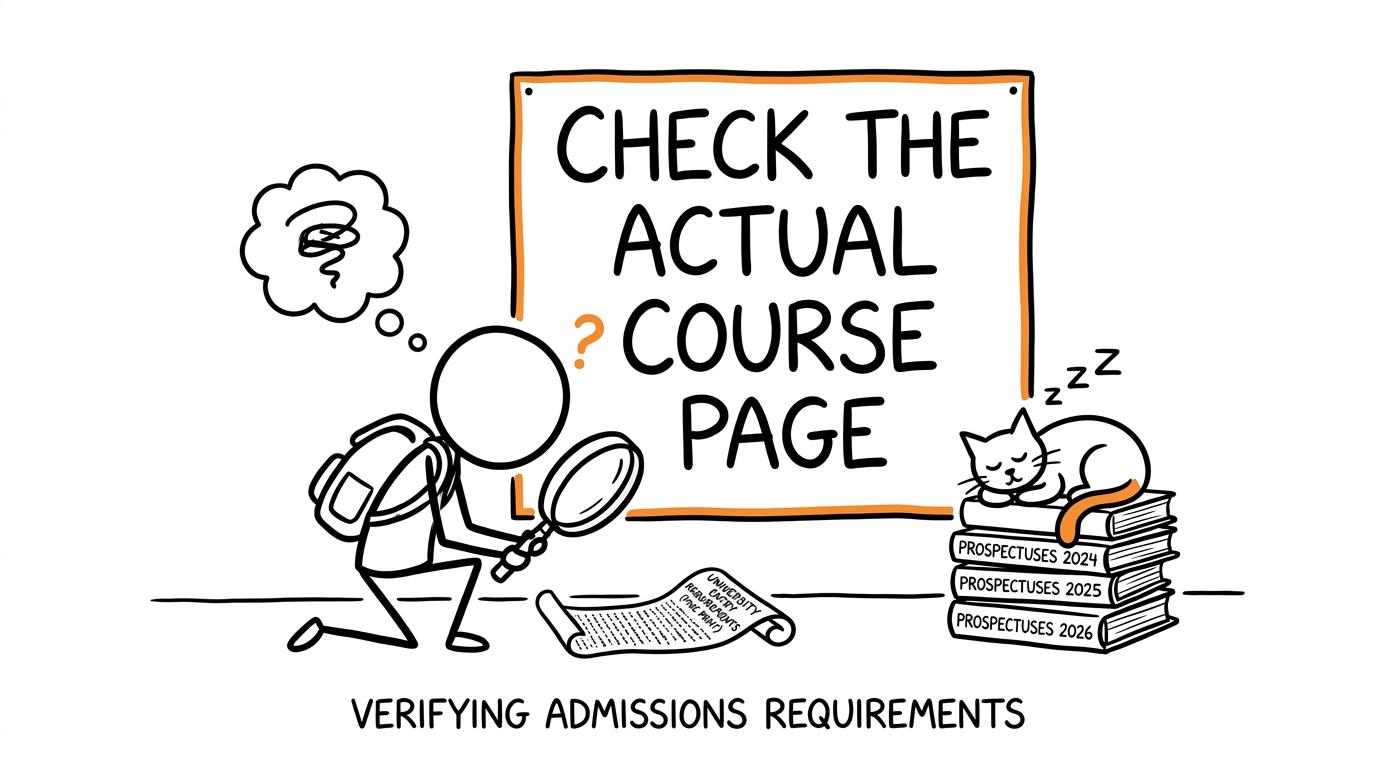 A student examines the small print while the obvious advice waits behind them
What if your English Literature grade is lower than expected?
First, separate a disappointing result from an unmet condition.
If your intended course requires English Language and maths but says nothing specific about Literature, a lower Literature grade may not prevent an application. It remains part of your academic record, but later results and the rest of the selection process may carry greater relevance.
If the course does name Literature, ask the university whether the condition is absolute, whether an equivalent qualification is accepted and how resits are treated. Do this before making assumptions about eligibility.
You can also protect future choices by concentrating on qualifications that repeatedly appear in entry requirements. GCSE English Language and maths are common pre-161616 conditions across UK higher education. For maths, use the GCSE Maths topics by board and tier to confirm what your Edexcel, AQA, OCR or Eduqas course covers.
Then turn uncertainty into evidence. The weak-topic diagnostic routine helps you identify where marks are being lost. Short Edexcel GCSE Maths mini tests can test individual skills without demanding a full paper.
Keep university options open through balanced revision
The practical response is not to abandon maths revision in order to chase one English Literature grade, or to ignore Literature because most courses name Language. Both reactions make the same mistake: treating revision as an all-or-nothing decision.
Build a timetable around actual needs. Give priority to subjects with formal entry thresholds, but continue preparing properly for every qualification you take. A calm weekly plan is usually more useful than repeatedly checking hypothetical university decisions.
The GCSE maths revision timetable guide shows how to combine topic work, mixed questions and timed papers. If your schedule is crowded, the 20-minute maths revision routine provides a smaller starting point.
As exams approach, use official past papers first and predicted papers as additional practice. The guide to starting GCSE past papers explains how to move from short sections to complete timed papers. Edexcel students can also use GCSE Maths predicted papers to uncover remaining gaps after topic revision.
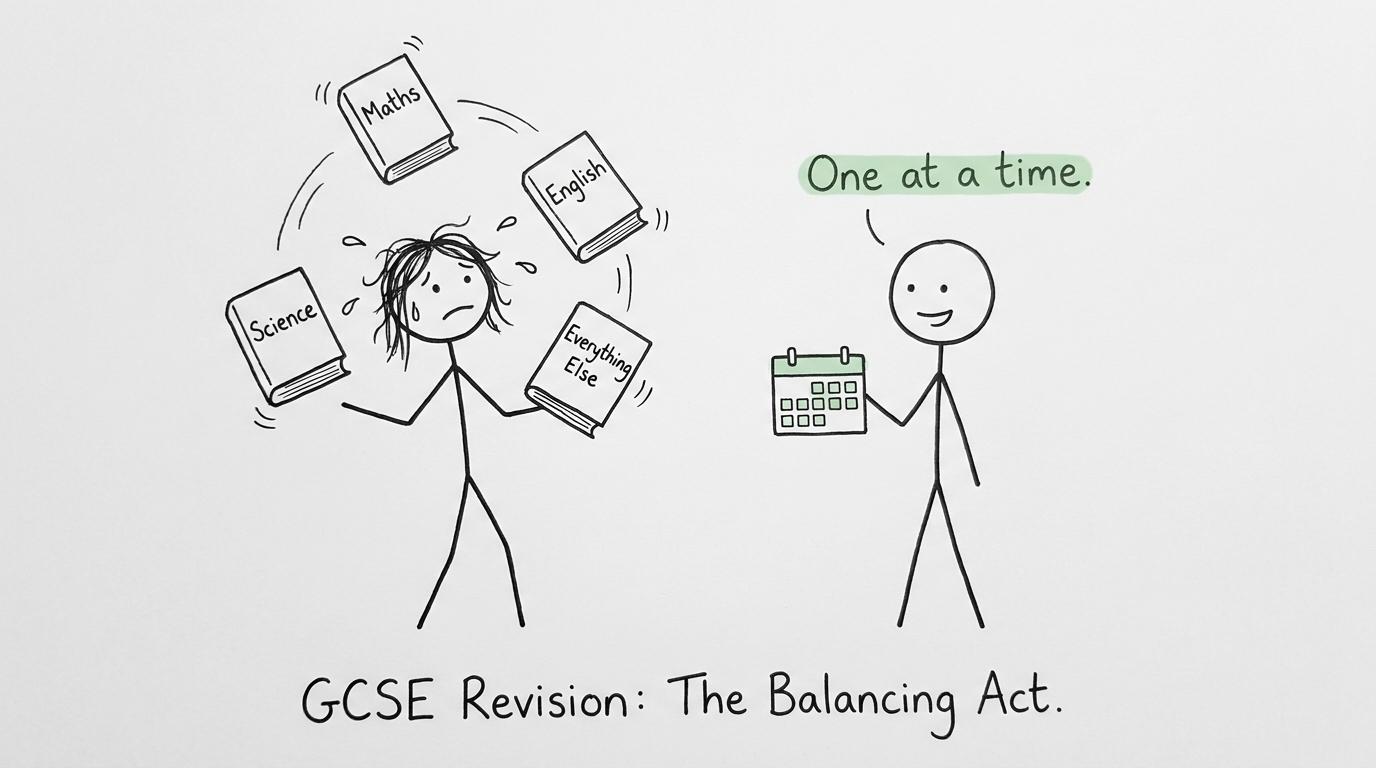 A revision planner calmly rescues a student juggling every GCSE subject
Common mistakes
Confusing a literacy condition with a Literature requirement
A request for GCSE English Language is not automatically satisfied by GCSE English Literature. Read the named qualification exactly.
Assuming universities never inspect GCSEs
Universities can consider declared GCSE results. Some courses use particular grades as thresholds, while some selective programmes assess the broader profile.
Assuming one Literature grade decides everything
Unless a published condition makes that grade essential, it is normally one part of a much larger application. Avoid turning visibility into imagined decisiveness.
Checking the university but not the course
Requirements can differ between departments at the same institution. The course-level page is often the most important source.
Using requirements from the wrong year
Admissions policies can change. Check the page for the year in which you intend to begin university, not merely the year in which you search.
Neglecting GCSE maths and English Language
These subjects appear frequently in course requirements. If either is currently fragile, address it early rather than discovering the condition during Year 131313.
The grade matters most when the course says it matters
Universities may look back at GCSE English Literature, but most do not impose a universal minimum grade in it. English Language is more commonly specified, Literature may contribute to an overall GCSE profile, and English-related degrees usually place their explicit Literature requirement at A Level or equivalent.
So check the exact course, read every subject name carefully and ask admissions when the wording is unclear. Then return your attention to what you can still improve.
MathsGenie makes that next step straightforward. Choose your board and tier, use free revision lessons and practice questions to repair weak topics, check progress with mini tests, and build exam confidence through past papers, predicted papers, mark schemes and video solutions. A university requirement is information. Your revision plan is the action that follows.











