Can Home-Schooled Students Sit GCSE English Literature?
Home schooled GCSE English Literature: learn how private candidates find a centre, choose a board, meet deadlines and book exams with confidence in the UK.
A student can spend months learning quotations, exploring characters and practising essays, yet still face a surprisingly practical question: where will the actual examination happen?
The short answer is yes: home schooled GCSE English Literature students can sit the qualification. They normally enter through an approved school, college or independent examination centre as a private candidate. The centre makes the formal entry, hosts the examinations and handles results, certificates and any post-results services.
The challenge is not permission. It is organisation. You must choose the precise qualification, find a centre that accepts private candidates, meet its deadline and pay its fees. Starting early makes every part of that process easier.
Your private-candidate checklist
Before committing to a course, confirm:
- the exam board, such as AQA, Pearson Edexcel, OCR or Eduqas
- the exact GCSE English Literature specification
- which set texts and poetry anthology you will study
- whether a nearby approved centre accepts that board and subject
- the centre's own registration deadline and total fee
- what identification and candidate information it requires
- whether access arrangements are needed
- when and where each paper will be taken
- how results, certificates and post-results enquiries will be handled
Treat these as connected decisions. Choosing books before checking the specification can leave you preparing texts that your centre cannot enter.
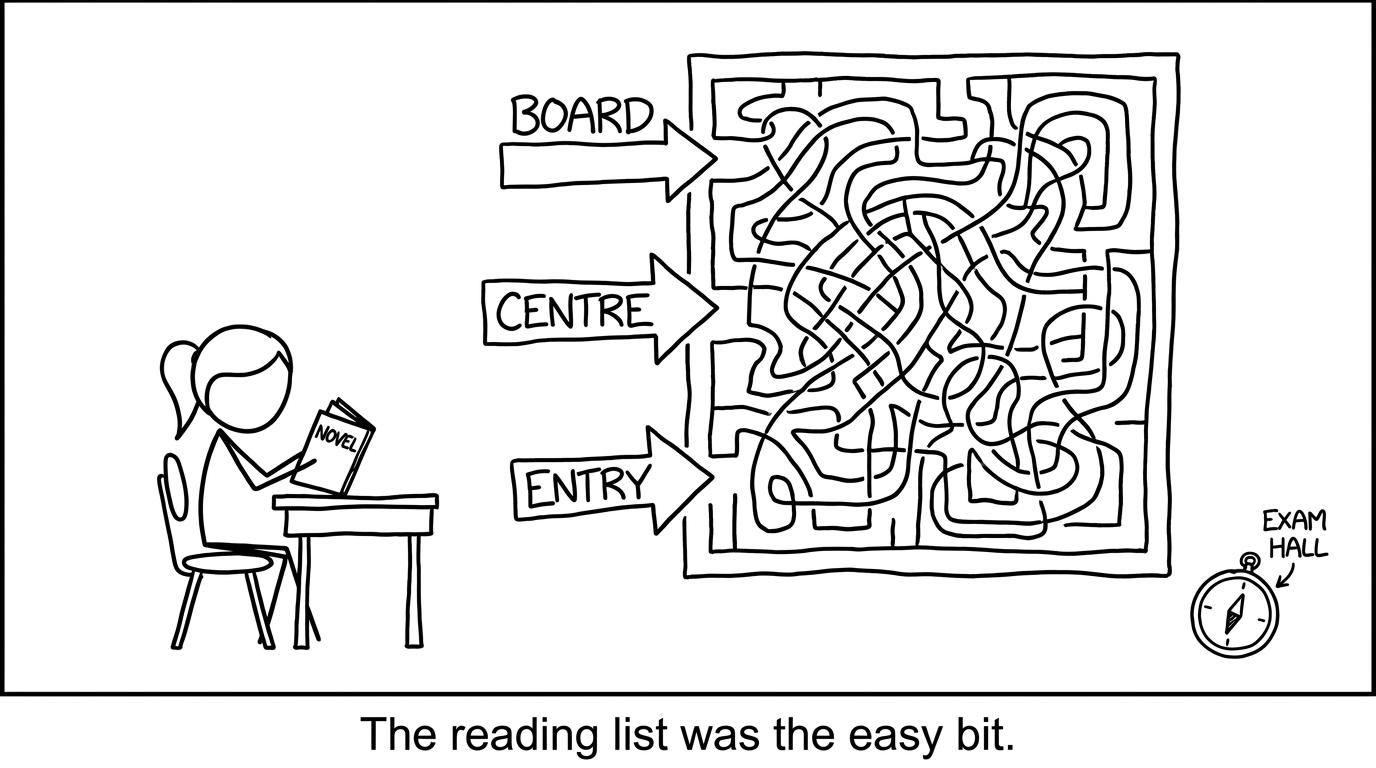 A student navigates the maze of board, centre and entry decisions
How home-schooled students enter GCSE English Literature
A private candidate takes an examination at an approved centre without being enrolled there as a full-time student. This category includes many home-educated, self-taught and distance-learning students.
You cannot normally submit a GCSE entry directly to an exam board as an individual. An approved centre must accept you and make the entry on your behalf. The centre also supplies the examination room, invigilators and official paperwork.
Choose the board and specification first
Do not ask a centre simply whether it offers “English Literature”. Give the exams officer precise information:
- qualification: GCSE English Literature
- awarding organisation: AQA, Pearson Edexcel, OCR or Eduqas
- specification code
- intended examination series
- required text or option codes, where applicable
GCSE English Literature is not one identical course shared by every board. Paper structures, prescribed texts, poetry collections, question styles and option codes vary. For example, AQA GCSE English Literature uses specification code 870287028702, while Pearson Edexcel and OCR have their own specifications and entry details.
AQA currently lists GCSE English Literature as available to private candidates without an additional private-candidate restriction. OCR describes its English Literature GCSE as a linear qualification assessed through two externally marked examinations. Other boards also use written examinations, but you should always check the current specification rather than assuming the arrangements are interchangeable.
English Literature should not be confused with English Language. English Language specifications can include a spoken-language component that the centre must organise. That can make centre selection more complicated. If you plan to take both subjects, ask about both separately.
Select the texts required by that specification
Once the board is settled, download or obtain its current specification and create a complete text list. Depending on the board, the course may include:
- a Shakespeare play
- a nineteenth-century novel
- modern prose or drama
- an anthology of poetry
- unseen poetry or prose
Check the exact editions and anthology arrangements. Some exam boards or centres provide specific materials, while others expect candidates to obtain their own clean copies for revision. Whether texts appear in the examination also depends on the specification, so revise for the actual paper rules.
How to find an approved examination centre
The Joint Council for Qualifications, usually called JCQ, provides a private-candidate centre search tool. Search by location, qualification type and awarding organisation, then contact centres directly.
The results are a starting point, not a guaranteed booking. A centre may accept private candidates for one board but not another, or accept GCSE Maths while declining English Literature. Capacity and policies can change between examination series.
Contact several centres as early as possible. Schools, colleges and dedicated private-candidate centres may all be worth asking. If you recently left a school, you can also ask whether its examinations officer would consider entering you.
Questions to ask each centre
A clear first email saves time. Ask:
- Do you accept private candidates for this precise specification?
- Can you enter all the required English Literature options?
- What is your internal entry deadline?
- What is the complete fee, including administration and invigilation?
- Which identity documents do you require?
- Do you need an existing Unique Candidate Identifier?
- Can you arrange approved access arrangements if required?
- When will I receive my statement of entry?
- How will I receive results and the final certificate?
- How do you handle script requests and reviews of marking?
Keep a simple record of the centres contacted, their replies, deadlines and quoted fees. Memory feels reliable until several similar emails arrive at once.
GCSE English Literature entry deadlines
Entry deadlines are easy to misunderstand because there are usually two of them: the awarding organisation's deadline and the centre's earlier internal deadline.
For the June 202620262026 series, JCQ's published entry deadline was 212121 February 202620262026. AQA and Pearson Edexcel also published 212121 February 202620262026 as the standard deadline for relevant June GCSE entries. Those dates have now passed and should not be treated as deadlines for a future series.
If you are preparing for June 202720272027 or later, check the new key-dates documents when they are published and ask your chosen centre for its own cut-off. A centre needs time to verify information, collect payment and process entries, so its internal deadline may be weeks earlier.
Late entries may be possible, but they can attract increased charges and depend on the centre still having capacity. Planning around a late-entry window is therefore risky.
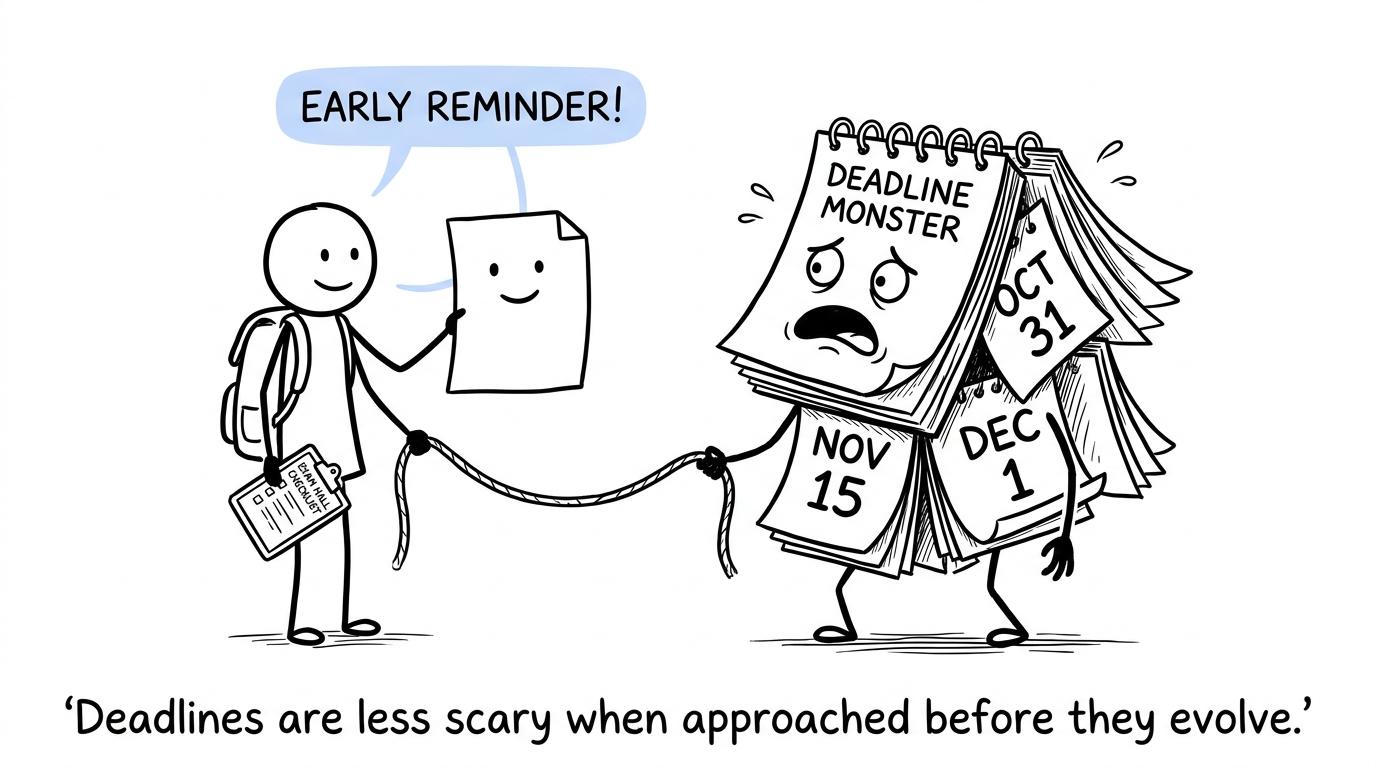 A prepared student calmly defeats a calendar deadline monster
Fees and paperwork to expect
Private-candidate fees are not standardised into one national price. The total may include the exam board's entry fee plus charges for administration, invigilation, rooms, postage and other centre services. Ask for the full amount in writing and check the refund policy before paying.
A centre may request:
- the candidate's legal name and date of birth
- address and contact details
- photographic identification
- previous candidate information or a Unique Candidate Identifier
- the board, specification and entry codes
- details of any access requirements
- payment by its stated deadline
After entry, the centre should issue a statement of entry. Check the spelling of the candidate's name, subject, board, specification, option codes and examination series immediately. A small administrative error is much easier to correct before the examination timetable begins.
Access arrangements must be raised early
Students who need extra time, supervised rest breaks, a word processor, modified papers, a scribe or another reasonable adjustment should tell the centre during the first enquiry.
The centre is responsible for processing access arrangements and confirming that JCQ requirements are met. Existing reports can be useful, but they do not automatically guarantee an arrangement. The centre may need evidence of need, evidence of the student's normal way of working or an assessment by its appointed assessor.
For June 202620262026, the JCQ deadline for ordering modified papers was 313131 January 202620262026, while the deadline for processing most other access arrangements was 212121 March 202620262026. Future dates must be checked afresh. A private-candidate centre may also impose earlier internal deadlines.
Do not register first and mention access needs just before the papers. Ask whether the centre can support the arrangement before paying the entry fee.
Preparing for English Literature alongside GCSE Maths
Finding the centre solves the administrative problem. It does not solve the revision problem.
English Literature rewards secure knowledge, thoughtful interpretation and well-supported writing. GCSE Maths rewards accurate methods, reasoning and repeated practice. The subjects look different, but both improve when revision becomes a planned cycle rather than a last-minute reaction.
Create separate weekly blocks for reading, quotation recall, essay planning and maths practice. Use a timetable that leaves space for correction, not just completion. Maths students can adapt the structure in the GCSE Maths revision timetable or build shorter sessions around the 20-minute maths revision routine.
For maths, begin at the GCSE Maths revision hub, where you can choose your exam board and work through revision lessons, worksheets and exam questions. If your examinations are close, the one-month GCSE revision plan can help you balance topic repair with timed papers.
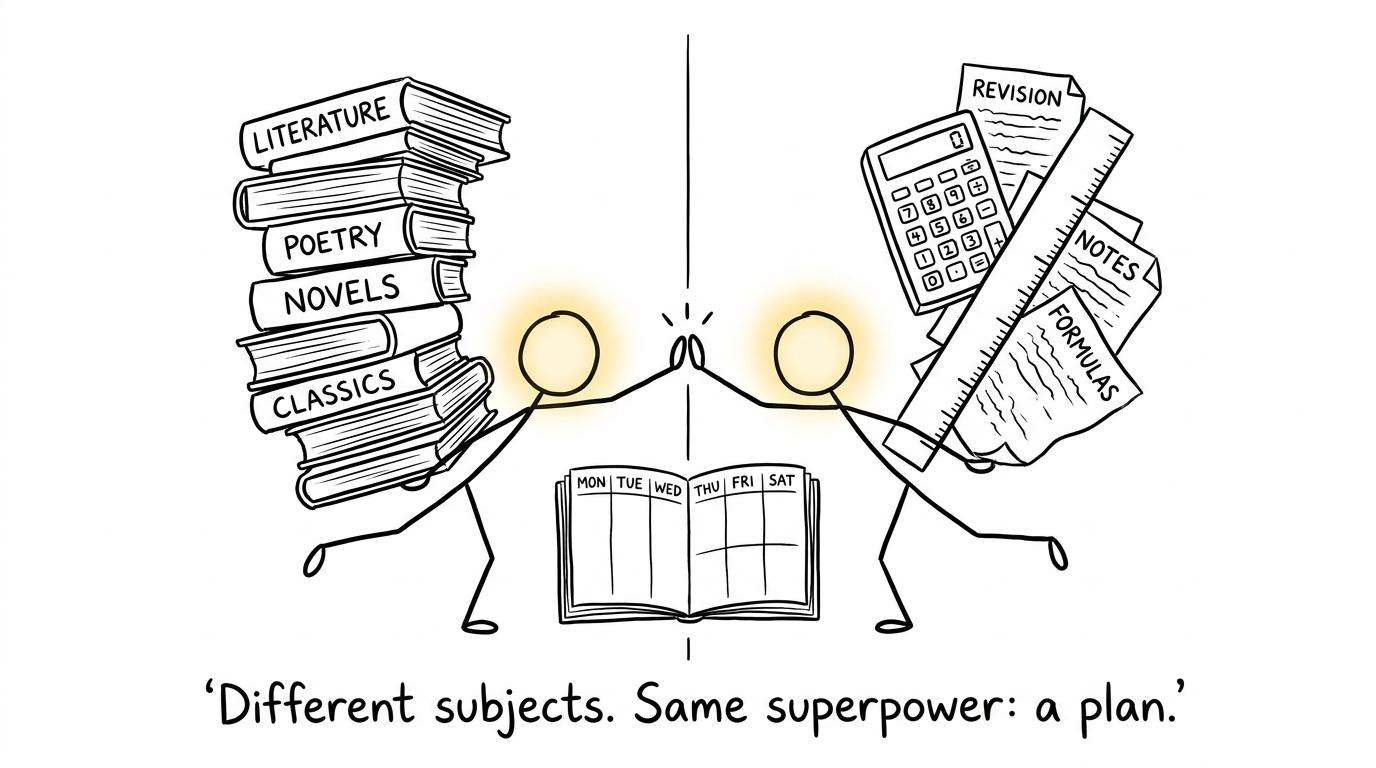 A literature student and maths student share the superpower of a weekly plan
Common mistakes when arranging the examination
Choosing books before choosing the specification
A familiar novel is not necessarily an approved option for your board. Confirm the specification and text combination first.
Assuming every centre accepts every subject
A centre appearing in a private-candidate search does not guarantee that it accepts English Literature for your chosen board. Obtain direct confirmation.
Treating the board deadline as your personal deadline
Centres usually need applications and payment earlier. Always follow the centre's internal date.
Confusing English Literature with English Language
They are separate qualifications with different assessment requirements. Ask for both specification codes if you intend to sit both.
Waiting to discuss access arrangements
Evidence, assessments and applications take time. Raise requirements during your first conversation with the centre.
Failing to check the statement of entry
Check names, codes, options and examination details as soon as the statement arrives. Do not assume administrative information must be correct because it looks official.
Revising without using timed assessment
Reading notes can feel productive while hiding weak recall. In maths, use the guidance on when to start GCSE past papers and learn how to review Edexcel papers properly. The same principle applies to Literature: attempt complete responses under time pressure, then improve them using the assessment objectives and mark scheme.
Turn the process into a plan
Home-schooled students can sit GCSE English Literature, but the booking is not automatic. Choose the board and specification, identify the correct texts, contact approved centres, disclose access needs early, pay before the centre's deadline and check the statement of entry.
Once those practical details are settled, attention can return to the work that earns marks. Keep English revision moving through reading, retrieval and timed writing. For maths, use MathsGenie's free revision lessons, practice questions, mini tests, mark schemes and video solutions. Build confidence with GCSE Maths resources for every exam board, then test your progress through Edexcel predicted papers and official past papers.
The examination centre provides the desk. A steady revision system prepares you for what happens once you sit down.