Grade 6 GCSE History: Enough for Sixth Form?
Grade 6 GCSE History sixth form entry is often enough for A Level History. Learn what to check, how offers work and why your full GCSE profile matters.
A results sheet can make one number feel as though it decides everything. It rarely does. If you are searching for grade 6 GCSE History sixth form entry advice, the short answer is reassuring: a grade 666 is enough for A Level History at many UK sixth forms and colleges. It is a strong result, and it commonly meets the subject-specific threshold.
But it is not a universal guarantee. Some providers ask for a grade 777, while others accept a grade 555. Your place may also depend on your overall GCSE profile, English and maths grades, available spaces and the exact combination of courses you choose. The only definitive answer comes from the published entry requirements of the sixth form or college you actually want to attend.
The quick sixth-form entry checklist
Before worrying about whether one result is “good enough”, check the complete picture:
- Find the current prospectus or admissions policy for your intended year of entry.
- Check the general entry requirement for the sixth form or college.
- Check the subject-specific requirement for A Level History.
- Look for separate requirements in GCSE English Language or Literature.
- Confirm the requirements for your other A Level choices, especially maths and sciences.
- Ask whether the grades shown are minimum thresholds or grades that guarantee consideration.
- Keep a realistic alternative course or provider in mind.
- Contact admissions if the wording is unclear or you narrowly miss a condition.
That distinction between general and subject-specific entry requirements matters. A grade 666 in History may qualify you for the subject, but you must usually satisfy both sets of conditions.
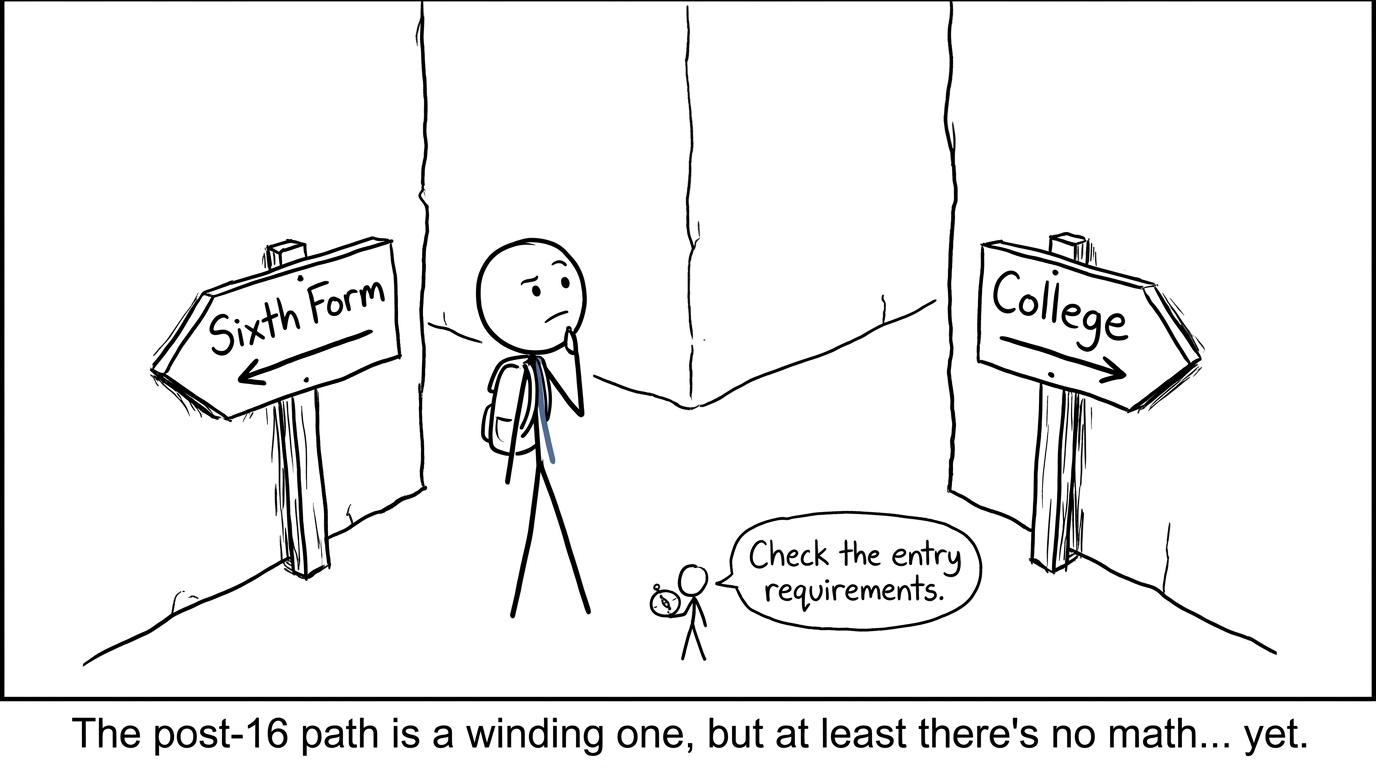 A student choosing between sixth form and college while a compass recommends checking entry requirements
Is a grade 6 in GCSE History good?
Yes. In England’s grading system, grades 999, 888 and 777 replaced the old top grades, while grades 444, 555 and 666 provide greater differentiation around the former grade B and C range. A grade 444 is the standard pass benchmark; a grade 555 is described as a strong pass in school performance measures. A grade 666 therefore sits above both thresholds.
More importantly for sixth-form entry, current UCAS guidance says students normally need at least five GCSEs at grades 999 to 444 to take A Levels, with at least a grade 666 in subjects they want to continue. UCAS also stresses that individual schools and colleges set their own requirements.
That is exactly what current admissions information shows. Among sixth forms publishing requirements for 202620262026 entry, grade 666 in GCSE History is a common threshold for A Level History. Yet the range is real: some providers publish grade 555, while more selective institutions may require grade 777 alongside demanding overall GCSE conditions.
A grade 666 is therefore best understood as widely acceptable, but provider-dependent.
Will it get you onto the course you actually want?
The phrase “sixth form entry” can hide several separate decisions. You may be applying to your school’s sixth form, another school, a large sixth-form college or a further education college. Each institution controls its own admissions criteria and course availability.
If you want to take A Level History
A grade 666 will meet the published History threshold at many providers. You should still check whether the course also asks for:
- a particular grade in English Language or English Literature;
- a minimum number of GCSEs at grades 999 to 555 or 999 to 444;
- several grades at 666 or above;
- a minimum GCSE average or score;
- successful completion of GCSE History, rather than another humanities subject.
Some providers consider applicants who did not take GCSE History if they achieved a strong grade in English, Geography or another essay-based subject. That flexibility cannot be assumed, however. Read the individual History course page rather than relying only on the main admissions summary.
If History supports another course choice
A grade 666 in History may also help with subjects such as Politics, Economics, Law, Sociology, Philosophy or Classical Civilisation. Some sixth forms accept a grade 666 in a humanities subject as evidence that you can analyse sources, build arguments and write extended responses.
Again, the wording matters. “Grade 666 in a humanities subject” is broader than “grade 666 in GCSE History”. One gives you several routes; the other names a precise condition.
If you want to take A Level Maths too
This is where a student can focus on the wrong grade. A strong History result does not override the entry condition for A Level Maths. Many sixth forms ask for at least grade 777 in GCSE Maths, although some accept grade 666 and others set higher conditions for Further Maths.
If maths is part of your intended programme, compare your current level with the provider’s requirement now. The GCSE Maths revision hub lets you choose your board and work through free lessons, questions, papers and revision tools. You can also use the GCSE Maths topics by exam board and tier guide to make sure your revision matches Edexcel, AQA, OCR or Eduqas and your foundation or higher tier entry.
Why your whole GCSE profile matters
Admissions decisions are rarely built around one isolated grade. A sixth form may require five GCSEs at grades 999 to 444, five at grades 999 to 555, or a particular number of grades at 666 and above. English and maths are frequently named because they support progress across Level 333 courses.
Imagine the application as a set of locks rather than one locked door. Your grade 666 in History may open the History lock. Your overall GCSE profile opens the general admissions lock. Your maths and English results may open further locks attached to your chosen subjects.
This is why students preparing for maths exams should not treat maths as unrelated to a History application. Even when A Level History itself has no demanding maths condition, the sixth form’s general offer may require a particular maths grade. Future university courses also commonly expect GCSE English and maths or their equivalents, although exact requirements vary by course and institution.
If maths is the result most likely to affect your offer, build revision around evidence rather than anxiety. A GCSE maths revision timetable can help you balance subjects, while the best order for learning GCSE maths topics provides a sensible route from core number skills to higher-tier topics and exam technique.
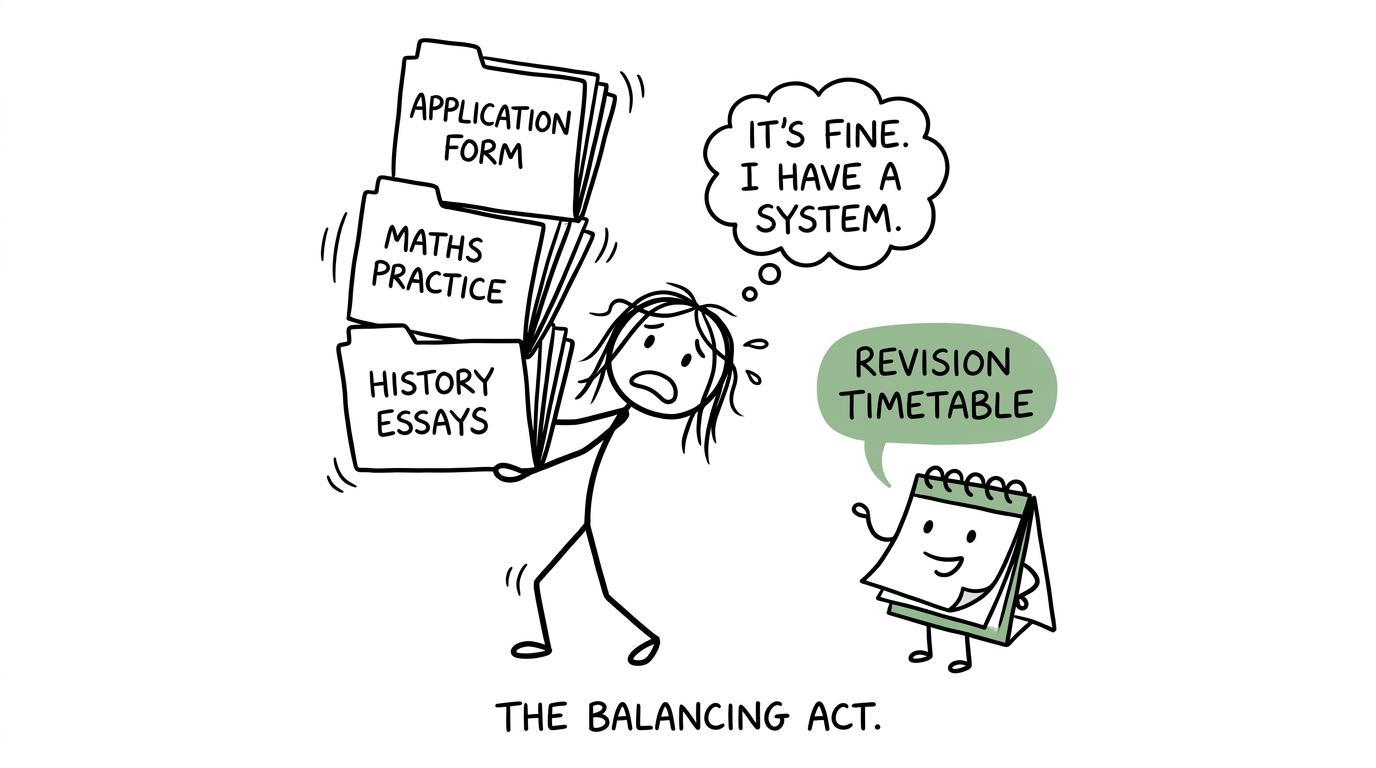 A student balancing History, maths and an application while a calm calendar offers help
How to check an offer properly
Start with the provider’s own website and locate the prospectus, course guide, admissions policy or subject entry criteria for your intended intake. Requirements can change between admission years, so an old screenshot or a comment from a previous student is not enough.
Then separate what you find into three categories:
- General entry: the minimum GCSE profile needed to join the institution.
- History entry: the specific grade needed to enrol on A Level History.
- Programme entry: additional conditions created by your complete subject combination.
Check whether the provider distinguishes between an application, a conditional offer and final enrolment. Receiving an offer before results day does not usually remove the need to achieve its stated conditions. Course places can also depend on demand, timetabling and whether the course runs.
If you are one grade below a requirement, contact admissions rather than guessing. Ask whether the criterion is absolute, whether related GCSE results are considered and what alternative programme would be available. Schools may exercise discretion in some circumstances, but no student should plan on an exception.
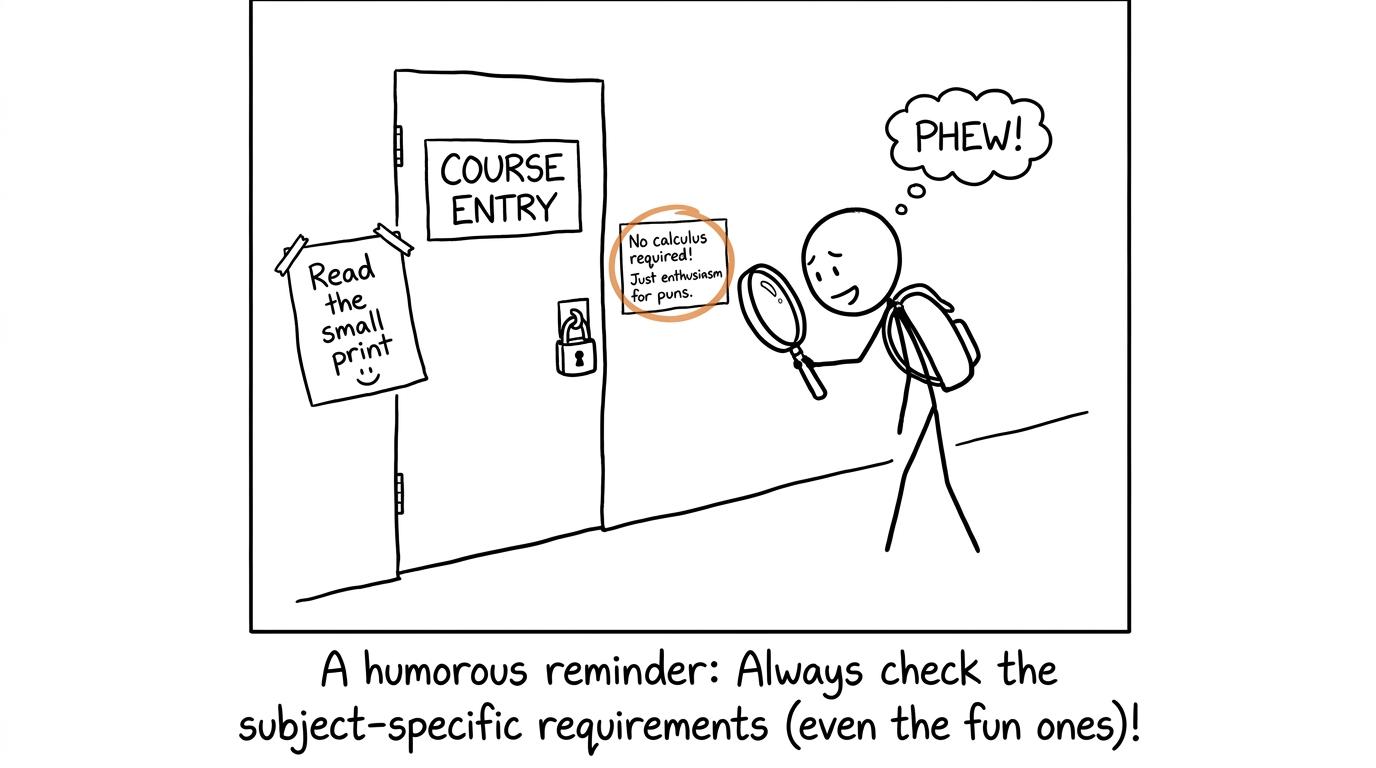 A student uses a magnifying glass to read the small print beside a course-entry door
What to do before results day
You cannot control an admissions policy, but you can control how clearly you prepare for it.
Record the conditions for every choice
Write down the general requirements and the subject requirements for your first-choice provider and at least one alternative. Include English and maths conditions rather than recording only the subjects you hope to take.
Protect the grades that affect several options
English and maths often matter beyond one course. If maths needs attention, diagnose specific weak topics instead of repeatedly reading notes. MathsGenie’s guide to when you should start GCSE past papers explains how to move from topic practice to timed papers without starting too late or using papers before you are ready.
With a month remaining, follow a structured one-month GCSE maths revision plan. Nearer the exams, Edexcel GCSE Maths predicted papers can provide fresh practice for Edexcel students. Predicted papers should complement official past papers, not replace them.
Prepare a sensible alternative
A backup is not a prediction of failure. It is a way to make results day calmer. Your alternative might be another provider with different entry criteria, a related humanities course or a mixed A Level and vocational programme. Check that it still supports any university, apprenticeship or career direction you are considering.
Common mistakes when judging sixth-form eligibility
Assuming every sixth form uses the same threshold
There is no single national grade requirement for A Level History. Grade 666 is common, but published conditions vary.
Checking only the History grade
You may satisfy the subject requirement while missing the general requirement or a condition attached to another A Level.
Treating a minimum grade as an automatic place
Meeting the academic threshold makes you eligible under that rule. It may not guarantee admission if there are other published conditions, limited places or timetable constraints.
Relying on outdated information
Use requirements for your intended entry year. Admissions policies and course offers can change.
Neglecting maths because you plan to study humanities
Maths may still be part of the provider’s general entry criteria. It can also preserve options for courses such as Economics, Psychology or certain university programmes.
Revising without analysing mistakes
Completing paper after paper is less useful if the same errors survive. Sit a paper, mark it, identify the lost skills and return to focused practice. Mark schemes and video solutions are tools for deciding what to do next, not merely for calculating a score.
A grade is a threshold, not a verdict
A grade 666 in GCSE History is a good result and is enough for A Level History at many sixth forms and colleges. The honest qualification is that your chosen provider sets the rule. Check its current general admissions criteria, History requirement, English and maths conditions, and the requirements for every other course in your programme.
Then put your energy where it can still change the outcome. Use MathsGenie’s free GCSE maths revision resources to identify weak topics, learn through revision lessons and practise with exam questions. Build confidence through mini tests, then use past papers, predicted papers, mark schemes and video solutions to turn mistakes into reliable marks.
Your History grade may already be on course to open the right door. Strong, organised maths revision can help ensure the rest of your GCSE profile opens it too.