GCSE Arabic Discord Server: Is It Worth Joining?
GCSE Arabic Discord server advice covering realistic benefits, online safety, reliable feedback and a balanced plan for Arabic and maths revision.
Revision can feel strangely lonely. You may understand Arabic at home but feel unsure about formal writing, or have nobody available when a listening question makes no sense. A GCSE Arabic Discord server can help by providing conversation, encouragement and quick contact with other learners. But it should be a supporting tool, not your teacher, specification or main source of exam advice.
The short answer is this: a well-moderated community may be worth joining if it gives you purposeful practice without consuming your revision time. Leave or mute it if unreliable answers, unsafe interactions or constant notifications outweigh the benefits.
A quick checklist before joining
A useful subject community should have:
- clear rules and active moderators
- separate channels for speaking, writing, vocabulary and exam questions
- members who distinguish personal opinions from verified exam guidance
- no pressure to share your real name, school, location or private accounts
- respectful treatment of different dialects and levels of fluency
- a culture of attempting work before requesting help
- enough useful activity to justify the time you spend there
Most importantly, it should fit around a proper revision plan. If Arabic chat starts displacing maths practice, use the GCSE Maths revision hub to restore some structure.
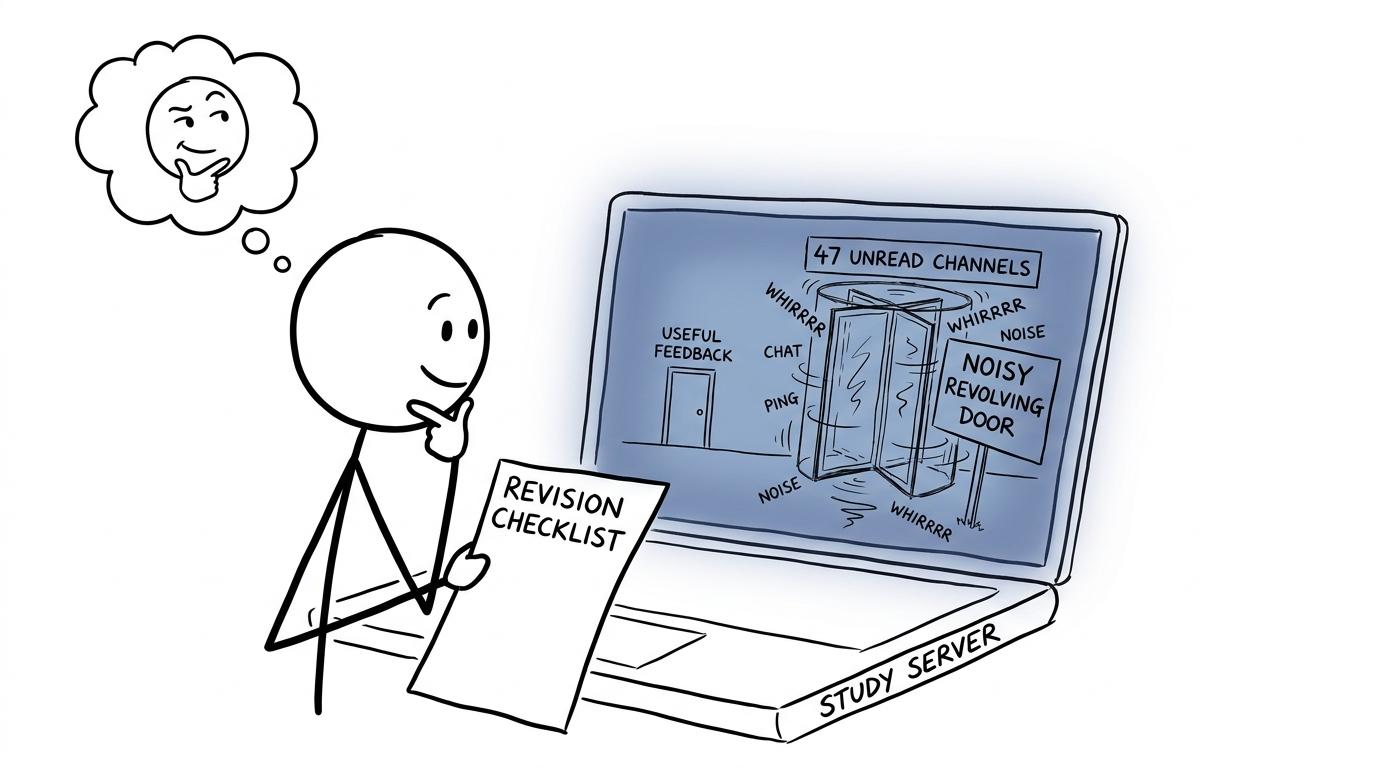 A student choosing between useful feedback and too many unread study channels
What a GCSE Arabic online community can realistically offer
Online communities are strongest where textbooks are weakest: interaction. They can make it easier to ask a small question, encounter unfamiliar language and practise producing Arabic for a real reader.
More frequent contact with Arabic
Reading messages, following topic discussions and joining suitable voice sessions can increase your exposure to Arabic. That matters because language skills improve through repeated use, not merely through recognising vocabulary on a page.
The word suitable matters. GCSE Arabic generally assesses Modern Standard Arabic, while community conversations may include regional dialects, slang and informal spellings. Those varieties have genuine cultural value, but you must know whether you are practising natural conversation or preparing an examination response.
A good community labels that difference. A poor one treats every form of Arabic as interchangeable.
Feedback and alternative explanations
Another learner may notice that your response is unclear, too repetitive or in the wrong register. They may also explain a phrase in language that feels more accessible than a textbook explanation.
Treat this as preliminary feedback. Anonymous members are not automatically qualified teachers or examiners, and a confident answer can still be wrong. If advice concerns permitted resources, task requirements or how marks are awarded, check it against your current specification, your teacher and official assessment materials.
This is particularly important for Pearson Edexcel GCSE Arabic. Its qualification assesses listening, speaking, reading and writing, with each skill contributing 25%25\%25%. Candidates enter Foundation or Higher tier across the papers, and dictionaries are not permitted in the assessments, including speaking preparation. Community activity should therefore support all four skills rather than turning revision into an endless vocabulary chat.
Motivation without isolation
A server can make an uncommon GCSE subject feel less isolated. Seeing other students revise may provide a useful nudge, while a scheduled discussion can create accountability.
Yet visible activity is not the same as progress. Reading hundreds of messages feels busy because your attention is occupied. The examination asks you to understand and produce language independently. The strongest communities send you back to the work: attempt, receive feedback, correct and repeat.
That principle also applies to maths. MathsGenie's guide to turning notes into active recall explains why retrieving knowledge is more valuable than repeatedly looking at it.
What a server cannot replace
Discord cannot reliably replace a teacher who knows your course, a current specification or properly marked exam practice.
It is especially weak at judging:
- whether an answer would receive a particular mark
- whether advice applies to Foundation or Higher tier
- how your speaking performance sounds across a complete assessment
- whether vocabulary is appropriate for Modern Standard Arabic and the task's register
- which topics you personally need to prioritise
A shared model answer may also be unsuitable for memorisation. It could contain mistakes, exceed your natural level or fail to answer the precise task. Worse, memorising impressive paragraphs can conceal gaps that become obvious when the examination changes the context.
Use community feedback to create questions, not unquestionable conclusions. Ask, “What should I verify?” rather than, “What can I copy?”
The risks of relying on Discord too much
Unreliable exam advice
Servers mix students from different schools, qualifications and stages of revision. Someone may remember an old rule, confuse an internal school assessment with the final examination or describe a different language specification.
Before accepting an exam claim, apply three checks:
- Does it match your exact exam board and current specification?
- Can your teacher or an official mark scheme confirm it?
- Does it apply to your tier and assessment component?
The same discipline protects maths marks. When using Edexcel GCSE Maths past papers, compare your work with the mark scheme and available solutions rather than relying on somebody's recollection of a method.
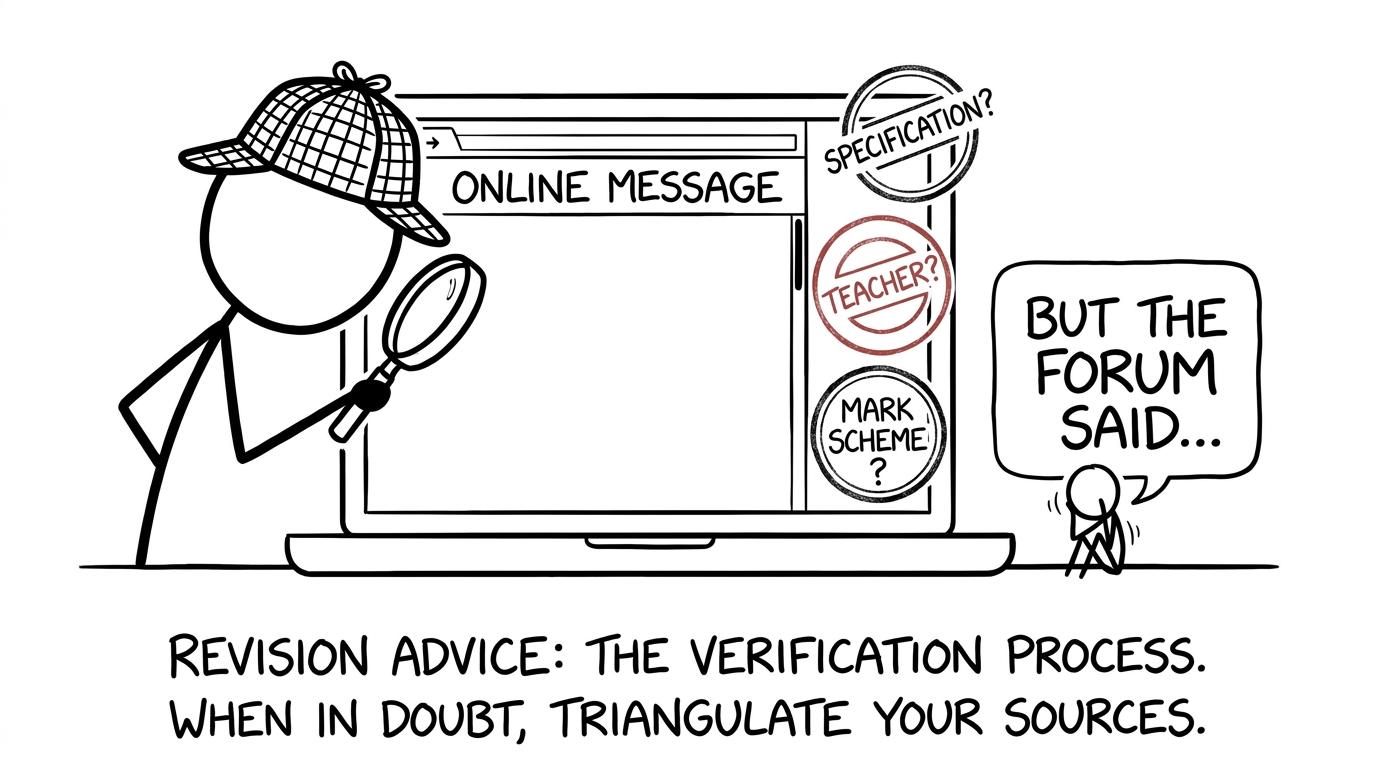 A student detective checking online revision advice against reliable sources
Privacy and safeguarding
Discord generally requires users to be at least 131313, although applicable rules and account features can vary. GCSE students should review the current terms and safety settings with a parent, carer or trusted adult before joining a public community.
Use a username that does not reveal your identity. Do not share your school, timetable, location, phone number, personal photographs or examination candidate details. Be cautious about unsolicited direct messages, files, shortened links and invitations to private calls.
Discord provides privacy controls, content filtering, blocking and reporting tools, but settings and defaults can change. Review them rather than assuming they are already right for you. Restrict direct messages and friend requests where appropriate, enable two-factor authentication, and report concerning behaviour to the platform and a trusted adult. If moderators ignore harassment or unsafe conduct, leave.
Distraction disguised as revision
A server can turn one question into an hour of scrolling. Notifications create the feeling that something important is always happening elsewhere, even when the important work is already on your desk.
Set a narrow purpose before opening the app:
- ask one prepared question
- join one planned practice session
- review feedback on one response
- leave when the task is complete
For a repeatable routine, adapt MathsGenie's 20-minute GCSE revision routine. Use a short Arabic block for recall or production, then close Discord before starting maths.
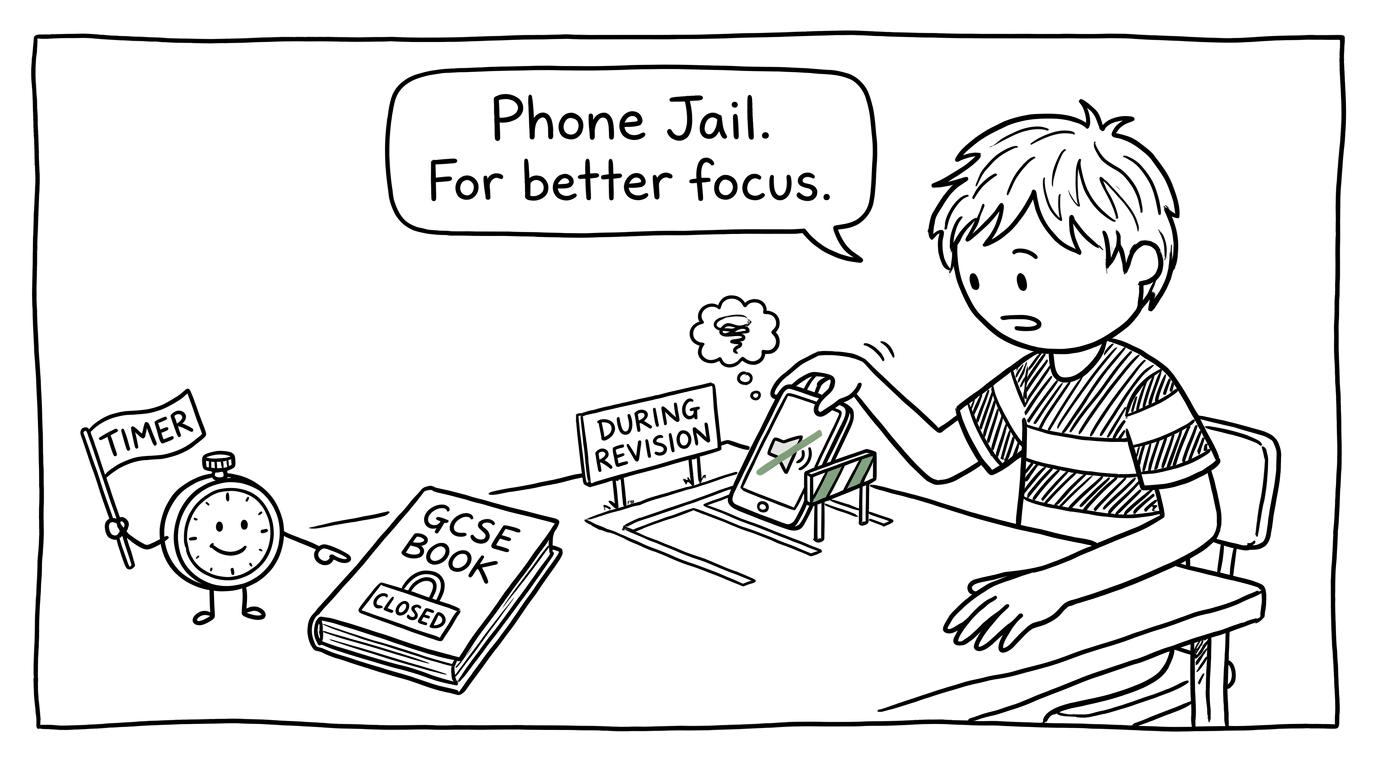 A phone parked behind a barrier while focused revision begins
How to use a GCSE Arabic Discord server well
Arrive with a specific question
“Help with writing” is difficult to answer. A focused request is better: ask whether a sentence communicates the intended meaning, whether the register is suitably formal or which part of a listening extract others found difficult.
Remove personal information from anything you upload. Do not share secure assessment material or copyrighted papers in ways that breach rules. If you are unsure whether material can be posted, do not post it.
Attempt first, then request feedback
Producing your own response exposes the real gap. Copying somebody else's polished answer only exposes their ability.
A useful cycle is:
- attempt the task without community help
- identify the exact uncertainty
- request limited feedback
- verify important advice
- correct the response yourself
- revisit the skill later without notes
This resembles the paper, mark, fix and retest approach in MathsGenie's guide to using GCSE past papers properly.
Protect the rest of your GCSE timetable
Arabic is one subject among several. A lively community can quietly take time from maths because conversation is easier to begin than a difficult problem set.
Plan by evidence. Use Arabic assessment feedback to identify a weak skill, then use maths papers or GCSE mini tests to locate topics losing marks. The guide to finding your weakest GCSE topics offers a practical way to turn mistakes into priorities.
If you are already behind, do not join five revision communities in the hope that organisation will appear automatically. Start with the GCSE revision catch-up checklist, choose a small number of resources and make each session produce visible work.
Common mistakes students make
Choosing a server by size alone
A large membership does not guarantee accurate advice, active moderation or useful discussion. Read the rules, observe the tone and inspect how moderators handle misinformation before participating.
Treating fluent speakers as automatic exam experts
A fluent speaker may offer excellent language insight while knowing little about the GCSE mark scheme. Language accuracy and assessment expertise overlap, but they are not identical.
Sharing too much information
A study context does not make strangers safe. Keep identifying information private, limit direct messages and involve a trusted adult if an interaction becomes uncomfortable.
Collecting resources instead of practising
Downloading vocabulary lists and model answers can feel productive. Improvement requires retrieval, writing, speaking, listening and correction. Save only resources you have a clear plan to use.
Letting Arabic discussion replace maths revision
Your GCSE timetable needs balance. Check your exam board and tier against MathsGenie's GCSE maths topics by board and tier, then reserve protected time for topic questions and timed papers.
The verdict: community is useful, dependence is not
A GCSE Arabic Discord server can be worth joining when it gives you safe interaction, purposeful language practice and questions to verify. It becomes less useful when social activity replaces independent work, anonymous claims replace official guidance or private conversations create safeguarding concerns.
Run a short trial. Mute unnecessary notifications, use the server only for defined tasks and review after a week whether it produced corrected work or merely more screen time. You are not obliged to remain in a community simply because it calls itself educational.
Then keep your wider revision grounded in evidence. Use MathsGenie as your free maths revision base: begin with revision lessons and practice questions, test recall through mini tests, build exam stamina with past papers, and use predicted papers, mark schemes and video solutions to identify the next gap. A community can encourage you. A disciplined revision system is what keeps you moving.