Drop GCSE Geography Mid-Year? A Clear Guide
Drop GCSE geography or keep going? Learn what the decision affects, how to judge your workload and what to ask your school before changing course.
There is a particular kind of worry that arrives halfway through a GCSE course. You are no longer choosing subjects on an options form, but you are not yet close enough to the final exam to see the finish line. Geography case studies are accumulating, maths needs more practice, and every unfinished task seems to compete for the same evening.
If you are wondering whether to drop GCSE Geography, the short answer is this: it may be possible, but you cannot normally make the change by yourself. Your school decides whether a subject can be removed from your timetable or exam entries. Before agreeing, staff will usually consider your progress, wellbeing, timetable, support already offered and future plans.
Dropping Geography does not directly change your GCSE Maths grade. Nor does it guarantee extra maths lessons or independent revision time. The practical consequences depend on what your school puts in its place.
The decision checklist
Before asking to leave the course, establish five things:
- whether Geography is optional within your school's curriculum;
- whether your difficulty is persistent or connected to one temporary problem;
- what subject support you have already tried;
- what would replace Geography on your timetable;
- whether the change could affect sixth-form, college or career plans.
Speak to your Geography teacher, form tutor or Head of Year first. A parent or carer should normally be involved, and the school's examinations officer may need to explain whether an entry has already been made or can still be withdrawn.
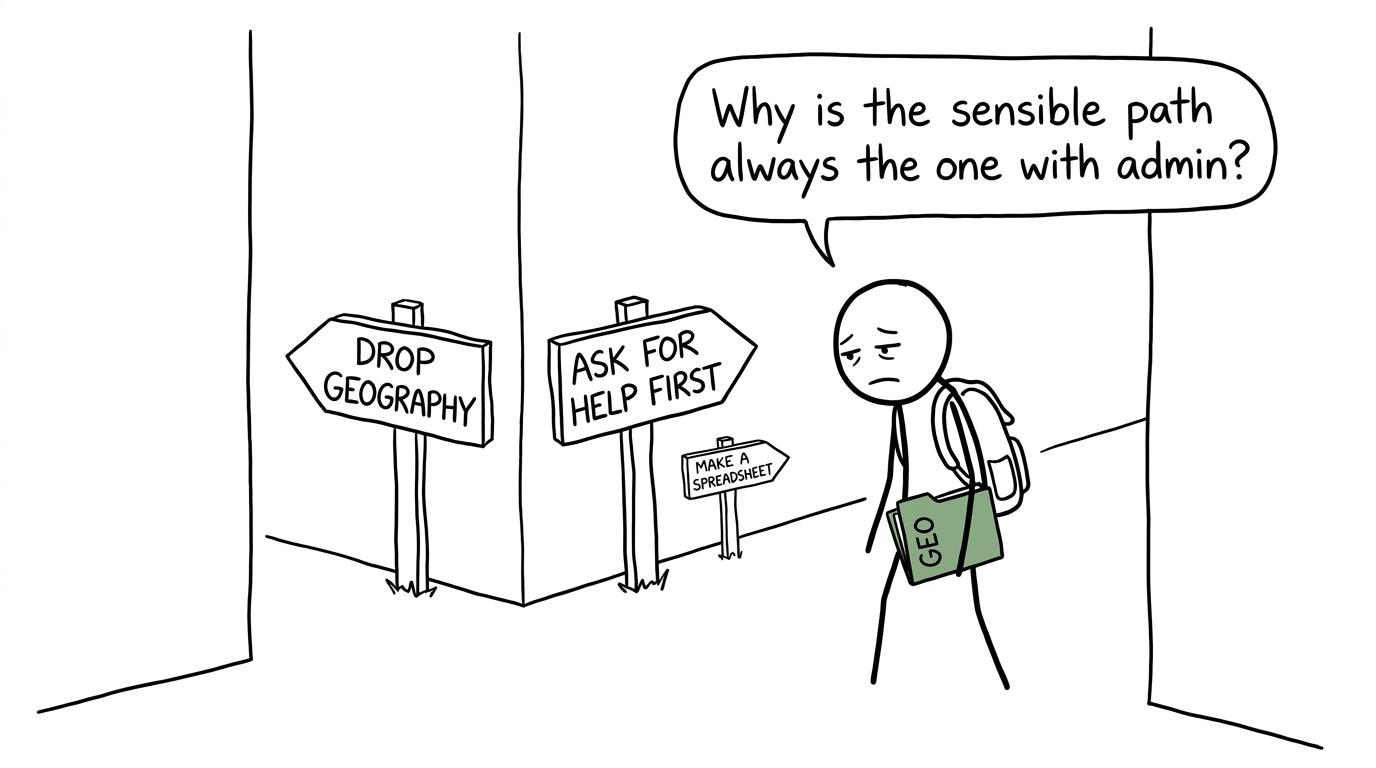 A student choosing between dropping Geography and asking for help first
Can you drop GCSE Geography mid-year?
In England, Geography is not a nationally compulsory GCSE for every pupil. Schools must provide a broad curriculum, but they can design option blocks and may require pupils to take Geography or History as part of their own programme. Arrangements elsewhere in the UK and between individual schools can differ.
That means there is no universal date or automatic right to leave the course. One school may approve a change following a meeting and documented interventions. Another may allow it only in exceptional pastoral, medical or educational circumstances. A school might also decide that changing subjects late would create a larger problem because too much of the replacement course has already been taught.
Exam administration matters too. Entry, amendment and withdrawal deadlines vary by exam series and awarding organisation. If you are in Year 11, ask your examinations officer for the current position rather than relying on a date found in an old forum post.
A request is more likely to receive careful consideration when it explains:
- the precise difficulty you are experiencing;
- how long it has continued;
- your assessment and mock evidence;
- which interventions have been attempted;
- why a reduced or changed programme would improve your education or wellbeing.
“I dislike the subject” describes a feeling. “I have attended intervention, completed the agreed catch-up work and still cannot access large parts of the course” describes evidence. Both matter, but the second gives your school something concrete to evaluate.
How to tell if you are actually in over your head
A difficult month is not the same as an unsuitable course. GCSE Geography contains physical and human geography, geographical skills, fieldwork-related knowledge, data interpretation and extended written responses. Feeling stretched when several of these meet at once can be normal.
The useful question is not simply, “Is this hard?” It is, “Is the gap closing when I receive appropriate support?”
Signs that the problem may be recoverable
You may need a better revision plan rather than a dropped subject if:
- your lower mark came from one missed unit or absence;
- you understand topics after they are retaught;
- your main difficulty is recalling case-study detail;
- unfinished work is caused by organisation rather than understanding;
- your assessments are improving, even slowly;
- stress is concentrated around one deadline or mock period.
In this situation, ask for a topic list, identify missing work and agree on a realistic catch-up period. Do not attempt to relearn the entire specification in one weekend.
The same diagnostic habit helps with maths. The MathsGenie guide to finding your weakest topics explains how to turn lost marks into a short, specific repair list rather than treating a whole subject as one enormous weakness.
Signs that a formal review is justified
A serious conversation with your school may be appropriate when several of these persist together:
- you remain unable to access core content after targeted teaching and intervention;
- your backlog continues to grow despite an agreed catch-up plan;
- Geography is significantly affecting attendance, health or wider learning;
- assessment evidence shows a sustained problem rather than one poor result;
- additional needs or personal circumstances are not being met adequately;
- keeping the subject is damaging progress across several essential subjects.
Wellbeing concerns should not be reduced to a revision calculation. Speak to your Head of Year, pastoral team, SENCO or another trusted adult if health, anxiety, bereavement, caring responsibilities or additional needs are involved.
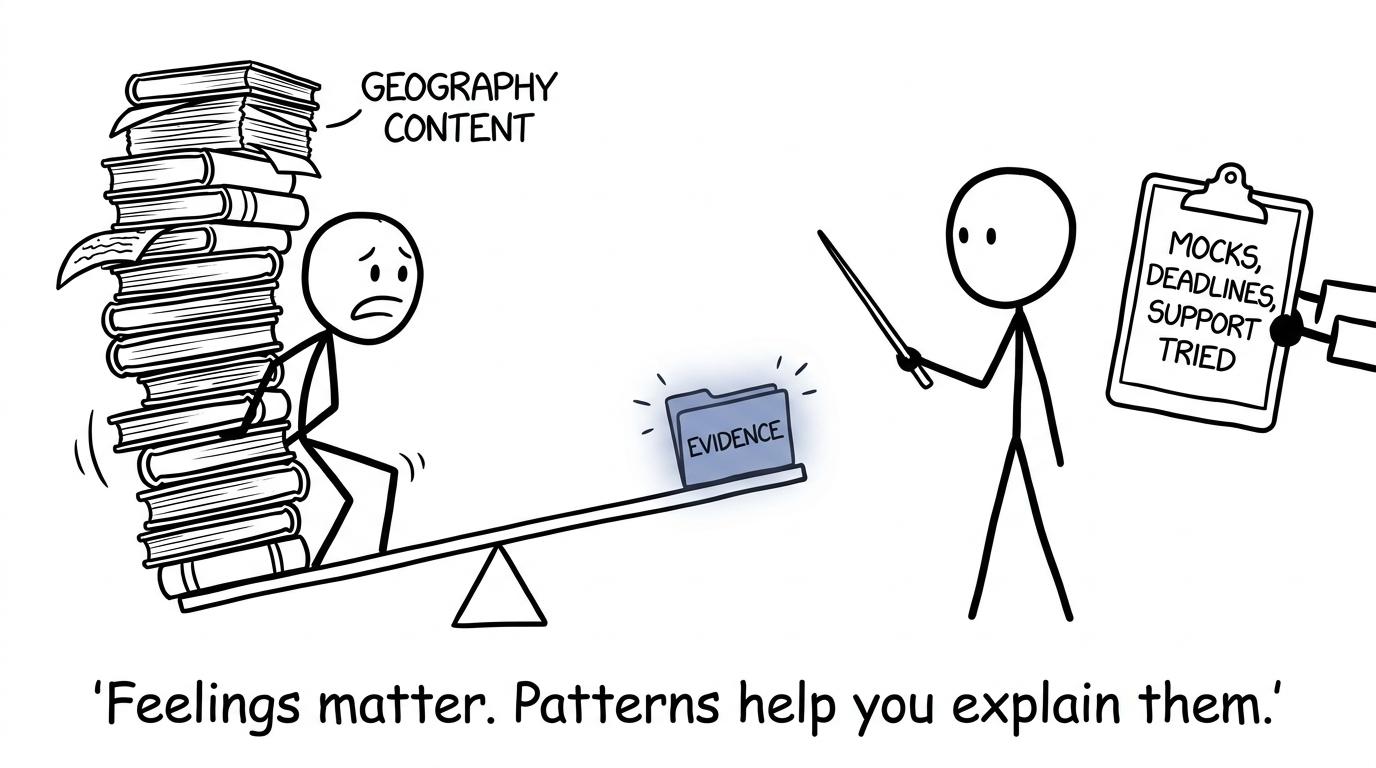 A student balancing Geography content against evidence from mocks and support
What dropping Geography may affect
Leaving a GCSE changes more than the number of books in your bag. Ask your school to explain each consequence before the decision is final.
Your qualifications and results
If your exam entry is withdrawn, you will not receive a GCSE grade for Geography. It would not normally appear as an awarded qualification on your final certificate, although your school will retain its own educational records.
Taking fewer qualifications can also matter if it leaves gaps within the set of subjects used in school performance measures. Those measures primarily evaluate schools, not whether an individual student is worthy of a college place, but your school may still need to consider them when approving curriculum changes.
Sixth-form and college choices
Dropping Geography does not automatically prevent you from entering sixth form, college or an apprenticeship. Most courses focus particularly on English and maths alongside their own entry requirements.
However, providers set their own rules. A sixth form may expect a particular GCSE grade before allowing A Level Geography, while another may consider your broader results. If Geography might be part of your post-16 plan, check the published requirements and speak directly to the provider before leaving the GCSE.
Your timetable
Do not assume the Geography lessons will become unrestricted revision periods. Your school remains responsible for your supervision and curriculum. You might receive supported study, literacy intervention, learning support or additional lessons, or you may remain in the room while completing alternative work.
Ask for a specific answer: Where will I be, who will supervise me, and what work will I complete?
Your GCSE Maths preparation
Dropping Geography has no direct effect on your maths tier, exam board, papers or grade. It only helps maths if the replacement time is deliberately used and your school agrees to that arrangement.
If extra supported revision is available, begin with the GCSE Maths revision hub, where you can select Edexcel, AQA, OCR, Eduqas, WJEC or CCEA resources. Students taking AQA can move directly to AQA GCSE Maths past papers for timed practice and mark schemes.
What dropping the subject does not do
Dropping Geography does not:
- remove the need to follow your school's approval process;
- guarantee a higher grade in maths or English;
- automatically create free periods;
- prove that you have failed;
- solve poor organisation across every subject;
- automatically block university or employment routes;
- allow you to ignore work while a decision is pending.
It also does not mean that taking Geography was a mistake. Decisions made with the information available in Year 9 can reasonably need reviewing later. The aim is not to defend an old choice at any cost. It is to make the best educational decision with the evidence available now.
Test the alternative before making it permanent
If there is no immediate health or safeguarding reason to change course, ask whether your school can set a short review period. This might include targeted intervention, reduced catch-up priorities and a clear date for reassessment.
Keep a simple record of:
- assessment results;
- missing topics or tasks;
- support attended;
- deadlines met or missed;
- how the workload affects other subjects;
- whether your understanding improves after intervention.
For maths, use the same period to test whether additional revision time would genuinely be productive. The twenty-minute maths revision routine is short enough to repeat consistently. If a longer plan is needed, use the GCSE maths revision timetable guide to assign each session a clear purpose.
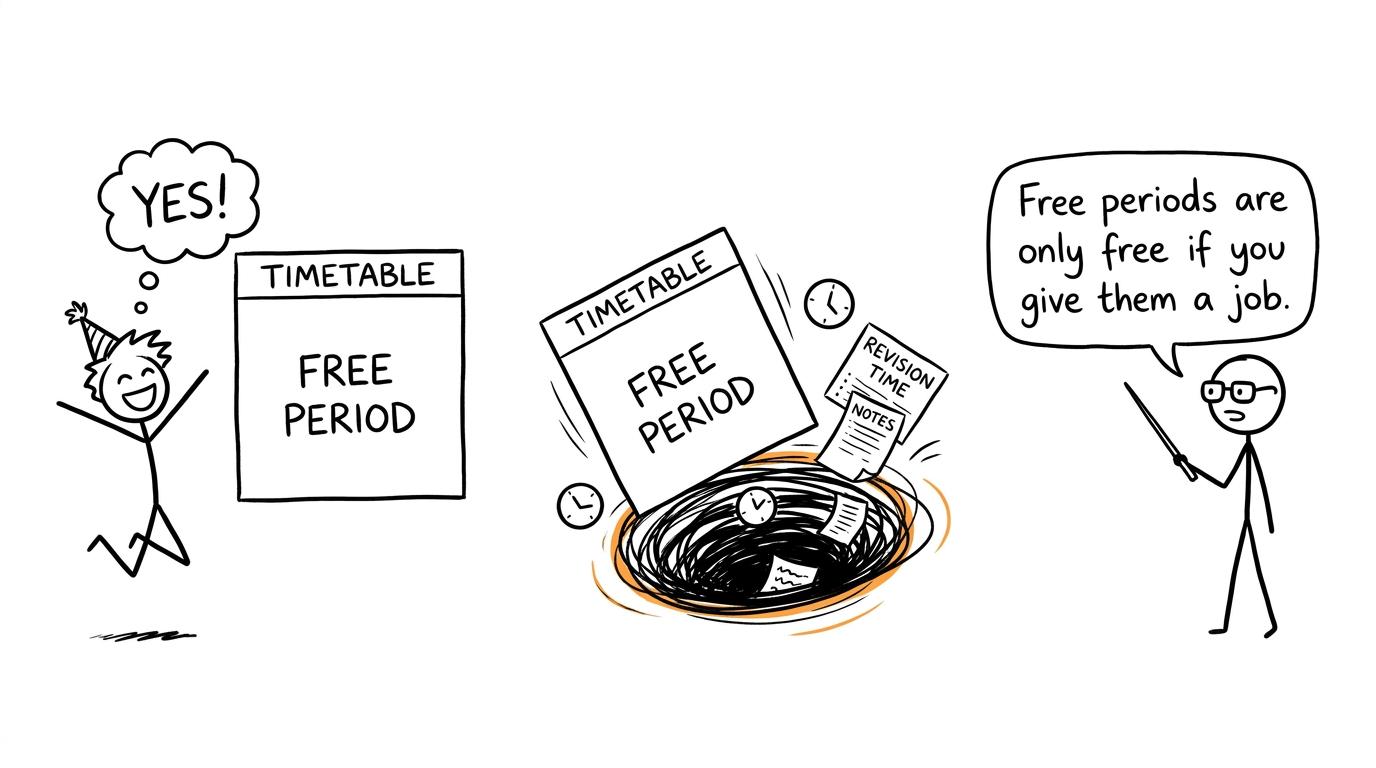 An empty timetable square turning into a revision-time black hole
Common mistakes when deciding whether to drop GCSE Geography
Deciding after one disappointing mock
A mock is evidence, not a verdict. Review whether marks were lost through missing knowledge, weak extended answers, poor timing or misunderstood command words. Different problems need different solutions.
Comparing your workload with someone else's
Another student may have different options, support needs, targets and responsibilities. The relevant comparison is between your current position and what happens after appropriate support.
Assuming all saved time will go to maths
Unplanned time tends to disappear. Before making the change, decide what each replacement lesson would contain. MathsGenie's one-month GCSE maths revision plan can help turn available time into topic practice, mini tests and paper review.
Ignoring future entry requirements
Do not rely on what a friend says a sixth form requires. Check the provider's current admissions information and ask whether leaving Geography changes any route you are considering.
Stopping work before approval
Continue attending lessons and completing reasonable work until your school confirms a decision. Quietly disengaging can weaken your evidence that you have tried the available support.
Treating predicted papers as a substitute for diagnosis
More time does not help if it is spent repeating comfortable work. Begin with a mini test or past paper, mark it carefully and repair the exact topics costing marks. The guide to starting GCSE past papers at the right time explains how to move from diagnosis to timed practice.
Make the next conversation specific
Go into your meeting with three questions:
- Is Geography compulsory within my school's programme?
- What support can we test before making a final change?
- If I leave, exactly what replaces the subject and how could it affect my next step?
The strongest decision may be to stay with better support. It may be to leave because the evidence shows that your current programme is no longer appropriate. Either way, the goal is clarity rather than escape.
If additional maths revision becomes part of the plan, give that time a structure. Start with the free MathsGenie GCSE Maths resources, use revision lessons and practice questions to repair specific gaps, then build confidence with mini tests, past papers, predicted papers, mark schemes and video solutions. A changed timetable only creates an opportunity. What you repeatedly do with it is what improves your marks.