Question 14
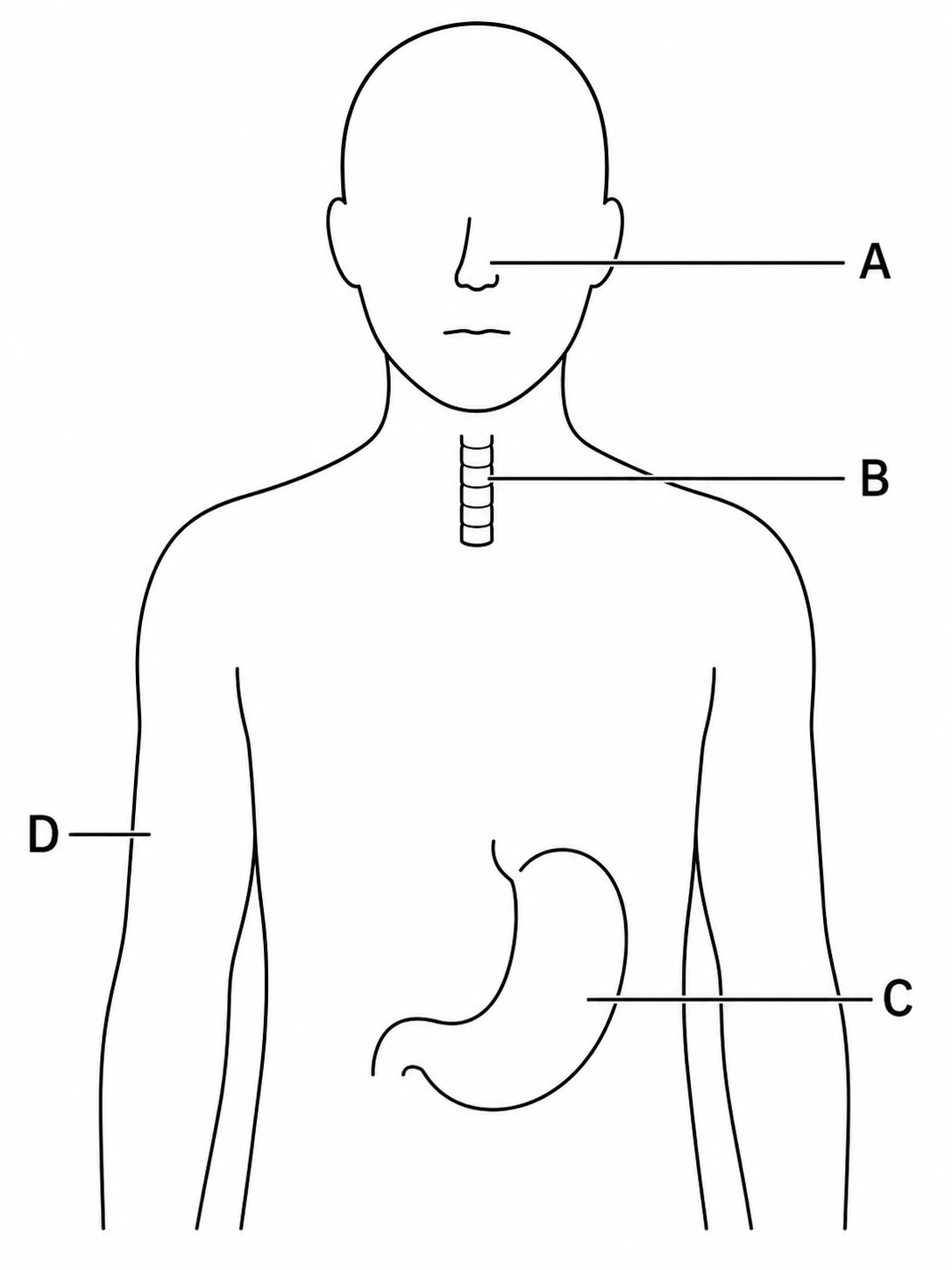
FThe figure shows four places in the human body where pathogens are stopped from getting inside.
Figure: Four places in the human body where non-specific defences stop pathogens getting inside
a.[1]
Name the part of the body labelled C.
b.[1]
Give one way in which the part labelled D defends the body against pathogens.
c.[2]
Describe how the part labelled A stops pathogens in the air reaching the lungs.
d.[1]
These defences are described as non-specific. Give the meaning of non-specific.
3.1 Communicable diseases Questions
176 exam-style questions on AQA GCSE Biology 3.1 Communicable diseases, covering 3.1.1 Communicable (infectious) diseases, 3.1.2 Viral diseases, 3.1.3 Bacterial diseases, 3.1.4 Fungal diseases, 3.1.5 Protist diseases, 3.1.6 Human defence systems, 3.1.7 Vaccination, 3.1.8 Antibiotics and painkillers, and 3.1.9 Discovery and development of drugs. Each one has a worked solution and a mark scheme showing where the marks go.