What to Eat Before GCSE Spanish Exam: Food Guide
What to eat before GCSE Spanish exam day: choose familiar food, hydrate sensibly and avoid energy-drink gambles for steadier focus and comfort.
The strange thing about an exam morning is that ordinary decisions suddenly feel important. Toast or cereal? Water or coffee? Eat despite the nerves, or leave breakfast untouched?
If you are wondering what to eat before GCSE Spanish exam day, the useful answer is simple: choose a familiar meal containing a source of carbohydrate, some protein and, where practical, fruit or vegetables. Drink water normally, avoid experimenting with unfamiliar food, and do not rely on an energy drink.
There is no breakfast that can insert vocabulary into your memory. Food has a quieter job. It should help you arrive comfortably fed and hydrated, without feeling excessively hungry, heavy, jittery or distracted. That matters in a Spanish listening paper, where concentration can disappear with a single missed phrase, and in reading and writing papers that require sustained attention.
Your quick pre-exam food checklist
Before leaving for your exam, aim to:
- eat a familiar breakfast or meal rather than testing a new routine
- include carbohydrate for energy, such as porridge, wholegrain toast, cereal, rice, pasta or potatoes
- add protein, such as yoghurt, milk, eggs, beans, cheese, tofu or nut butter
- drink water normally instead of consuming a large amount immediately before the exam
- avoid using high-caffeine energy drinks as a substitute for food or sleep
- allow enough time to eat without rushing
- take an permitted water bottle if your school and exam arrangements allow it
- follow your established medical or dietary advice if you have allergies, diabetes, coeliac disease or another relevant condition
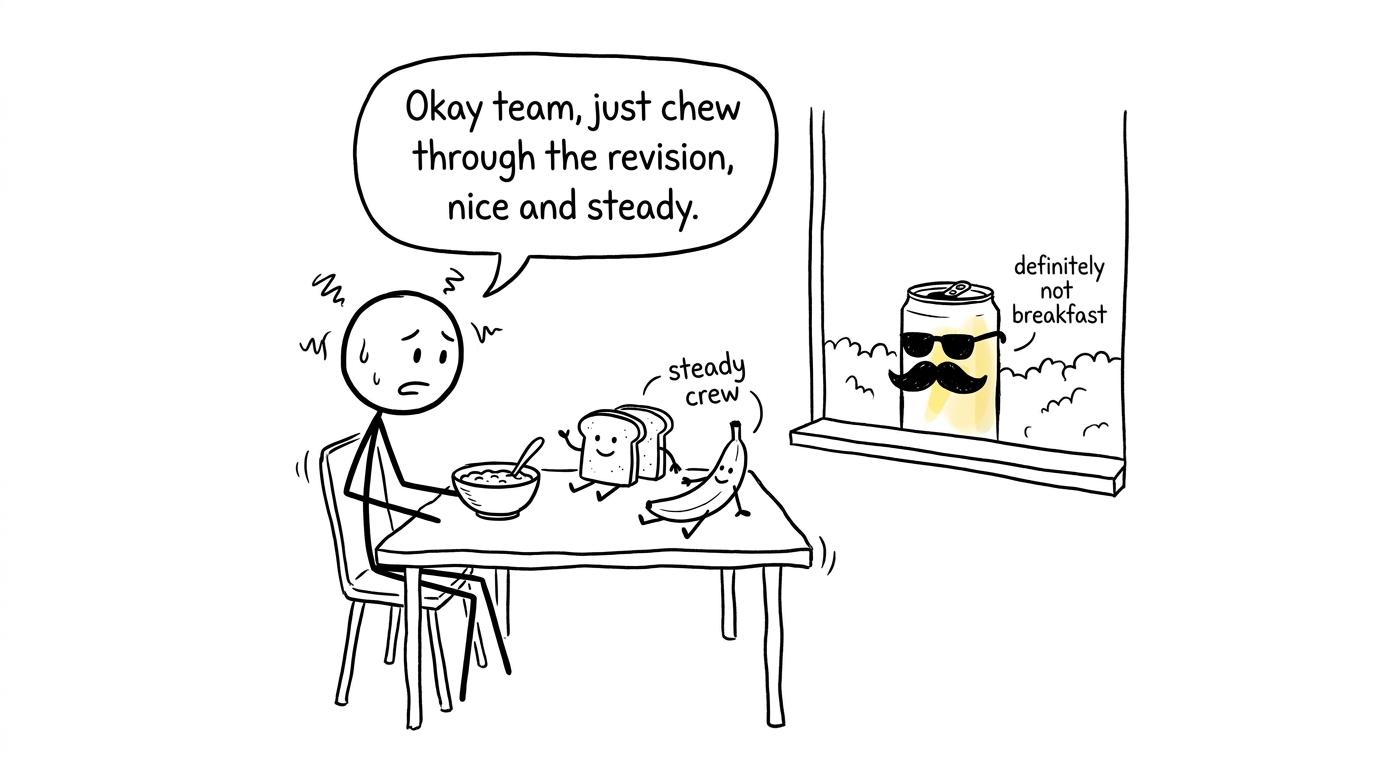 A GCSE breakfast team keeps an energy drink imposter outside
What actually supports focus and energy?
Exam-day nutrition is often presented as a hunt for a special brain food. That makes the decision sound more mysterious than it is.
Your brain needs energy, but focus also depends on sleep, preparation, stress, hydration and physical comfort. A balanced meal cannot rescue an all-night revision session. Equally, a sensible breakfast can remove avoidable distractions such as hunger, thirst or an unsettled stomach.
Current UK nutrition guidance for teenagers encourages regular meals, wholegrain foods and varied sources of nutrients. Water and milk are generally recommended as everyday drinks, while high-caffeine energy drinks are not recommended for children. This is not a promise that one type of toast will raise your grade. It is a practical foundation for feeling ready to work.
Carbohydrate provides usable energy
Foods containing carbohydrate include bread, oats, breakfast cereal, fruit, rice, pasta and potatoes. A breakfast based on one of these foods gives your body an accessible source of energy after the overnight gap between meals.
Wholegrain or higher-fibre options can be useful because they tend to be more filling. However, exam morning is not the time to force down a food you dislike merely because it has a healthy reputation. Familiarity and comfort matter too.
Protein can make the meal more satisfying
Adding protein may help the meal feel more substantial. Straightforward options include:
- porridge made with milk or a fortified alternative
- toast with egg, cheese or nut butter
- cereal with milk and yoghurt
- beans on toast
- yoghurt with fruit and oats
- a sandwich containing cheese, egg, tuna, chicken, tofu or hummus
No single combination is compulsory. The principle is to combine foods rather than depending on sweets, a sugary drink or one small piece of fruit when you know that will leave you hungry.
Hydration helps you avoid an unnecessary distraction
Thirst, headache and a dry mouth are not useful companions during a listening exam. Begin the day by drinking normally and have some water with your meal. If permitted, take a clear bottle into the exam according to your school’s instructions.
The goal is not to drink as much as possible. Drinking an unusually large amount just before entering the exam may leave you uncomfortable or needing the toilet. Steady, ordinary hydration is more sensible than a last-minute flood.
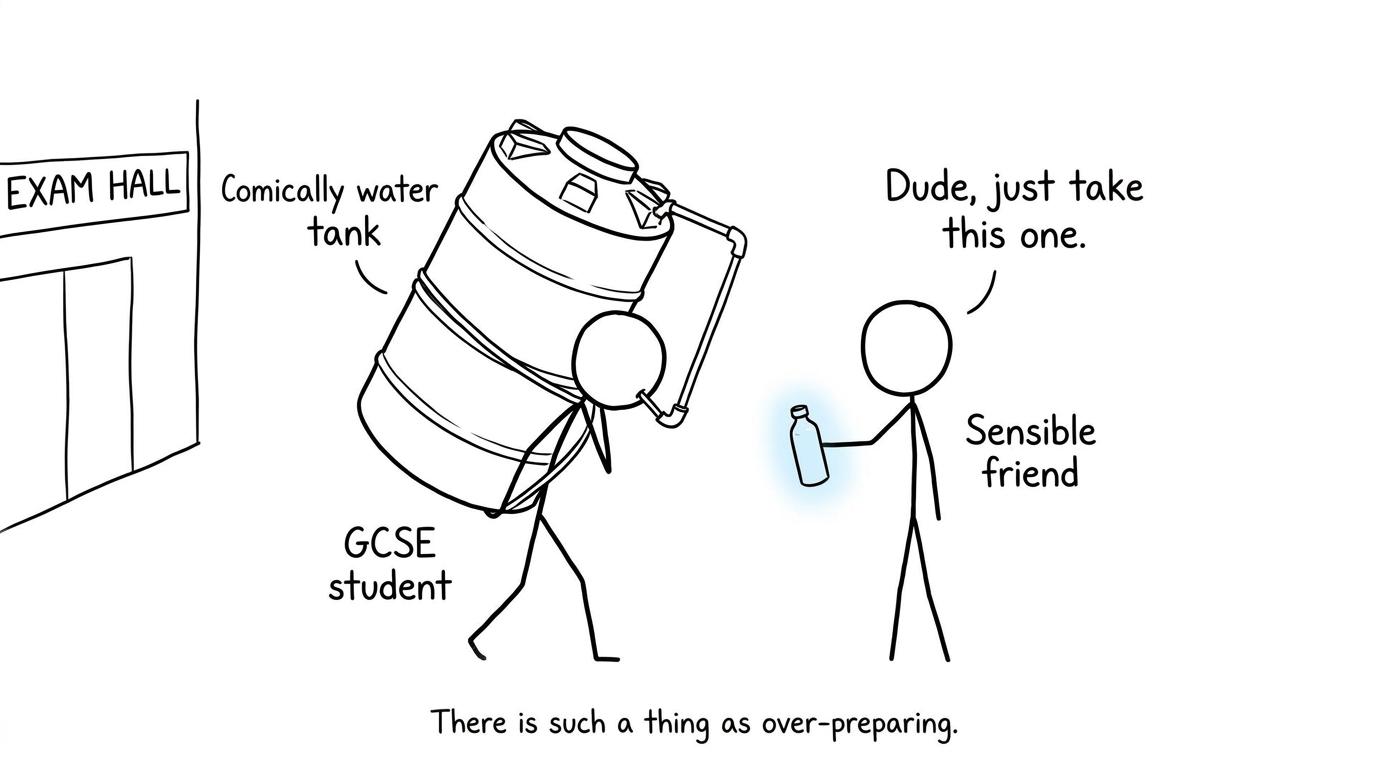 A sensible water bottle confronts an absurd exam-day water tank
Good breakfast choices before a morning Spanish exam
A good breakfast is one you can eat, tolerate and prepare without creating extra stress. Useful options include:
- porridge with banana and yoghurt
- wholegrain toast with eggs and a piece of fruit
- lower-sugar cereal with milk and fruit
- toast with peanut butter or another nut butter, if suitable for your allergies and school environment
- yoghurt with oats and berries
- beans on toast
- a breakfast wrap with egg or beans
If nerves reduce your appetite, a smaller meal may be more realistic. Yoghurt with a banana, toast with a little nut butter, or cereal with milk may feel easier than a large cooked breakfast. You could also divide breakfast into two modest parts, provided this fits your journey and school rules.
Liquid food can sometimes feel manageable, but be cautious with oversized smoothies containing unfamiliar ingredients. A drink that is very large, very sweet or unusually high in fibre may not be the calmest choice for your stomach.
What to eat before an afternoon exam
For an afternoon GCSE Spanish paper, breakfast still matters, but lunch becomes the final main meal before the exam.
Choose a normal lunch that you already know suits you. Examples include a sandwich or wrap with a protein filling, rice with vegetables and chicken or tofu, pasta with a familiar sauce, or a jacket potato with beans or cheese. Add fruit or vegetables where practical and drink water.
Try not to turn lunch into a celebration-sized meal simply because an exam is approaching. Very large portions can leave some people feeling uncomfortably full or sleepy. At the other extreme, skipping lunch because you feel nervous may leave hunger competing with the recording in a listening paper.
Timing depends on your school day and your own digestion. The best guide is your established routine: eat early enough to feel settled, but not so early that you become hungry before the paper begins.
Should you have a snack before GCSE Spanish?
A snack may help when there is a long gap between your previous meal and the exam. It is optional, not a requirement.
Portable choices include a banana, an apple, yoghurt, oatcakes, wholegrain crackers, a small sandwich or a suitable cereal bar. Nuts can also be filling, but check allergies and your school’s rules before bringing them onto the premises.
Eat the snack during an authorised break or before entering the exam area. Food will normally not be allowed at an examination desk unless an approved medical arrangement applies.
Why energy drinks are a poor exam strategy
The promise on the can is attractive: instant energy, sharper attention, one final push. The trade-off is less appealing.
High-caffeine energy drinks can contribute to jitteriness, anxiety, headaches, disrupted sleep and a racing heartbeat. UK government guidance requires drinks containing high levels of caffeine to carry warnings stating that they are not recommended for children. Teenagers are better served by food, water, sleep and preparation than by treating caffeine as emergency revision equipment.
If you regularly drink tea or coffee, exam morning is not the ideal time to suddenly consume much more than usual. Nor is it wise to start using caffeine for the first time. Stick close to your normal routine and choose water as the dependable option.
The same principle applies across exam season. A late energy drink used for extra revision may interfere with sleep, leaving tomorrow’s attention worse rather than better. A calm plan such as the GCSE night-before revision checklist is usually more valuable than another exhausted hour at a desk.
Make the decision before exam morning
Small decisions feel larger under pressure. That is why the best exam breakfast is often decided the evening before.
Check that the food is available. Prepare anything that can be prepared safely in advance. Pack your equipment and confirm when you need to leave. The purpose is not perfect organisation; it is fewer opportunities for panic.
This idea transfers directly to maths revision. A prepared student does not wake up and decide randomly between algebra, geometry and a full paper. They follow a plan. MathsGenie’s GCSE maths revision timetable and one-month GCSE revision plan help turn that principle into a repeatable routine.
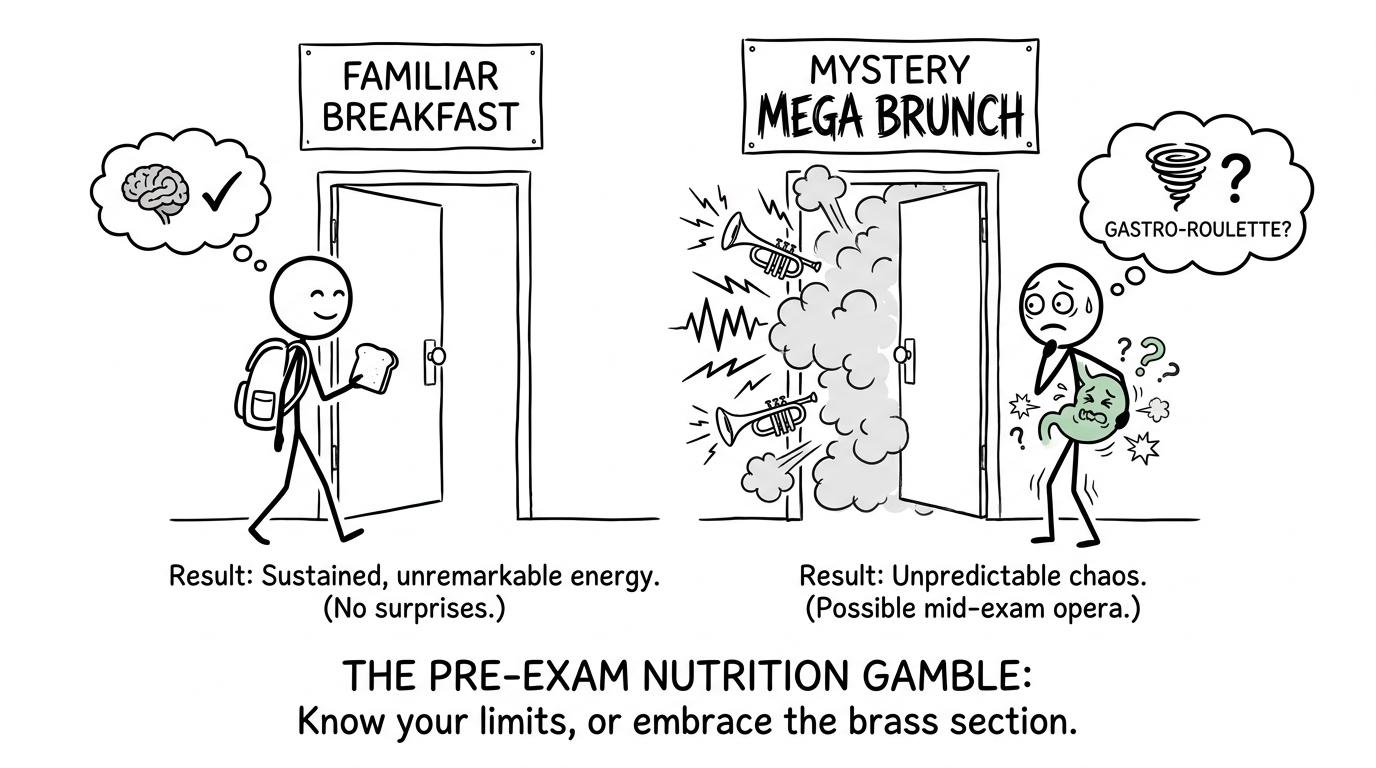 A familiar breakfast door looks calmer than the mystery mega brunch
Common mistakes before a GCSE Spanish exam
Skipping food without considering the consequences
Some students comfortably eat later in the day, while others quickly become hungry. Do not copy somebody else’s routine without thinking about how you normally feel. If nerves make eating difficult, choose a smaller familiar option rather than assuming nothing is the only choice.
Trying a supposedly perfect new breakfast
An unfamiliar protein shake, supplement or enormous high-fibre meal introduces uncertainty when you want predictability. Exam day is not a nutrition experiment. Choose foods your body already knows.
Eating too much immediately before the paper
More food does not produce more marks. A very large or rich meal can feel uncomfortable. Aim to feel satisfied rather than stuffed.
Replacing sleep with caffeine
Caffeine cannot reproduce the benefits of adequate sleep. It may also make existing nerves feel stronger. A structured revision schedule is a better defence against last-minute cramming; the guide to starting GCSE past papers can help you plan earlier.
Forgetting practical exam rules
Check what your school permits in the exam room. Follow instructions about clear water bottles, labels and food. If you need food, medication or glucose because of a medical condition, arrange this with your school in advance rather than improvising on the day.
Food supports performance, but preparation earns the marks
A sensible meal can help you feel ready. It cannot choose the correct Spanish tense, identify a distractor in a listening recording or build a convincing written response. Those skills come from deliberate practice.
The same is true in maths. Breakfast supports the student; revision builds the method. Use the free GCSE maths revision hub to choose your board and work through revision lessons and practice questions. Shorter Edexcel GCSE maths mini tests can build timed focus, while Edexcel predicted papers provide further exam-style practice with mark schemes and solutions.
So keep exam food ordinary. Eat something familiar and balanced, drink water sensibly and leave the energy-drink gamble alone. Then put your real effort where it changes grades: practise, mark, correct and repeat.
When your Spanish paper is finished and the next maths exam is approaching, return to MathsGenie. Use the free revision lessons to repair weak topics, practice questions and mini tests to build fluency, and past papers, predicted papers, mark schemes and video solutions to make the real exam feel familiar.