What to Eat Before GCSE English Literature Exam
What to eat before GCSE English Literature exam: balanced meal ideas, hydration tips and a calm routine for steady focus, recall and energy on the day.
The strange thing about an exam morning is that ordinary decisions suddenly feel important. Toast or cereal? Water or coffee? Eat now or wait? When your mind is already carrying quotations, themes and essay plans, breakfast can become one decision too many.
If you are searching for what to eat before GCSE English Literature exam, the short answer is simple: choose a familiar meal containing a starchy carbohydrate, some protein and a little fruit or vegetables, then drink water regularly. Porridge with fruit and yoghurt, eggs on wholemeal toast, or a low-sugar cereal with milk and a banana are all sensible options.
There is no food that can insert quotations into your memory. The aim is more modest and more useful: arrive comfortably fed, normally hydrated and free from the distraction of hunger, thirst or an upset stomach.
Your quick pre-exam food checklist
Before an English Literature paper, aim to:
- eat a normal, familiar meal rather than experimenting;
- include a starchy food such as oats, wholegrain bread, cereal, rice or potatoes;
- add protein such as eggs, yoghurt, milk, beans, tofu or nut butter;
- include fruit or vegetables if they suit your appetite;
- drink water during the morning rather than trying to catch up at the last minute;
- avoid relying on sweets, fizzy drinks or an energy drink as your main fuel;
- check your school's rules before taking any drink or food into the exam room;
- adjust the meal for allergies, intolerances and medical advice.
That checklist works for a morning English Literature paper, an afternoon exam and your GCSE maths papers. Your brain does not require a different breakfast for Shakespeare and simultaneous equations.
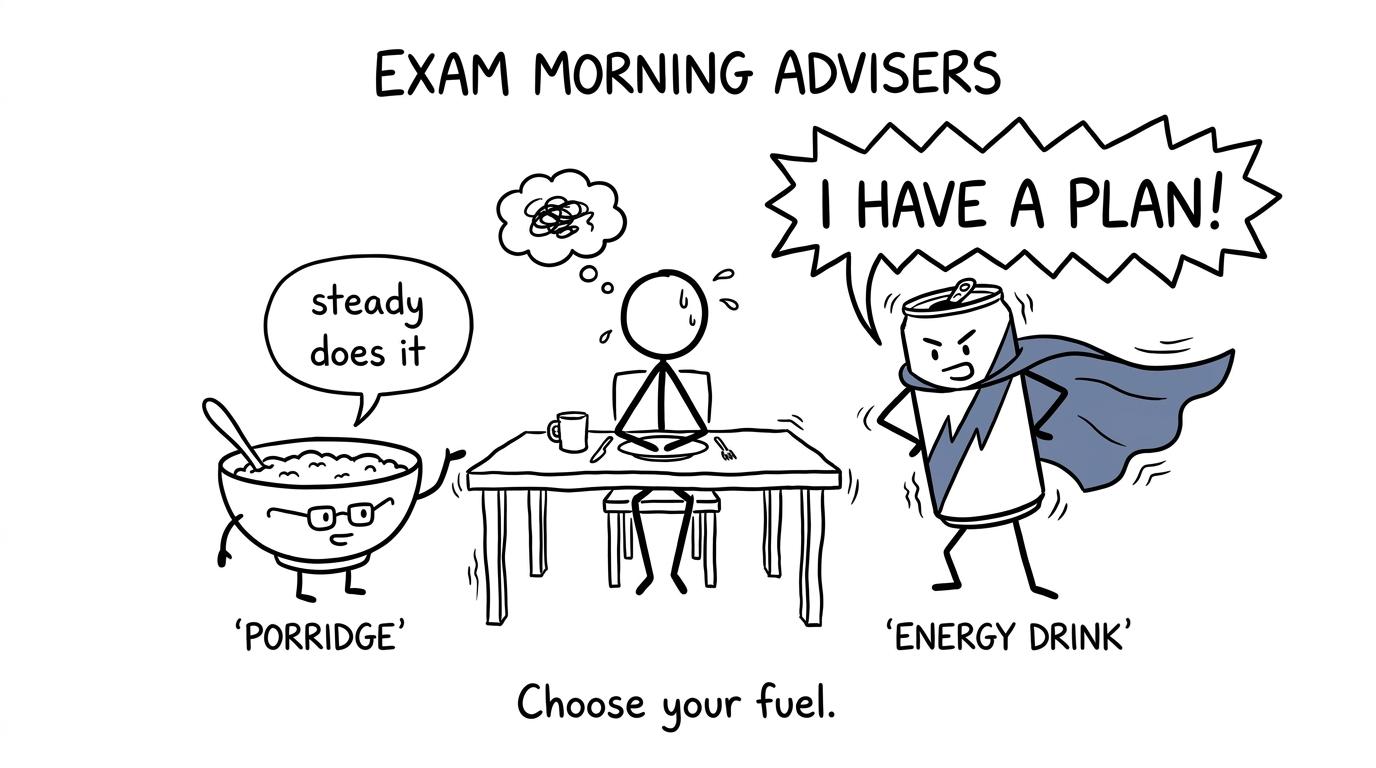 A bowl of porridge gives calm advice while an overconfident energy drink announces that it has a plan
What actually supports focus and steady energy?
Exam food is often discussed as though one ingredient can unlock exceptional concentration. In reality, the useful effects come from avoiding preventable problems.
A balanced meal can reduce distracting hunger. Regular hydration can help you avoid thirst and dehydration-related tiredness or headaches. Familiar food lowers the chance that your stomach becomes the most dramatic character in the room.
Start with a starchy carbohydrate
The NHS Eatwell approach recommends basing meals on starchy foods, choosing higher-fibre or wholegrain varieties where possible. Suitable pre-exam choices include:
- porridge or overnight oats;
- wholemeal toast, a bagel or a wrap;
- a lower-sugar wholegrain cereal;
- potatoes, rice or pasta before an afternoon paper.
Wholegrain choices are often digested more gradually than highly refined, sugary options. That does not make white toast forbidden, however. If nerves affect your stomach and plain toast is the food you can comfortably eat, it is better than chasing a theoretically perfect breakfast that you dislike.
Add protein for a more satisfying meal
Protein helps a meal feel substantial and can make hunger less likely to interrupt a long paper. Easy options include:
- eggs;
- milk or yoghurt;
- cheese;
- beans or lentils;
- tofu;
- nut or seed butter, where allergies are not a concern.
The practical pattern is carbohydrate plus protein. That could mean porridge made with milk, toast with eggs, yoghurt with oats, or beans on toast. None is compulsory, and vegetarian or vegan students have plenty of suitable alternatives.
Include fruit or vegetables without overcomplicating it
A banana with breakfast, berries on porridge, an apple beside toast or vegetables in an omelette can contribute to an ordinary balanced diet. But exam morning is not the time to force down a giant smoothie or an unfamiliar plate of vegetables because it sounds virtuous.
Good preparation is usually boring in the best sense. It is something your body already recognises.
Best meal ideas for a morning English Literature exam
Choose according to your appetite, dietary needs and what is available at home.
| If you want... | A sensible option |
|---|---|
| A warm breakfast | Porridge with milk or a fortified alternative, plus banana or berries |
| Something savoury | Eggs, tofu or lower-sugar baked beans on toast |
| A quick breakfast | Wholegrain cereal with milk and fruit |
| A portable option | A banana with yoghurt and toast or oatcakes |
| A lighter meal | Yoghurt with oats and fruit, or toast with a familiar topping |
| A vegan option | Porridge with fortified plant-based milk, fruit and seeds |
These are meal ideas, not performance guarantees. Portion size should reflect what you normally eat. A very large breakfast immediately before sitting down may leave you uncomfortable, while too little may allow hunger to arrive halfway through an essay.
If nerves suppress your appetite, divide breakfast into smaller parts. You might eat toast at home and have a banana or yoghurt later, provided this fits your journey and school arrangements.
What to eat before an afternoon exam
For an afternoon English Literature paper, breakfast still matters, but lunch becomes the final substantial meal before the exam. A useful lunch follows the same structure:
- a starchy carbohydrate;
- a source of protein;
- some fruit or vegetables;
- water.
Examples include a chicken, hummus, egg or tofu sandwich; rice with vegetables and beans; pasta with a familiar sauce and protein; or a jacket potato with beans or tuna.
Avoid turning lunch into a feast. A familiar, moderate meal is less likely to leave you feeling heavy. Equally, do not skip lunch because you are revising. Another rushed reading of your poetry notes is unlikely to compensate for spending the paper distracted by hunger.
The same principle applies when English and maths exams fall close together. Use the gap to eat and reset rather than extending revision until the next paper begins. MathsGenie's GCSE Maths night-before plan can help you finish preparation earlier, while the one-month GCSE maths revision plan reduces the need for frantic exam-day cramming.
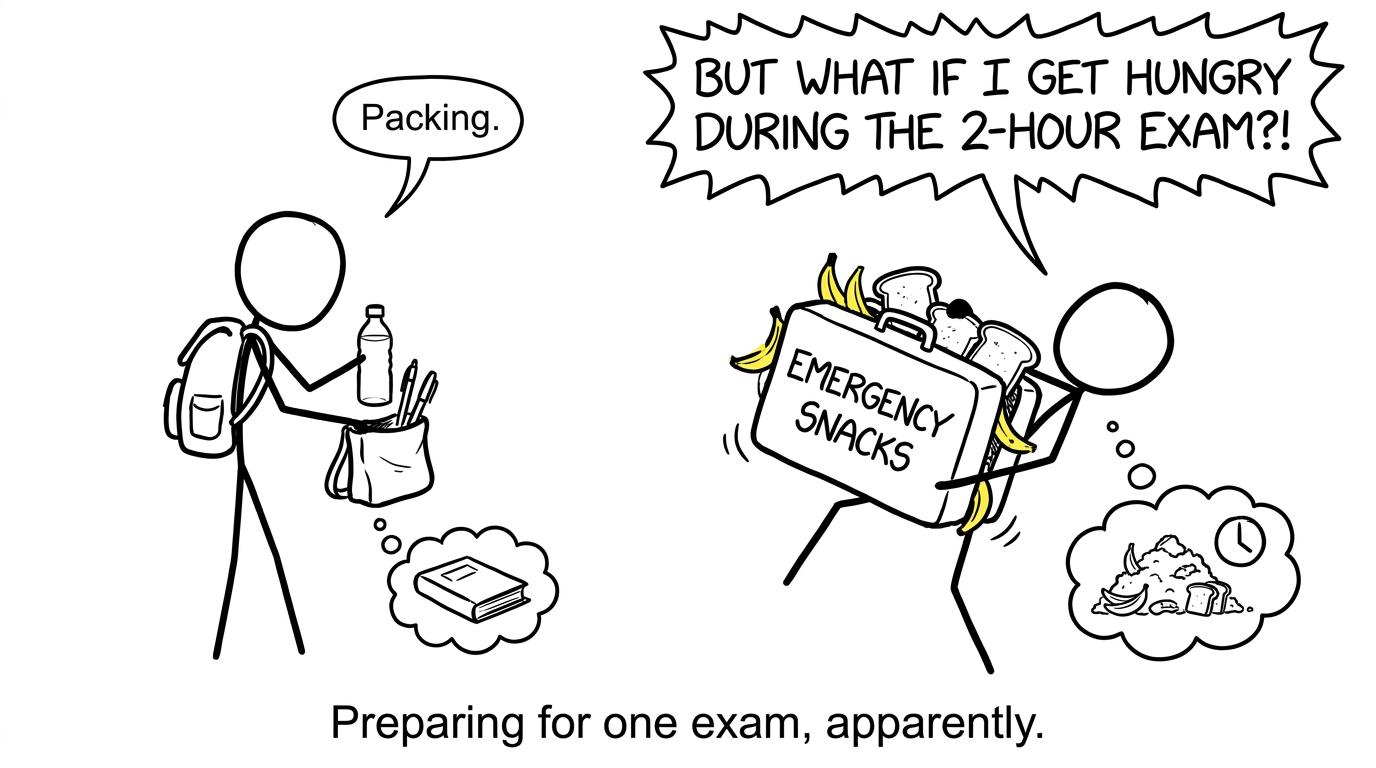 A student packs one water bottle while an enormous suitcase overflows with emergency toast and bananas
Hydration matters, but more is not always better
The NHS gives a general guide of six to eight cups or glasses of fluid a day, although individual needs vary with factors such as weather, activity and illness. Water is an easy choice before an exam. Milk and sugar-free drinks can also contribute to normal fluid intake.
The useful habit is to drink regularly across the day. Do not arrive dehydrated and rapidly consume a large bottle outside the exam hall. That may replace thirst with an urgent need for the toilet.
Current JCQ instructions allow food and drink in an examination room only at the head of centre's discretion. Where drinks are permitted, bottles must be transparent and labels removed. Individual schools can apply stricter arrangements, so follow your school's instructions rather than assuming food or a particular drink will be allowed.
If you have diabetes, severe allergies or another medical condition affecting food and drink, speak to your school or exams officer in advance. Follow your healthcare plan rather than general online advice.
Sugar, caffeine and energy drinks
A sweet food is not inherently disastrous, and fruit does not need to be avoided because it contains naturally occurring sugar. The concern is relying on sweets, sugary fizzy drinks or pastries as the entire meal. They may not keep you satisfied through a long paper.
Energy drinks are a particularly poor exam strategy for many teenagers. They can contain substantial caffeine and sugar, and may contribute to agitation, stomach discomfort or disrupted sleep. Feeling more stimulated is not always the same as thinking more clearly.
Caffeine affects people differently. If you do not normally drink coffee, exam morning is not the moment to start. If you regularly have tea or coffee, keep your routine moderate and familiar rather than using extra caffeine to compensate for too little sleep.
Sleep, breakfast and hydration work together. Food cannot fully repair a night of exhausted cramming. A calmer revision system helps: use the GCSE Maths revision hub for focused lessons and questions, or learn how to find your weakest GCSE topics instead of rereading everything.
A calm exam-morning routine
Food helps most when it is part of an organised morning rather than another source of pressure.
Prepare the night before
Choose breakfast, check that the ingredients are available and prepare anything portable. Pack your permitted equipment and confirm when and where the exam begins. This saves attention for the paper itself.
If a maths exam is approaching too, choose your board-specific practice in advance. MathsGenie provides Edexcel GCSE Maths past papers and AQA GCSE Maths past papers, with mark schemes and worked solutions where available.
Eat without revising at full intensity
Trying to memorise quotations while swallowing breakfast can make both tasks feel rushed. A brief glance at a small prompt sheet is one thing; launching into a complete practice essay over cereal is another.
Give yourself enough time to eat at a normal pace. Then make a calm final check of a few themes, quotations or essay reminders.
Bring only what your school permits
A transparent, unlabelled water bottle is commonly permitted, but check your school's candidate guidance. Do not assume snacks can enter the room. If food is allowed, JCQ instructions state that it should be free from packaging and placed in a transparent container.
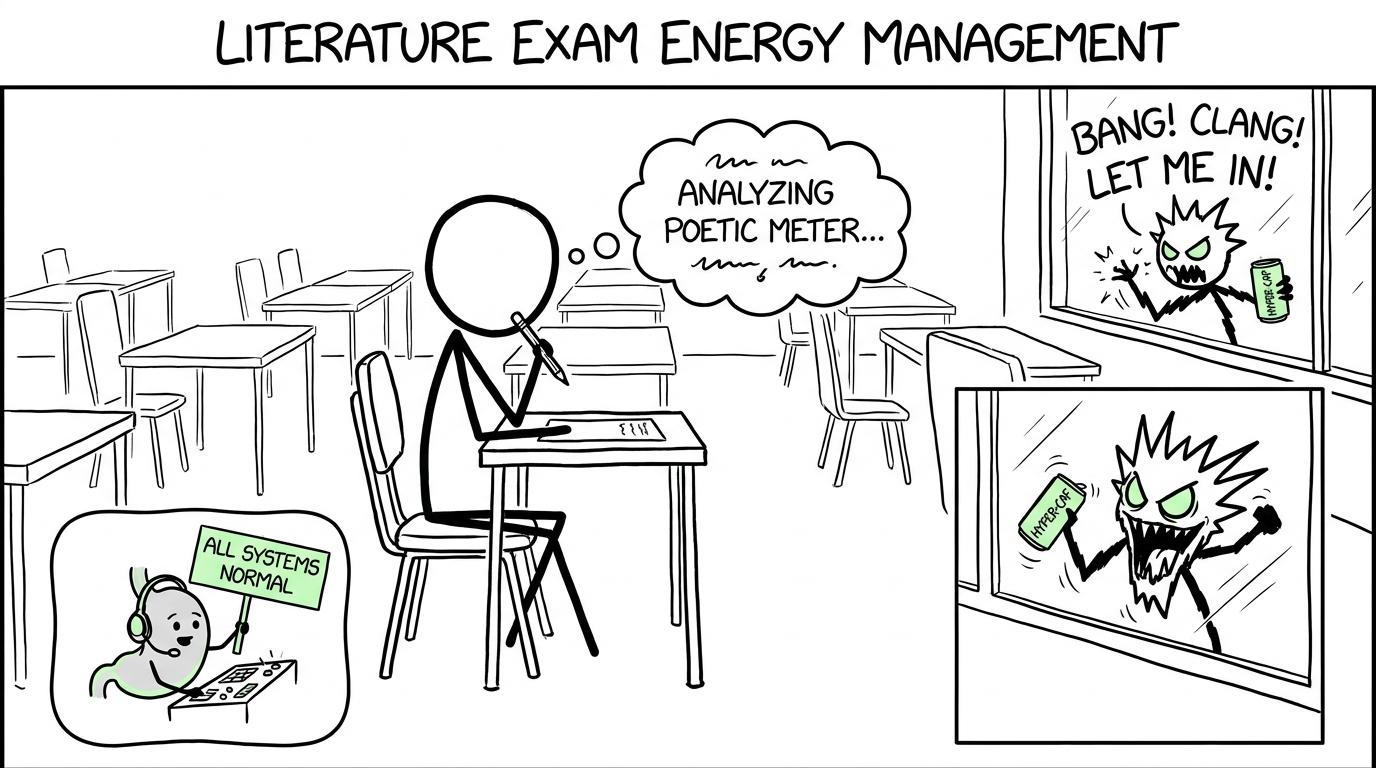 A calm student's stomach reports that all systems are normal while an energy drink gremlin waits outside
Common mistakes to avoid
Searching for a miracle brain food
No single breakfast can replace knowing the text, practising essay structure or managing time. Food supports the conditions in which you perform; it does not create knowledge overnight.
Skipping food because of nerves
If a full meal feels difficult, choose a smaller familiar option and consider eating it in stages. Persistent nausea, faintness or appetite problems deserve support from a parent, carer or healthcare professional.
Eating something completely new
An unfamiliar supplement, oversized smoothie or unusual high-fibre breakfast may cause discomfort. Exam morning rewards reliability, not novelty.
Using caffeine instead of sleep
More caffeine can leave some students restless rather than focused. It also cannot reproduce the benefits of adequate sleep.
Drinking everything just before the exam
Hydration is a day-long habit. Sip regularly and take permitted water with you instead of trying to correct the whole morning at the exam-room door.
Revising through every meal
A meal break is not wasted revision time. It can create a clear boundary between preparation and performance. For maths, the same disciplined approach appears in MathsGenie's guide to using GCSE past papers properly: practise, review, fix the gap and then stop when the session is complete.
A steady morning beats a perfect menu
The best answer to what you should eat before GCSE English Literature is not an exotic ingredient. It is a familiar, balanced meal you can digest comfortably, accompanied by regular hydration and enough time to arrive without rushing.
Eat something sensible. Bring water if your school allows it. Avoid last-minute experiments. Then let your preparation do its work.
When your English paper is finished and attention turns back to numbers, use MathsGenie as your free revision base. Start with GCSE maths revision lessons and practice questions, build exam stamina through the MathsGenie past-paper library, and use mark schemes, video solutions, mini tests and predicted papers to turn each mistake into a clear next step.