Too Late to Revise GCSE German? A Realistic Plan
Too late to revise GCSE German? See what you can still improve, what to prioritise near the exam, and how to balance German with GCSE maths revision.
The calendar can create a strange illusion. When the exam is months away, revision feels optional. When it is close, every unfinished vocabulary list suddenly feels enormous.
If you are wondering whether it is too late to revise GCSE German, the useful answer is no. Starting late limits how much you can cover, but focused revision can still improve your vocabulary recall, listening accuracy, speaking confidence and ability to produce clear written answers. Even a few days can be used well. The aim is no longer to master everything. It is to recover the most accessible marks without neglecting subjects such as maths.
Your first step is simple: confirm your exam board, tier and assessment dates, then diagnose which German skills need the most attention. Do not begin by rewriting two years of notes.
Your late GCSE German revision checklist
Use this checklist before making a detailed timetable:
- Confirm whether you take AQA, Pearson Edexcel or another specification.
- Check whether you are entered for foundation or higher tier.
- Write down the dates of your speaking and written assessments.
- Test listening, speaking, reading and writing separately.
- Identify a small group of recurring vocabulary and grammar gaps.
- Practise producing German rather than only recognising it.
- Keep maths and other GCSE subjects in your timetable.
- Mark or review every task while the attempt is still fresh.
- Protect your sleep, especially immediately before an assessment.
The current AQA and Pearson Edexcel GCSE German specifications used for first assessment in twenty twenty-six both assess listening, speaking, reading and writing. Each skill contributes 25%25\%25% of the qualification, although the task structures and timings differ. Check the specification and guidance supplied by your own school because boards and examination series are not interchangeable.
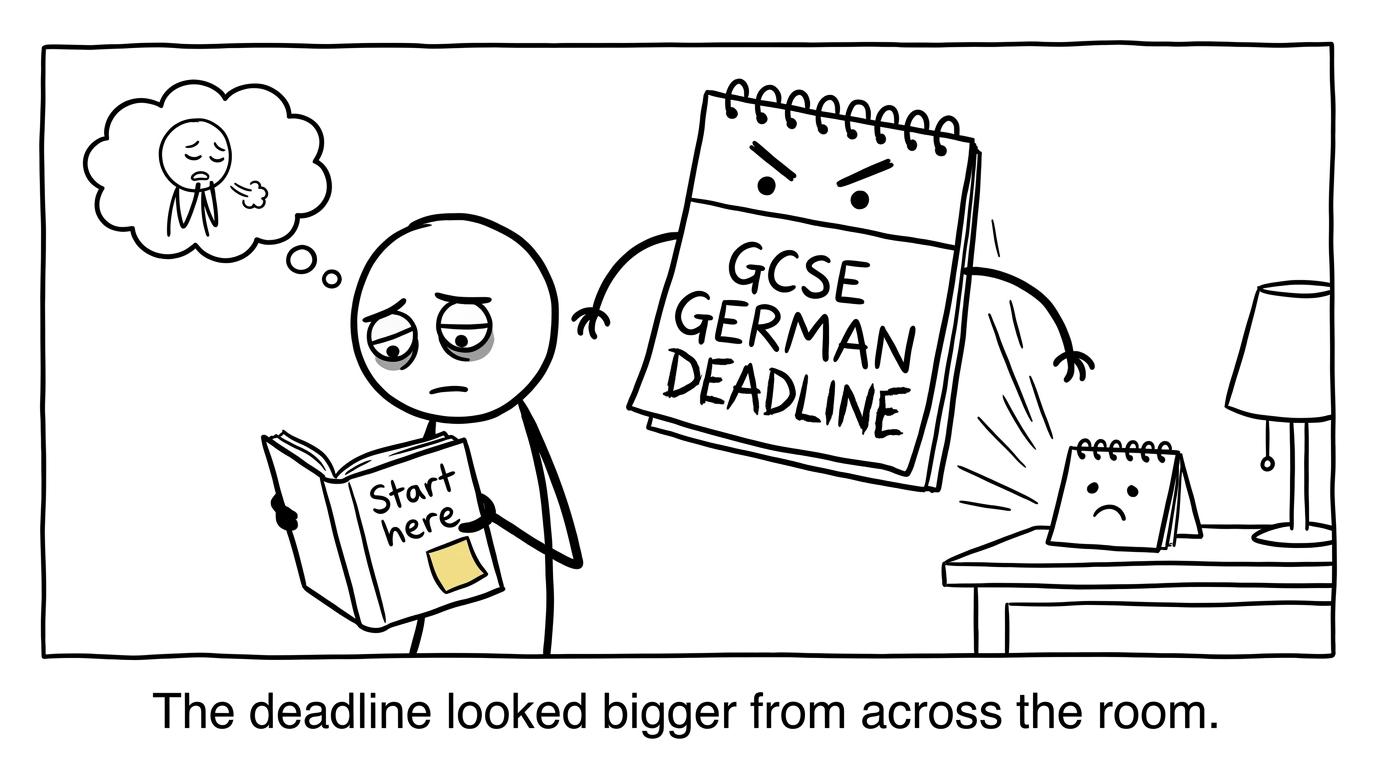 A student discovers that the deadline looks smaller after starting
How much difference can late revision really make?
Late revision cannot reproduce two years of steady language exposure. It can, however, remove avoidable weaknesses.
Imagine that you understand a reading passage but repeatedly miss negatives, time phrases or changes of opinion. You do not need to relearn German from the beginning. You need targeted practice on those signals. Likewise, a student who knows plenty of vocabulary may improve a writing response by controlling word order and checking verbs more carefully.
The possible improvement depends on three things:
- Your starting point: forgotten knowledge is usually quicker to recover than entirely new content.
- The time remaining: several weeks allow spaced recall; several days demand stricter priorities.
- The quality of practice: testing yourself produces better evidence than decorating notes.
There is no honest formula that converts revision hours into a guaranteed grade. Grade boundaries vary by paper and series, while performance depends on the answers produced in the assessment. A realistic goal is therefore to become more reliable on material you partly know and less likely to lose marks through blank answers, misunderstood instructions or weak checking.
What to prioritise when time is short
When revision begins late, prioritisation matters more than ambition. Treat the specification as a map, not a list that must be copied.
High-utility vocabulary
Start with words that travel across several topics: opinions, reasons, connectives, common verbs, time expressions, negatives, question words and descriptive adjectives. Add topic vocabulary from areas your board specifies, but avoid trying to memorise an entire dictionary at once.
Use active recall. Cover the answer, retrieve it and then check. Practise both directions because recognising a German word in reading is different from recalling it for speaking or writing. Include the article with nouns and record common verb forms in useful phrases rather than as isolated fragments.
Core grammar that improves many answers
Concentrate on grammar with wide application:
- present, past and future time frames
- verb position in main and subordinate clauses
- modal verbs
- negatives
- adjective and noun agreement where required
- comparatives and opinions with reasons
- accurate question formation
At this stage, secure structures are worth more than impressive structures you cannot control. A shorter accurate sentence can communicate more effectively than a complicated sentence that collapses halfway through.
Listening and sound-symbol links
Listening cannot be revised effectively by reading a transcript silently. Use audio from your school or exam-board materials, listen without support, record what you understood and then check. Replay only after committing to an answer.
Current GCSE German assessments may include dictation or tasks that reward accurate understanding of spoken language. Give particular attention to numbers, dates, negatives, verb endings and words that sound similar. Short daily listening is more useful than saving all audio practice for one exhausting session.
Speaking aloud
Speaking improves through speaking. Prepare flexible ideas for common themes, but do not rely entirely on memorised paragraphs that may not fit the question.
Practise answering aloud, describing an image, reading unfamiliar German and responding to follow-up questions where these match your board. Record yourself occasionally. You are listening for comprehensibility, hesitation and missing verbs, not a perfect accent.
Reading and writing under time
For reading, annotate evidence rather than guessing from one familiar word. Look for who is speaking, when events happen and whether an opinion changes.
For writing, practise planning quickly and checking deliberately. Your final check should have specific jobs: locate verbs, confirm tense, inspect word order, check capital letters for German nouns and make sure every bullet point has been addressed.
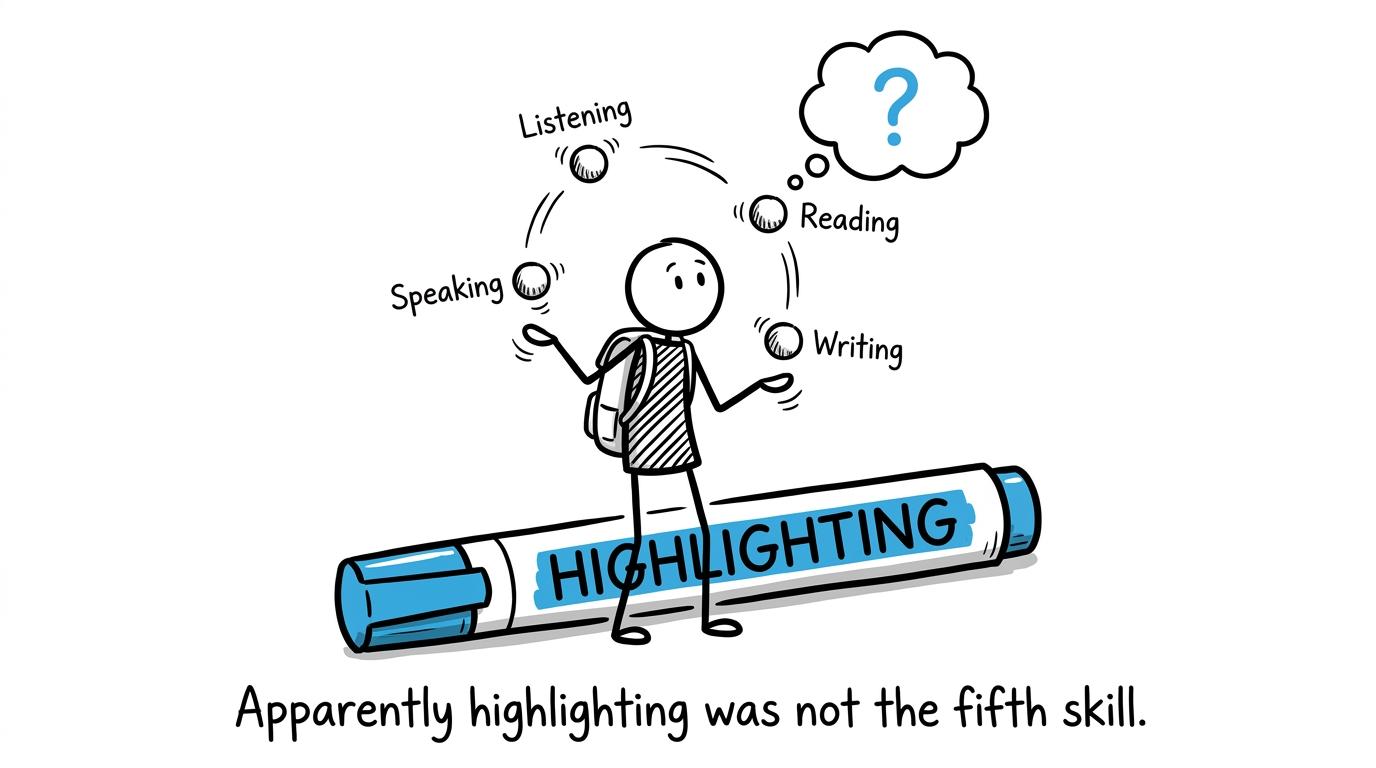 A student juggles the four German skills while ignoring an enormous highlighter
A realistic plan for the time you have left
If you have several weeks
Use short, repeated sessions across all four skills. Begin with a diagnostic task, then revisit weak vocabulary and grammar on different days. Complete exam-style sections as the assessment approaches.
A sensible weekly rhythm includes vocabulary retrieval, two focused skill sessions, one timed task and one correction session. Your revision should gradually move from supported practice towards independent performance.
This resembles the diagnose, practise and retest cycle in the GCSE one-month revision plan for maths. The German resources will come from your teacher and board, but the planning principle transfers well.
If you have about one week
Reduce the scope. Select the vocabulary themes and grammar weaknesses that appear repeatedly in your work. Complete short tasks for each assessed skill and correct them immediately.
Do not spend the entire week creating resources. Use the notes and vocabulary lists you already have. The GCSE one-week maths revision plan demonstrates the same useful idea: diagnose, build a small fix list, practise and check whether the fix worked.
If the speaking assessment comes first, give it temporary priority while retaining brief retrieval for the later papers. Once speaking is complete, redirect that time rather than stopping revision altogether.
If you have only a few days
Choose tasks with immediate value:
- retrieve high-frequency vocabulary
- rehearse flexible speaking answers aloud
- complete one short listening or reading section
- plan and write under a realistic time limit
- review recurring grammar errors
- learn the paper instructions and task expectations
Avoid an all-night session. Tiredness can weaken attention, recall and listening precisely when you need them most.
If the exam is tomorrow
You are not trying to rebuild the course. Review your smallest high-value lists, complete one brief retrieval task and inspect previous corrections. Then prepare your equipment and stop at a sensible time.
The calm decision-making in MathsGenie's GCSE night-before plan applies beyond maths: fix a few known weaknesses instead of opening an endless new topic.
Balancing German with GCSE maths revision
German may feel urgent because speaking can occur before the main written examination period. Urgency, however, should not erase maths from your week.
Give each subject a defined minimum. A short German recall session can sit beside a focused maths block. MathsGenie's twenty-minute maths revision routine is useful on crowded school days, while the broader GCSE maths revision hub lets you choose resources for your board and tier.
For maths, use revision lessons and practice questions to repair weak topics, then test them under time. Edexcel students can use GCSE maths mini tests, while OCR students can begin at the OCR GCSE maths revision hub. This protects maths progress without requiring an unmanageable daily marathon.
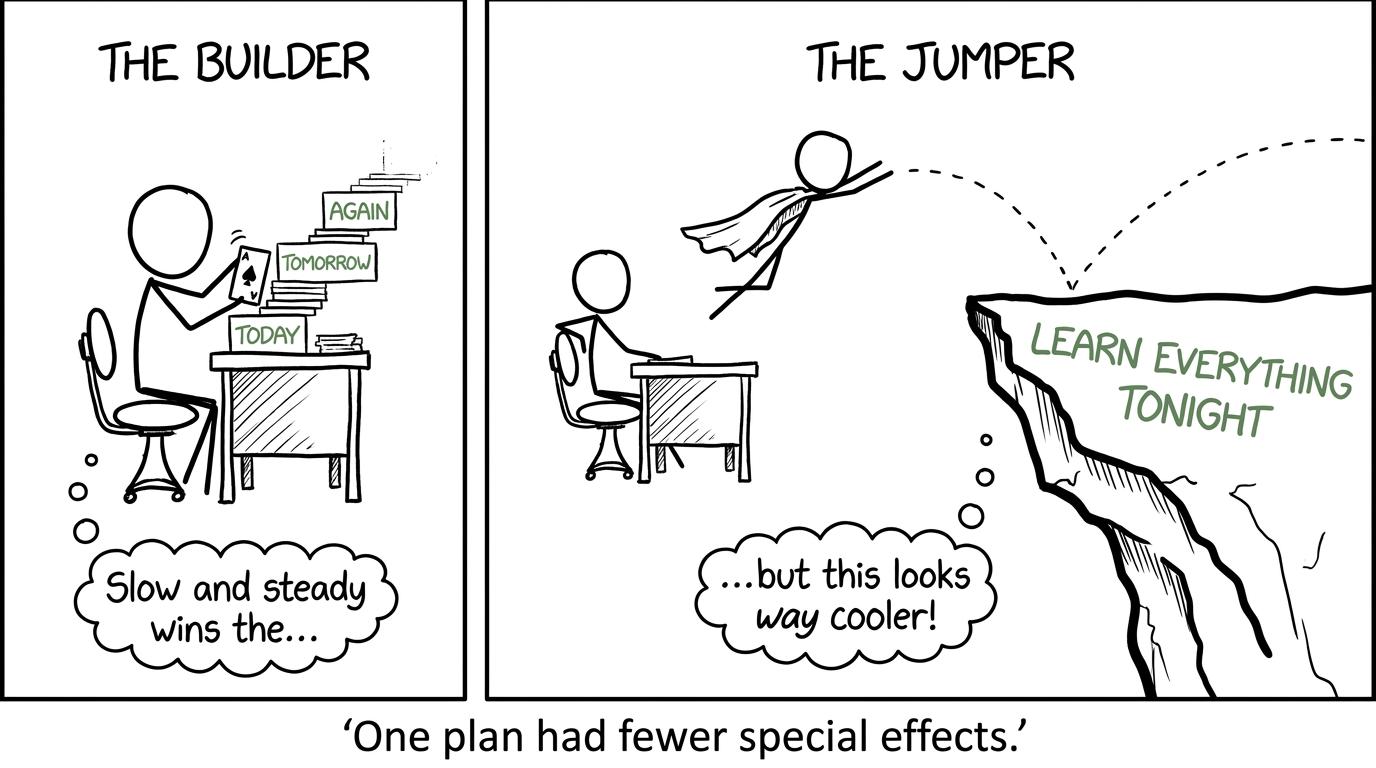 One student builds a small daily staircase while another attempts an impossible revision leap
Common mistakes in last-minute German revision
Revising only vocabulary
Vocabulary matters, but GCSE German assesses your ability to understand and communicate. Combine word recall with listening, speaking, reading and writing.
Rereading instead of retrieving
Familiar notes can create false confidence. Close the book and produce the word, sentence or answer before checking it.
Ignoring one assessed skill
Students sometimes avoid speaking or listening because these skills feel uncomfortable. That discomfort is diagnostic information. Give the weaker skill a short daily slot rather than postponing it.
Memorising inflexible paragraphs
Prepared language can help, but the response still needs to answer the actual task. Build adaptable sentence patterns and practise changing the person, tense, opinion or topic.
Completing tasks without reviewing them
An unmarked task shows effort but gives limited direction. Identify why each error occurred and retest it later. Maths students can develop the same habit through the guide to using GCSE past papers properly, then apply its paper, mark, fix and retest cycle to German.
Sacrificing every other subject
A panic timetable often gives all available time to the nearest exam. Keep small maintenance sessions for maths and other subjects so that one deadline does not create the next crisis.
Start with the next useful action
It may be too late for the perfect revision plan. It is not too late for a useful one.
Confirm your German board and tier, complete one short diagnostic task and make a compact fix list. Then practise the language actively: retrieve vocabulary, listen without a transcript, speak aloud and write under time. Judge each session by what you can now do without help.
Alongside German, make MathsGenie your free GCSE maths revision base. Use the Edexcel GCSE maths past papers or the resources for your own board, then move between revision lessons, practice questions, mini tests, mark schemes and video solutions. As the maths exams approach, add past papers and predicted papers to test whether your methods hold up under pressure.
You cannot change when you began. You can still change what you do next.