

Should You Get a GCSE History Tutor?
GCSE history tutor guide: learn when tuition can help, how to diagnose the real problem, what to ask before hiring, and how to protect maths revision time.

A disappointing History mark can create an urgent feeling: I need more help, and I need it now. But urgency does not always identify the right solution. A GCSE history tutor may help when a student has persistent, specific gaps that classroom support and independent revision have not resolved. Tuition is less useful when the real problem is unfinished practice, poor organisation or too little time spent recalling content.
The sensible first step is diagnosis. Find out whether marks are being lost through missing knowledge, weak analysis, misunderstood question types, timing or incomplete revision. If the same problem survives several focused attempts to fix it, a well-chosen tutor could be worthwhile.
For students preparing for both History and Maths exams, there is another question: will tuition improve History without quietly consuming the time needed for Maths?
A quick decision checklist
Before arranging tuition, ask:
- Do you know your History exam board and exact options?
- Can you identify where marks are being lost?
- Have you asked your teacher for specific feedback?
- Have you tried targeted revision and marked exam questions?
- Does the difficulty continue after that practice?
- Would individual explanation or feedback address it?
- Can tuition fit your budget and revision timetable?
- Has a parent or carer checked the tutor's suitability and safeguarding arrangements?
Several uncertain answers do not automatically mean you need a tutor. They mean you need better evidence before deciding.
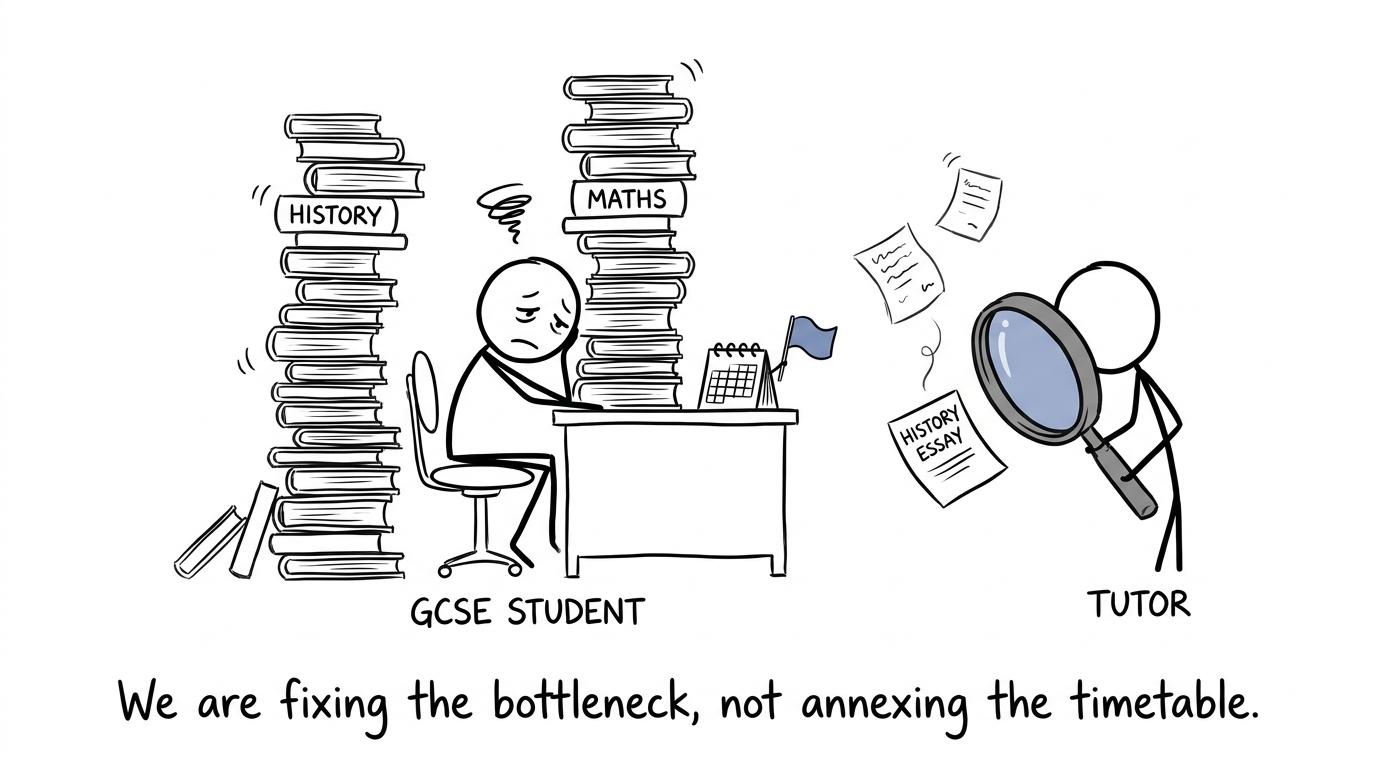 A student, tutor and overworked revision timetable
What GCSE History actually rewards
History is not simply a test of how many dates you can remember. Across GCSE specifications, the assessment objectives cover four broad areas:
- knowledge and understanding of the periods studied;
- explanation using concepts such as cause, consequence, change, continuity, significance, similarity and difference;
- analysis and evaluation of contemporary sources;
- analysis and evaluation of historical interpretations.
The balance is important. Official specifications give substantial weight to knowledge and historical explanation, while source and interpretation skills also contribute meaningfully. A student can therefore know many facts but still lose marks by selecting irrelevant evidence, leaving reasoning undeveloped or misunderstanding what a question requires.
Exam structures and topic combinations differ between AQA, Pearson Edexcel, OCR and Eduqas. GCSE History is not divided into foundation and higher tiers in the way GCSE Maths is. A tutor must know the student's board, specification, chosen topics and current assessment format rather than teaching a generic version of History.
This matters particularly where a specification has been updated. Before tuition begins, the tutor should check the current exam-board documents and confirm that their resources match the student's examination series.
How to tell whether a tutor would actually help
Start with marked evidence
One low mock mark is not a complete diagnosis. Look across several pieces of work: timed questions, homework, teacher assessments and mock papers. Record why marks were lost.
Useful categories include:
- knowledge gap: a person, event or development could not be recalled;
- selection gap: facts were known but the wrong evidence was used;
- analysis gap: points were described rather than explained;
- source or interpretation gap: evidence was accepted at face value or evaluated vaguely;
- question-reading gap: the command word, time period or focus was missed;
- timing gap: a response was rushed or unfinished;
- communication gap: the argument lacked a clear line of reasoning.
This resembles the marks-leak approach used in MathsGenie's guide to finding your weakest GCSE topics. A total mark tells you how the performance ended. A mistake log tells you what to do next.
Try the smallest sensible intervention first
Ask the History teacher what one change would make the greatest difference. Then spend a short, defined period acting on that advice. This might involve retrieval practice for a weak unit, planning answers, completing timed questions or comparing work with the mark scheme.
A tutor becomes more reasonable when:
- the same weakness repeatedly appears;
- school feedback is understood but difficult to apply alone;
- the student needs live questioning to expose gaps;
- written answers need regular, precise feedback;
- absence or disruption has created substantial missing content;
- confidence is being damaged by a genuine misunderstanding.
A tutor is less likely to solve the problem when work is rarely completed, notes are disorganised or sessions are expected to replace independent practice. Tuition can guide effort. It cannot manufacture it.
Ask whether individual attention is the missing ingredient
Some difficulties are unusually well suited to tutoring. A student may understand an explanation when hearing it, yet struggle to build an argument independently. A good tutor can observe the thinking process, ask why a piece of evidence matters and correct vague reasoning immediately.
Other problems may need a different response. Persistent difficulties with reading, writing, attention or anxiety should be discussed with the school and a parent or carer. A subject tutor should not be treated as a substitute for appropriate pastoral or additional-learning support.
What a good GCSE History tutor should do
Effective tuition should become more specific over time, not less. After reviewing marked work, the tutor should be able to state what needs attention and how progress will be checked.
Look for someone who can:
- teach the correct exam board and chosen options;
- explain how particular question types are assessed;
- distinguish knowledge problems from writing problems;
- give actionable feedback on completed answers;
- model planning without dictating scripts to memorise;
- use retrieval and exam practice rather than endless note copying;
- set a manageable task between sessions;
- measure whether repeated errors are disappearing;
- communicate appropriately with the parent or carer.
Strong feedback is concrete. “Add more detail” is weak because it leaves the student guessing. Better feedback identifies the missing link, irrelevant evidence or unsupported judgement and gives the student another opportunity to improve the response.
The tutor should also encourage independence. The best outcome is not permanent dependence on weekly explanations. It is a student who increasingly knows how to recall, plan, write, check and improve without prompting.
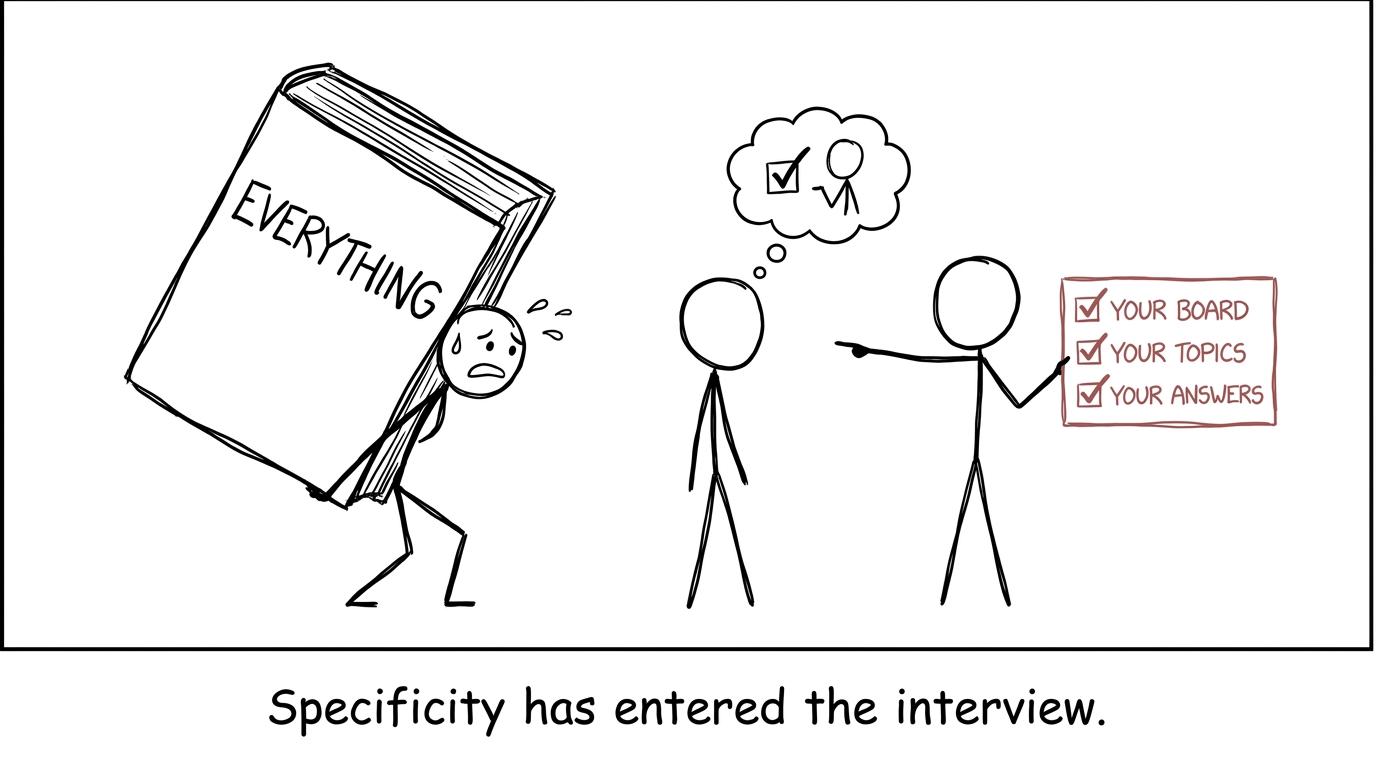 A student choosing between a generic and specification-aware tutor
Questions to ask before choosing a tutor
A short conversation can reveal whether a tutor has a real plan. Ask:
- Which GCSE History boards and options do you currently teach?
- How will you diagnose the student's main weakness?
- What would a typical session include?
- How do you mark essays, source questions and interpretation questions?
- How will progress be measured and reported?
- What work is expected between sessions?
- Can you provide relevant qualifications and recent references?
- What are your safeguarding and online-tuition procedures?
- What are the fees, cancellation terms and review arrangements?
Be cautious if someone guarantees a particular grade, speaks only about “covering content”, cannot identify the current specification or wants to begin a long package without first seeing any work.
A trial session is useful, but judge it by more than whether the tutor seems friendly. Afterwards, the student should be able to explain what was diagnosed, what was learned and what they will do next.
Safeguarding and practical checks
A parent or carer should make the final arrangements. Current safeguarding guidance recommends checking identity, relevant qualifications, references and criminal-record documentation where appropriate. A DBS certificate is useful evidence from a particular point in time, but it is not by itself a guarantee of suitability.
For private tuition, families should also agree:
- where sessions will happen;
- who can observe or access the teaching area;
- how online communication will work;
- whether lessons may be recorded and how data is handled;
- who receives progress updates;
- what to do if the student feels uncomfortable.
In-person tuition should take place in an appropriate, accessible room rather than a bedroom. For online sessions, parents should understand the platform, contact arrangements and safeguarding policy. If an agency is involved, ask who its safeguarding lead is and what checks it completes.
Protecting GCSE Maths revision time
A History tutor can be helpful while still carrying an opportunity cost. The lesson itself takes time, but so do travel, homework and mental energy. Students preparing for Maths exams should check that History tuition is not displacing the deliberate practice needed in a cumulative subject.
Build both subjects into one realistic weekly plan. Keep fixed space for Maths topic repair, mixed practice and timed papers. The GCSE Maths revision hub brings together resources for Edexcel, AQA, OCR, Eduqas, WJEC and CCEA, making it easier to choose work that matches your board and tier.
If Maths weaknesses are still unclear, follow a simple cycle: diagnose, practise, mark, correct and retest. MathsGenie's guide to the best order for learning GCSE Maths topics can help students build foundations before moving to harder material.
As exams approach, use GCSE predicted papers as additional practice rather than a replacement for official papers. Edexcel students can work through GCSE Maths past papers with mark schemes and use the method in the guide to using Edexcel past papers properly.
The principle is the same in both subjects: feedback only becomes valuable when it changes the next attempt.
Common mistakes when deciding on tuition
Hiring before identifying the problem
Without marked evidence, tuition can become expensive general revision. Diagnose first, then hire for a defined need.
Choosing a tutor who knows the subject but not the specification
Historical knowledge matters, but GCSE success also requires familiarity with the relevant board, options, assessment objectives and question formats.
Treating more notes as progress
A fuller folder can feel reassuring while exam performance remains unchanged. Sessions should include recall, planning, writing, feedback and later retesting.
Expecting the tutor to do all the work
Improvement depends on what happens between lessons. If agreed practice is repeatedly avoided, another weekly explanation is unlikely to change much.
Continuing without reviewing results
Agree a review point. Compare recent work with the original diagnosis. If the same errors remain and the approach has not changed, discuss it or stop.
Sacrificing every other subject
History tuition should fit a balanced revision plan. If Maths has become last-minute work, use a focused GCSE Maths night-before plan to avoid panic, then create a more sustainable routine for the remaining exams.
Make the decision from evidence, not fear
A GCSE History tutor can be worthwhile when the obstacle is specific, persistent and suited to individual teaching. The right tutor understands the exact course, gives precise feedback, checks progress and gradually makes the student more independent. The wrong arrangement merely adds another hour to an already crowded week.
Start with teacher feedback and marked work. Try targeted practice. If the same weakness remains, interview tutors carefully, involve a parent or carer in all safety checks and agree a review point before committing long term.
Meanwhile, keep Maths revision active. Visit the MathsGenie GCSE Maths revision area for free revision lessons, practice questions, mini tests, past papers, predicted papers, mark schemes and video solutions. A tutor may help with one bottleneck. A clear, repeatable revision system helps with the whole journey.











