Should You Drop GCSE Portuguese Mid-Year?
Drop GCSE Portuguese mid-year? Learn how to judge workload, what withdrawal may affect, and how to protect your GCSE maths revision and choices calmly.
There is a particular kind of worry that appears halfway through a GCSE course. Your Portuguese vocabulary is piling up, the speaking assessment feels uncomfortably close, and maths needs more attention than you are giving it. Suddenly, dropping one subject looks like the cleanest way to make everything manageable.
If you are wondering whether to drop GCSE Portuguese, the short answer is this: do not decide from one bad mock or one exhausting week. Consider dropping it when sustained evidence shows that the subject is damaging your progress, health or preparation across more important qualifications, and when your school confirms that withdrawal is possible. Speak to your Portuguese teacher, head of year, exams officer and parent or carer before making the decision.
Dropping the subject may change your timetable, GCSE entry and eligibility for the full English Baccalaureate subject combination. It does not automatically alter your maths tier, maths grade or ability to apply for sixth form. Those consequences depend on your school and the entry requirements of courses you may want later.
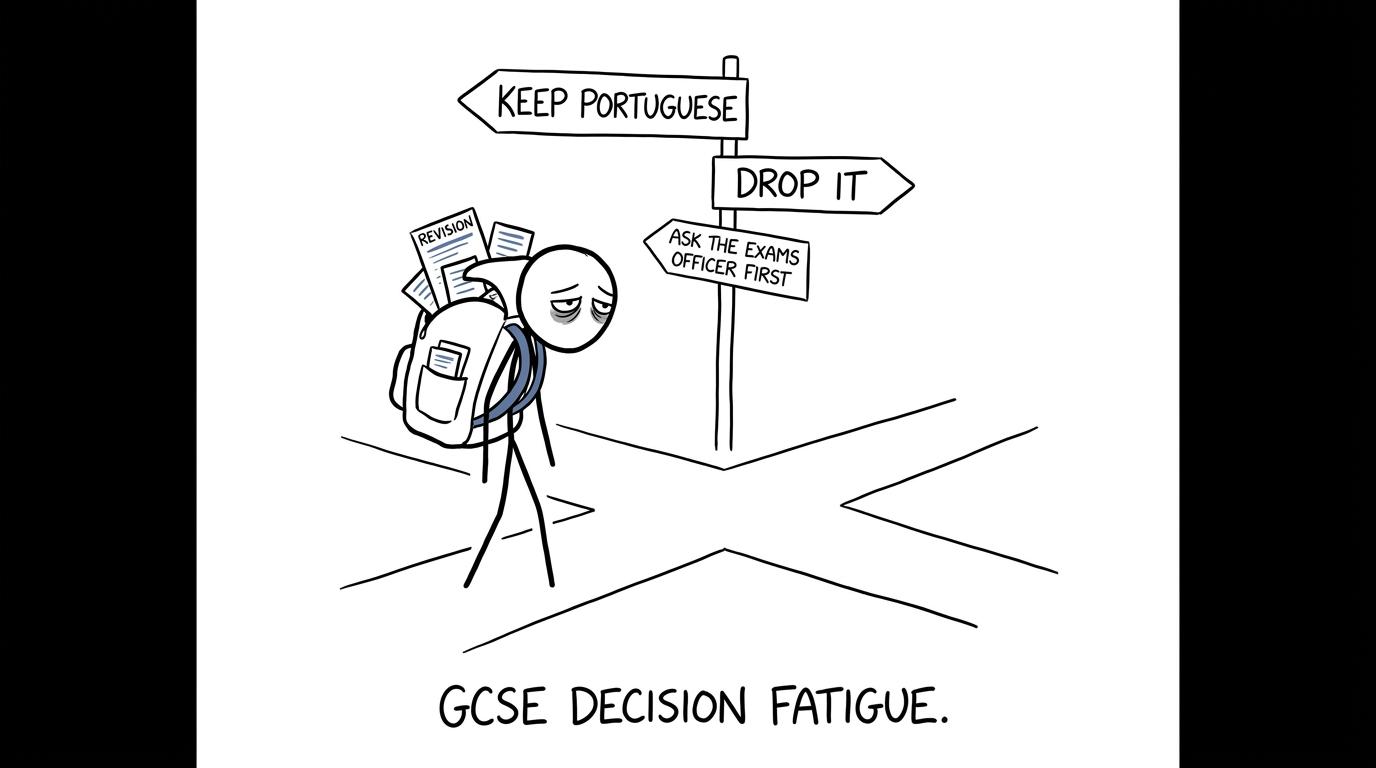 A GCSE student considering whether to keep or drop Portuguese at a school corridor crossroads
A quick decision checklist
Before asking to withdraw, find clear answers to these questions:
- Is the problem limited to one skill, such as speaking or listening, or are you struggling across the course?
- Have your results remained weak over several assessments despite regular, focused practice?
- Is Portuguese reducing the time available for English, maths, science or subjects required for your next step?
- Are stress, sleep or attendance being affected over a sustained period?
- Could support, a different revision method or a change of tier make the course manageable?
- Will your school permit a mid-year withdrawal, and has it already entered you for the examination?
- Would dropping Portuguese affect your school timetable, sixth-form application or intended career route?
- What exactly would replace the lesson and revision time?
The last question matters more than it seems. Free time does not automatically become productive time. It needs a destination.
How to tell if you are genuinely in over your head
Feeling behind is not the same as being unable to recover. GCSE courses often feel hardest when several assessments arrive together. Look for patterns rather than moments.
Your difficulty appears across all four skills
The current Pearson Edexcel GCSE Portuguese qualification assesses listening, speaking, reading and writing through four externally examined papers. Foundation and higher tiers are available, but a candidate is entered for the same tier across all papers.
A disappointing speaking task alone may indicate a specific weakness rather than a reason to leave the course. The case for reconsidering becomes stronger if you are consistently unable to access tasks across all four skills, even after using teacher feedback and appropriate practice.
Your results do not improve after targeted support
One low mark is information, not a verdict. Ask whether you have completed a fair test of improvement:
- Have you followed a regular vocabulary routine?
- Have you practised listening without relying on a transcript?
- Have you prepared speaking responses aloud rather than only reading them?
- Have you corrected writing using precise teacher feedback?
- Have you attended intervention sessions or asked for help?
Set a short review period with your teacher and agree what progress would look like. A decision based on several marked tasks is more reliable than one based on how difficult the course feels on Tuesday evening.
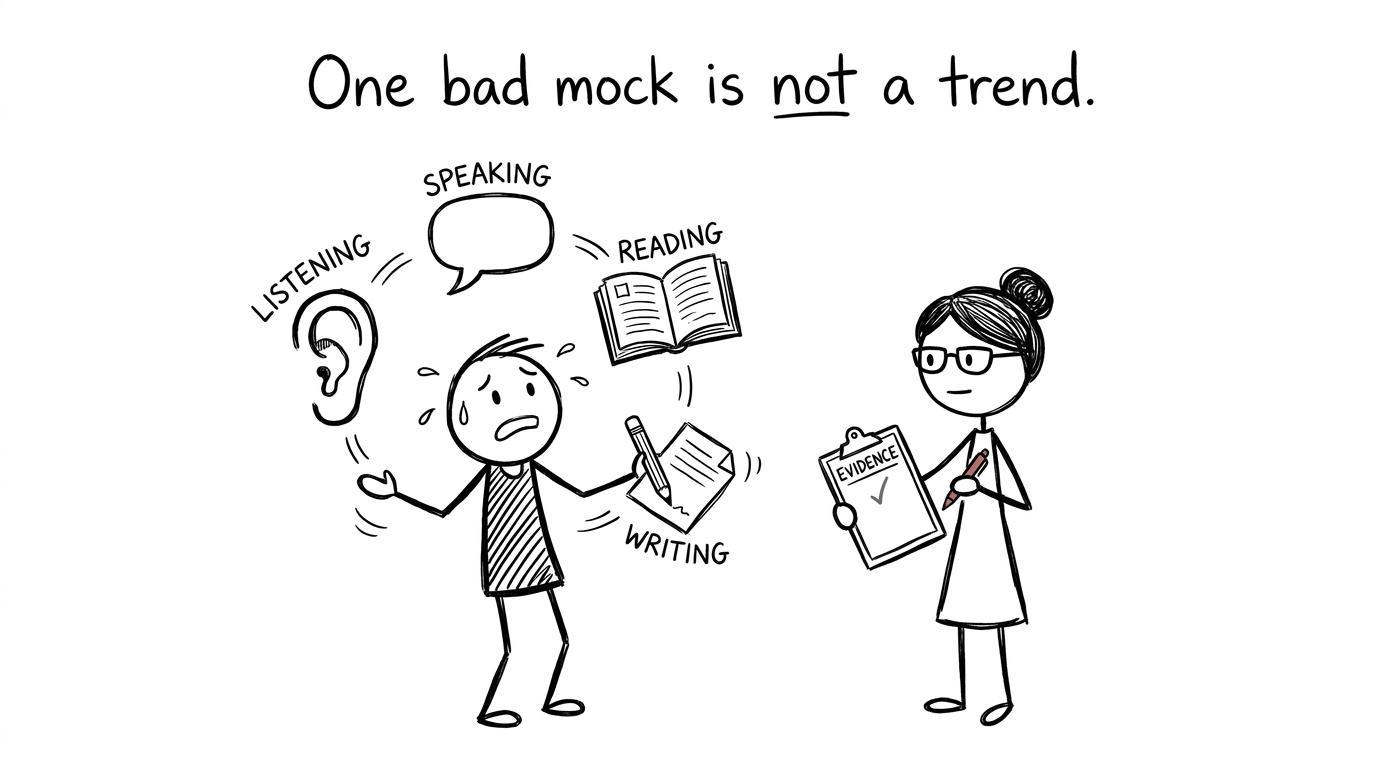 A student juggling the four GCSE Portuguese skills while a teacher checks the evidence
The workload is harming core GCSE preparation
English and maths carry particular importance in post-161616 progression, and many courses or apprenticeships specify minimum grades in one or both. That does not make Portuguese unimportant. It means your revision plan should reflect the qualifications most relevant to your next step.
Use evidence from a timed maths paper or mini test. If repeated gaps are developing because Portuguese consistently consumes the available revision time, the trade-off is real. Start with the GCSE Maths revision hub to identify your board, tier and weak topics rather than estimating your position from memory.
However, the first solution should usually be better allocation, not immediate withdrawal. A focused routine can recover time that unfocused revision loses. The GCSE maths revision timetable guide explains how to organise topic work, marking and paper practice without treating every subject as an emergency.
Your wellbeing is being affected consistently
Persistent loss of sleep, dread, panic or inability to manage ordinary school routines deserves attention. Speak to a trusted adult and the appropriate pastoral or health professional. Dropping one subject may help in some circumstances, but it should not be treated as the only response to a broader wellbeing problem.
What dropping GCSE Portuguese may affect
Your examination entry and timetable
A student cannot normally cancel an examination entry independently. Your school or examination centre manages entries, amendments and withdrawals, and awarding organisations operate administrative deadlines and fees.
Ask the exams officer:
- whether you have already been entered;
- whether withdrawal is still administratively possible;
- whether any speaking assessment arrangements have begun;
- what you would do during the freed lessons;
- whether the withdrawal would appear on internal records or references.
Do not assume that stopping attendance means the examination entry disappears. Get the arrangement confirmed by the school.
The English Baccalaureate subject combination
The English Baccalaureate, usually called the EBacc, is a school performance measure based on entry in English, maths, science, a language, and history or geography. It is not a separate qualification or additional certificate awarded to an individual student.
Under the subject combination used for relevant cohorts, dropping your only eligible language would mean you had not entered the full EBacc combination. Government accountability policy is changing, so your school should explain which measures apply to your cohort. More importantly, ask whether the full combination matters for your own plans rather than treating a school measure as a personal qualification.
Future language choices
Without the GCSE, progression directly to A Level Portuguese may be less straightforward. Individual sixth forms set their own entry requirements, so check the published requirements of any provider you are considering.
Dropping the qualification does not erase your ability to speak Portuguese, your cultural knowledge or the work already completed. You may still use the language in daily life and could return to formal study later. What changes is the evidence of achievement you receive at the end of the course.
What dropping Portuguese does not automatically affect
Withdrawing from Portuguese does not automatically:
- change your GCSE maths grade;
- move you between foundation and higher maths tiers;
- prevent you from attending sixth form or college;
- remove another GCSE from your results;
- guarantee that your other grades will rise;
- make your timetable less stressful without a replacement plan.
Maths tier decisions are made separately by your school using your attainment and the rules of your maths specification. Edexcel, AQA, OCR and Eduqas all offer foundation and higher GCSE Maths routes, but Portuguese performance does not determine which one you sit.
Likewise, colleges and sixth forms apply their own entry policies. Some focus heavily on English and maths, while particular programmes may ask for a total number of GCSEs or specific grades. Check the actual requirements instead of relying on rumours.
Test whether a better plan would solve the problem
Before making an irreversible choice, run a short, structured trial. Agree the length and expectations with your teachers.
For Portuguese, concentrate on the weakest assessed skill rather than trying to repair the entire course at once. For maths, use a diagnostic task and classify the marks you lose by topic. The GCSE Maths topics by board and tier guide can help turn a vague concern such as “I am bad at algebra” into a precise revision list.
On busy school days, the twenty-minute maths revision routine provides a realistic minimum. Use a revision lesson, answer questions without notes, mark them immediately and record one correction.
Then measure what happened. Did your marks move? Did your sleep improve? Did you complete the planned sessions? A trial gives you evidence about whether the obstacle is the subject itself, your current routine or an unusually difficult part of the term.
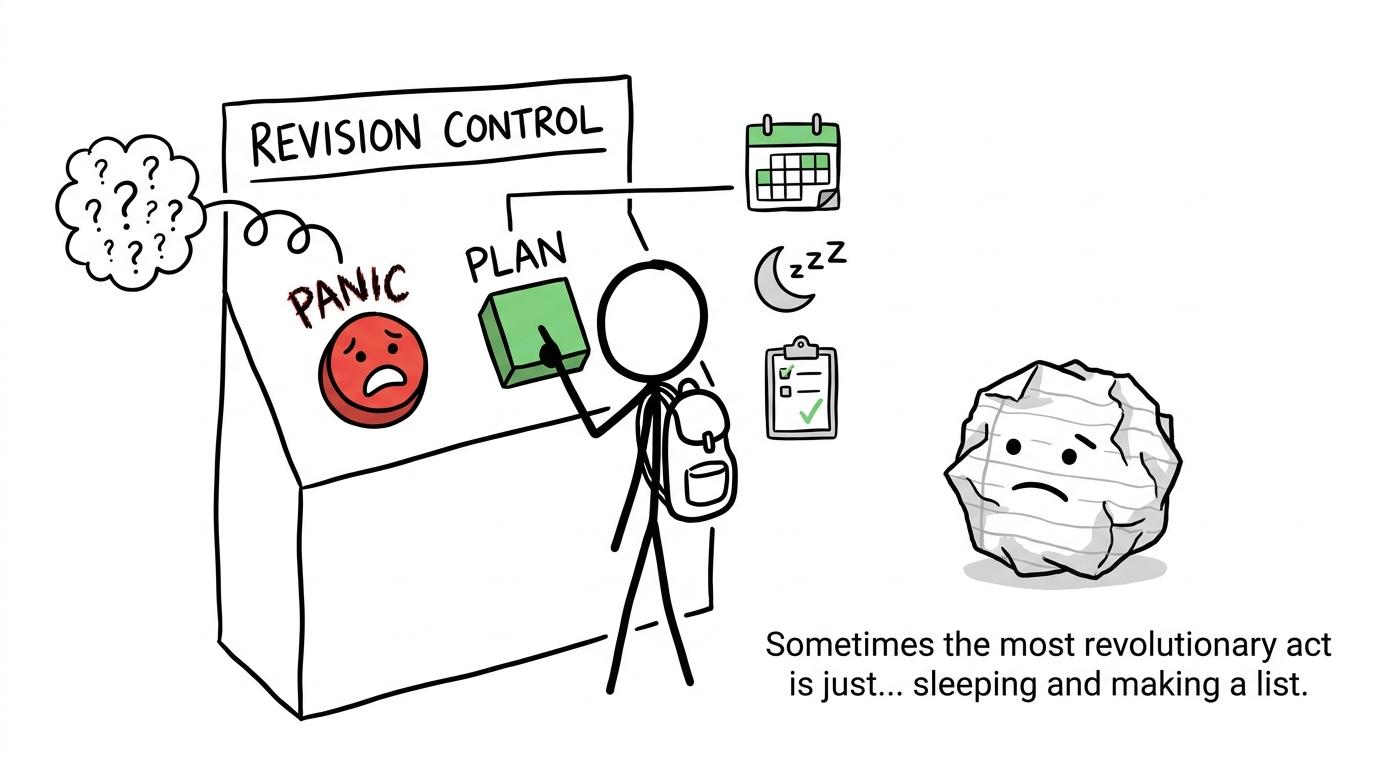 A student choosing a calm revision plan instead of the panic button
If you decide to drop the subject
Make the decision formally and use the released capacity deliberately.
Write down the subjects receiving the extra time and the work you will complete. For maths, begin with a mini test or timed section, then repair the exact topics costing marks. When enough content is secure, use the guidance on when to start GCSE past papers to introduce timed practice sensibly.
Nearer the exams, Edexcel GCSE Maths predicted papers can provide fresh practice modelled on the specification. Predicted papers should supplement official past papers, not replace them. Mark every attempt, revisit the weak topic and retest it. The value lies in the correction loop, not simply in completing more paper.
If you keep Portuguese, the same principle applies. Protect small, regular blocks for the language and keep maths revision measurable. Keeping the subject should be an active plan, not the absence of a decision.
Common mistakes when making the decision
Deciding after one bad mock
Mocks reveal weaknesses, but one result can be influenced by preparation, timing, nerves or a particular paper. Use several assessments and teacher judgement.
Assuming a dropped subject guarantees better grades
Extra hours help only when they are scheduled and used well. Replace the subject with named tasks, not the hopeful phrase “more revision”.
Listening only to friends
Friends can offer support, but they do not manage your exam entry or know every sixth-form requirement. Get factual answers from teachers, the exams officer and prospective providers.
Ignoring the possibility of targeted support
A change in study method, intervention session or tier discussion may solve the immediate difficulty while preserving the qualification.
Continuing purely because of sunk time
Past effort is not a reason to continue if the course is now clearly damaging your wider preparation. Equally, difficulty is not proof that the effort has been wasted. Judge the decision by likely future consequences.
Make the next decision calm and specific
Whether you drop GCSE Portuguese should come down to sustained evidence, school policy, wellbeing and future requirements. It should not come down to embarrassment, one mark or the hope that removing a subject will organise the rest of your revision for you.
Speak to the right adults, confirm what withdrawal would affect and create a written plan for the time you recover. Then make maths progress visible. Start at the MathsGenie GCSE Maths revision hub, use free revision lessons and practice questions to repair individual topics, build confidence with mini tests, and move into past papers, predicted papers, mark schemes and video solutions when you are ready.
A good decision does not make every week easy. It gives the difficult weeks a direction.