Send GCSE English Language Result to Sixth Form
Send GCSE English Language result to sixth form or college correctly. Learn how grades arrive, what evidence to upload and what to do if there is a delay.

Results morning can feel strangely unfinished. You have opened the envelope, found your English Language grade and perhaps celebrated quietly. Then a more practical worry arrives: how does the result reach the sixth form or college waiting to enrol you?
To send GCSE English Language result to sixth form, follow the provider's enrolment instructions. You will usually need to upload, email or present your official school-issued results slip. Your exam board sends the result to your current school or exam centre, but you should not assume that it is automatically sent to every place where you have applied.
The administrative part is normally simple. The important thing is to use the evidence requested, meet the deadline and contact admissions promptly if anything is missing.
Your results-day checklist
Before results day, make sure you can answer each of these questions:
- How will your school release your GCSE results?
- Does your sixth form or college want an upload, email or in-person enrolment?
- What is the deadline for providing your grades?
- Does the evidence need to show your name, school and complete results page?
- Do you need identification, an application reference or other documents?
- Who should you contact if your English Language result is delayed?
- What will you do if the grade does not meet the course requirement?
For the June 2026 examination series, GCSE results are released to candidates on Thursday 20 August 2026. Schools may release results from 8.00am, although your school's collection or online-access time may be later. The GCSE results day 2026 guide explains the wider arrangements.
 A GCSE result making a much calmer journey than the student imagined
How GCSE English Language results actually travel
Your answer script is marked through the relevant awarding organisation, such as AQA, Pearson Edexcel, OCR or Eduqas. The awarding organisation then releases the result electronically to the school or exam centre that entered you.
Your centre prepares the document you receive on results day. This is normally called a Candidate Statement of Provisional Results, although most people simply call it a results slip.
The normal route is therefore:
- the exam board releases the grade to your school or exam centre;
- your school issues your results slip;
- you provide the requested evidence to your new sixth form or college;
- the provider checks the result and completes its enrolment decision.
If you are staying at your current school's sixth form, staff may already have access to your results through the school's systems. Even then, complete every enrolment step you have been given. If you are moving elsewhere, the destination may not receive your individual result automatically.
JCQ guidance recommends that provisional results supplied to sixth forms and further education colleges are centre-endorsed, such as a printout on school letterheaded paper or one carrying the school's name or stamp. It should also include your Unique Candidate Identifier. Your school normally handles these details when producing the slip.
This is why a cropped screenshot showing only “English Language, grade 555” may be rejected. It does not necessarily establish whose result it is or where it came from.
How to send the result correctly
There is no single national submission method. Each provider controls its own admissions and enrolment process, so the instructions in your offer email or applicant portal matter more than what another student has been asked to do.
Uploading through an applicant portal
Some providers ask you to log in and upload a scan, PDF or clear photograph of your results statement. Make sure:
- the whole requested page is visible;
- your name can be read;
- your school or exam centre is identifiable;
- the English Language qualification and grade are clear;
- the image is upright, focused and free from glare;
- the file format and size meet the portal's rules.
After submitting it, save the confirmation page or email. Logging in is not the same as completing enrolment.
Sending evidence by email
Use the admissions address given by the provider rather than guessing an individual teacher's email. Include your full name, application reference, intended course and a clear attachment. Keep the message brief and check that the file has actually attached before pressing send.
Because results contain personal information, do not publish the slip on social media or send it through an unofficial group chat.
Taking the slip to enrolment
A provider may ask to inspect your original results statement at an appointment. Bring the complete document and any identification specified in your enrolment instructions. Keep it in a folder rather than folding it into a pocket where part of the printout can disappear.
The GCSE results and sixth-form offers guide explains what to do after comparing your grades with a conditional offer. Students taking a further education route can also use the college applications after results day guide.
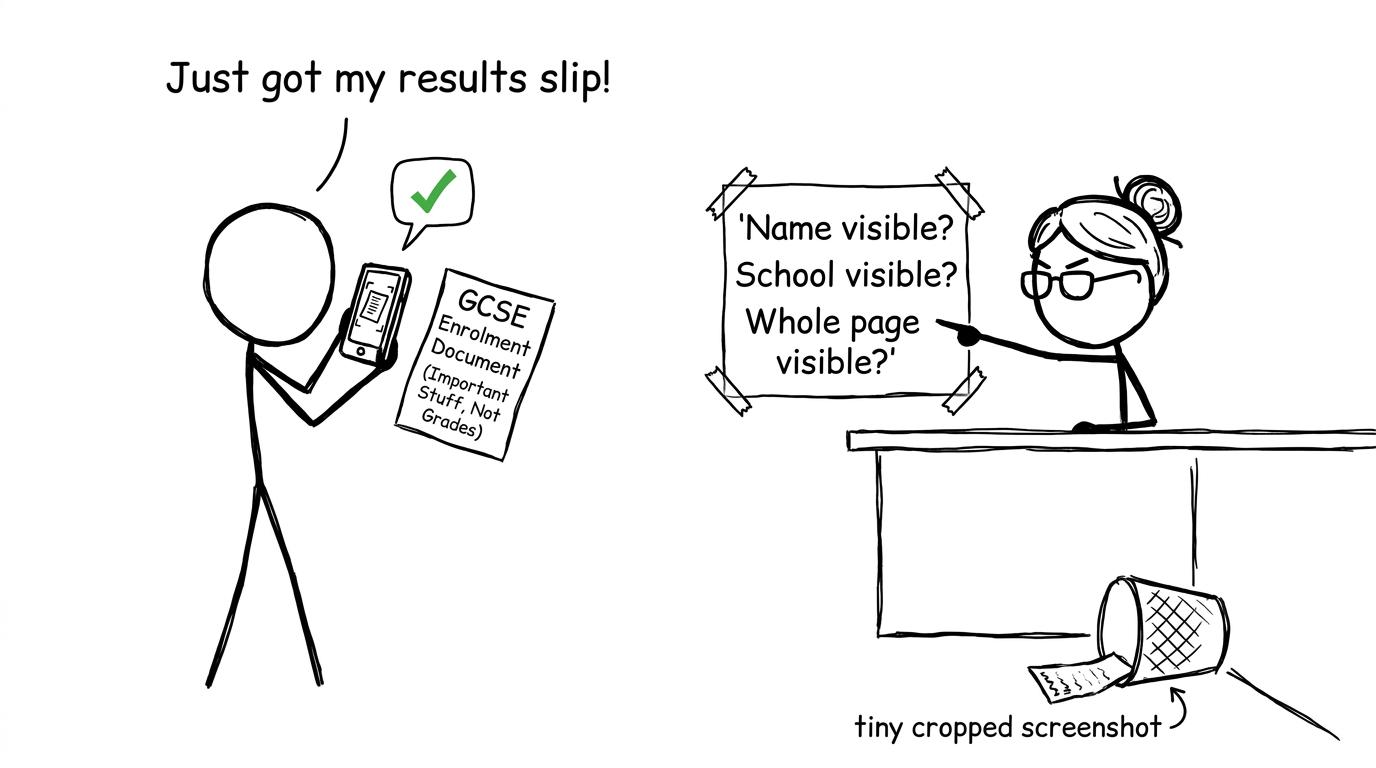 A very serious inspection of whether a results photograph shows the whole page
Can the Education Record app send your result?
In England, the DfE Education Record app is being introduced nationally for Year 11 students from summer 2026. Where your school has issued you a digital education record, GCSE results are expected to appear in the app from 11.00am on results day. Some records may take longer to update.
A participating sixth form, college or training provider can request information from your education record. You receive the request in the app and choose to share the relevant information.
However, the app does not replace the school-issued results slip. Official guidance says that if the app is delayed, incomplete or different from the slip, you should use the slip as your evidence. Ask your school in advance whether it is issuing digital records and ask your destination whether it supports this form of sharing.
Do not wait for an app update if your provider has asked for a results-slip upload by a particular deadline.
What to do if your result is delayed or missing
A missing result is an administrative problem to investigate, not a grade to guess.
First, speak to your school's exams officer. Your results statement may show that a result is pending, or the school may need to check information with the awarding organisation. Students generally deal with the exam board through the centre that entered them.
Next, contact the sixth form or college immediately. Explain:
- that your GCSE English Language result is currently unavailable;
- what your school or exams officer has told you;
- when you expect a further update;
- which course and offer are affected;
- what temporary evidence you can provide.
Ask whether the provider can hold the enrolment decision while verification takes place. Keep copies of messages and note the name of anyone you speak to. The practical sequence from results morning into September is covered in the GCSE results day timeline.
If your digital record is delayed but your school slip shows the result, submit the slip. If the college's portal fails, take a screenshot of the error and contact admissions before the deadline rather than repeatedly refreshing in silence.
If the grade is lower than the entry requirement
Contact the provider rather than deciding for it. State the grade accurately and ask whether it can confirm your original course, consider your complete GCSE profile or offer an alternative programme.
In England, the post-16 maths and English condition of funding generally requires eligible students without grade 444 or above in the relevant subject to continue studying an approved maths or English qualification. For the English funding condition, grade 444 or above in either GCSE English Language or English Literature at Key Stage 4 can satisfy the requirement. A particular sixth form or course may still set its own requirement specifically for English Language, so read the wording of your offer carefully.
If the English Language grade looks seriously unexpected, speak to your teacher or exams officer about access to scripts, a clerical re-check or a review of marking. For the June 2026 series, the awarding-body deadline for most reviews is 24 September 2026, but your school will set an earlier internal deadline. Written consent is required because a reviewed mark or grade can rise, fall or remain unchanged.
Tell the destination that a review is being considered or has been requested. Do not promise that the grade will change.
Results slips, certificates and final evidence
The statement issued on results day contains provisional results. Your formal certificate arrives later through your school or exam centre and becomes the final record of the achievement.
For immediate post-16 enrolment, providers commonly use the centre-endorsed provisional statement because certificates are not yet available. Store both documents safely when you receive them. If a GCSE certificate is lost in later life, the relevant exam board can usually issue a certifying statement of results rather than recreating the original GCSE certificate, normally for a fee.
Common mistakes when sharing GCSE results
Assuming the college already has the grade
The exam board sends your result to the centre that entered you. Unless your destination confirms otherwise, you remain responsible for completing its evidence and enrolment process.
Sending an unreadable or cropped photograph
A close-up of one grade may omit your name, school and document details. Follow the provider's evidence rules and show the complete requested page.
Missing the deadline despite meeting the offer
Achieving the required grade does not necessarily enrol you automatically. Check emails, spam folders, portals and appointment times.
Waiting silently when something is delayed
Admissions teams can only respond to a problem they know about. Contact your exams officer and destination promptly, then maintain a written record.
Treating a provisional result as a certificate
A results slip is normally enough for August enrolment, but it is not the final certificate. Collect and preserve the certificate when your school releases it.
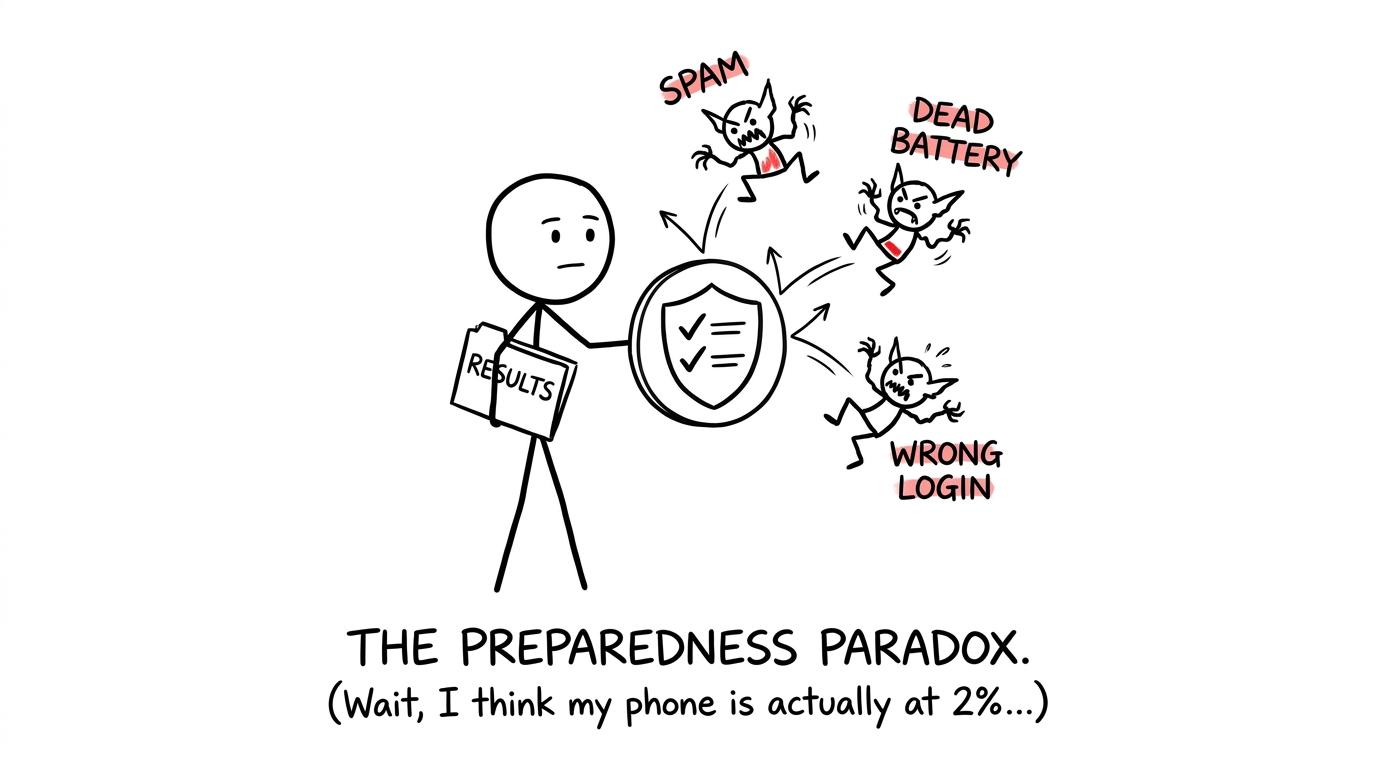 A checklist defending results day from spam folders, dead batteries and forgotten logins
Keep the administration small and the next step clear
The result itself has already travelled through a controlled system. Your task is simply to complete the last handover: collect the official statement, follow your destination's instructions, submit clear evidence and speak up quickly if there is a delay.
Once enrolment is settled, attention turns to the course ahead. If maths remains part of your plan, use the free GCSE Maths revision hub to strengthen unfinished topics, or start preparing for resits where required. You can build exam confidence with Edexcel GCSE Maths past papers, GCSE predicted papers and a realistic GCSE revision timetable.
MathsGenie brings free revision lessons, practice questions, mini tests, past papers, predicted papers, mark schemes and video solutions into one clear revision route. Complete the paperwork, protect your documents, then take the next academic step with a plan you can actually follow.