Language Analysis GCSE: A Simple Method
Language analysis GCSE made simple. Use the What, How, Why method to select quotes, explain effects and build secure grade 4-5 English responses.
A language question can make a familiar extract feel strangely difficult. You understand the passage, but the moment you are asked to analyse it, your mind reaches for phrases such as “this makes the reader want to read on”. For resit students, that feeling is particularly frustrating.
The good news is that language analysis GCSE answers do not require mysterious insight or a list of impressive words. You need to identify what the writer presents, examine how a carefully chosen quotation creates that impression, and explain why the language matters. A repeatable What, How, Why method gives you a reliable way to do that.
This guide teaches that method using original examples at grade 4 and grade 5 level. Exact question wording and mark allocations vary between exam boards, so always check your specification and mark scheme, but the central skill remains the same: explain how writers use language to create meanings and effects.
The language analysis checklist
Before writing, reduce the task to five manageable decisions:
- Read the question and identify its precise focus.
- Select a short quotation connected to that focus.
- State what the quotation suggests.
- Explain how a specific word or technique creates that meaning.
- Explore why the choice is effective in this particular moment.
A complete paragraph should contain interpretation, evidence and analysis. Naming a technique can help, but it is not analysis by itself.
| Stage | Question to ask yourself |
|---|---|
| What | What impression, feeling or idea does the writer create? |
| How | Which word or language choice creates that impression? |
| Why | Why might the writer choose it, and what does it add here? |
Think of the method as a route rather than a rigid sentence formula. It prevents you from getting lost, while still leaving room for your own interpretation.
What does language analysis mean?
Language analysis means examining the writer's choices closely. These choices might include:
- verbs, nouns, adjectives and adverbs
- imagery, including metaphor, simile and personification
- sensory description
- repetition and patterns of words
- contrast
- sound choices, where genuinely significant
- semantic fields, meaning groups of related words
- the associations and implications of individual words
Suppose a writer describes a door as “crouching” at the end of a corridor. A weak response merely labels the word as personification. A stronger response asks what “crouching” suggests. It could make the door appear animal-like, secretive or ready to attack. Those associations create the unsettling effect, not the label itself.
This distinction matters when analysing quotes in English. Technique spotting is only the beginning. Your explanation earns its value by connecting the writer's choice to a reasonable interpretation.
Use the What, How, Why method
What is the writer presenting?
Begin by answering the question directly. If the question asks how the setting is presented as threatening, your opening sentence should make a clear claim about the threatening setting.
Useful sentence openings include:
- The writer presents the setting as...
- The description creates an impression of...
- The character appears...
- The language suggests that...
Avoid beginning with “The writer uses language”. That is true of every text, but it does not reveal your interpretation.
How does the quotation create that idea?
Choose a short quotation and zoom in on its most useful word. You do not need to analyse every word in a sentence. One carefully examined verb is often more valuable than copying three lines and discussing them vaguely.
Ask:
- What does this word literally mean?
- What else might it suggest?
- Does it have positive or negative associations?
- Does it make something appear human, violent, fragile or unnatural?
- Does it connect with another image in the extract?
Use terminology only when you are confident it is correct. “The verb” or “the phrase” is perfectly useful terminology. Incorrectly labelling a metaphor as a simile does not strengthen an answer.
Why has the writer made this choice?
The final step develops the significance of the language. Consider why this image or word suits the scene. It may establish mood, reveal a character's state of mind, intensify danger or prepare the reader for a change.
Be cautious with reader effects. Different readers can respond differently, so phrases such as “may make the reader feel” are safer than declaring that every reader “will” have one reaction.
Also avoid treating the writer as someone trying to control the reader mechanically. “This makes the reader read on” says almost nothing about the language. Explain the tension, curiosity or discomfort created instead.
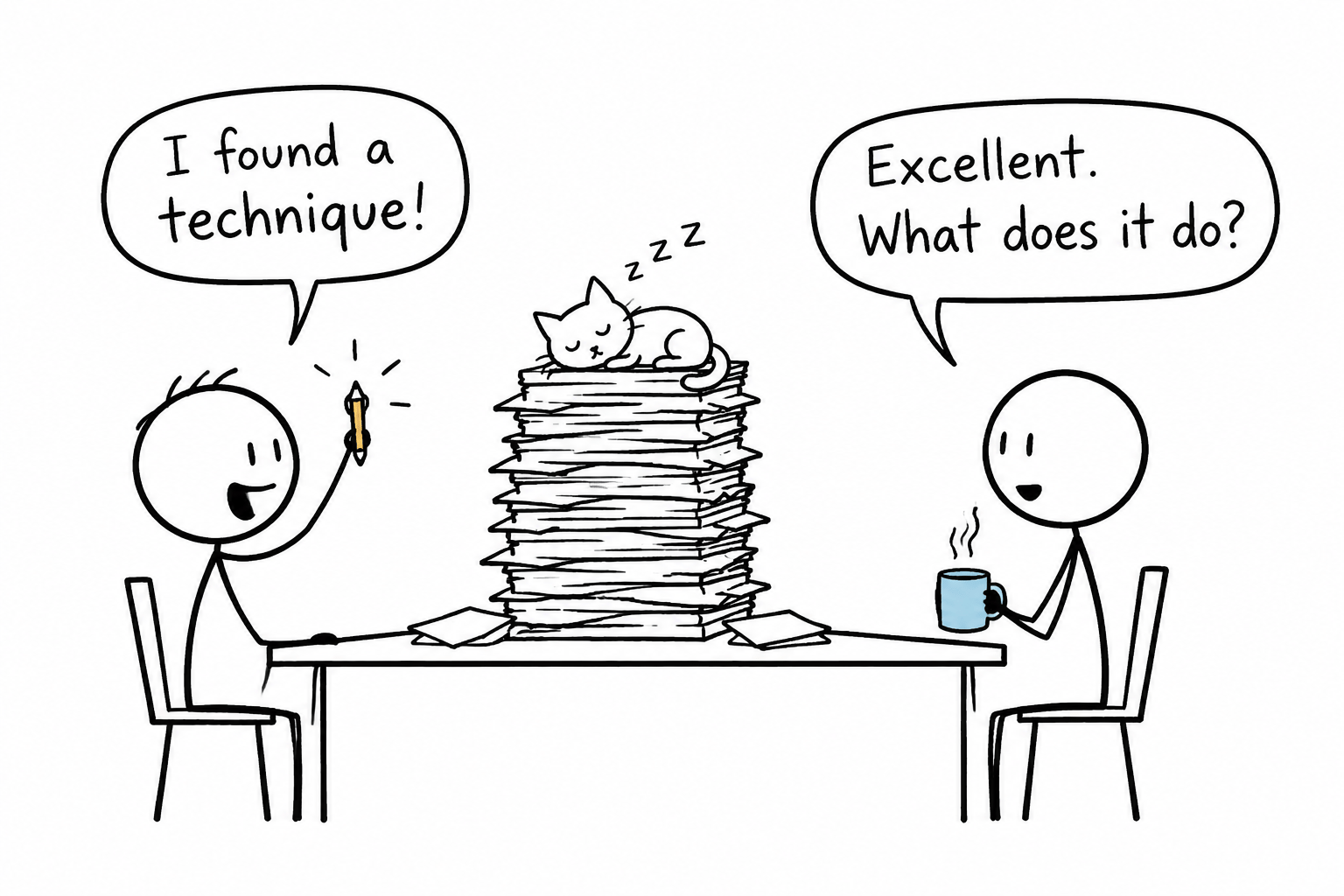 Stick figure students discover that identifying a technique is only the beginning of analysis
A grade 4 language analysis example
Consider this original extract:
The rain scratched at the windows. Beyond the glass, the empty street shone under one tired lamp, while Amir folded the letter into smaller and smaller squares.
Imagine the question asks: How does the writer use language to create an uneasy atmosphere?
A developing grade 4 level paragraph might say:
The writer creates an uneasy atmosphere by describing how “the rain scratched at the windows”. The verb “scratched” personifies the rain as if it is a creature trying to get inside. This makes the weather seem threatening and may make the reader feel that Amir is not completely safe, even indoors.
This paragraph succeeds because it follows the full route:
- What: the atmosphere is uneasy.
- How: the verb “scratched” personifies the rain.
- Why: the weather appears threatening and the room no longer feels fully safe.
It is clear, relevant and supported. It does not need several techniques or elaborate vocabulary. Grade boundaries depend on performance across the whole paper, so no single paragraph guarantees a grade, but this illustrates the clarity associated with a secure, developing response.
Developing the response towards grade 5
A grade 5 level response can build on the same quotation by exploring its implications more precisely:
The writer makes the setting feel hostile through the description that “the rain scratched at the windows”. The violent verb “scratched” personifies the rain as a persistent creature attempting to enter Amir's shelter. Scratching can also suggest leaving a mark, so the image may reflect how the letter is disturbing Amir emotionally. The threatening weather and his repeated folding of the paper combine to suggest that he cannot simply shut the problem outside.
The improvement does not come from making the paragraph longer. It comes from making the reasoning deeper. The response explores a second association of “scratched”, then connects the external setting with Amir's behaviour.
Here is another possible paragraph using a different quotation:
The adjective “tired” gives the lamp a weak, human quality. Rather than offering comfort, the light seems close to failing, leaving Amir isolated in an “empty” street. This fragile image of safety adds uncertainty because the only source of light appears unable to protect him from the darkness.
This response notices a pattern. The words “tired”, “empty” and the image of limited light work together. Analysis often becomes more convincing when you connect related details instead of forcing several unrelated interpretations from one word.
How to choose quotations quickly
Good quotation selection saves time. Look for words that carry strong associations or connect directly to the focus of the question.
For the example above, “scratched”, “empty”, “tired” and “smaller and smaller” all offer useful possibilities. The word “windows” is less productive on its own because it does not carry the same clear emotional or imaginative weight.
Keep quotations short enough to analyse. You can embed them smoothly:
The verb “scratched” makes the rain seem aggressive.
This is usually clearer than copying the entire sentence and then leaving the examiner to guess which part matters.
During revision, practise selecting three promising words from an extract before writing. This separates quotation choice from paragraph construction and makes both skills easier to improve.
A practical routine for resit revision
Language analysis improves through short, repeated practice rather than memorising one model answer. Try this routine:
- Spend two minutes identifying the question focus.
- Highlight three short quotations.
- Say a What, How and Why explanation aloud for each one.
- Write one complete paragraph.
- Check whether every sentence answers the question.
Then compare your paragraph with your exam board's mark scheme or teacher feedback. Look for the quality of explanation, not just the number of techniques mentioned.
Revision becomes easier when the routine removes unnecessary decisions. MathsGenie's 20-minute GCSE revision routine is designed for maths, but its principle transfers well: complete a small, focused task and review it straight away. If the resit season feels crowded, the structure behind a one-week revision plan or one-month revision plan can also help you divide time sensibly between English and maths.
Common language analysis mistakes
Retelling the extract
Explaining what happens is not the same as examining how it is written. Keep plot summary brief, then focus on a word or phrase.
Listing techniques
“The writer uses a verb, personification and imagery” identifies features but does not explain their meanings. Follow each relevant identification with an interpretation.
Using vague reader effects
Avoid stock phrases such as “it makes the reader interested”. Name the particular impression created, such as unease, sympathy, suspicion or relief, and explain its cause.
Choosing quotations that are too long
Long quotations consume time and encourage general comments. Select the smallest section that preserves the meaning you need.
Forcing an interpretation
An answer can be original without becoming implausible. Ground every interpretation in the actual associations of the words and the context of the extract.
Forgetting the question
A thoughtful paragraph can still drift away from the task. Repeat a key word from the question in your opening claim and return to it at the end when helpful.
Make the method automatic
The aim is not to memorise a perfect paragraph. It is to make the thinking process familiar enough that pressure does not erase it: What is presented? How does this word create that impression? Why does the choice matter here?
That same habit of breaking a difficult task into smaller decisions sits at the heart of effective revision. Alongside English practice, MathsGenie offers free GCSE maths revision resources, including lessons, practice questions, past papers and exam-board materials. You can use the GCSE revision timetable guidance to build a balanced plan, then return to the MathsGenie home page whenever you need structured maths revision.
Start simply today. Choose one paragraph from a text, underline one powerful word and explain it using What, How and Why. One precise explanation is the beginning of a stronger answer.