How to Get Grade 6 GCSE Italian: Revision Guide
How to get grade 6 GCSE Italian: improve vocabulary, grammar, speaking and exam technique with a focused, practical revision plan that works.
A grade can feel strangely distant when revision is measured in vocabulary lists, grammar pages and speaking questions. You work for an hour, close the book, and still cannot tell whether anything has changed.
The practical answer to how to get grade 6 GCSE Italian is to prepare for Higher tier, build reliable language across several timeframes, practise all four assessed skills and use marked exam questions to identify exactly where marks are being lost. Progress usually comes from changing the feedback loop, not merely adding more hours.
GCSE Italian is assessed through listening, speaking, reading and writing. Under the current AQA and Pearson Edexcel specifications, each skill contributes 25%25\%25% of the qualification. Although formats differ between boards, success depends on understanding Italian accurately and communicating clearly under exam conditions.
Your grade 6 Italian checklist
Use this as a quick audit of your present revision:
- Confirm your exam board, Higher tier entry and current specification.
- Learn vocabulary through active recall rather than rereading.
- Practise present, past and future timeframes every week.
- Speak aloud regularly, including unprepared follow-up questions.
- Complete short listening and reading tasks under timed conditions.
- Use mark schemes and teacher feedback to diagnose recurring errors.
- Reattempt corrected work without looking at the original answer.
- Keep Italian revision consistent while protecting time for other GCSEs.
A grade 666 is only available on Higher tier because Foundation tier awards grades 111-555, while Higher tier targets grades 444-999. Students normally take every Italian component at the same tier, so discuss your entry with your teacher rather than making assumptions from one mock result.
Know what your exam actually rewards
The phrase “revise Italian” is too vague to guide a useful session. It might mean learning vocabulary, correcting verb endings, interpreting a recording or improving pronunciation. Each problem needs a different activity.
Begin with the specification and assessment materials for your board. AQA and Edexcel both assess four skills, but task structures, timings and raw marks are not identical. Check the paper codes on school materials and use resources designed for that specification. Do not assume that advice for French, Spanish or another Italian board transfers perfectly.
There is also no permanent percentage that guarantees a grade 666. Grade boundaries are set for each exam series and can move according to the demands of the papers. A more useful target is consistent Higher-tier performance across complete assessments, supported by feedback from your teacher.
This is similar to effective maths revision. You would not treat every lost mark as “being bad at maths”; you would identify whether the issue was algebra, accuracy or interpretation. The same diagnostic approach appears in MathsGenie’s guide to using GCSE past papers properly.
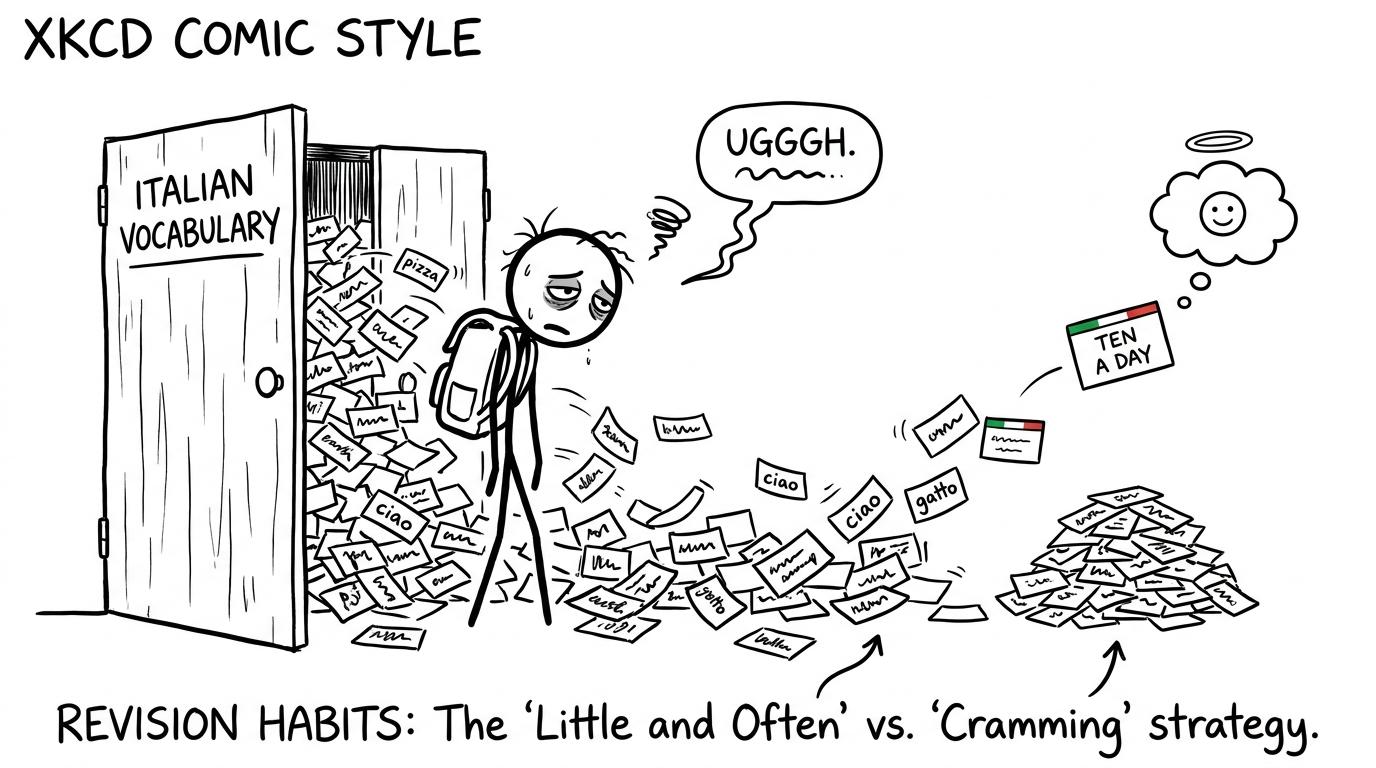 A student discovers that a manageable daily vocabulary habit beats opening an overflowing cupboard of words
Build vocabulary that survives the exam
Vocabulary is often revised in the least useful way: looking at a list until every word seems familiar. Recognition feels like knowledge, but the exam asks you to retrieve meaning quickly, sometimes from speech and sometimes while constructing a sentence.
Use two-way recall. Look at the English and produce the Italian, then reverse the direction. Say the word aloud so that spelling, sound and meaning become connected. Revisit missed words after a short delay, then again several days later.
Organise vocabulary by function as well as topic. Alongside words for holidays, school or technology, learn language that helps almost anywhere:
- opinions and justifications;
- comparisons;
- negatives and qualifiers;
- sequencing words;
- time markers;
- question forms;
- high-frequency verbs.
Do not make every session a hunt for sophisticated expressions. A smaller bank of flexible language that you can spell, pronounce and adapt is more valuable than impressive phrases you cannot control.
For revision across several GCSEs, consistency matters more than heroic bursts. The structure in MathsGenie’s GCSE maths revision timetable can be adapted: use short weekday retrieval sessions, then reserve a longer weekend block for timed Italian practice and correction.
Turn grammar into usable language
Students aiming for grade 666 need more than isolated words. They must connect ideas accurately enough for meaning to remain clear and show some range in speaking and writing.
Prioritise grammar with high practical value:
- present-tense forms of common regular and irregular verbs;
- a secure past tense;
- a future construction;
- adjective and article agreement;
- negatives;
- modal verbs;
- pronouns and common prepositions;
- linking expressions that extend an answer naturally.
Learn grammar through short, reusable sentence patterns rather than copying entire model paragraphs. Memorising a long answer can feel safe, but one unexpected bullet point may make it unusable. Adaptable structures let you respond to the task actually printed on the paper.
Keep an error log with three columns: the error, the corrected form and a brief rule. If the same agreement or tense mistake appears repeatedly, that becomes the next revision target. The aim is not to admire the correction. It is to produce the corrected form later without support.
Improve each Italian exam skill deliberately
Listening
Listening improves when practice is brief, repeated and reviewed carefully. Before audio begins, read the question and anticipate the type of information required: a person, opinion, time, reason or destination.
During review, separate vocabulary gaps from sound-recognition problems. You may know a word on paper but fail to recognise it at normal speed. Replay short sections after marking, then note the sound or phrase that caused the error. Pay particular attention to negatives, changes of opinion and distractors.
Reading
Read the question before searching the text. Match ideas rather than expecting identical words, because exam questions often test synonyms, paraphrase and inference.
When an unfamiliar word appears, use its context, word family and surrounding grammar. Do not allow one unknown term to erase the meaning of an entire paragraph. Translation tasks require accurate English as well as broad understanding, so check tense, subject and negatives rather than translating word by word.
Speaking
Speaking must be practised aloud. Silent preparation does not train pronunciation, fluency or the ability to recover when a question is unexpected.
Record short responses, listen back and check whether you answered directly, added a reason and used accurate language. Ask a teacher or revision partner to interrupt with unplanned follow-up questions. That discomfort is useful because it trains genuine interaction rather than recitation.
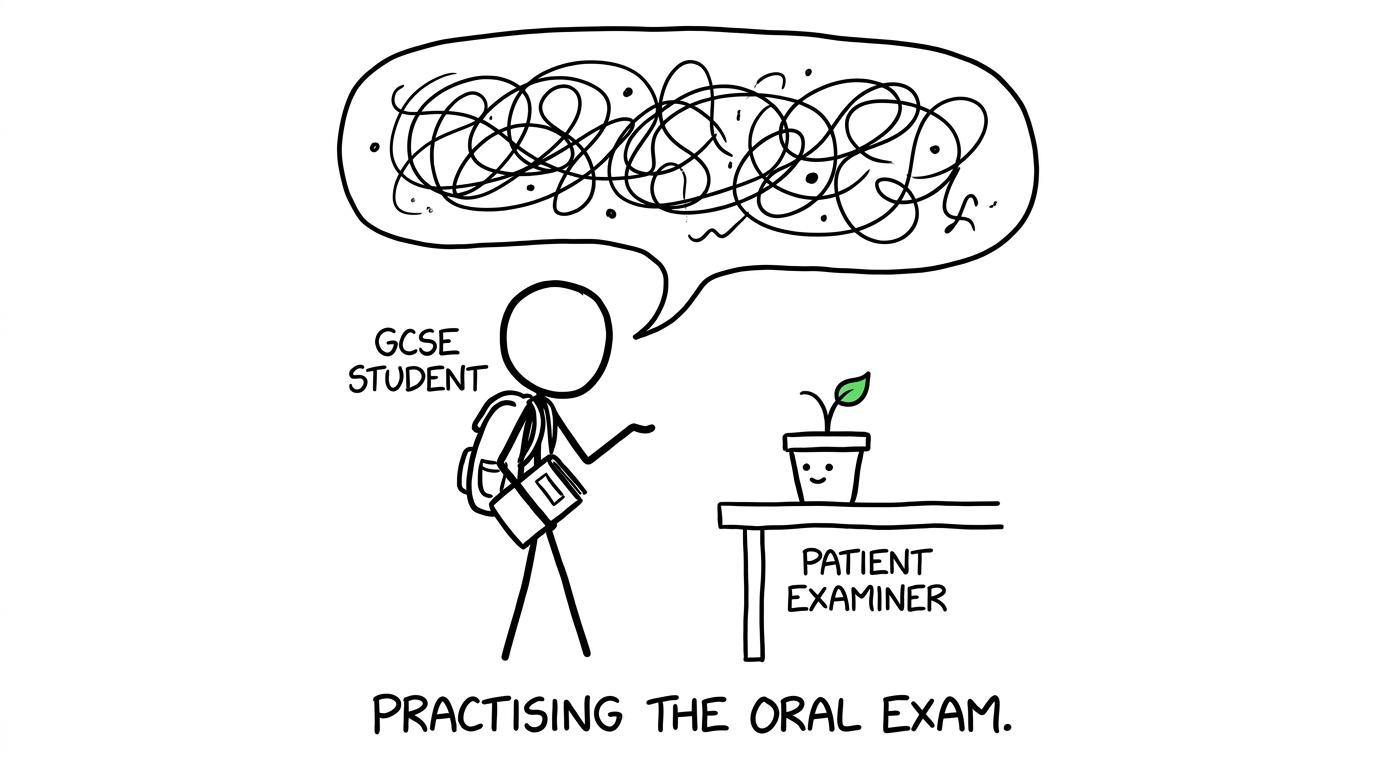 A student practises speaking Italian with an unusually patient houseplant
If you forget a word, keep communicating with simpler language. A clear answer you can control is better than silence while searching for a memorised phrase.
Writing
Before writing, turn every bullet point into a miniature checklist. Missing part of the task can restrict communication marks even when the Italian elsewhere is strong.
Plan which timeframes and opinions belong naturally in the response. Then leave time to check verbs, agreements, spellings and whether each bullet point has been covered. Editing should be targeted: look first for the errors that appear most often in your own work.
Use past papers as a feedback system
A completed paper is not automatically useful revision. Its value comes from what happens after marking.
Use this cycle:
- Complete a paper or section under realistic conditions.
- Mark it using the correct board’s mark scheme and teacher guidance.
- Classify each lost mark as vocabulary, grammar, comprehension, task coverage or timing.
- Repair the two most repeated weaknesses.
- Reattempt the relevant questions on another day.
MathsGenie describes the same paper, mark, fix and retest principle in its guide to starting GCSE past papers. For maths, you can put that cycle into practice through the free GCSE maths revision hub, GCSE mini tests and GCSE predicted papers.
Use official Italian papers for your own board rather than replacing them with generic worksheets. Start with individual sections if a full paper overwhelms you, then increase the length as your knowledge and stamina improve.
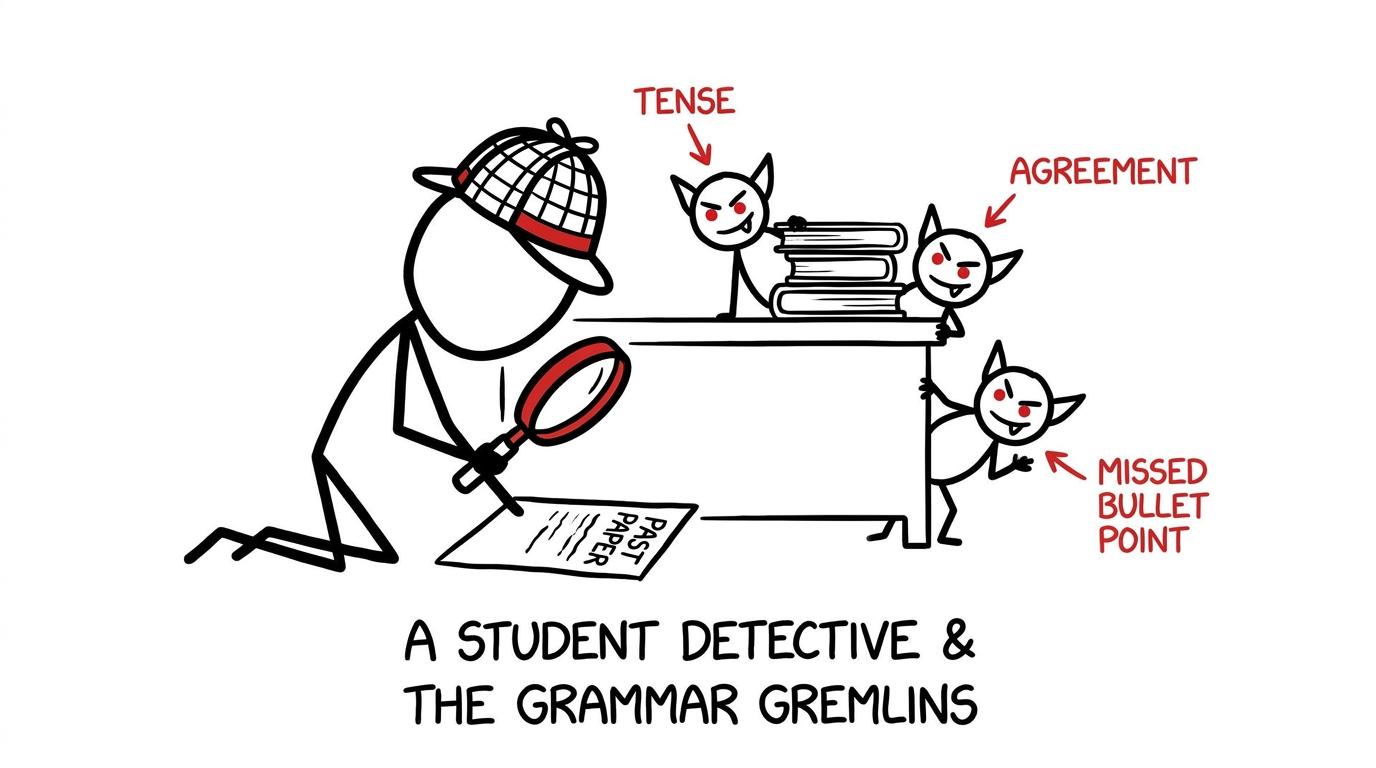 A student detective tracks down three common sources of lost marks in a past paper
A realistic weekly grade 6 routine
A sustainable week could contain:
- two short vocabulary retrieval sessions;
- one focused grammar session;
- one listening or reading task with detailed correction;
- one spoken recording or conversation practice;
- one short writing task or timed paper section;
- one review of the error log.
Rotate topics while keeping the four skills active. If a mock exposes a major weakness, temporarily give that skill more time without abandoning the others completely.
Students balancing Italian with maths can use the planning principles in MathsGenie’s one-month GCSE revision plan. Diagnose first, choose a small number of weaknesses and review them again later. Near the exams, avoid replacing a sensible routine with an exhausting final evening; the GCSE night-before plan explains why calm, selective review is usually more useful than indiscriminate cramming.
Common mistakes that hold students below grade 6
Revising only favourite topics
Comfort creates repetition, not necessarily progress. Let marked work determine what comes next.
Memorising answers without learning the language
Prepared material can support confidence, but rigid scripts are vulnerable to unfamiliar wording and follow-up questions. Learn adaptable structures and vocabulary instead.
Ignoring listening and speaking
Reading notes may feel productive because it is quiet and controllable. It cannot replace exposure to spoken Italian or the experience of answering aloud.
Forcing complexity into every sentence
Ambitious language is useful only when it remains understandable. Build from accurate core structures, then add range selectively.
Completing papers without repairing errors
A score measures the attempt; correction creates the improvement. Record patterns, practise them and retest them.
Using the wrong tier or specification materials
Aiming for grade 666 means preparing for Higher tier. Confirm your board, tier and current paper format with your school.
Make grade 6 the result of a repeatable process
The distance between grades often looks dramatic from results day, but the daily changes are usually ordinary: recalling vocabulary without prompts, speaking when it feels awkward, covering every bullet point and returning to mistakes until they stop recurring.
Begin with one diagnostic Italian task. Identify two marks leaks and plan the next week around them. Then repeat the cycle.
For your parallel maths preparation, make MathsGenie your free revision base. Use revision lessons and practice questions to rebuild weak topics, mini tests to check recall, and past papers or predicted papers to develop exam readiness. Mark schemes and video solutions then show you what to fix next. Different subjects require different knowledge, but the habit that raises grades is remarkably consistent: practise, check, correct and return.