

Group vs 1:1 Tutoring GCSE Geography: Which Wins?
Group vs 1:1 tutoring GCSE geography compared: explore cost, feedback, confidence, exam practice and how to choose the right support for your needs.
Choosing a tutor can feel like choosing the answer before you have seen the question. One-to-one tuition sounds more focused. Group tuition sounds more affordable and sociable. Yet neither format is automatically better.
For students comparing group vs 1:1 tutoring GCSE geography, the short answer is this: choose one-to-one tuition when you need highly personalised feedback, help with specific gaps or a quieter place to ask questions. Choose a small group when you learn through discussion, benefit from hearing other answers and want a more economical option. The tutor's quality, the group's size and how closely sessions match your specification matter more than the label.
This guide explains the real differences so that you can choose according to how you learn, not according to which option sounds more impressive.
A quick decision checklist
Before booking anything, ask:
- Does the tutor teach your exam board: AQA, Edexcel, OCR or Eduqas?
- Are your difficulties broad, or limited to a few identifiable topics?
- Do you ask questions readily when other students are present?
- Does the tutor use exam questions, mark schemes and specific feedback?
- Is the group genuinely small and reasonably well matched?
- Can you attend consistently without losing independent revision time?
- Is the cost sustainable until the examination period?
If several of your difficulties are personal and precise, one-to-one support is usually the stronger fit. If discussion helps you think and the group is carefully organised, group tutoring may offer better value.
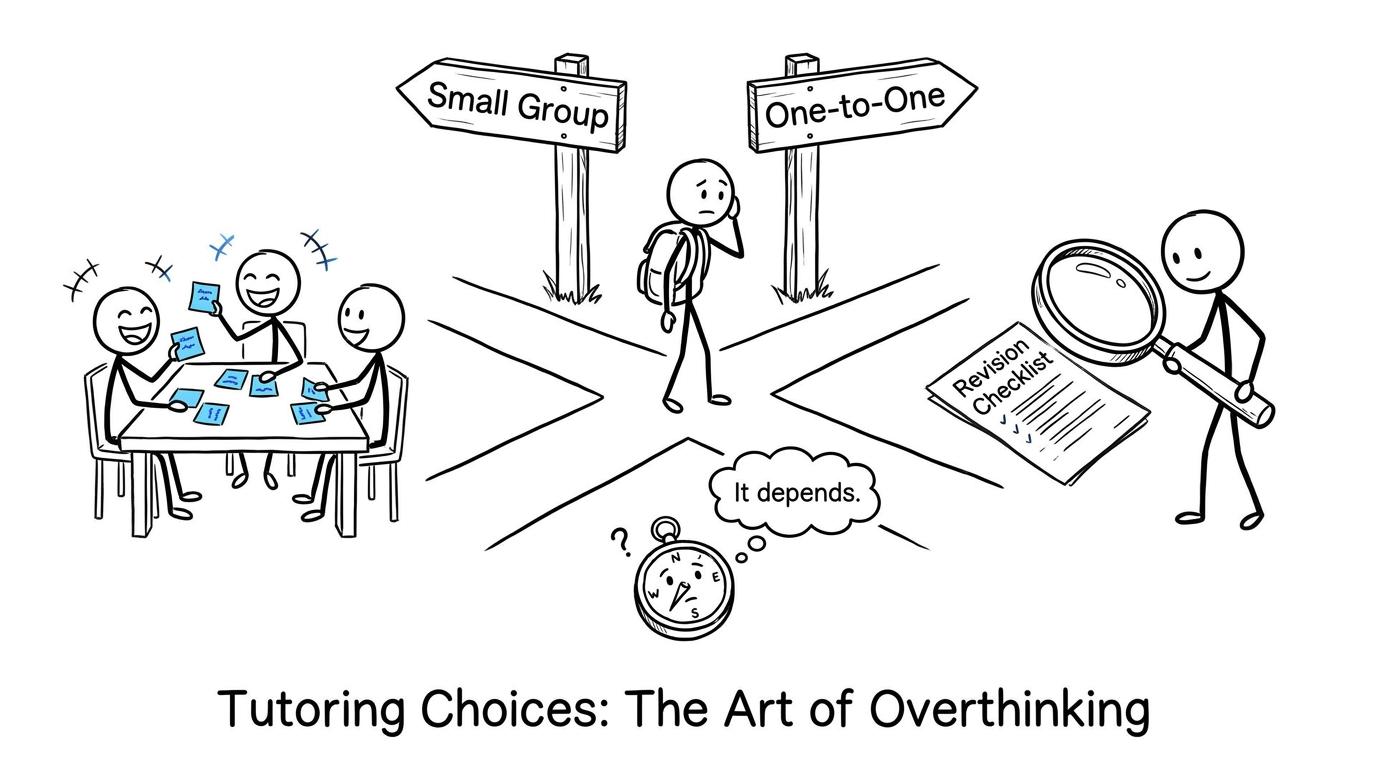 A student chooses between small-group and one-to-one tutoring
What does the tutoring evidence actually show?
Research reviewed by the Education Endowment Foundation indicates that both one-to-one and small-group tuition can improve attainment. Its evidence summaries define small-group tuition as one tutor working with approximately 222 to 555 pupils. On average across subjects and age groups, one-to-one tuition has a somewhat larger estimated effect, while small-group tuition is generally more economical.
Those averages are useful, but they are not a promise about GCSE Geography. Much of the wider tutoring evidence comes from literacy and maths, and outcomes vary according to age, subject and implementation. Studies comparing one-to-one tuition with groups of two or three have also produced mixed results.
The more dependable lesson is about design. Tutoring works best when it is:
- targeted at diagnosed needs;
- connected to normal classroom teaching;
- delivered regularly by a consistent, capable tutor;
- based on ambitious expectations;
- monitored so that progress can be checked.
Ofsted's reviews of school tutoring have similarly emphasised curriculum alignment, small groups and tutors who can identify misconceptions in real time. A generic weekly presentation is not automatically effective simply because it is called tutoring.
The real advantages of one-to-one geography tutoring
Every explanation can respond to you
In a one-to-one session, the tutor can stop as soon as your reasoning becomes uncertain. That matters in geography because an answer can contain accurate knowledge while failing to apply it to the question.
Perhaps you know a coastal case study but struggle to select evidence. Perhaps your fieldwork evaluation identifies a weakness without explaining its effect on reliability. A personal tutor can isolate that precise issue rather than reteaching the entire topic.
Feedback is immediate and detailed
Extended responses require more than memorised facts. Across GCSE specifications, students must demonstrate knowledge, understanding, application, analysis, evaluation and geographical skills. A one-to-one tutor can inspect how you interpret a command word, organise an argument and support a judgement.
That makes individual tuition particularly useful for students who repeatedly lose marks on longer answers despite knowing the content.
The pace can change without compromise
One week might focus on unfamiliar fieldwork data; another might concentrate on tectonic hazards or urban change. There is no need to wait for classmates or move on before you are ready.
This flexibility is valuable after a diagnostic paper. A similar principle works in maths: the MathsGenie guide to finding your weakest topics explains why lost marks should determine what you practise next.
The drawbacks of one-to-one tuition
Individual tuition is normally more expensive because the tutor's time is not shared. It can also become too comfortable. If the tutor supplies every prompt, the student may perform well during the session but struggle alone.
A good tutor therefore allows thinking time, expects complete answers and gradually removes support. Personalised tuition should create independence, not dependency.
Where small-group geography tutoring is stronger
Other students expose you to other ways of thinking
Geography often involves weighing evidence rather than producing one fixed sentence. Hearing another student defend a different management strategy can reveal evidence or counterarguments you overlooked.
Group discussion can be especially useful for decision-making exercises, resource interpretation and evaluative questions. Explaining a process aloud also tests whether you genuinely understand it.
A group can make participation feel normal
For some students, a weekly small group creates momentum. Everyone arrives, attempts the task and reviews the mark scheme. Revision becomes an appointment rather than an intention.
There is also reassurance in discovering that other students confuse similar command words or find unfamiliar figures difficult. That should not lower expectations. It simply removes the belief that uncertainty must be hidden.
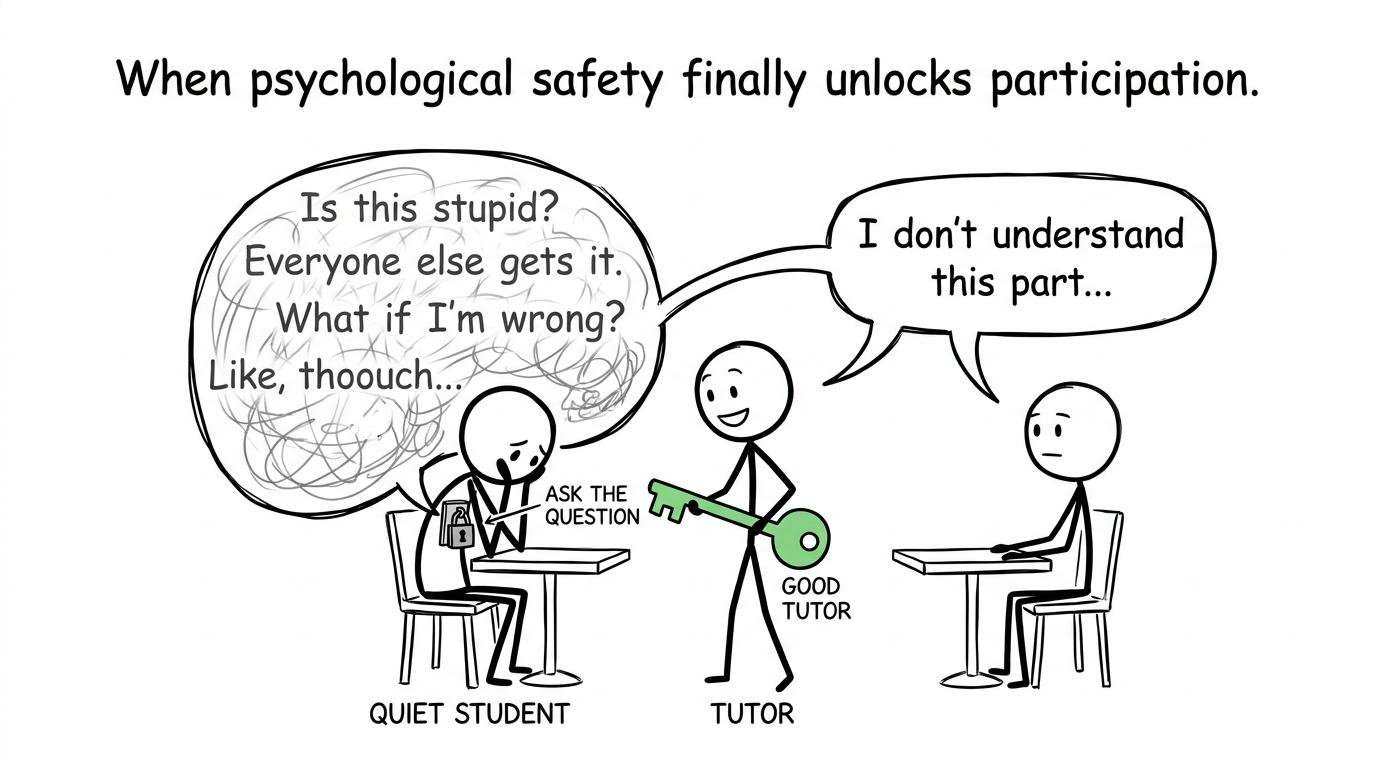 A good tutor unlocks questions during a group session
It is usually more affordable
Because several families share the tutor's time, group sessions commonly cost less per student. That may make regular support sustainable for longer.
Value, however, depends on participation. A cheap session where you rarely speak, receive no individual feedback and study the wrong specification is poor value.
The drawbacks of group tutoring
The pace cannot perfectly suit everyone. Confident students may dominate discussion, while quieter students can leave misconceptions unspoken. Personal feedback is also limited by the number of learners.
Group tuition becomes less targeted as the group grows. Before joining, ask how many students attend, how they are matched and whether the tutor reviews each student's written work.
Group vs 1:1 tutoring GCSE geography by student type
| Student need | Usually the better starting point |
|---|---|
| Several specific knowledge gaps | One-to-one |
| Difficulty structuring extended answers | One-to-one |
| Anxiety about asking questions publicly | One-to-one or a very small, supportive group |
| Stronger learning through debate | Small group |
| Need for regular accountability | Either, depending on the tutor's system |
| Limited budget | Small group |
| Broad revision with similarly matched classmates | Small group |
| Rapid support close to an exam | One-to-one, if needs have been diagnosed |
This is not a permanent classification. A student might use a short block of one-to-one sessions to repair fieldwork evaluation, then move into a group for mixed-paper practice. Another might begin in a group but need an individual session after a mock exposes a stubborn misconception.
The best format can change because the problem changes.
What GCSE Geography tuition should cover
A credible tutor should begin with your specification and school course. AQA, Edexcel, OCR and Eduqas do not organise every topic and paper identically. Current specifications assess combinations of physical geography, human geography, fieldwork, geographical skills, resource interpretation and extended responses.
Fieldwork deserves particular attention. Official GCSE requirements include work outside the classroom, while exam questions can test enquiry design, data collection, analysis, conclusions and evaluation. A tutor should use the investigations you actually completed at school rather than inventing replacements.
Geography also contains numerical skills. You may need to interpret graphs, calculate percentages, use averages, consider range or analyse relationships in data. MathsGenie's free GCSE maths revision hub can support these underlying skills with revision lessons, practice questions and solutions.
For independent practice, the twenty-minute GCSE revision routine offers a useful structure: recall, attempt questions, mark and record the next weakness. The subject may change, but the feedback loop remains sound.
How to test a tutor before committing
Ask practical questions rather than relying on promises:
- Which GCSE Geography specifications do you currently teach?
- How will you diagnose my weakest areas?
- How often will I write complete exam answers?
- Will feedback refer to the relevant mark scheme?
- How do you track whether mistakes disappear?
- For a group, what is the maximum size and how are students matched?
- What independent work is expected between sessions?
Requesting a trial session can help. Afterwards, you should be able to name what you learnt, what you corrected and what you need to practise next.
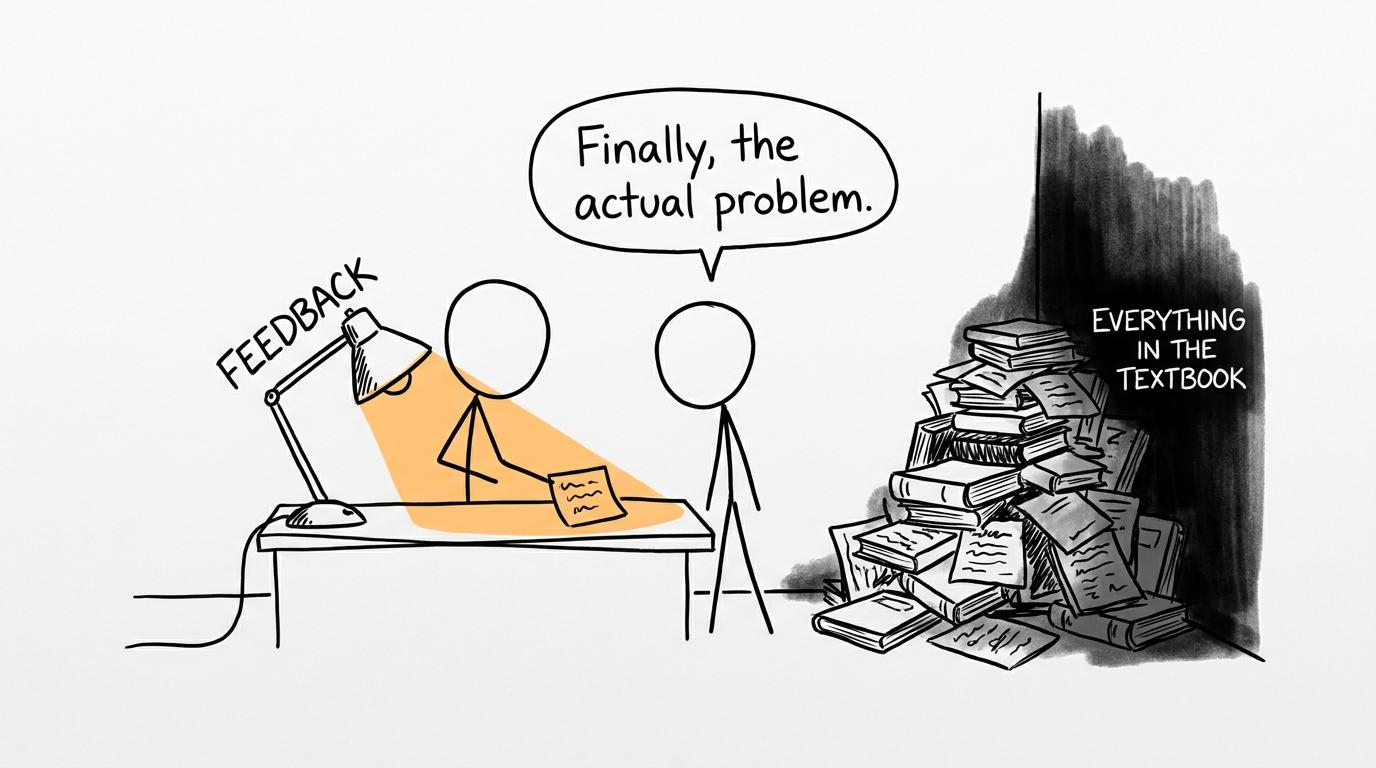 Focused feedback illuminates the real revision problem
Combine tutoring with independent revision
Tutoring occupies only a small part of the week. Improvement happens when feedback changes what you do alone.
A sensible cycle is:
- identify one weakness from an exam question;
- use tuition to understand and correct it;
- attempt a fresh question independently;
- mark it carefully;
- revisit the skill several days later.
For maths skills that support geographical data handling, MathsGenie provides free revision lessons, practice questions, mini tests, past papers, predicted papers, mark schemes and video solutions. The one-week GCSE maths revision plan shows how to combine diagnosis, focused repair and timed practice without turning every evening into a marathon.
If content tends to fade after a lesson, use the spacing ideas in the guide to stopping forgotten GCSE content. Retrieval and later re-testing are more revealing than rereading notes until they feel familiar.
Common mistakes when choosing tutoring
Assuming one-to-one must be superior
More attention is useful only when the attention is expert, targeted and designed to build independence. An excellent small group can outperform unfocused individual tuition for a particular student.
Choosing by price alone
Compare group size, preparation, feedback, specification knowledge and included resources. The lowest hourly price is not necessarily the lowest cost per useful session.
Ignoring the exam board
A tutor who teaches generic geography may overlook differences in content, fieldwork assessment and paper structure. Confirm the exact specification before paying for a course.
Revising passively during sessions
Watching explanations can feel productive. Exams require you to retrieve knowledge, analyse resources and write answers yourself. You should spend a substantial part of tuition attempting questions.
Never checking progress
Keep a short error log and retest the same skill with a different question. MathsGenie's GCSE revision loop for reluctant students captures the essential rhythm: learn, practise, mark, fix and repeat.
Choose the problem before choosing the format
The group versus one-to-one decision becomes easier when you stop asking which is universally better and ask what is currently blocking your marks.
Choose one-to-one tutoring for precise diagnosis, intensive written feedback and a pace built around you. Choose small-group tutoring for discussion, shared accountability and lower cost, provided the group stays small and well matched. In both cases, prioritise a tutor who knows your specification, uses exam evidence and expects independent practice.
Then support the numerical side of geography with MathsGenie's free GCSE maths resources. Start with a revision lesson, complete targeted practice questions, check the mark scheme or video solution, and move towards mini tests, past papers and predicted papers. A tutor can point towards the gap. Consistent practice is what closes it.










