Group vs 1:1 Tutoring GCSE Chemistry: Which Wins?
Group vs 1:1 tutoring GCSE chemistry compared clearly: costs, feedback, confidence and learning needs, plus a practical way to choose the right support.
Choosing a tutor can feel like choosing an answer before you have seen the question. A small group may offer energy, discussion and a lower cost. One-to-one tuition promises individual attention, but that does not automatically make it the better option.
The honest answer to group vs 1:1 tutoring GCSE chemistry is simple: one-to-one tuition usually suits students with specific gaps, low confidence or an urgent need for personalised feedback. Group tutoring often suits students who are broadly on track, learn through discussion and want structured support at a more accessible cost.
The quality of the tutor, the relevance of the sessions and what you do between them matter more than the label. A focused group can outperform unfocused individual tuition. Equally, a skilled one-to-one tutor can uncover misunderstandings that a student has hidden for months.
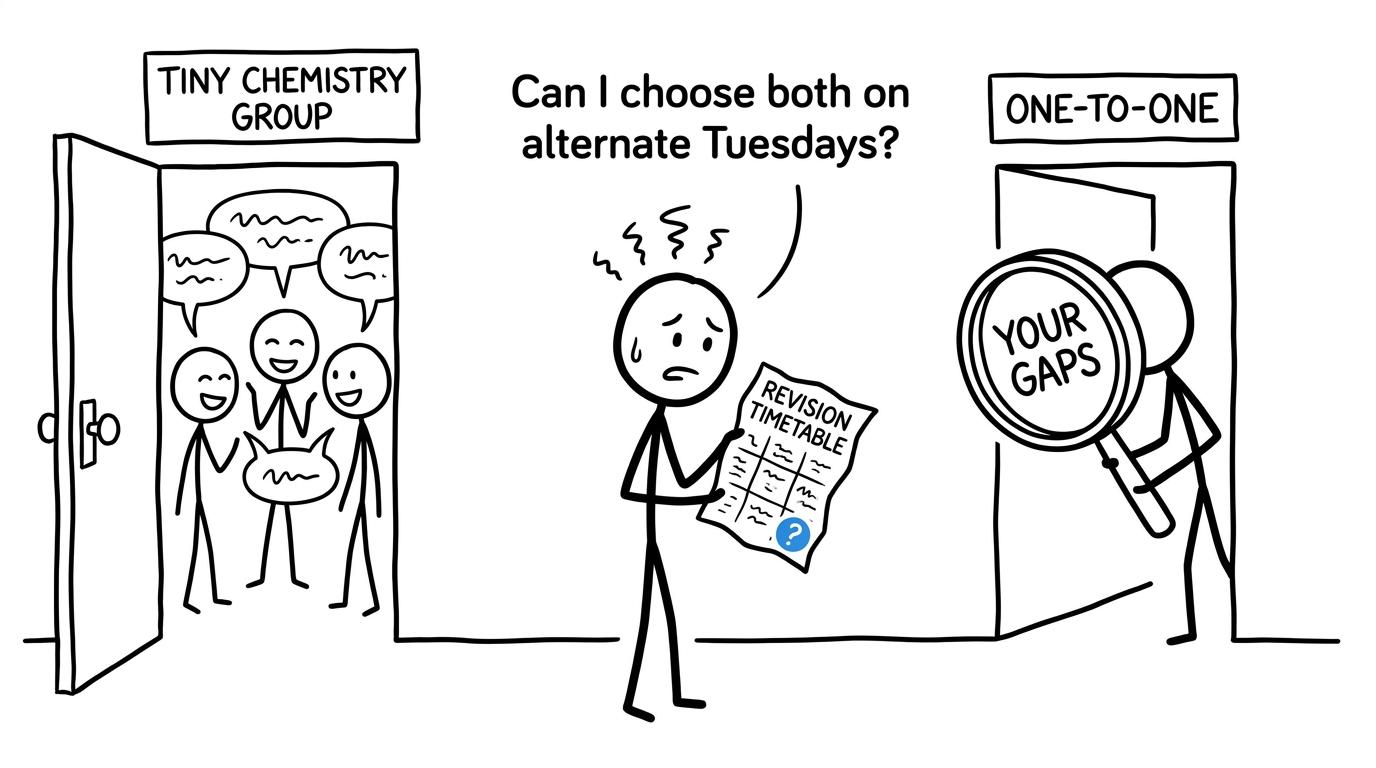 A GCSE student choosing between group and one-to-one tutoring
The quick comparison
Use this checklist before looking at the detail.
| Consideration | Small-group tutoring | One-to-one tutoring |
|---|---|---|
| Personalisation | Some, provided the group has similar needs | High, with the whole session adapted to one student |
| Opportunity to speak | Shared with other students | Continuous |
| Peer discussion | A major advantage | Usually absent |
| Pace | Set for the group | Adjusted immediately |
| Cost | Usually lower per student | Usually higher |
| Best suited to | Consolidation, motivation and regular practice | Specific gaps, confidence problems and targeted intervention |
| Main risk | Quiet students can disappear into the group | The student can become over-reliant on prompts |
Neither format is universally better. Your decision should depend on the problem you are trying to solve.
What the tutoring evidence really says
The Education Endowment Foundation defines small-group tuition as a teacher, teaching assistant or tutor working with approximately 222 to 555 pupils. Its evidence reviews indicate that both small-group and one-to-one tuition can improve academic progress, particularly when support is targeted, regular and connected to classroom teaching.
Its headline averages have generally favoured one-to-one tuition slightly, but comparisons between very small groups and individual tuition are mixed. In some studies, groups of two or three students have been similarly effective. These findings cover different ages and subjects, so they should not be treated as a guaranteed GCSE Chemistry result.
That qualification matters. There is no reliable rule saying that every GCSE Chemistry student will gain more from one format. The evidence points towards a more useful conclusion: targeted teaching and good feedback matter more than group size alone.
A tutor should know your exam board, whether you study separate Chemistry or Combined Science, and whether you are entered for foundation or higher tier where applicable. They should also connect tuition to your school course rather than teaching a disconnected collection of interesting facts.
When group GCSE Chemistry tutoring is better
Group tuition works best when the group is genuinely small and students have reasonably similar starting points.
You learn by hearing other questions
A student may think they understand electrolysis until somebody else asks why ions move towards a particular electrode. That question can expose an assumption everyone else was carrying silently.
Peer explanations also make students compare ideas, justify conclusions and hear scientific language used in different ways. This is valuable preparation for questions that require application rather than simple recall.
You need structure and accountability
A weekly group creates a rhythm. There is a fixed time, shared homework and an expectation that everyone arrives ready to participate. For students who know what to do but struggle to begin, that social structure can be more valuable than complete personalisation.
Your knowledge is broadly secure
If your main aim is to consolidate content, practise exam questions and sharpen explanations, a well-matched group may provide enough individual feedback. It can be particularly effective when the tutor groups students by specification and tier rather than simply by school year.
Cost affects how consistently you can attend
Group tutoring is normally less expensive per student. A sustainable programme over several months may be more useful than a brief burst of individual tuition that ends before weaknesses have been revisited.
The lowest price is not automatically the best value, however. Ask how many students attend, how work is marked and whether the tutor tracks individual mistakes.
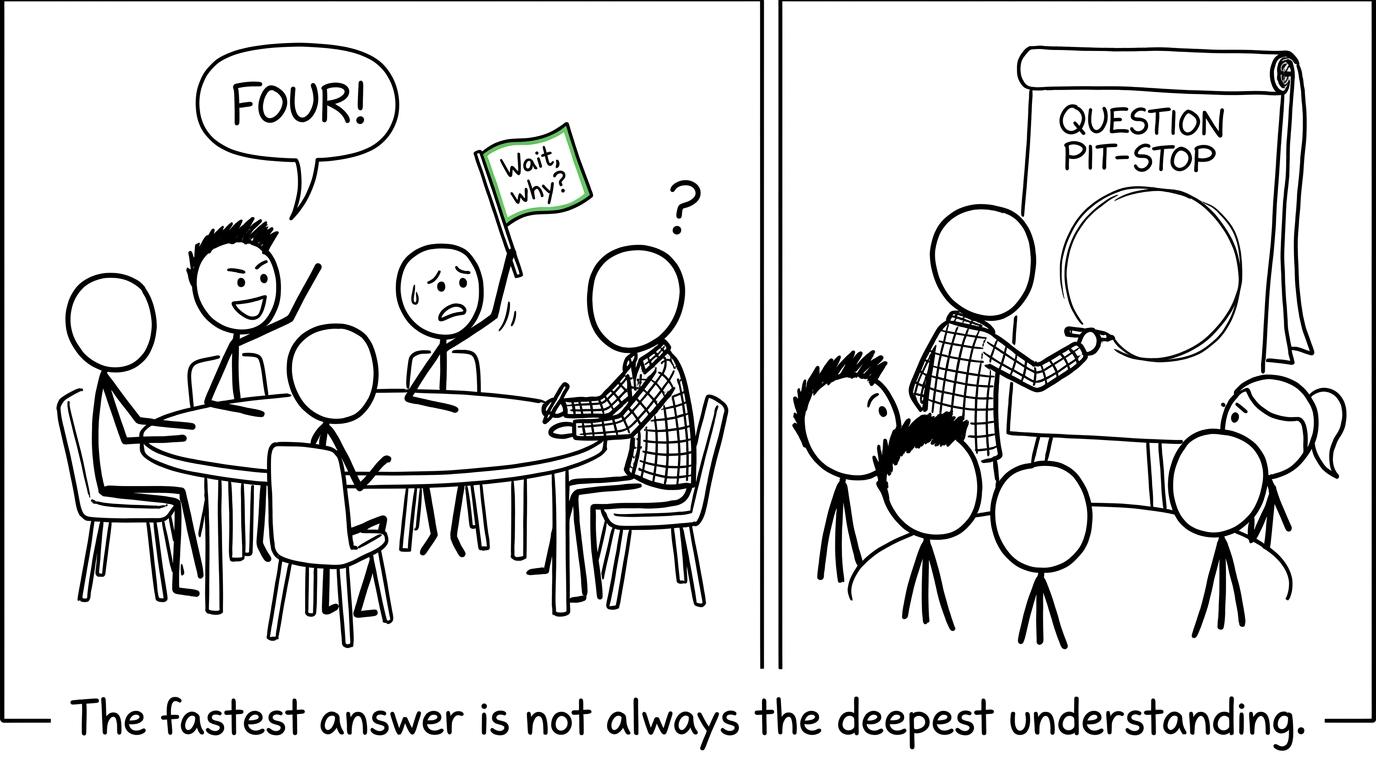 A tutoring group learns why the fastest answer is not always the deepest
When one-to-one GCSE Chemistry tutoring is better
Individual tuition becomes more valuable when a student’s needs are unusually specific.
You have gaps beneath the current topic
Difficulty with quantitative chemistry may not begin with chemistry. The real obstacle could be ratios, standard form, units, significant figures, graphs or rearranging formulae.
GCSE Chemistry specifications require mathematical skills in context, and at least 20%20\%20% of the assessment marks in separate GCSE Chemistry are allocated to maths skills. A tutor who diagnoses the underlying issue can slow down and repair it without asking the rest of a group to wait.
MathsGenie can support that repair through its free GCSE Maths revision hub, where students can choose resources for boards including Edexcel, AQA, OCR and Eduqas. Use the lessons and questions to practise the maths independently, leaving tutoring time for chemistry-specific application.
You are reluctant to ask questions publicly
Some students remain silent when confused because the group appears to have moved on. In a one-to-one setting, the tutor can notice hesitation, ask diagnostic questions and revisit a point without embarrassment.
This only works when the tutor creates a calm atmosphere. Individual attention should feel safe, not intense.
You need rapid, targeted intervention
If a mock has revealed several precise weaknesses close to the exams, one-to-one tuition can focus immediately on those areas. The session does not have to cover material that the student already understands.
A useful model is the same diagnostic cycle used in effective maths revision: attempt, mark, identify the gap, repair it and retest. Maths students can see this process in how to use past papers properly.
Your pace is significantly different from your peers
A student who needs more processing time may benefit from being able to pause and rebuild an explanation. A student working well beyond the class pace may need harder application questions. Both can be poorly served by a group designed around the middle.
The hidden issue: tutor quality
Parents and students often compare formats before comparing teaching. That reverses the important decision.
A strong GCSE Chemistry tutor should:
- understand the relevant Edexcel, AQA, OCR or Eduqas specification;
- distinguish separate Chemistry from Combined Science requirements;
- diagnose misconceptions rather than simply repeat notes;
- model precise scientific vocabulary and exam reasoning;
- include retrieval and exam-style practice;
- give feedback that tells the student what to do next;
- monitor whether mistakes disappear over time;
- encourage independent work rather than permanent dependence.
Ask a prospective tutor what a normal lesson looks like. If every session is an improvised tour through whatever homework appeared that week, progress may be hard to measure. There should be a plan, even when that plan changes in response to evidence.
Chemistry tutoring should strengthen your maths too
Chemistry questions can require ratios, percentages, averages, graph interpretation, gradients, standard form and algebraic substitution. Weakness in these areas can make secure chemical knowledge look less secure on paper.
Use tuition to identify the problem, then practise the underlying skill separately. MathsGenie’s GCSE Maths topics by board and tier can help you check what belongs to your maths course. The direct and inverse proportion revision guide is useful when proportional reasoning needs attention.
For broader planning, follow a repeatable GCSE maths revision timetable. Chemistry tutoring should sit inside your revision week, not consume all the independent practice time around it.
How to choose between group and one-to-one tuition
Start with a short trial period and judge it by evidence rather than atmosphere alone.
Identify the actual need
Write down the three most important problems. Are they missing knowledge, mathematical fluency, exam wording, motivation, confidence or time management? “I am bad at chemistry” is too broad to guide a tutor.
Ask how the group is organised
For group tuition, check the maximum size, exam-board alignment and range of attainment. Also ask whether every student receives marked feedback. A “small group” of students following different specifications may still be difficult to personalise.
Review progress after several sessions
Look for changes you can observe:
- Can you answer previously difficult questions without prompts?
- Are repeated errors becoming less frequent?
- Can you explain why an answer is correct?
- Is independent homework becoming more accurate?
- Do timed questions feel more manageable?
The purpose of tutoring is not to make the lesson feel easy. It is to make you more capable when the tutor is absent.
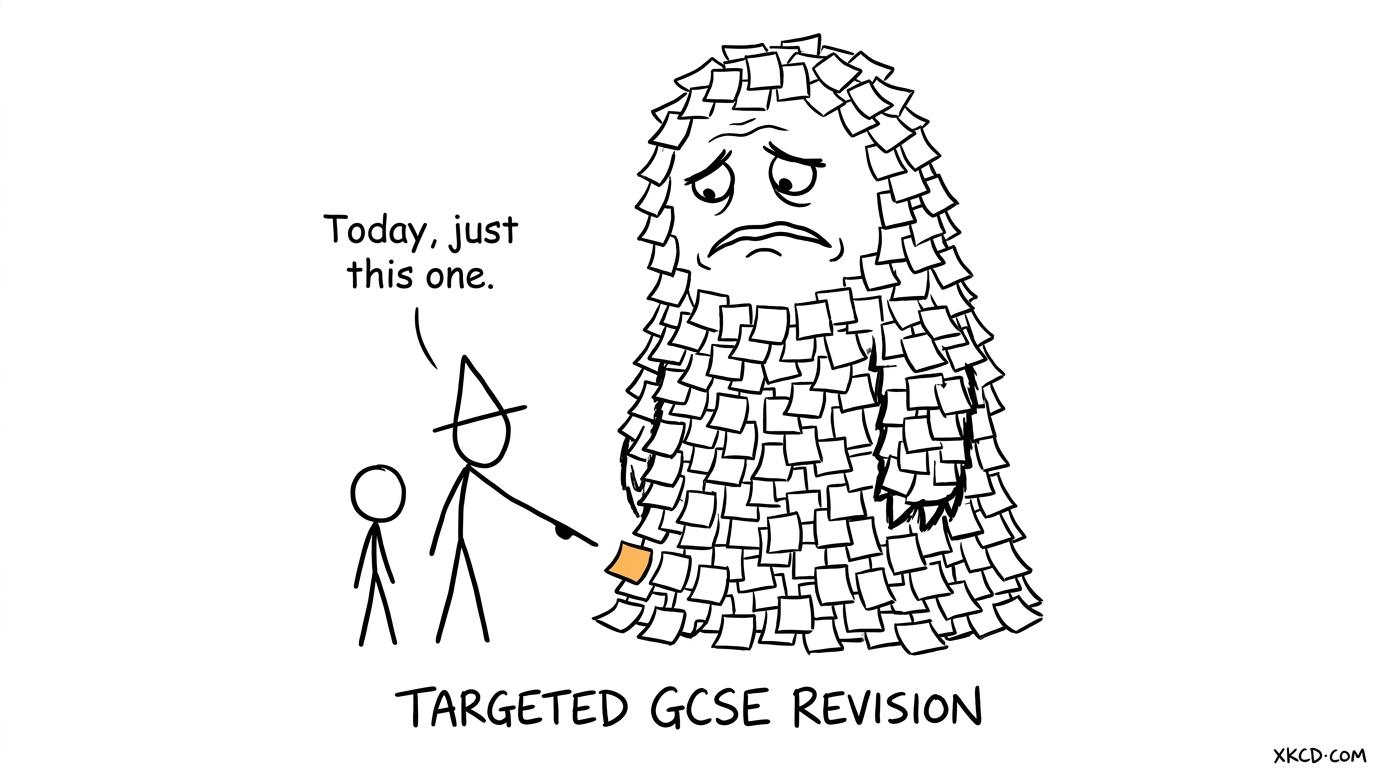 A tutor reduces an enormous revision checklist to one clear target
A blended option can be stronger
The choice does not have to remain fixed. A student might use one-to-one sessions briefly to diagnose and repair foundational gaps, then move into a small group for regular practice. Another might attend group tuition throughout the year and book occasional individual sessions after mocks.
Free independent resources can reduce the amount of paid tutoring required. For maths, begin with a revision lesson, complete practice questions, mark the work and bring unresolved problems to the next session. Near the exams, use GCSE predicted papers alongside official past papers rather than as a replacement for them.
The one-month GCSE maths revision plan offers a practical structure for combining topic repair, retrieval and timed work.
Common mistakes when choosing tutoring
Assuming one-to-one must be better
More attention is useful only when that attention is well directed. An expert-led, well-matched group may offer better teaching and more productive practice than weak individual tuition.
Choosing only by price
Compare group size, tutor experience, feedback, lesson length and preparation. The cheapest hourly option can become expensive if sessions are not targeted.
Ignoring the exam specification
Chemistry content and paper organisation vary between exam boards and qualifications. Resources should match what you will actually sit.
Letting tutoring replace independent practice
Watching a tutor solve questions can create the feeling of understanding without the ability to reproduce it. Students must attempt questions alone, check feedback and revisit errors.
Continuing without measuring progress
Comfort is not proof of improvement. Keep a short error log and test old weaknesses regularly. The same principle applies when using GCSE past papers: marking and repairing mistakes is where much of the learning happens.
Which option should you choose?
Choose small-group GCSE Chemistry tutoring if you enjoy discussion, need a regular routine, have broadly similar needs to the other students and want a more affordable long-term option.
Choose one-to-one tutoring if you have precise knowledge gaps, significant confidence barriers, an unusual learning pace or limited time for targeted intervention.
Then look beyond the format. Choose a tutor who diagnoses, explains, checks and retests. The best tuition gradually makes itself less necessary.
For the mathematical side of GCSE Chemistry and your wider exam preparation, make MathsGenie your independent revision base. Use free revision lessons and practice questions to repair individual skills, mini tests to check retention, and past papers, predicted papers, mark schemes and video solutions to turn that understanding into marks. Start at the GCSE Maths revision hub, choose your board and tier, and give your next tutoring session a clearer problem to solve.