GCSE Resit Myths: 8 Things Students Get Wrong
GCSE resit myths explained clearly, from grade caps and exam papers to November English Literature entries, certificates and revision choices for students.

Resitting GCSE Maths or English Language can feel like carrying an old result into a new classroom. It is easy to imagine everyone else moving forwards while you have been sent backwards. That feeling helps GCSE resit myths spread: your grade will be capped, November is easier, or one result will follow you forever.
Here are the facts. A resit is another valid attempt at the qualification. You normally complete every required paper, and your work is assessed against the grade boundaries for that examination series. Entry rules depend on your nation, exam board and centre, so confirm the details with your exams officer.
A quick GCSE resit facts checklist
- Resit grades are not automatically capped.
- Your GCSE Maths tier still affects the grades available.
- You normally complete all required papers or components.
- In England, November GCSE examinations cover Maths and English Language, not English Literature.
- November papers are not automatically easier.
- A certificate does not normally label a qualification as a resit.
- Not every student below grade 444 follows the same route.
- Better preparation can produce a different result.
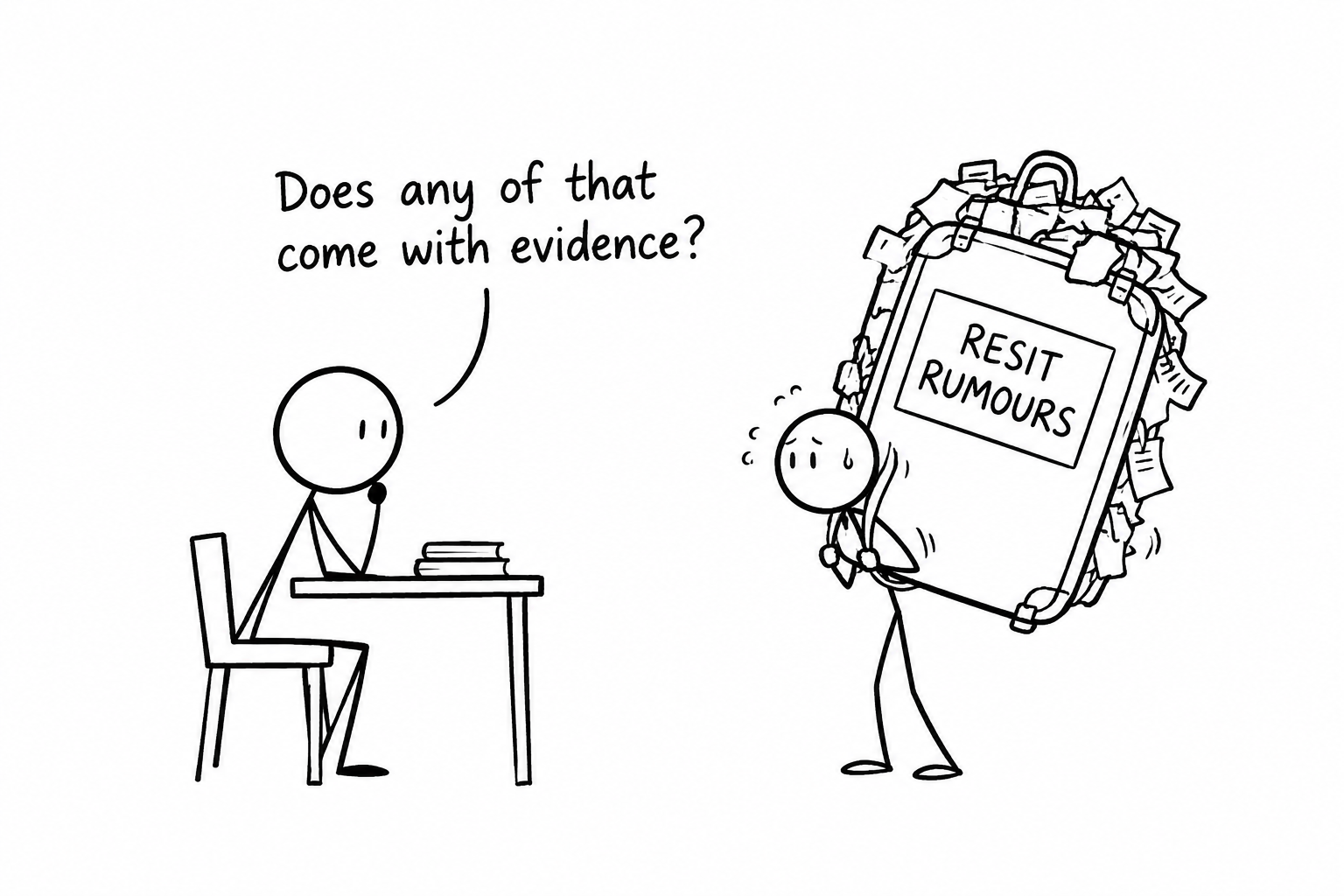 A student asks an awkward rumour salesman whether his suitcase of GCSE resit rumours comes with evidence
Eight GCSE resit myths worth leaving behind
Myth one: resit grades are capped
A paper is not given a lower maximum grade because it is a resit. It is marked according to the qualification rules and grade boundaries for that series.
GCSE Maths does have foundation and higher tiers. Foundation tier usually limits the highest available grade to grade 555, while higher tier provides access to the upper grades. That is a tier rule, not a resit penalty. English Language is untiered.
Choose your Maths tier with your teacher or centre. The useful question is which paper offers the best realistic opportunity to demonstrate your knowledge. You can select your board and tier through the GCSE Maths revision hub.
Myth two: you can resit only your weakest paper
GCSE Maths and English Language are linear qualifications. Your final grade is based on the papers or components required for that entry. You cannot normally keep a strong paper from the summer and replace only a weaker paper in November.
Prepare across the specification and complete full papers. GCSE past-paper practice reveals difficulties that isolated questions can hide, including timing, topic switching and incomplete methods.
Myth three: English Literature can be resat in November
In England, the November GCSE series includes Maths and English Language. English Literature is not part of the standard November series, so a Literature resit will generally need to wait until summer.
Language and Literature are separate qualifications. Check the subject title and specification code on your results documents before an entry is made. If Literature is the qualification you need, follow an English Literature resit revision plan built around the summer series.
Myth four: November resits are easier
November papers are not designed as softer versions of GCSE examinations. They assess the same qualification standard, with awarding processes intended to maintain that standard between series.
November may feel easier when summer content remains fresh. It may feel harder when the short preparation window produces rushed revision. Treat it as an earlier opportunity, not an easier examination. Your centre should consider whether you are ready rather than entering you automatically.
Myth five: a failed attempt is printed on your certificate
A standard GCSE certificate does not normally list every unsuccessful attempt or print “resit” beside the final grade. It records the qualification and awarded result rather than narrating how you reached it.
Awarding bodies retain results records, and an employer, college or university may request particular information. Answer those requests honestly. If you are concerned about documentation or an unclassified result, ask your exams officer what your awarding body will issue.
Myth six: everyone below grade four takes the same course
In England, students on funded post-16 programmes who have not met the maths and English requirement must generally continue learning the relevant subject. However, the route depends on prior attainment, study pattern and provider decisions.
A full-time student with grade 333 will ordinarily continue towards GCSE Maths or English Language. Students with lower grades may have approved alternatives, including Functional Skills, where appropriate. The rules also differ across the UK. Continued learning may be required, but the qualification and timing are not identical for everyone.
Myth seven: you must repeat the same tier and approach
A new entry does not have to repeat every earlier decision. Your centre can reconsider whether foundation or higher tier is appropriate for GCSE Maths. You may also use a school, college or approved private-candidate centre, depending on availability, fees and deadlines.
Changing exam boards is sometimes possible, but specifications and paper structures differ across Edexcel, AQA, OCR and Eduqas. Familiarity has value. Use GCSE Maths resources organised by exam board so your questions and mark schemes match your entry.
Myth eight: the same student will receive the same result
A previous grade records one performance. It is not a permanent description of your ability. Improvement, however, requires more than repeating the same revision with greater anxiety.
Complete a timed paper, mark it carefully, and classify lost marks as knowledge gaps, incomplete methods or exam-management errors. Use revision lessons and practice questions for missing knowledge, video solutions for methods, and timed mini tests for exam technique.
A GCSE Maths revision timetable can turn that diagnosis into weekly action. Near the examination, use GCSE predicted papers alongside past papers, not instead of them.
Common resit mistakes to avoid
The first mistake is revising from memory. Familiar topics feel reassuring, but marked work should decide your priorities. The second is ignoring the specification. Confirm your awarding body, subject code and Maths tier before choosing resources.
Another mistake is reading solutions without writing complete answers. Recognition can feel like progress, but examinations test retrieval. Attempt each question first, then use the mark scheme or video solution to identify exactly where marks were lost.
Do not leave practical arrangements until the final weeks. Ask your centre about entry deadlines, fees, identification and access arrangements. Previous support does not remove the need for your current centre to process the appropriate evidence.
Turn resit misconceptions into a plan
A resit can look like a verdict when viewed backwards. Viewed forwards, it is a timetable, a specification and a collection of skills that can improve.
Confirm your subject, board, examination series and tier. Identify weak areas from marked work. Then use MathsGenie's free revision lessons, practice questions, mini tests, past papers, mark schemes and video solutions. If time is limited, begin with the one-month GCSE Maths revision plan.
Rumours make resits feel mysterious. Good revision makes them specific. Start with one accurately marked paper and let the evidence decide what you revise next.