GCSE Panjabi Examiner Reports: What They Reveal
GCSE Panjabi examiner reports reveal recurring marks leaks. Learn what they flag in each skill and turn official feedback into a focused revision plan.
A student can know plenty of Panjabi and still leave an exam feeling that the paper measured something else. Perhaps a listening answer missed one crucial detail. Perhaps a carefully memorised speaking response collapsed after an unexpected question. Perhaps a writing task covered the topic beautifully but ignored one bullet point.
That is where GCSE Panjabi examiner reports become useful. They explain how candidates approached a paper, where marks were commonly lost and what stronger performances tended to do differently. The practical message is simple: accurate communication, complete responses and flexible language matter more than impressive material that does not answer the exact task.
This article draws on the current AQA GCSE Panjabi specification and publicly accessible official assessment material, including the June 2022 Higher speaking report. Availability varies by series and component, so the aim is not to pretend that one document proves a statistical trend. Instead, it identifies recurring issues built into the assessment criteria and repeatedly emphasised in examiner guidance.
The quick examiner-report checklist
Before exploring each skill, here is the useful version of the message:
- Answer every element of the question, especially separate bullet points.
- Give the precise detail requested rather than everything you understood.
- Build vocabulary across all three specification themes.
- Practise past, present and future time frames.
- Develop opinions with reasons instead of stopping after a basic statement.
- Prepare for spontaneous speaking, not only memorised speeches.
- Make handwriting and Gurmukhi spelling clear enough to communicate meaning.
- Treat translation as an accuracy task, not a creative-writing exercise.
- Use the mark scheme and examiner report after attempting the paper.
- Keep an error log and revisit the same weakness later.
This resembles effective maths revision more than it first appears. In both subjects, improvement begins when a vague result becomes a specific diagnosis. MathsGenie’s guide to finding your weakest GCSE topics explains the same feedback principle.
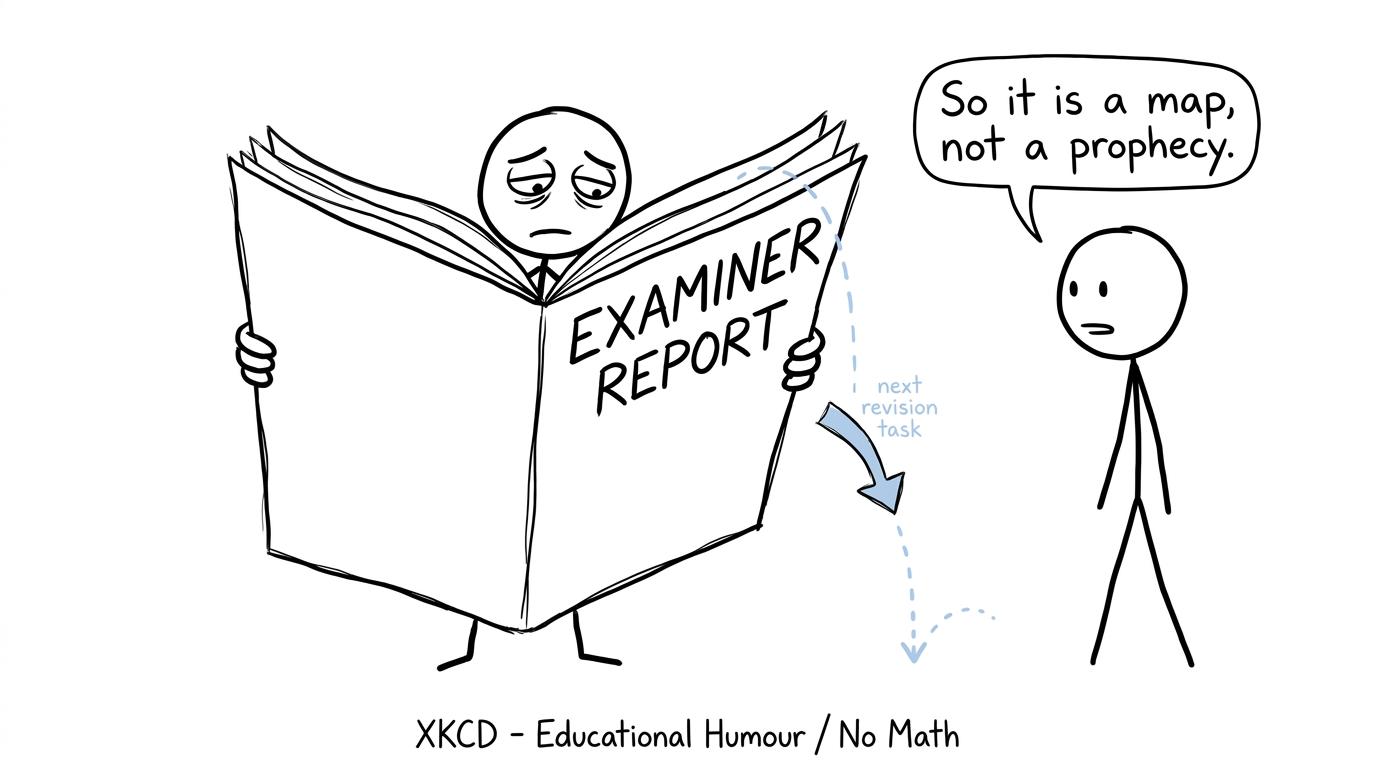 A student discovers that an examiner report is a map rather than a prophecy
What examiner reports are actually for
An examiner report is not a hidden list of next year’s questions. It is a retrospective commentary on a completed examination series. Depending on the component, it may discuss candidate performance, successful approaches, common misunderstandings and problems with how speaking assessments were conducted.
That distinction matters. Reading a report passively produces little benefit. Its value appears when you connect a comment to three things:
- the original question;
- the official mark scheme;
- your own response under timed conditions.
The report tells you what happened across a cohort. The mark scheme tells you what earned credit. Your answer shows whether the same problem applies to you.
A sensible sequence is therefore:
attempt, mark, read, diagnose, practise, retest.
This is also the method recommended in MathsGenie’s guide to using GCSE past papers properly. Although MathsGenie specialises in free maths revision, the underlying revision habit transfers well to a language qualification.
What GCSE Panjabi examiner reports flag in speaking
AQA GCSE Panjabi speaking contains a role-play, a photo card and a general conversation. The assessment is worth 25%25\%25% of the qualification. The official specification distinguishes communication from qualities such as range and accuracy, pronunciation and intonation, spontaneity and fluency.
The June 2022 Higher speaking report noted that many centres managed the requirements well, while also offering detailed guidance about candidate performance and the conduct of tests. For students, the most useful lessons concern completeness, spontaneity and control.
Memorising is not the same as communicating
A polished prepared answer can be helpful, but only if the student can adapt it. General conversation is an interaction. Examiners need evidence that candidates can respond to questions, develop ideas and sustain communication rather than simply reproduce a fixed paragraph.
Prepare reusable language structures, not an entire script. Practise giving an opinion, adding a reason, changing time frame and responding to a follow-up question. Ask a teacher or revision partner to interrupt your expected sequence so that flexibility becomes normal.
Role-play details are easy to overlook
Role-play tasks reward the required information. A long answer cannot compensate for omitting the detail requested by a prompt. Candidates should identify each task element during preparation and check that every response communicates it directly.
This is similar to a multi-part maths question: completing an elegant calculation for the wrong quantity does not answer the question. The broader habit is to circle command words and identify exactly what must be supplied.
Natural follow-up questions matter
Students should expect to react to questions they have not rehearsed word for word. Short, accurate answers can be extended through a reason, example or contrast. The goal is controlled interaction, not speed for its own sake.
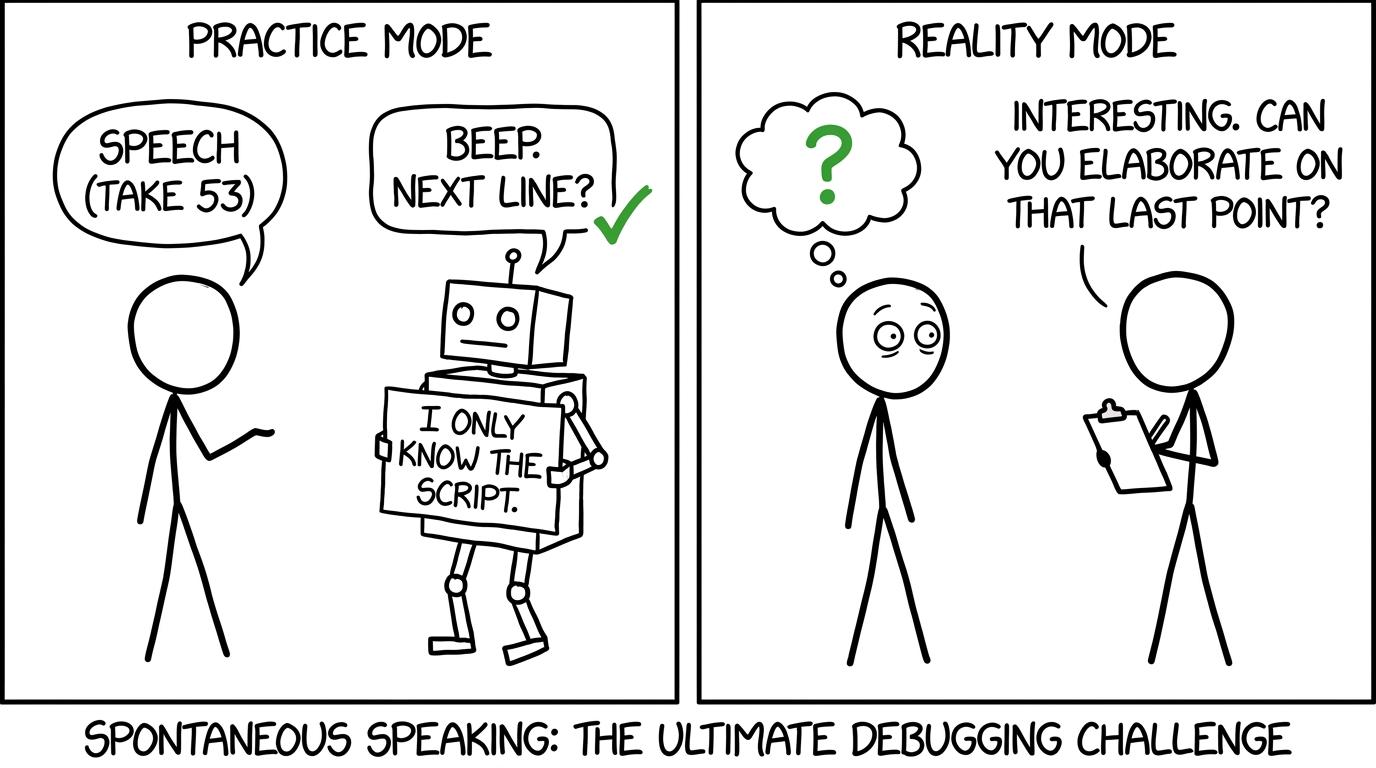 A cardboard robot is excellent at scripts but less helpful with follow-up questions
What the feedback implies for listening and reading
AQA assesses listening and reading separately, with each contributing 25%25\%25% of the GCSE. Both papers include questions requiring careful attention to detail, while the reading paper also contains translation from Panjabi into English.
The specification expects students to recognise overall messages, key points, details and opinions. That list explains why simply recognising the topic is not enough.
General understanding can hide missing detail
Suppose you understand that a recording concerns school, travel or family life. That broad recognition may help, but a question could ask for a reason, time, preference or consequence. Revision should therefore move beyond topic recognition towards precise retrieval.
When marking listening or reading practice, label every error:
- vocabulary not known;
- known word not recognised in context;
- distractor selected;
- question misread;
- insufficient detail;
- answer given in the wrong language.
That final category deserves attention because AQA papers contain sections with different response-language requirements. Always follow the instructions printed for that section.
Translation rewards meaning and precision
Translation is not the place to embellish. The safest approach is to preserve the meaning, tense, relationships and important details of the source. If one word is unfamiliar, use the surrounding sentence to infer its role before deciding how to express the overall message.
Vocabulary revision should include words inside phrases and sentences. An isolated list may teach recognition, but context teaches how words behave.
What examiner guidance means for writing
Writing also contributes 25%25\%25% of the qualification. Foundation and Higher papers use different task structures, but both require candidates to communicate relevant information accurately. The current specification expects a range of vocabulary and grammatical structures, reference to different time frames and the ability to express and justify ideas.
Every bullet point needs visible coverage
One of the most avoidable marks leaks in language exams is incomplete task coverage. Before writing, convert each bullet point into a small planning prompt. After writing, check each one against the response.
Length alone is not evidence of completeness. A candidate can write extensively about the first idea and leave too little time for the remaining requirements. A brief plan protects the whole answer.
Range must remain under control
More complex language can strengthen a response, but only when meaning remains clear. Students sometimes chase ambitious vocabulary while losing tense consistency, agreement, spelling or sentence control.
A better progression is:
- secure accurate everyday structures;
- connect ideas clearly;
- add reasons and opinions;
- vary time frames;
- introduce more complex forms that you can use reliably.
Accuracy and ambition are partners, not rivals.
Gurmukhi accuracy affects communication
Clear script and accurate spelling help examiners understand the intended message. Build regular transcription, dictation and proofreading into revision rather than leaving handwriting practice until the final week. Create a personal list of words you repeatedly misspell, particularly common verbs, connectives and topic vocabulary.
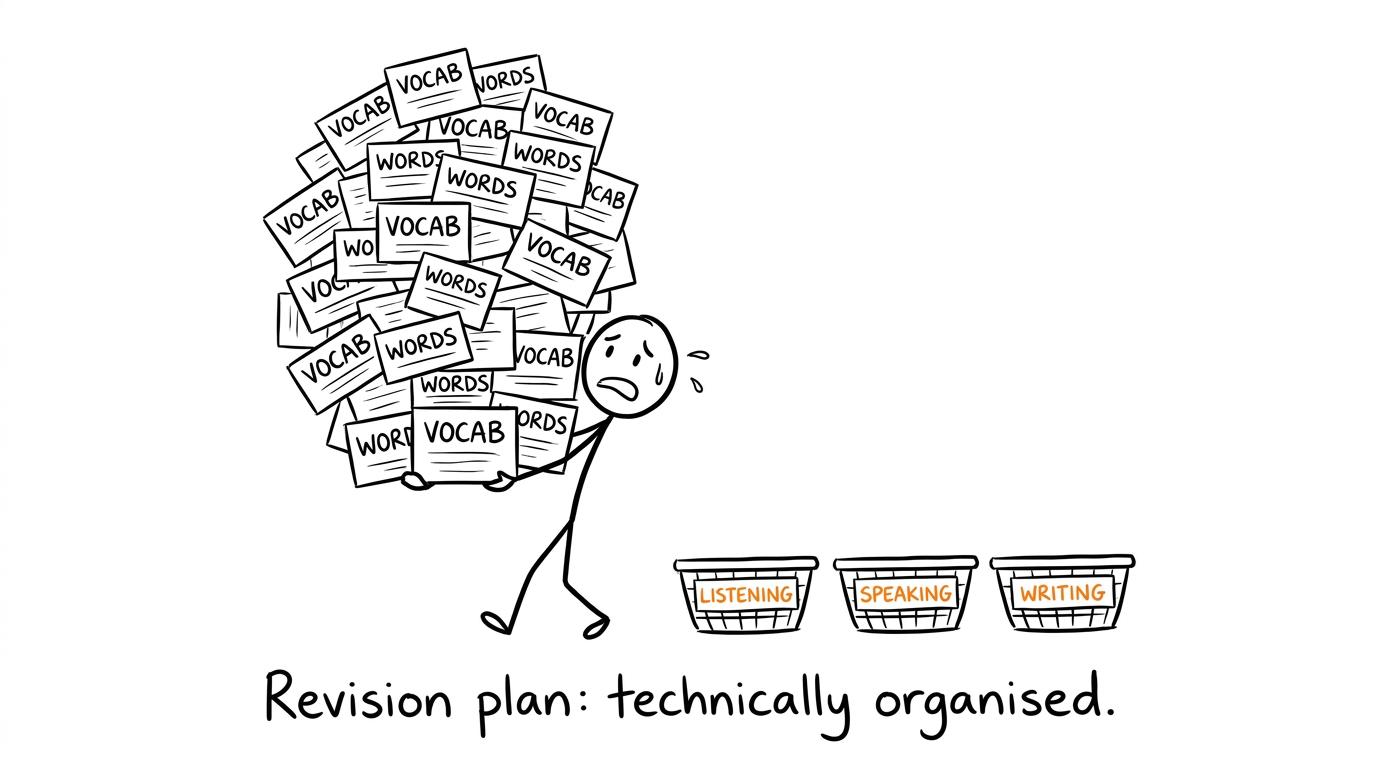 A highly organised vocabulary system becomes slightly less organised in practice
Turn examiner comments into smarter revision
An examiner report should change what you do next. Use one page with four columns: report observation, evidence from your work, precise repair task and retest date.
For example, an observation about undeveloped speaking answers might lead to a practice session on adding reasons and follow-up details. A warning about missed bullet points should lead to timed planning and coverage checks. A translation weakness should produce targeted tense and vocabulary practice.
Keep each repair task small. “Revise Panjabi” is too broad. “Answer ten unexpected speaking questions using a reason and two time frames” is measurable.
A manageable weekly pattern could include:
- one listening session with an error log;
- one reading or translation session;
- one spontaneous speaking session;
- one timed writing task followed by marking;
- one retest of the week’s most common error.
Students balancing Panjabi with maths can use MathsGenie’s one-month GCSE revision plan or twenty-minute revision routine to organise the maths side without allowing it to consume every evening.
Common mistakes when using examiner reports
Treating comments as predictions
Reports describe previous performance. They do not reveal the next paper. Cover the full specification rather than gambling on repeated topics.
Reading without attempting the paper
A comment feels obvious when somebody else has already made the mistake. Attempting the question first reveals whether you would have done the same.
Collecting every weakness at once
A long list creates anxiety rather than action. Choose the two patterns costing you the most marks, repair them and then move on.
Ignoring the mark scheme
The examiner report provides context, but the mark scheme remains essential for understanding how a particular response is credited. Use both documents together.
Applying centre guidance to yourself
Speaking reports may discuss teacher timing, recording, questioning or administration. Those points are important for centres, but your revision list should focus on candidate actions unless your teacher tells you otherwise.
Assuming fluency guarantees examination success
Home or community use of Panjabi can provide a strong foundation, but the GCSE still tests specific themes, response formats, translation, accuracy and task fulfilment. Familiar conversation does not replace timed exam practice.
Make feedback part of your whole GCSE strategy
Examiner feedback works because it narrows attention. It turns “I need to improve” into “I lose details in listening questions” or “I do not develop speaking answers”. That is useful in Panjabi, maths and every other GCSE.
For maths, begin with the free GCSE Maths revision hub, or select the AQA GCSE Maths revision resources if that is your board. Learn weak topics through revision lessons, complete practice questions, and then test your understanding with mark schemes and video solutions.
As the examinations approach, use GCSE predicted papers alongside real past papers and mini tests. Predicted papers are rehearsal, not prophecy: exactly the same principle that applies to examiner reports.
The most valuable report is not the one you highlight most carefully. It is the one that changes your next revision session. Read the evidence, choose one repair and practise it until the weakness becomes less expensive. Then let MathsGenie provide the same calm, evidence-led structure for your GCSE maths revision.