GCSE Japanese Group Chat Study Tips That Work
GCSE Japanese group chat study tips that turn messages into useful quizzes, speaking practice and feedback while keeping your wider revision on track.

A class group chat can look productive while achieving almost nothing. Someone posts a vocabulary list. Three people react with thumbs-up emojis. Then a meme arrives, the conversation disappears into exam jokes, and everybody quietly assumes revision happened.
Effective GCSE Japanese group chat study is different. The chat needs a clear task, a short deadline and an answer-checking routine. Use it for retrieval quizzes, voice-note speaking practice, sentence corrections and shared accountability, not as an endlessly scrolling folder of resources nobody opens.
The aim is not to remove every joke. It is to make useful revision the default.
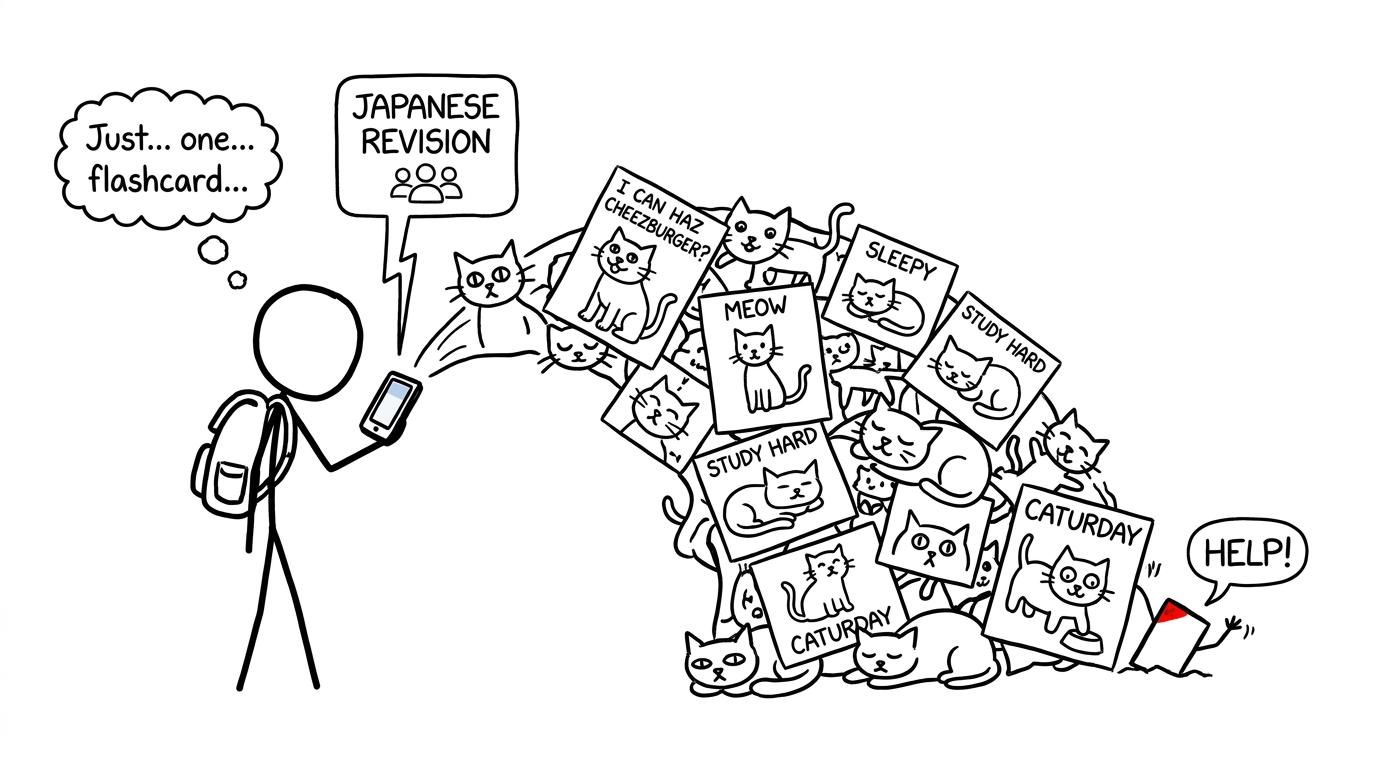 A Japanese revision flashcard tries to escape an avalanche of group-chat memes
The quick group chat revision checklist
Before sending another link or photograph of your notes, agree on these basics:
- Keep the group small enough for everyone to participate.
- Choose one administrator or rotating session leader.
- Set specific revision windows rather than messaging all day.
- Give every session one skill: listening, speaking, reading or writing.
- Ask questions before revealing answers.
- Correct kindly and explain the correction.
- Revisit difficult material several days later.
- Keep memes and general conversation to an agreed time or separate chat.
- Follow your school's online-safety rules and protect personal information.
- End each session with an individual task completed away from the chat.
That final point matters. A group can prompt revision, but nobody else can retrieve vocabulary, speak Japanese or write an exam response for you.
Give the chat a job before it develops a personality
Every group chat eventually creates its own culture. If its purpose is vague, the loudest habit wins. Usually that means notifications, reactions and increasingly elaborate jokes about how little revision everyone has done.
Write a short pinned message explaining what the group is for. It might say that the chat runs short weekday quizzes, accepts Japanese questions and keeps social posts until after the revision window. Agree that nobody is expected to reply late at night.
A useful session follows a simple sequence:
- Prompt: one student posts a question or task.
- Attempt: everyone answers without immediately checking notes.
- Check: the leader shares an approved answer or teacher-checked source.
- Explain: the group discusses why errors happened.
- Repeat: missed material returns in a later session.
This converts conversation into retrieval practice. Educational evidence reviews distinguish active recall from passive rereading: trying to bring information to mind can strengthen learning and reveal what still needs attention. The uncomfortable pause before an answer is not wasted time. It is often the useful part.
Match activities to the GCSE Japanese assessment
The current Pearson Edexcel GCSE Japanese qualification assesses listening, speaking, reading and writing in four externally examined papers. Each skill contributes 25%25\%25% of the qualification. Students enter either foundation or higher tier across the papers.
A productive chat should therefore do more than exchange vocabulary photographs. Rotate through all four skills and make sure the difficulty suits the tier your teacher has entered you for.
Use rapid retrieval for vocabulary and grammar
One person posts a short set of prompts without answers. Members respond privately on paper first, then post their answers together. This reduces copying and gives everyone genuine thinking time.
Prompts could test:
- recognition of kanji and kana;
- meanings in context;
- verb and adjective forms;
- question words;
- time expressions and connectives;
- vocabulary from the specification themes;
- choosing an appropriate structure for a sentence.
Avoid testing isolated words forever. Knowing a translation is useful, but the examination also requires students to understand and communicate meaning within longer spoken and written material.
Create three shared lists: secure, uncertain and repeatedly missed. The repeatedly missed list should drive future quizzes. Revision improves when the evidence decides what comes next, rather than whichever topic feels most comfortable.
Practise speaking with short voice notes
Voice notes can turn a silent text chat into useful speaking practice. Set a brief topic, allow planning time and ask each person to record a concise response. Partners can listen for clarity, relevant vocabulary, opinions, reasons and accurate structures.
Keep feedback narrow. Correcting every hesitation at once can overwhelm the speaker. Instead, identify one strength and one priority for the next attempt. If pronunciation is uncertain, flag it for your teacher rather than allowing the group to repeat an unverified correction.
Never pressure somebody to share a recording if they are uncomfortable. An alternative is to rehearse aloud independently and report completion in the chat.
Build listening tasks without turning them into guessing games
A group member can record a short, teacher-approved passage or question while others listen without seeing the script. Students write down the key message, supporting details or an appropriate response before the transcript is shared.
The recording should use language the group has genuinely encountered. Friends can help you practise recall, but they are not a substitute for accurate pronunciation models, lessons or official assessment materials.
Improve reading and writing through delayed feedback
For reading, post a short suitable passage and ask focused comprehension questions. Do not reveal answers as soon as the first person replies. Set a closing time so quieter members can think independently.
For writing, use short prompts linked to your course themes. Members draft individually before exchanging feedback. Check whether the response answers the task, communicates clearly and uses an appropriate range of language. Ask your teacher when the group cannot confidently resolve a disagreement.
Do not circulate invented mark schemes. GCSE mark schemes reflect assessment criteria, not whichever answer sounds most sophisticated in a chat.
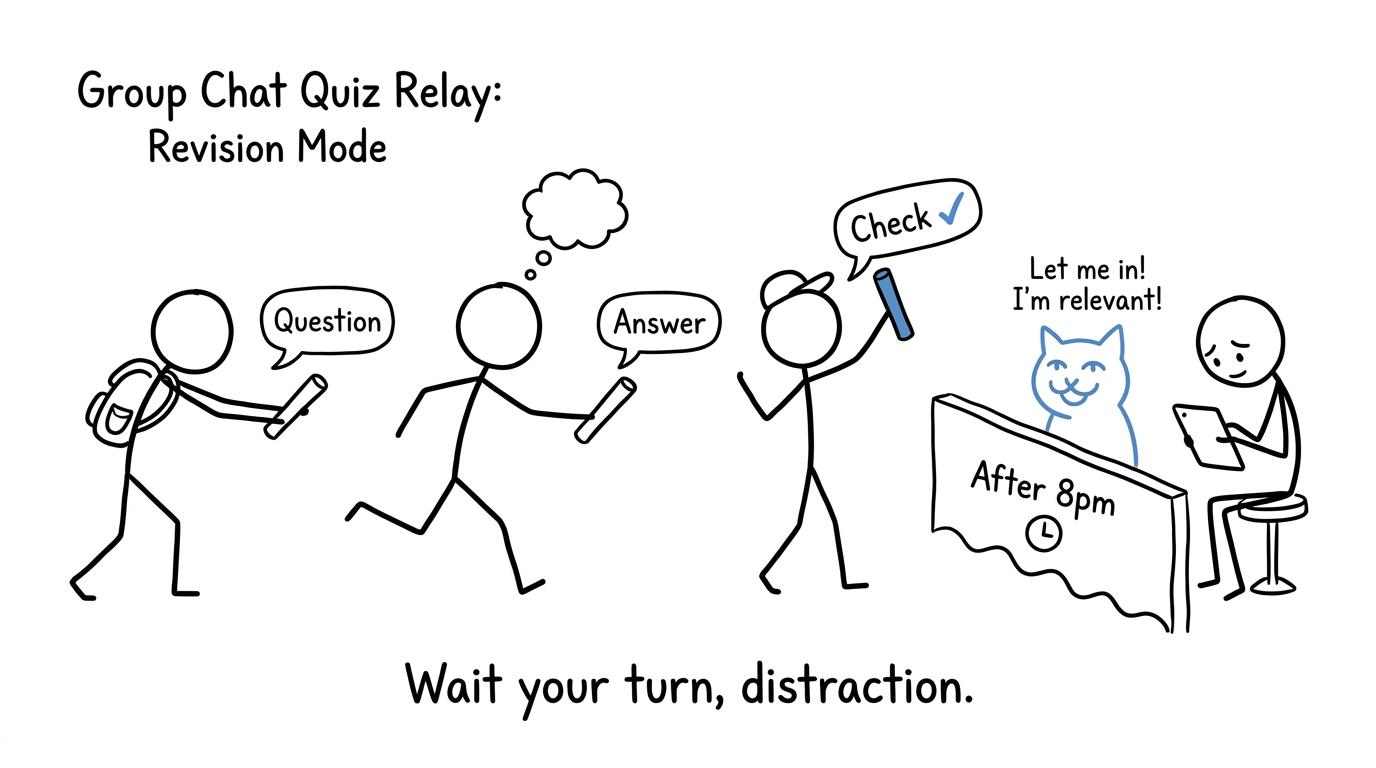 Students pass question, answer and checking batons while a meme waits behind a barrier
Use roles so one student does not carry the group
A revision chat often fails because one organised person creates every quiz while everyone else consumes it. Rotate simple roles:
- Host: announces the topic and keeps the session moving.
- Question setter: prepares prompts from reliable course material.
- Checker: compares responses with an approved answer.
- Misconception tracker: records recurring errors.
- Scheduler: chooses when missed content returns.
Roles create accountability without turning the chat into another classroom. They also expose weak understanding: writing a fair question or explaining a correction requires more thought than forwarding a screenshot.
Keep sessions short. A focused burst with a definite finish is more manageable than a chat that expects permanent availability. Anyone who misses the live session should still be able to complete the prompts later.
Space and mix the revision
A long quiz on one evening can create familiarity, but familiarity is not the same as durable recall. Bring difficult items back after a gap. Mix older vocabulary with newer grammar and rotate assessment skills across the week.
A simple rhythm might include:
- an early-week vocabulary retrieval quiz;
- a midweek voice-note task;
- a later reading or listening challenge;
- a weekend review of repeated errors.
The schedule does not need to be complicated. It needs to be repeatable. Store only the most useful information in a pinned error list or shared document; otherwise, corrections vanish beneath hundreds of messages.
This same principle helps when Japanese is competing with maths and other GCSE subjects. Use the MathsGenie GCSE maths revision hub to select a precise maths task, then place it beside the group's Japanese session in your revision planner. A small completed task in each subject is more valuable than an evening spent reorganising every resource you own.
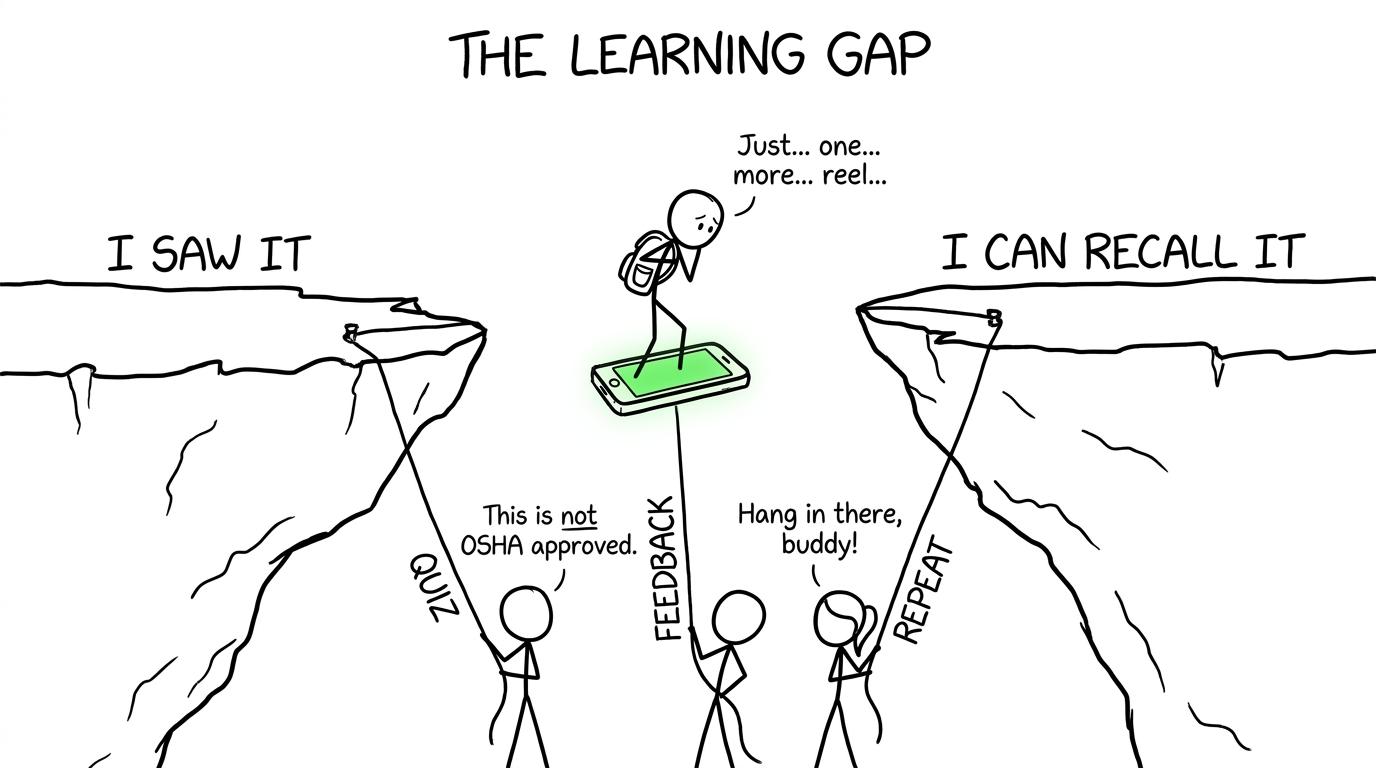 A phone forms a bridge from recognising material to recalling it, supported by quiz, feedback and repeat ropes
Keep your maths revision moving alongside Japanese
Group revision works particularly well for quick recall, but GCSE maths also requires sustained independent problem solving. Protect time for both.
After a Japanese chat session, complete one clearly defined maths action. You could use MathsGenie's guide to finding your weakest GCSE topics, open a revision lesson or answer practice questions without help. If exams are approaching, the one-month GCSE maths revision plan can provide a wider weekly structure.
The strongest maths routine is similar to the best group-chat routine: attempt, check, diagnose and revisit. MathsGenie's guide to revising GCSE maths efficiently explains how to turn mistakes into targeted practice rather than simply collecting more notes.
When you are ready for exam conditions, use the MathsGenie resources hub for mini tests, predicted papers and shorter practice formats. Full papers become more useful when there is still time to respond to the result, as explained in the guide to when to start GCSE past papers.
Edexcel maths students can also complete GCSE maths past papers with mark schemes. Students taking AQA, OCR or Eduqas should choose the matching board and foundation or higher tier through the main revision hub.
Keep the chat safe and respectful
Only include people you know and follow your school's rules about communication platforms. Check privacy settings, avoid sharing home addresses, timetables, passwords, live locations or photographs containing personal information, and never forward somebody else's work or recording without permission.
Agree that corrections must address the work, not the person. Mocking an error makes people hide uncertainty, which removes the very information a revision group needs.
If messages become abusive, threatening or inappropriate, save relevant evidence and speak to a trusted adult or your school's designated safeguarding lead. Block and report accounts where appropriate. A revision chat is optional; leaving an unsafe group is not failing at revision.
Common mistakes in GCSE Japanese group chat study
Posting answers too quickly
The first confident reply can stop everybody else thinking. Set silent response time and ask members to answer simultaneously where possible.
Treating activity as progress
A busy chat may contain no retrieval, correction or independent practice. Judge a session by what you attempted and fixed, not by its message count.
Sharing unverified corrections
Confident explanations can still be wrong. Use specification-aligned materials and take unresolved language questions to your teacher.
Revising only vocabulary
Vocabulary matters, but the assessment covers listening, speaking, reading and writing. Rotate activities so one comfortable skill does not dominate.
Letting notifications control the day
Mute the chat outside agreed windows. Revision should fit inside your plan rather than interrupt every other subject.
Doing the work for other people
Helping means providing a prompt, explanation or useful feedback. Sending a complete answer for somebody to copy removes the learning opportunity.
Turn the chat into a starting point
The best group chat is not the place where all revision happens. It is the place that makes the next useful action obvious.
Set one task. Attempt it from memory. Check it accurately. Record the weakness. Return to it after a gap. Then close the chat and work independently.
Use that routine for Japanese, and carry the same discipline into maths. MathsGenie gives you free revision lessons, practice questions, mini tests, mark schemes, video solutions, past papers and predicted papers, all organised to help you move from recognising a topic to answering it under exam pressure. Open the GCSE maths revision area, choose one weak skill and make today's progress measurable.