Is GCSE English Literature Useful Without A Level?
GCSE English Literature useful without A-level? Explore its transferable skills, college entry value and how to balance the subject with maths revision.
The short answer to “is GCSE English Literature useful without A-level?” is yes. You may never analyse another Shakespearean soliloquy after Year 11, but the qualification still develops critical reading, evidence-based writing and the ability to explain a complicated idea clearly. Your result may also contribute to sixth-form or college entry requirements.
That does not mean Literature should consume every available revision hour. If you are preparing for GCSE maths, the sensible goal is balance: understand what English Literature gives you, check the requirements of the courses you want to take and allocate your time according to evidence rather than anxiety.
The quick answer
GCSE English Literature remains useful because it can:
- contribute to your overall GCSE profile;
- help you meet some sixth-form and college entry criteria;
- develop critical reading and analytical writing;
- strengthen your ability to select and use evidence;
- improve how you interpret unfamiliar questions;
- support essay-based subjects without requiring you to take Literature at A Level;
- build revision habits that transfer to maths and science.
However, English Language and English Literature are separate qualifications. Some colleges specifically require English Language, while others accept a particular grade in either qualification. Never assume one automatically replaces the other for every application; check the published requirements of each provider and course.
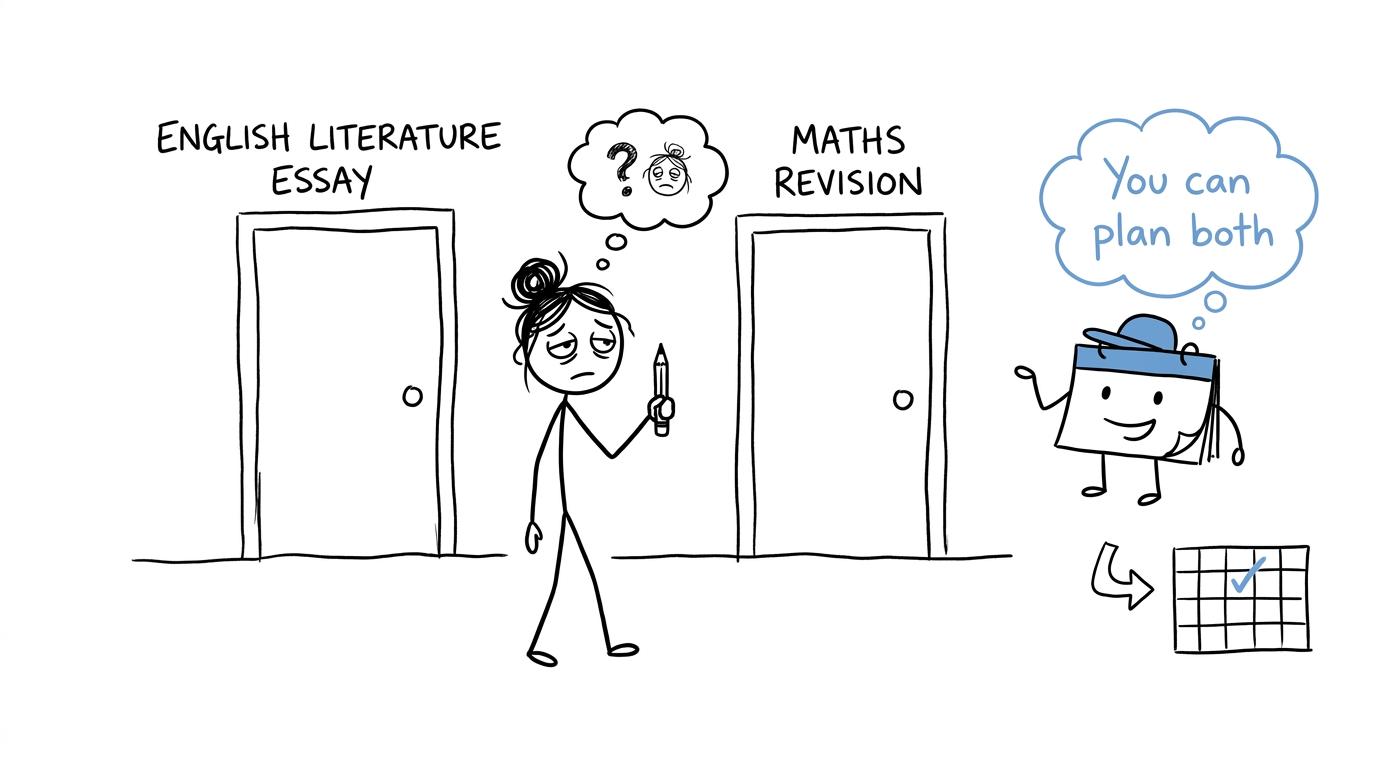 A GCSE student choosing between English Literature and maths revision while a calendar suggests planning both
What GCSE English Literature actually gives you
The lasting value of a subject is not always the content you can remember five years later. Often, it is the way the subject teaches you to think.
Across GCSE English Literature specifications, the assessment objectives require students to understand texts, support interpretations with references, analyse language and structure, consider context, and communicate accurately. AQA, Edexcel, OCR and Eduqas may organise their papers differently, but these underlying skills are central to the qualification.
Reading beyond the obvious meaning
Literature teaches you to distinguish between what a text states and what it implies. You notice patterns, question assumptions and look for alternative interpretations.
That habit matters in maths too. A multi-step problem may contain several facts, but not all of them are equally important. The student who reads carefully is more likely to identify the required operation, notice a restrictive condition and avoid answering a slightly different question.
This does not mean that analysing a poem directly teaches trigonometry. It means both subjects reward disciplined attention. You can develop the mathematical side through the free GCSE Maths revision hub, where lessons and questions are organised by exam board and topic.
Making a claim and supporting it
A strong Literature response does not merely announce an interpretation. It selects relevant evidence and explains why that evidence supports the argument.
The same principle appears in mathematical reasoning. A conclusion without working may be unconvincing, even when it is correct. In proof, probability, statistics and longer problem-solving questions, you need to show a logical chain rather than leap from the question to the answer.
Literature therefore helps build a useful mental structure:
- make a precise claim;
- select relevant evidence;
- explain the connection;
- consider whether another interpretation is possible;
- reach a justified conclusion.
That structure is valuable in subjects including history, religious studies, psychology, sociology, politics and economics. It also helps with applications, reports and professional communication later on.
Communicating complicated ideas clearly
Knowing something and explaining it are different skills. English Literature makes you practise organising ideas under time pressure, choosing precise vocabulary and keeping an argument focused.
In maths, clear communication can mean defining a variable, showing substitutions, labelling a diagram or setting out consecutive lines of working. Examiners award marks according to the mark scheme, not according to what you intended to write.
MathsGenie’s guide to turning GCSE notes into active recall applies a similar principle: retrieve an idea, express it clearly, check it and then correct it. That is more demanding, and more productive, than simply rereading notes.
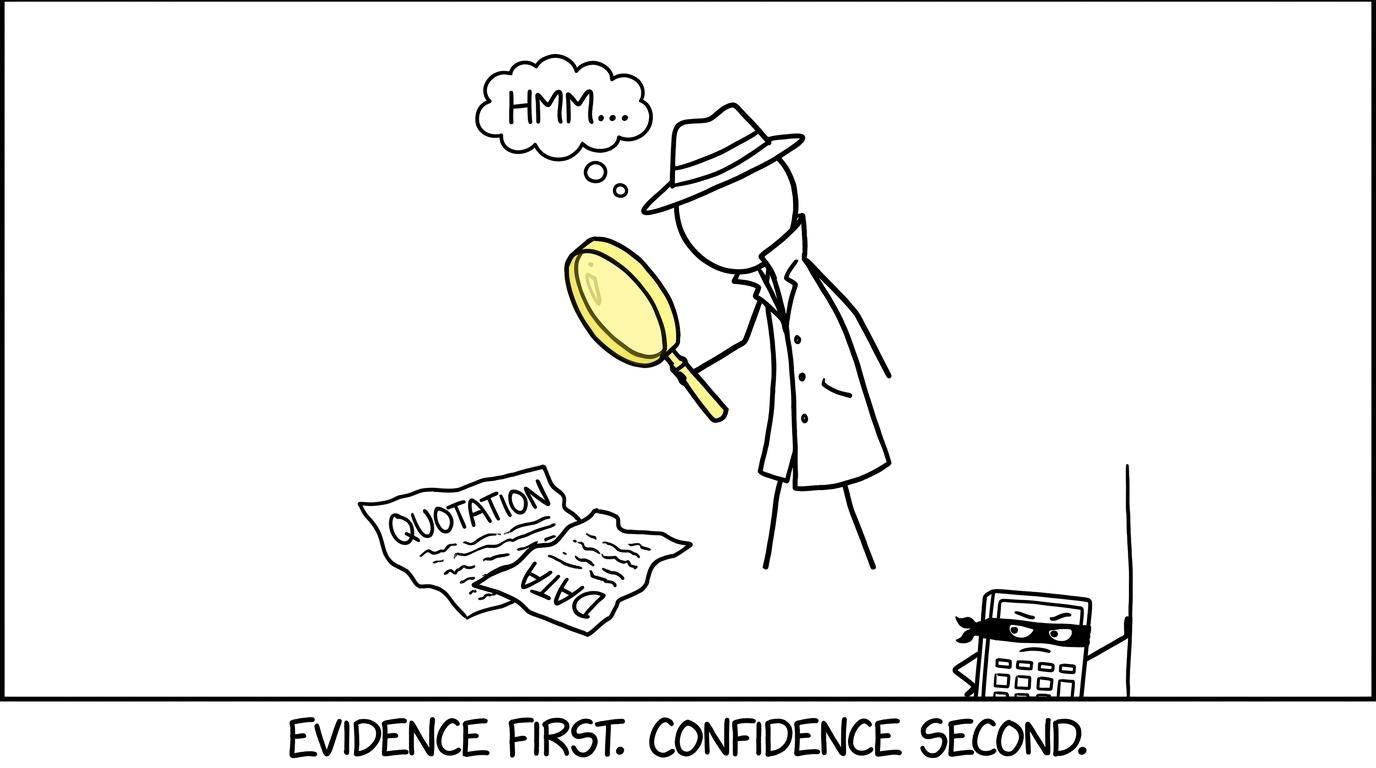 A student detective investigates a quotation and a piece of data while a calculator watches suspiciously
Does English Literature matter for college entry?
It can, but there is no single entry rule used by every sixth form, college, apprenticeship provider or university.
Published entry requirements for recent sixth-form admissions show several different approaches. Some providers ask for a minimum grade in English Language. Some accept English Language or English Literature. Others use the best grade from either qualification as part of their general entry criteria. Individual subjects can then have additional requirements.
For example, A Level Maths commonly has a subject-specific GCSE Maths requirement. Essay-based courses may also ask for a suitable English grade or evidence of achievement in an essay-based subject. English Literature A Level normally has its own Literature and, in some institutions, Language requirements.
Use this checklist before making decisions:
- Read the general entry requirements for each college or sixth form.
- Check the separate requirements for every course you may choose.
- Notice whether the wording says English Language, English Literature, or either.
- Ask the admissions team if the published wording is unclear.
- Recheck the requirements for your actual year of entry because policies can change.
In England, the Department for Education’s current post-161616 funding condition treats a grade 444 or above in either GCSE English Language or English Literature as meeting its English prior-attainment condition. That funding rule does not force an individual college to use the same admissions criteria. A provider may still require English Language or set a higher grade for a particular programme.
English Literature also forms part of the English component of the English Baccalaureate measure: pupils need to enter both English Language and English Literature for that component. The EBacc is a school performance measure and subject combination, not a separate qualification that students receive.
Is it useful if you want to take A Level Maths?
Yes, but as a supporting subject rather than a substitute for strong mathematical preparation.
Your GCSE Maths grade will normally matter much more for entry to A Level Maths. Providers commonly set a higher subject-specific requirement because the course builds directly on higher-tier algebra, graphs, geometry and statistics. Check your chosen provider rather than relying on a typical grade quoted online.
English Literature can still support the transition by strengthening:
- careful interpretation of unfamiliar wording;
- extended concentration during formal exams;
- concise written explanations;
- selection of relevant information;
- evaluation of an argument or conclusion;
- planning and revision under a heavy workload.
If A Level Maths is your destination, you can preview the style of later assessment through Edexcel A Level Maths past papers. The content is more advanced, but the need to read precisely and communicate a logical method remains.
How to balance Literature with GCSE maths revision
A common problem is not choosing the wrong subject. It is allowing the most emotionally demanding subject to take all the available time.
English Literature can feel endless because there is always another quotation to learn or interpretation to refine. Maths can create the opposite illusion: a familiar-looking page of notes feels reassuring, even when you cannot independently answer the questions. Both problems are solved by testing performance.
Allocate time according to need
Start with evidence from recent class assessments, mock exams and marked practice. Ask:
- Which grade matters for my next step?
- Where am I currently dropping the most recoverable marks?
- Which exam comes first?
- Does this session involve retrieval or genuine question practice?
A balanced week might include short quotation retrieval sessions alongside focused maths topic practice. MathsGenie’s GCSE 202020-minute revision routine is useful on crowded school days, while the one-month GCSE maths revision plan helps organise a longer run-up.
Use the same feedback loop in both subjects
For Literature, attempt a plan or paragraph, compare it with the assessment objectives and identify what is missing. For maths, answer questions, use the mark scheme or video solution and record the exact reason for each lost mark.
Do not stop at “I got it wrong”. Classify the mistake:
- knowledge gap;
- misread question;
- weak evidence or incomplete working;
- timing problem;
- careless accuracy error.
Then choose the next revision task from that diagnosis. The GCSE maths revision timetable guide shows how to combine topic learning, timed practice and review without turning every evening into a marathon.
 A student struggles with a tower of revision books while a small checklist rolls past
Common mistakes when judging the value of Literature
Assuming only future A Level subjects matter
GCSEs provide both subject knowledge and a broader academic record. A qualification can be useful without becoming one of your A Levels. Literature may support entry criteria, demonstrate essay-writing ability and develop skills used elsewhere.
Treating English Language and Literature as interchangeable
They are separate GCSEs. Although some rules and providers accept either, others explicitly require English Language or particular grades in both. Read the exact wording.
Giving Literature unlimited revision time
Memorising every possible quotation is not a realistic strategy. Prioritise flexible evidence, secure understanding of themes and characters, and regular timed planning. Protect time for maths question practice too.
Revising maths by reading instead of doing
Recognition is not the same as recall. Use revision lessons to understand a method, then close the explanation and answer questions independently. Follow this with mini tests and papers.
Students taking AQA can begin with AQA GCSE Maths past papers. Edexcel students approaching the final stage can add Edexcel GCSE Maths predicted papers, while remembering that predicted papers should complement rather than replace official past-paper practice.
Believing one disappointing grade closes every route
Entry policies differ. If a result is below the requirement, speak directly to the provider about alternatives, resits and course-specific options. Do not make a final judgement based on assumptions or another student’s application.
GCSE English Literature has value beyond the final text
You may finish Year 111111 and never write another essay about your set novel. That does not make the work wasted. The deeper result is the ability to read carefully, detect implication, choose evidence and communicate a defensible conclusion.
At the same time, usefulness should not become pressure to revise everything equally. Check the requirements for your next step, identify where marks are being lost and build a plan around deliberate practice.
For maths, make MathsGenie’s free GCSE resources your starting point. Use revision lessons to rebuild weak methods, practice questions and mini tests to improve recall, and past papers, predicted papers, mark schemes and video solutions to prepare for exam conditions. Literature may sharpen how you think. Consistent maths practice will turn that thinking into marks.