GCSE English Language vs Literature: Employers
GCSE English Language vs Literature employers: learn which grade colleges and employers check, what to list, and how to prioritise GCSE revision wisely.
A GCSE results sheet can make two subjects with similar names feel strangely unequal. English Language and English Literature sit beside each other, yet job adverts and college entry pages often ask simply for “GCSE English”. What does that actually mean?
The short answer to gcse english language and literature vs english language employers searches is this: English Language is usually the qualification employers and colleges are most likely to specify because it provides evidence of core reading and writing skills. English Literature remains a valuable, separate GCSE, but it is less commonly named as an essential application requirement.
There is an important exception. Individual employers, colleges, apprenticeship providers and universities set their own criteria. If an entry requirement says “English Language”, do not assume that English Literature will automatically be accepted instead. Always check the exact wording.
The answer at a glance
- English Language is normally the safer qualification for meeting employment and course-entry requirements.
- English Literature is a separate GCSE and can strengthen your overall academic profile.
- In England, a grade 444 is officially described as a standard pass, but an employer or college can request a higher grade.
- Government funding rules for many 161616 to 191919 study programmes recognise a grade 444 or above in either English Language or English Literature when deciding whether further English study is required.
- That funding rule does not force every employer, apprenticeship or university to treat the subjects as interchangeable.
- List both qualifications and both grades accurately when an application provides space for them.
- Protect time for GCSE maths too, because applications frequently consider English and maths together.
The difference is not that one subject matters and the other does not. It is that they communicate different things.
 A student discovers that an employer's English checklist is smaller than expected
What English Language tells an employer
GCSE English Language assesses reading and writing through a range of texts and tasks. The national subject content gives substantial weight to reading and writing, while spoken language is reported separately and does not contribute to the final GCSE grade.
The assessed skills include understanding explicit and implicit ideas, comparing viewpoints, evaluating writing and adapting tone or style for different purposes and audiences. These abilities transfer naturally to working life. Employees may need to interpret instructions, write emails, explain decisions or identify the important detail in a long document.
Employers cannot learn everything about your communication from one GCSE grade. Your application, interview and experience matter too. Nevertheless, English Language offers a familiar initial indicator, which is why requirements frequently pair it with GCSE maths.
For a student concentrating on maths exams, that pairing matters. A strong application often needs evidence of both communication and numeracy. MathsGenie's free GCSE maths revision hub lets you choose your exam board and work through lessons, questions, papers and revision tools without allowing uncertainty about English to derail your maths plan.
What English Literature adds
English Literature asks you to study and analyse literary texts. Depending on the specification, this can involve Shakespeare, a nineteenth-century novel, modern writing and poetry. You learn to build an interpretation, select evidence and explain how language, structure and context shape meaning.
Those are serious skills. Literature can demonstrate analytical thinking, careful reading and the ability to construct a sustained argument. It may be particularly relevant when applying for English, humanities, law, media or other writing-intensive routes.
But relevance is not the same as being a standard gateway requirement. A warehouse apprenticeship, accountancy role or college science course is more likely to specify a minimum English Language grade than a Literature grade. Literature may make the application broader; Language is more likely to satisfy a named literacy condition.
Students should also avoid treating “English Language and Literature” as a single result. Under the GCSE system used in England, they are separate qualifications with separate grades. Record them separately unless an application form explicitly asks for something different.
Do colleges care more about English Language or Literature?
Colleges and sixth forms decide their own admissions requirements. Many courses ask for a particular number of GCSEs and place separate conditions on English and maths. Some may accept “English” generally, while others explicitly require English Language.
Government guidance for eligible 161616 to 191919 programmes in England currently says that a grade 444 or above in either English Language or English Literature can satisfy the English condition of funding. This means a student who has reached that level in one of the two subjects is not automatically required by that funding condition to continue studying English.
However, this is a rule about programme funding and continued study. It is not a universal admissions promise. A sixth form can still require grade 555 in English Language for a particular A Level, for example, if that is its published policy. Requirements vary by institution and course.
Before applying, check three things:
- whether the requirement says “English”, “English Language” or “English Language or Literature”;
- the minimum grade and whether it applies to every course;
- whether your chosen A Level or vocational subject has an additional English requirement.
If the wording is unclear, ask the admissions team in writing. A direct answer is more useful than an assumption repeated between friends.
What employers and apprenticeships actually notice
There is no single GCSE rule followed by every UK employer. Some job descriptions specify English Language and maths at a particular grade. Others ask for GCSEs “including English and maths”, accept equivalent qualifications or focus more heavily on experience.
For apprenticeships in England, English and maths remain important parts of the training system. Younger apprentices who have not yet achieved the relevant Level 222 standard may need to continue studying these subjects alongside their apprenticeship. Entry decisions can still vary between employers and training providers, so the vacancy details remain the decisive source.
An employer may notice your qualifications in stages:
- Initial eligibility: Do you meet the grades or equivalents stated in the advert?
- Accuracy: Have you named the qualification and grade honestly?
- Application quality: Is your writing clear, relevant and carefully checked?
- Role evidence: Can you show useful skills through school responsibilities, projects, work experience or interests?
- Interview communication: Can you listen, answer directly and explain your thinking?
English Language can help you pass the first check. It cannot compensate for a careless application. In the same way, a high maths grade is useful, but employers will still care whether you can apply numerical reasoning sensibly.
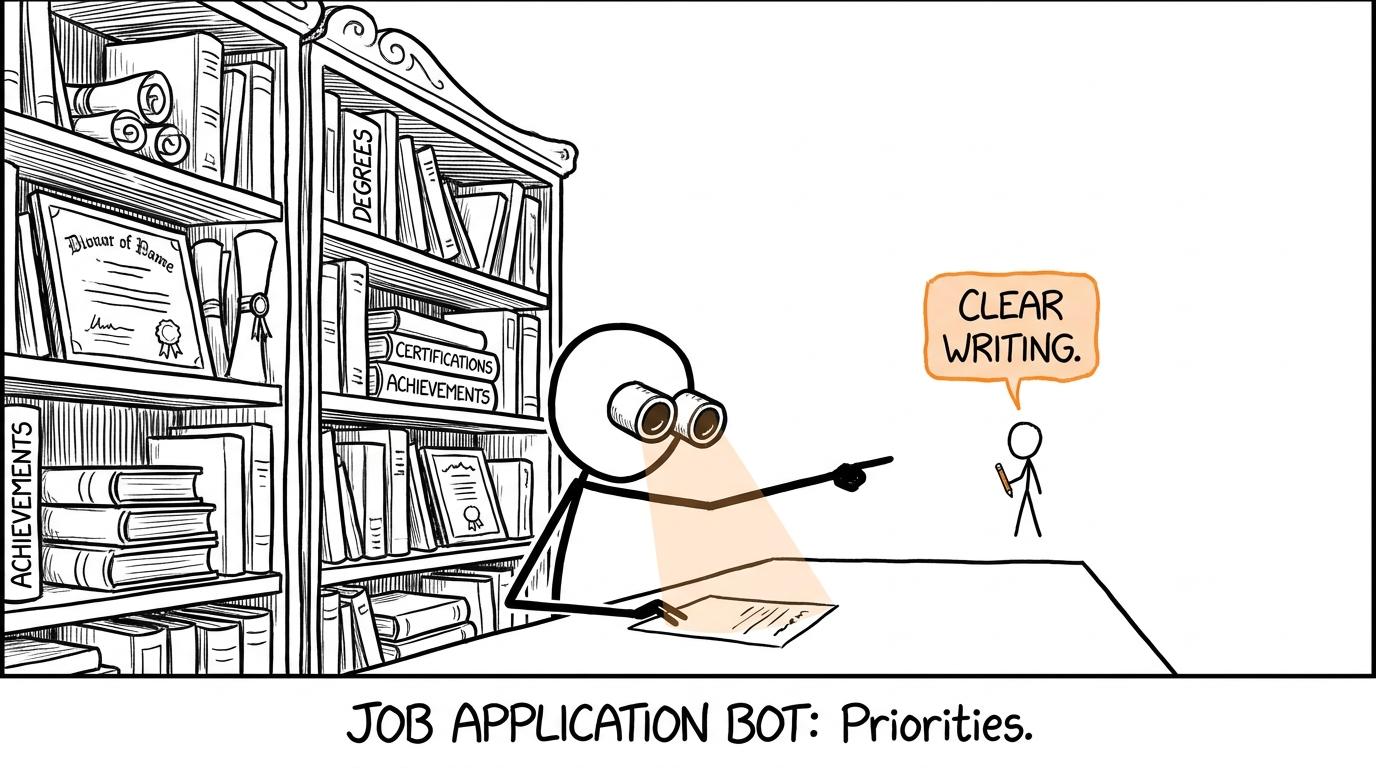 A job application robot becomes more interested in clear writing than a decorative bookshelf
Which subject should you prioritise?
If your immediate concern is keeping the widest range of employment and college options open, prioritising a secure English Language result is sensible. That does not mean abandoning Literature. It means recognising that Language is more often the explicitly requested qualification.
Your priorities should depend on your current position:
If English Language is below the required grade
Give it focused attention, especially if a planned college course, apprenticeship or job names English Language. Ask your teacher which assessment objectives are costing you marks and practise those tasks rather than simply rereading notes.
If Language is secure but Literature is weaker
Continue trying to improve Literature. It is another complete GCSE, and a stronger result can support your overall application. Just avoid sacrificing essential maths preparation for an imagined rule that every employer demands both English subjects at the same grade.
If maths is the greater risk
Keep the issue in proportion. English Language may be the more commonly specified English qualification, but maths is another frequent gateway subject. Use the GCSE maths topics by board and tier to check that your preparation matches Edexcel, AQA, OCR or Eduqas and your foundation or higher entry.
A realistic GCSE maths revision timetable can protect regular maths practice while leaving room for English essays and reading tasks. Revision works better when subjects have defined spaces rather than competing for whichever evening feels least busy.
How to balance English and maths revision
The natural reaction to an uncertain requirement is to revise everything for longer. That usually creates more anxiety than progress. A better approach is to separate eligibility from improvement.
First, identify the grades required for your likely next step. Then compare those requirements with your current working grades. Give more time to subjects where the gap is both important and realistically changeable.
For maths, build sessions around action: learn a method, complete exam-style questions, mark the work and repair the errors. The one-month GCSE maths revision plan offers a practical structure when exams are close.
Move into full papers only after topic practice has exposed and repaired the larger gaps. MathsGenie's guidance on when to start GCSE past papers explains how to progress from short diagnostic work to timed exam practice.
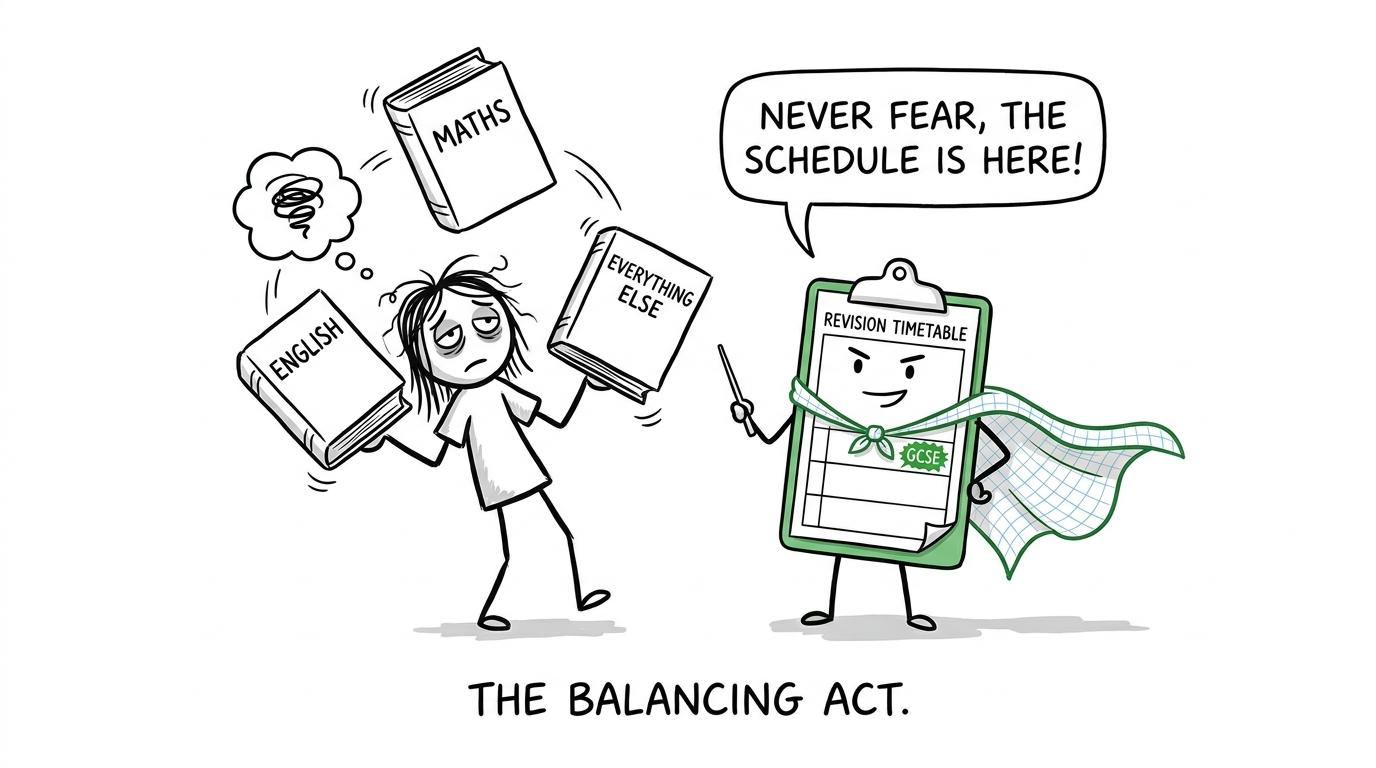 A revision timetable attempts to rescue a student juggling English, maths and everything else
Common mistakes when comparing the qualifications
Assuming Literature and Language are one GCSE
They are normally separate GCSE qualifications with separate results. Enter both accurately on forms.
Treating a grade 444 as a universal entry guarantee
Grade 444 is the standard pass in England, but organisations can set higher requirements. Some courses may ask for grade 555 or above, while others may accept alternatives.
Confusing funding policy with admissions policy
The English condition of funding may recognise either Language or Literature at grade 444 or above, but a specific course or employer can still name English Language.
Writing only “English” on an application
If you hold both qualifications, state “GCSE English Language” and “GCSE English Literature” with the correct grades. Precision prevents unnecessary questions.
Neglecting maths because English feels uncertain
English and maths are often considered together. Keep practising the maths topics where marks are being lost. Near the exams, use Edexcel GCSE maths predicted papers if you sit Edexcel, alongside official past papers and targeted topic revision.
The qualification that keeps more doors open
English Literature is worthwhile. It develops interpretation, argument and close analysis, and a strong grade deserves its place on any application. Yet when the question is which English GCSE employers and colleges are more likely to notice as a core requirement, English Language is usually the safer answer.
Read every requirement literally. If it says Language, check that you have Language. If it says English without defining the qualification, ask. If both subjects are accepted, record the stronger result while still listing both where appropriate.
Then return your attention to what you can control: the next revision session, the next corrected mistake and the next paper completed with care. Start with the MathsGenie GCSE maths revision resources, use revision lessons and practice questions to close gaps, then build confidence through mini tests, past papers, predicted papers, mark schemes and video solutions. Your qualifications open the first door. Consistent preparation helps you walk through it.