

GCSE Economics November Resit: Is It Available?
GCSE economics November resit rules explained: why standard GCSE Economics is summer-only, the IGCSE exception and practical next steps for students.
A disappointing result can make November look like an escape hatch. It is close enough to preserve momentum, but far enough away to prepare again. Unfortunately, the GCSE economics November resit most students are searching for is not available for the standard GCSE qualification.
In England, the regular November GCSE series covers GCSE Mathematics and GCSE English Language, subject to eligibility rules. Standard GCSE Economics is normally assessed in the May/June series, so most students must wait until the following summer. There is one important source of confusion: Pearson Edexcel International GCSE Economics may be available in November, but that is a different qualification from standard GCSE Economics.
Here is the short checklist:
- Standard GCSE Economics is not currently offered in the November series.
- AQA and OCR specifications state that assessment is available in May/June.
- A November International GCSE Economics sitting does not create a November entry for the standard GCSE.
- Most resit candidates need a school, college or approved private-candidate centre for the next summer series.
- GCSE Economics resits are optional; the post-16 maths and English rules do not apply to Economics.
- If you are also resitting maths, November may still be available for that separate qualification.
Is a GCSE Economics November resit available?
For the standard GCSE taken by most students in England, no. The confirmed November 2026 timetables from the main awarding bodies list GCSE Mathematics and GCSE English Language, not GCSE Economics.
That distinction matters because “GCSE resits happen in November” is only a partial truth. November is not a general second examination season for every GCSE. It is a focused series built mainly around the two core subjects that many post-16 students continue to revise: maths and English Language.
AQA GCSE Economics specification 813681368136 states that examinations are available each May/June. OCR GCSE Economics J205J205J205 similarly has one examination series each year in May/June. Students should check the exact qualification code on their results statement because exam-board names alone are not enough to establish availability.
If you received a GCSE Economics result in August 2026, your next standard resit opportunity will normally be the summer 2027 examination series. Confirm this with your examinations officer and the latest timetable before making plans.
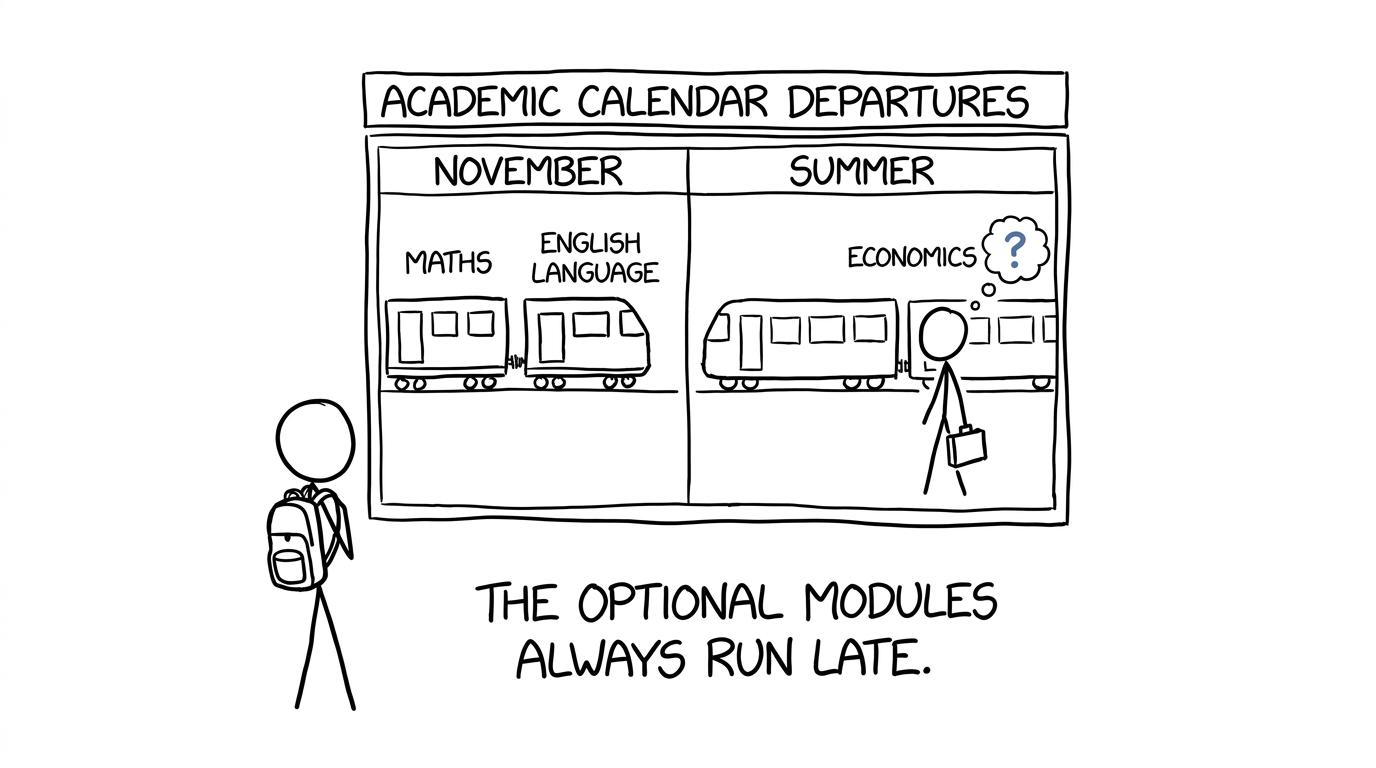 A student discovers that the November exam train only carries maths and English Language
Why students expect Economics to be available in November
The misunderstanding is reasonable. Schools and colleges talk frequently about November resits, especially after results day. A student resitting maths may naturally assume that Economics can be entered at the same time.
There are also old Economics papers labelled as November assessments. OCR, for example, has published November 2020 and 2021 Economics materials. Those papers arose from exceptional examination arrangements around the pandemic period. They do not prove that a current November series exists.
Current specifications and current timetables are what matter. A past paper’s date is historical evidence, not an entry invitation.
The clearest way to separate the two routes is:
- Standard GCSE Economics: normally May/June only.
- GCSE Mathematics and English Language: an additional November series is available for eligible candidates.
- International GCSE Economics: may have a November series, depending on the awarding body, specification and centre.
MathsGenie’s November GCSE resits guide explains the separate arrangements for maths and English Language, including the current age rule and examination window.
The International GCSE Economics exception
Pearson Edexcel International GCSE Economics 4EC14EC14EC1 is listed in the November 2026 International GCSE timetable. That is probably why some searches appear to suggest that an Economics resit is available.
However, International GCSE and GCSE are distinct qualifications with different specification codes and potentially different content, assessment structures and centre arrangements. You cannot assume that an entry for GCSE Economics automatically transfers to International GCSE Economics.
Switching may require you to:
- learn material organised under a different specification;
- take every required paper for the new qualification;
- locate a centre offering the precise International GCSE code;
- register and pay as a private candidate;
- confirm that the resulting qualification meets your intended purpose.
For most school leavers, changing qualification simply to obtain a November date is not the most realistic route. Waiting for the summer GCSE series usually allows you to build on the course you have already completed, use familiar past papers and avoid learning a new assessment structure.
An International GCSE entry may be realistic if you are already following that specification, your school or centre offers the November series, or you have received clear advice that the qualification is suitable. The centre’s examinations officer should confirm the code and entry before you pay anything.
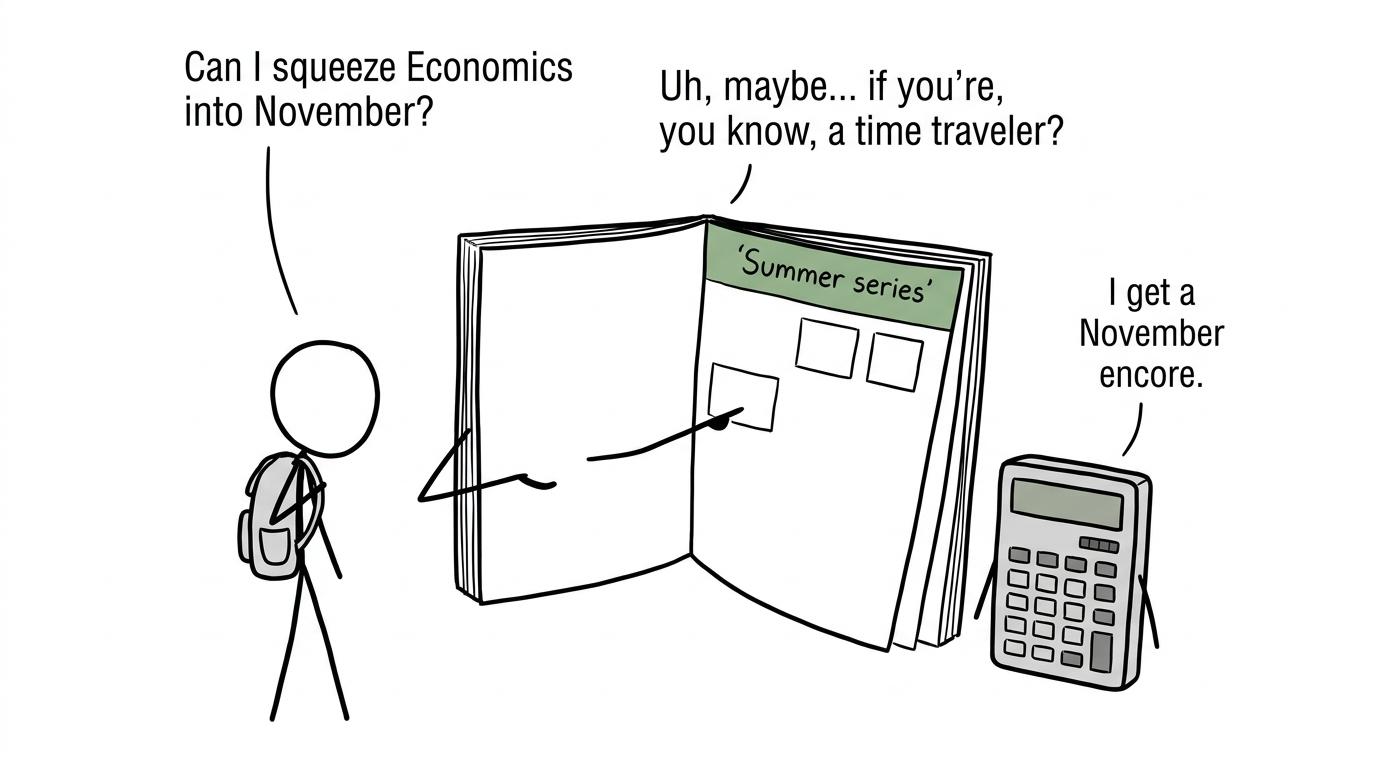 A calendar explains that Economics belongs in the summer series while a calculator celebrates its November encore
Who can realistically resit GCSE Economics?
A summer resit can be realistic for a student with a clear reason, enough preparation time and access to an examination centre.
Students returning through a school or college
Ask whether your former school, sixth form or college will enter you. Institutions are not required to offer every optional GCSE resit, so an Economics entry may depend on staffing, centre policy and whether the specification is already supported.
Do not assume your college will arrange Economics because it arranges maths resits. In England, post-16 funding rules require eligible students without grade 444 in maths or English to continue receiving support in those subjects. There is no equivalent national requirement for GCSE Economics.
Private candidates
If your institution cannot enter you, you may be able to sit AQA GCSE Economics as a private candidate. An approved centre must make the entry; students cannot enter directly with the exam board.
Ask the centre about:
- the exact qualification and entry code;
- whether it accepts private Economics candidates;
- its internal deadline, which may be earlier than the board deadline;
- examination and administration charges;
- access arrangements, if required;
- when and where each paper will be taken.
Contact centres early. Acceptance is not guaranteed, and leaving the search until the official deadline can limit your choices.
Students with a specific reason to improve
A resit is most sensible when a better grade serves a defined goal: meeting a stated course requirement, strengthening an application where Economics is relevant, or correcting a result that does not reflect your current understanding.
It is less convincing when the plan is based only on disappointment. Resitting costs time and may involve fees. Before committing, ask what the improved result would change and whether your effort would be better directed towards current A Level, vocational or GCSE maths work.
What to do if November Economics is unavailable
The absence of a November paper creates time. Used well, that can be an advantage rather than a delay.
Confirm your qualification first
Find your results statement and record:
- the qualification title;
- awarding body;
- specification code;
- grade awarded;
- the summer series you intend to enter.
Then ask an examinations officer to confirm the next available assessment series. Do not revise from materials simply labelled “Economics GCSE” until you know they match your specification.
Decide whether a review or resit is appropriate
Immediately after results, a school may discuss access to scripts, clerical checks or reviews of marking. These are not alternative resit dates, and marks can remain unchanged, rise or fall. Follow the official post-results process through your centre rather than treating a review as a risk-free second marking.
If the post-results deadlines have passed, focus on whether a full summer resit is worthwhile.
Build a two-subject plan if maths is also involved
Some students asking about Economics are also preparing for a November maths resit. The dates are different, but the workload still competes for the same evenings.
Prioritise the nearer examination without abandoning the later one. A sensible structure is short maintenance sessions for Economics while maths receives most of the immediate attention. After November, Economics can become the main summer-resit subject.
Use the GCSE maths revision timetable guide to organise weekly sessions, or follow the one-month GCSE maths plan if the November papers are approaching.
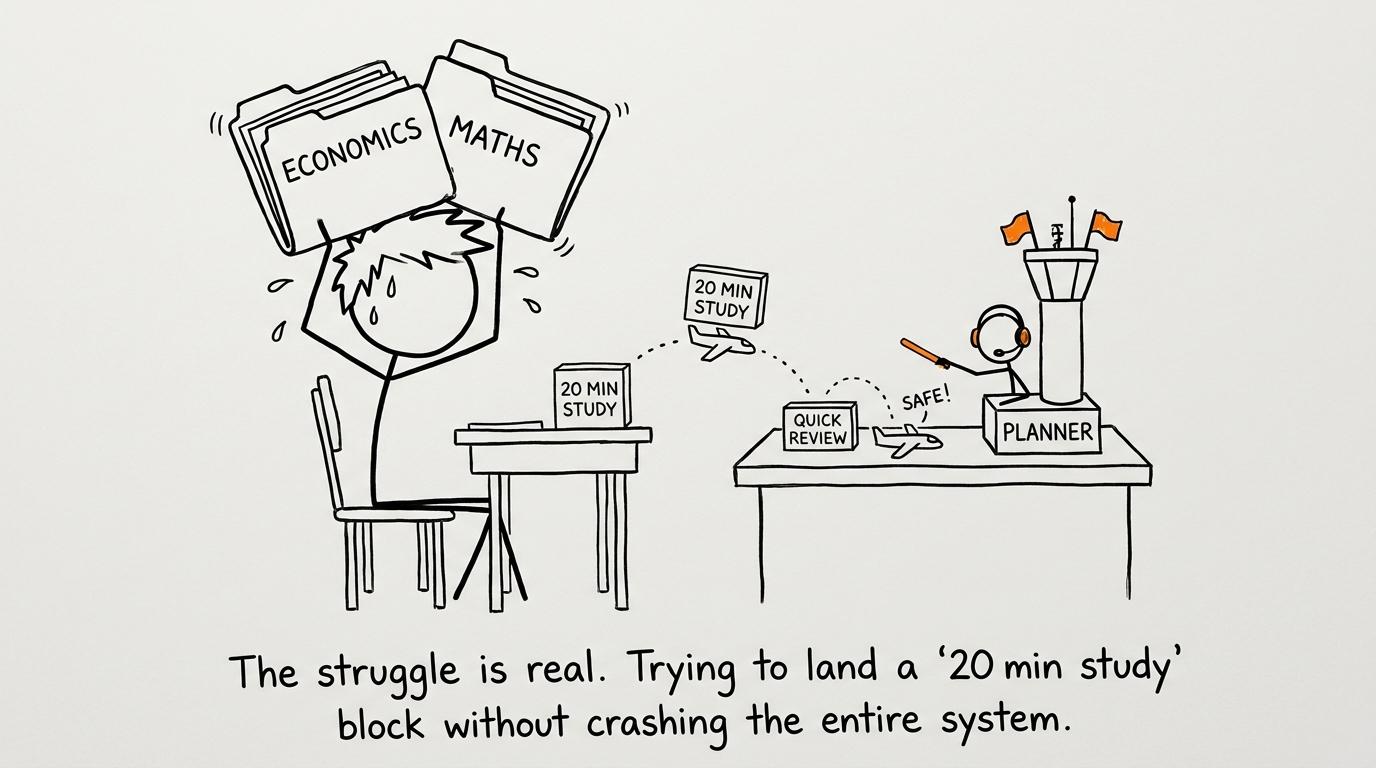 A tiny revision planner directs Economics and maths study sessions like aircraft
Preparing for a November maths resit alongside Economics
Maths is the subject for which November can provide the quicker second chance. Eligible candidates must take the complete set of papers required by their specification and tier; marks are not carried across from the summer sitting.
Begin with diagnosis rather than random revision. The GCSE maths topics by board and tier guide helps you check whether your work matches Edexcel, AQA, OCR or Eduqas and whether you are taking foundation or higher tier.
Then use a repeatable cycle:
- revisit one weak topic through a revision lesson;
- complete practice questions without copying the method;
- mark the work and classify each lost mark;
- return to the skill after a short gap;
- test it later in a mixed paper.
Short assessments can expose gaps without consuming an entire evening. MathsGenie’s Edexcel GCSE Maths mini tests provide focused timed practice, while the guide to starting GCSE past papers explains when to move from topic work to full exam practice.
Nearer the examination, use Edexcel GCSE Maths predicted papers alongside genuine past papers. Predicted papers should sharpen preparation, not replace coverage of the specification.
Common mistakes when planning an Economics resit
Assuming every GCSE has a November sitting
November availability is qualification-specific. For standard GCSEs in England, the regular autumn opportunity is focused on Mathematics and English Language.
Confusing GCSE with International GCSE
A November International GCSE Economics timetable does not mean your existing GCSE specification is available. Check the full title and code.
Using exceptional old papers as proof of current availability
November Economics papers from pandemic-era series remain useful practice, but they do not establish today’s entry rules.
Waiting for an examination centre to contact you
If you are entering privately, finding and registering with a centre is your responsibility. Centres set their own acceptance policies, charges and internal deadlines.
Treating Economics like a compulsory maths resit
Economics is optional. Maths and English have distinct post-16 rules, but a low Economics grade does not create the same national continuation requirement.
Revising before deciding what the resit will achieve
A clear purpose makes a long summer plan easier to sustain. Establish the requirement, qualification and entry route before buying materials or changing specification.
Make the next examination window count
The practical answer is simple: a standard GCSE Economics November resit is not currently available, so most candidates will need the next May/June series. The November exception you may see online usually concerns International GCSE Economics, not the standard qualification you previously took.
Confirm your code, speak to an examinations officer and decide whether a summer resit genuinely supports your next step. If maths is also part of the picture, November remains a valuable opportunity, and preparation can begin immediately.
Use MathsGenie’s free GCSE maths revision resources to turn that preparation into a clear routine. Start with revision lessons and practice questions, diagnose gaps through mini tests, then build examination confidence with past papers, predicted papers, mark schemes and video solutions. A date on the calendar matters, but what you repeatedly do before it matters more.











