GCSE Citizenship Studies Extracurricular Club: Does It Help?
GCSE citizenship studies extracurricular club: see how joining can build active citizenship evidence and exam skills without replacing focused revision.
The promise sounds attractive: join a club, discuss important issues, and watch your grade improve. But a GCSE citizenship studies extracurricular club does not raise your result simply because your name appears on an attendance list. It can help when its activities develop the knowledge, evidence, analysis and active citizenship experience assessed in your examination.
The short answer is therefore yes, potentially, but only if the club connects participation to the specification and you still practise exam questions. A productive club can give citizenship ideas somewhere to become real. An unfocused one may be interesting without changing how well you answer the paper.
For students balancing Citizenship Studies with GCSE maths, the same principle matters: an activity is valuable when it creates useful learning without displacing the deliberate revision that earns marks.
A quick checklist before joining
A club is more likely to support your grade if it:
- follows your Citizenship Studies specification;
- helps you research a genuine citizenship issue;
- includes different viewpoints rather than one-sided discussion;
- provides opportunities to plan, take and evaluate informed action;
- makes you record aims, methods, evidence, outcomes and limitations;
- improves your ability to construct reasoned written arguments;
- leaves enough time for maths and your other GCSE subjects.
It is less likely to affect your grade if meetings are mostly informal conversation, activities have no connection to assessed content, or attendance takes time away from essential paper practice.
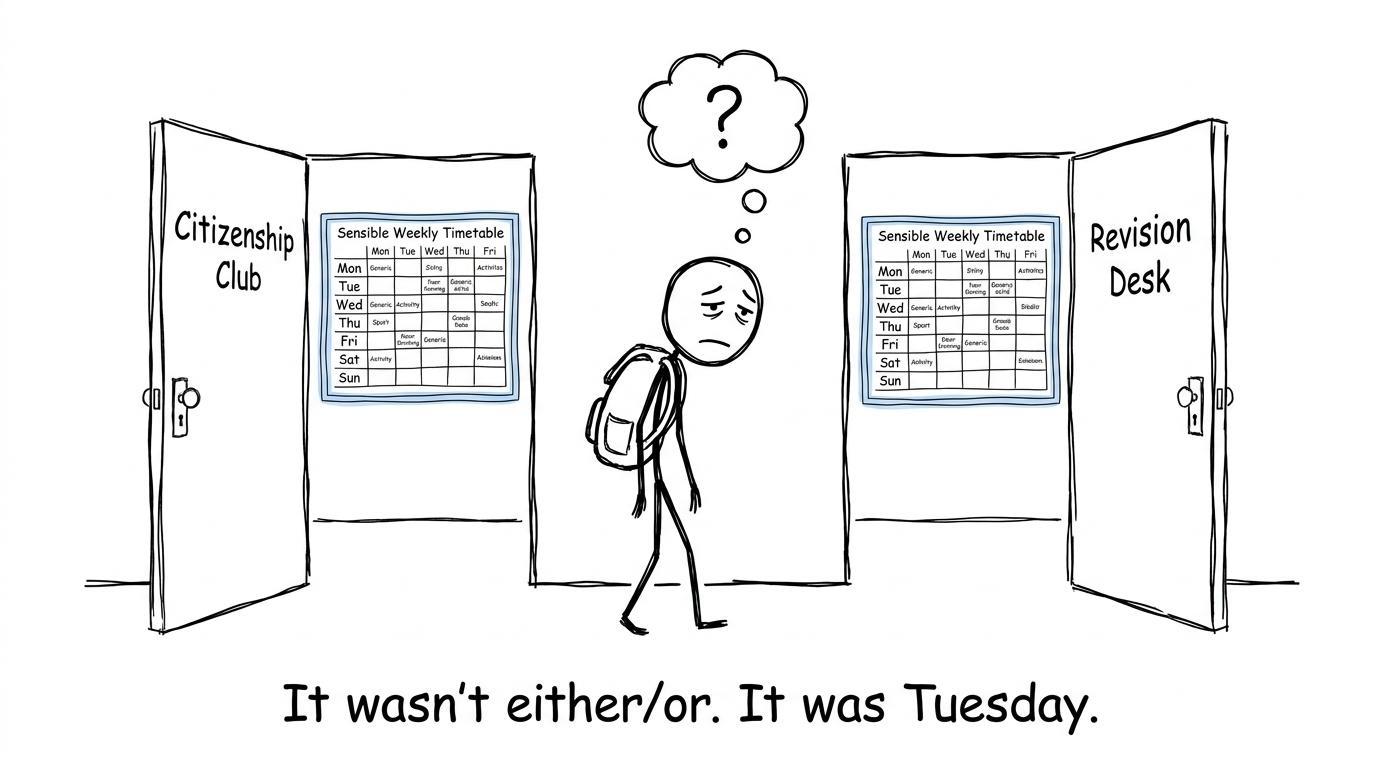 A student discovers that a club and revision can share one sensible timetable
How a Citizenship Studies club can help your grade
The strongest benefit is not the badge, certificate or title. It is the opportunity to practise what the examination asks you to do.
Official GCSE Citizenship Studies requirements place considerable emphasis on knowledge, application, analysis and evaluation. Across the regulated qualification, the assessment objectives are weighted approximately as follows:
- AO1, knowledge and understanding: 30%30\%30%;
- AO2, application to contexts and actions: 30%30\%30%;
- AO3, analysis and evaluation of evidence and viewpoints: 40%40\%40%.
Questions drawing on the knowledge and understanding developed through taking citizenship action account for 15%15\%15% of the full GCSE marks. The exact paper structure differs between AQA, Pearson Edexcel and OCR, so always check the specification your school follows.
It can make abstract ideas more concrete
Terms such as representation, accountability, democracy and pressure groups can feel tidy in a revision guide. Real civic issues are rarely tidy.
A well-run club might examine a local concern, compare possible actions, contact relevant decision-makers or consider how different groups would be affected. That experience can help you explain how citizenship concepts operate in context rather than merely recalling definitions.
This supports AO2, but only if you consciously make the connection. After a meeting, ask:
- Which specification concept appeared here?
- Whose viewpoint was represented or missing?
- What evidence influenced the decision?
- How effective was the action?
Those questions turn participation into examinable understanding.
It can strengthen active citizenship experience
A subject club may provide a practical setting for researching, planning and carrying out citizenship action. Depending on the issue and your school's arrangements, this could involve gathering evidence, raising awareness, writing to an organisation, presenting recommendations or establishing a group to seek change.
However, an ordinary club activity does not automatically become your assessed citizenship action. Your project must meet your exam board's requirements and should be organised with your teacher. AQA, Edexcel and OCR assess students' understanding of their citizenship action through written examination questions rather than awarding marks simply for attending meetings.
The useful evidence is the thinking behind the activity: why an issue was selected, how research informed the plan, why a method was chosen, what different viewpoints showed, what impact occurred and how the process could have been improved.
Discussion can improve extended responses
Citizenship examinations include questions requiring reasoned arguments and substantiated judgements. A serious club discussion can help you hear objections that would not occur to you when revising alone.
That matters because evaluation is not the same as stating an opinion. A strong judgement considers evidence, weighs competing arguments and explains why one factor is more significant than another. Club debate can rehearse these habits before you need to express them under timed conditions.
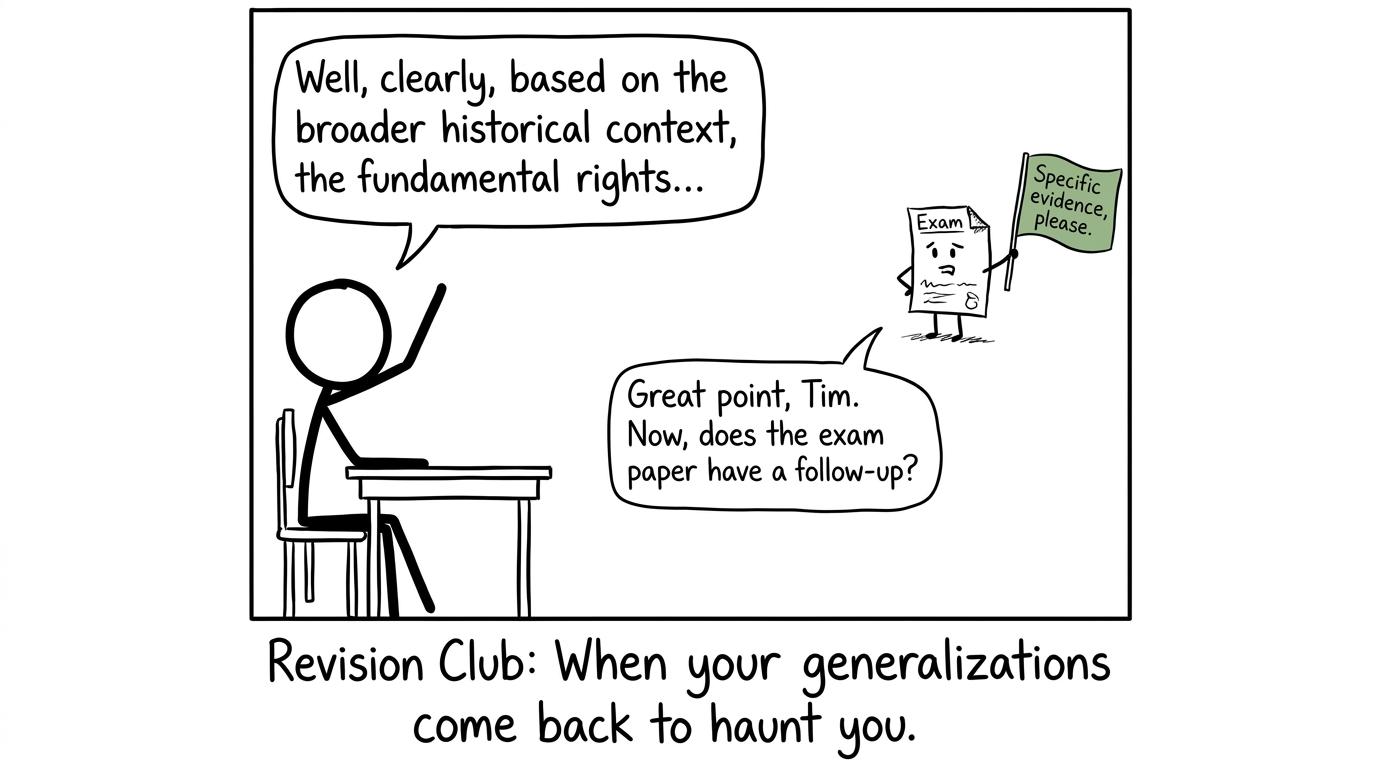 A confident club discussion meets an exam paper asking for specific evidence
It can give research a real purpose
Research becomes more careful when someone may act on it. Students have to consider whether a source is relevant, current, representative and trustworthy. They may also need to distinguish primary evidence from secondary evidence and identify weaknesses in the information collected.
A club can create opportunities to practise these decisions. Yet the quantity of research matters less than your ability to use and evaluate it. Saving twenty articles is not analysis. Selecting evidence, explaining what it shows and acknowledging its limitations is much closer to what AO3 rewards.
What the club cannot do for you
A club cannot replace specification revision. Nor can it guarantee a particular grade.
Research into extracurricular participation often finds associations with positive educational or later-life outcomes, but association is not proof that joining a club caused those outcomes. Students who participate may differ in motivation, attendance, prior attainment or access to support. Evidence from one age group or one type of enrichment should not be treated as a guaranteed GCSE grade increase.
The defensible claim is narrower: a relevant, structured club can give you more opportunities to develop useful knowledge and skills. You must still convert those opportunities into examination performance.
That means learning precise subject content, understanding command words, answering timed questions and reviewing mark schemes. The examiner marks what appears in your answer, not everything you remember doing after school.
How to turn club participation into exam preparation
Keep a brief citizenship action record after each relevant meeting. Include:
- the issue or enquiry question;
- the intended aim;
- research sources and viewpoints considered;
- decisions made and reasons for them;
- the action taken;
- evidence of reach, response or impact;
- limitations and realistic improvements.
Do not invent impact or exaggerate success. An action that had limited results can still support thoughtful evaluation. In fact, understanding why something was ineffective may produce a more convincing judgement than claiming everything worked perfectly.
Periodically compare your notes with your specification and recent mark schemes. Your teacher can confirm whether the activity satisfies the requirements for your own citizenship action and which details you need to remember for the examination.
Then practise retrieving the information without your notes. Knowing that a meeting happened is not enough; you need to explain and evaluate the decisions clearly under time pressure.
Protecting your GCSE maths revision time
Citizenship participation can be worthwhile without being allowed to consume every free afternoon. Time has an opportunity cost. The important question is not merely, "Is this club useful?" but, "Is this the best use of this particular hour?"
Start by identifying your current maths needs through the GCSE Maths revision hub. Choose the correct exam board and foundation or higher tier, then use short diagnostic work to find where marks are being lost. The GCSE maths topics by exam board and tier guide can help you map those gaps accurately.
A balanced week might include one Citizenship Studies club meeting, one short reflection session and several protected maths blocks. If you are unsure what to revise first, follow the best order for learning GCSE maths topics rather than jumping between whatever feels easiest.
Use MathsGenie's revision planner to reserve time for:
- one focused revision lesson;
- related practice questions;
- immediate marking and correction;
- a mini test or timed paper section;
- citizenship club participation and reflection.
The useful pattern is consistent across subjects: act, check, learn and repeat. The guide to finding your weakest GCSE topics shows how evidence from questions can guide the next revision decision.
As examinations approach, increase realistic paper practice. MathsGenie's advice on when to start GCSE past papers can help you phase this sensibly. Edexcel students can use Edexcel GCSE Maths past papers with mark schemes and worked solutions, while shorter GCSE Maths 45-minute tests can fit around a busy club week.
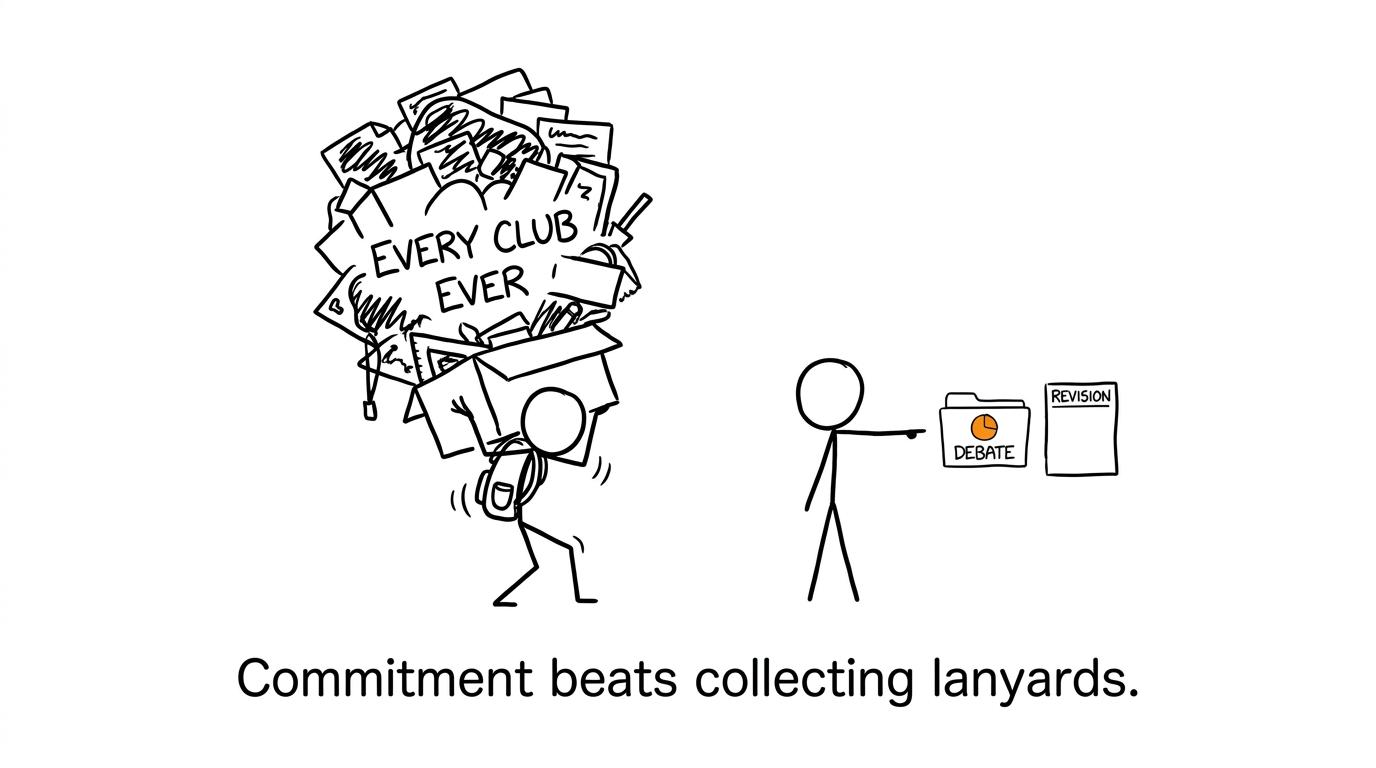 A revision planner rescues a student from joining every available club
When joining may not be the right choice
You do not need to join every useful activity. It may be better to decline or limit participation if:
- you already have an appropriate citizenship action arranged in lessons;
- the club has no clear structure or specification link;
- travel or meeting times regularly prevent essential revision;
- you are behind in several subjects and need a temporary catch-up period;
- the activity creates more stress than meaningful learning.
If you are struggling to secure your target maths grade, use a focused plan such as GCSE maths revision when you are stuck at a pass grade. Joining one carefully chosen activity is usually more sustainable than collecting commitments that leave no time to reflect or practise.
Common mistakes to avoid
Assuming attendance earns marks
There are no automatic marks for belonging to a society. Marks come from demonstrating the required knowledge, application, analysis and evaluation in the examination.
Treating any volunteering as citizenship action
A worthwhile community activity is not necessarily a suitable GCSE citizenship investigation. The issue, enquiry, research, informed action and evaluation must fit your exam board's requirements. Confirm this with your teacher.
Recording events but not decisions
A diary saying what happened is less useful than a record explaining why methods were chosen, which evidence influenced the group and how effectiveness was judged.
Presenting only one viewpoint
Passionate participation can make an issue feel obvious. Examination evaluation requires engagement with different perspectives, relevant evidence and a supported conclusion.
Sacrificing all independent revision
Discussion may improve understanding, but it does not build timed writing or maths fluency by itself. Protect regular individual practice and use mark schemes to identify exactly what must improve.
Is a GCSE Citizenship Studies club worth joining?
Yes, if it is relevant, structured and manageable. The club can deepen your understanding, provide meaningful active citizenship experience and sharpen the discussion, research and evaluation skills assessed by your exam board. It cannot award marks merely for attendance, replace content revision or guarantee a higher grade.
Choose the club for the quality of the learning, not the appearance of being busy. Record what you do, connect it to the specification, practise explaining it under examination conditions and protect time for your other GCSEs.
For maths, make MathsGenie your free revision base. Use revision lessons and practice questions to repair individual topics, mini tests to check recall, past papers to build timing, and predicted papers, mark schemes and video solutions to refine your final preparation. A good club can enrich your week. A clear revision system turns that week into progress.