GCSE Chemistry at a Different Exam Centre
GCSE chemistry different exam centre guidance: learn how private entries, practicals, fees, access arrangements and exam-day planning work across the UK.

The awkward part is often not learning chemistry. It is discovering that your school does not offer the qualification you want to take.
The short answer to the GCSE chemistry different exam centre question is yes: you can usually sit GCSE Chemistry at another approved school, college or examination centre as a private candidate. However, the centre must accept private candidates for your chosen exam board and specification. It must also be able to make the necessary arrangements for the qualification's practical activities.
You cannot enter directly through AQA, Pearson Edexcel, OCR or Eduqas. The approved centre makes the entry on your behalf, so finding the right centre early is essential.
Your essential checklist
Before committing to a course or paying an examination fee, confirm:
- whether your current school offers separate GCSE Chemistry or only Combined Science
- the exam board, specification code and examination series you need
- whether you will take foundation or higher tier
- whether the new centre accepts private candidates for that exact qualification
- how it provides the required chemistry practical activities
- its entry deadline and total fee
- what identification and previous candidate details it requires
- whether it can arrange any approved access arrangements
- the dates and locations of every written paper and practical session
That list may feel administrative, but it prevents the most expensive mistake: preparing for one specification and being entered for another.
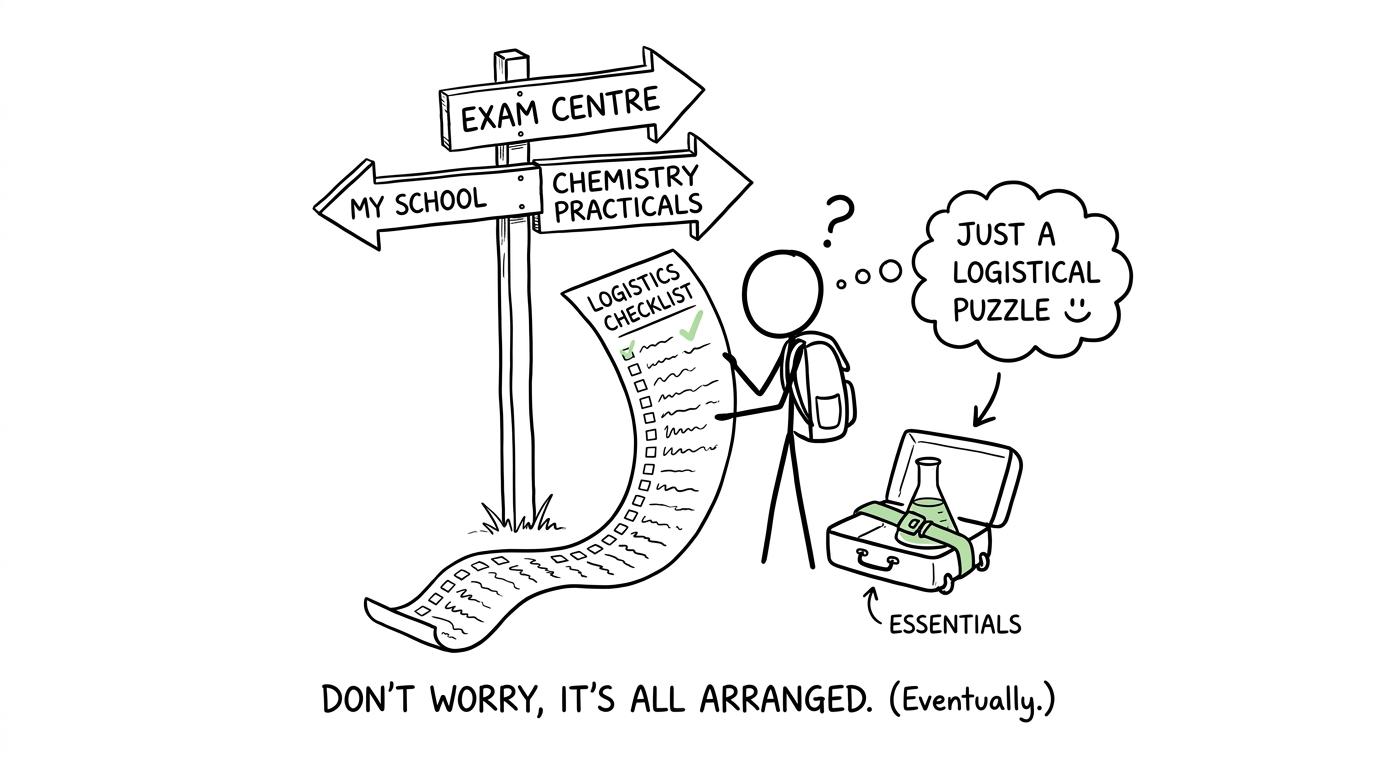 A student follows signposts towards a chemistry exam centre while carrying an oversized checklist
What to do if your school does not offer GCSE Chemistry
Start by asking your school's examinations officer or head of science exactly what is available. Some schools do not offer separate GCSE Chemistry but do offer Combined Science, which includes chemistry content and leads to two GCSE grades. These are different qualifications, so do not assume that taking Combined Science is the same as entering separate Chemistry.
Ask whether the school would consider entering you for Chemistry even if it does not teach the course. A school is not required to do this, and the practical requirements may make it impractical, but asking is sensible. Your school might also know of a nearby college or partner school with suitable laboratory facilities.
If it cannot help, you will need an approved centre that accepts private candidates. In this context, a private candidate is someone who takes an assessment at a centre without being enrolled there as a normal student.
The Joint Council for Qualifications, usually called JCQ, provides an official private-candidate centre search. Search using your postcode, qualification and awarding organisation. Its list is a starting point rather than a guarantee: centre policies and capacity can change, while some centres accepting candidates may not appear in the results. Contact each centre directly.
How to arrange a GCSE Chemistry entry elsewhere
Confirm the exact qualification
Write down the full qualification title, exam board and specification code before contacting centres. For example, AQA GCSE Chemistry has specification code 8462, while Pearson Edexcel GCSE Chemistry uses 1CH0. OCR and Eduqas have their own specifications and entry details.
You must also confirm your tier. GCSE Chemistry is commonly available at foundation and higher tier, but the entry must match what you have prepared for. Foundation and higher papers are not interchangeable on examination day.
Do not describe the subject simply as “science”. A centre may offer Combined Science but not separate Chemistry, or accept private candidates for one board but not another.
Contact several approved centres
Centres decide for themselves whether to accept private candidates. A centre that accepts external candidates for GCSE Maths may decline Chemistry because science requires laboratory access, practical records and additional administration.
When contacting an examinations officer, include:
- your full name and date of birth
- the examination series you intend to enter
- “GCSE Chemistry” as the qualification
- the exam board and specification code
- your intended tier
- whether you have already completed any required practical work
- details of any access arrangements you may need
- your Unique Candidate Identifier, known as a UCI, if you have one
Ask for written confirmation of what the fee includes. There may be separate charges for the awarding-body entry, centre administration, invigilation, laboratory sessions and late entry. Fees vary between centres, so obtain a current quotation rather than relying on an online estimate.
Arrange practical work before paying
Practical work is the point that makes a Chemistry entry different from many written-only GCSE subjects.
For current UK GCSE Chemistry specifications, practical skills are assessed through written examination questions, but students are expected to complete specified or mandatory practical activities during the course. The detailed wording and centre responsibilities differ by awarding organisation.
For example, AQA states that private candidates must find a school or college that will allow them to carry out the required practical activities. Its GCSE Chemistry specification contains eight required practicals. Pearson Edexcel's specification also includes eight mandatory core practicals, while OCR Chemistry A requires at least eight practical activities covering the prescribed apparatus and techniques.
The important question is therefore not just, “Can I sit the papers here?” Ask instead:
Can your centre enter a private candidate for this exact GCSE Chemistry specification and provide every practical opportunity and declaration required by the awarding organisation?
Get the answer in writing. Do not assume that watching practical videos or completing a home experiment will satisfy formal centre responsibilities. Videos can strengthen understanding, but they do not automatically replace required laboratory provision.
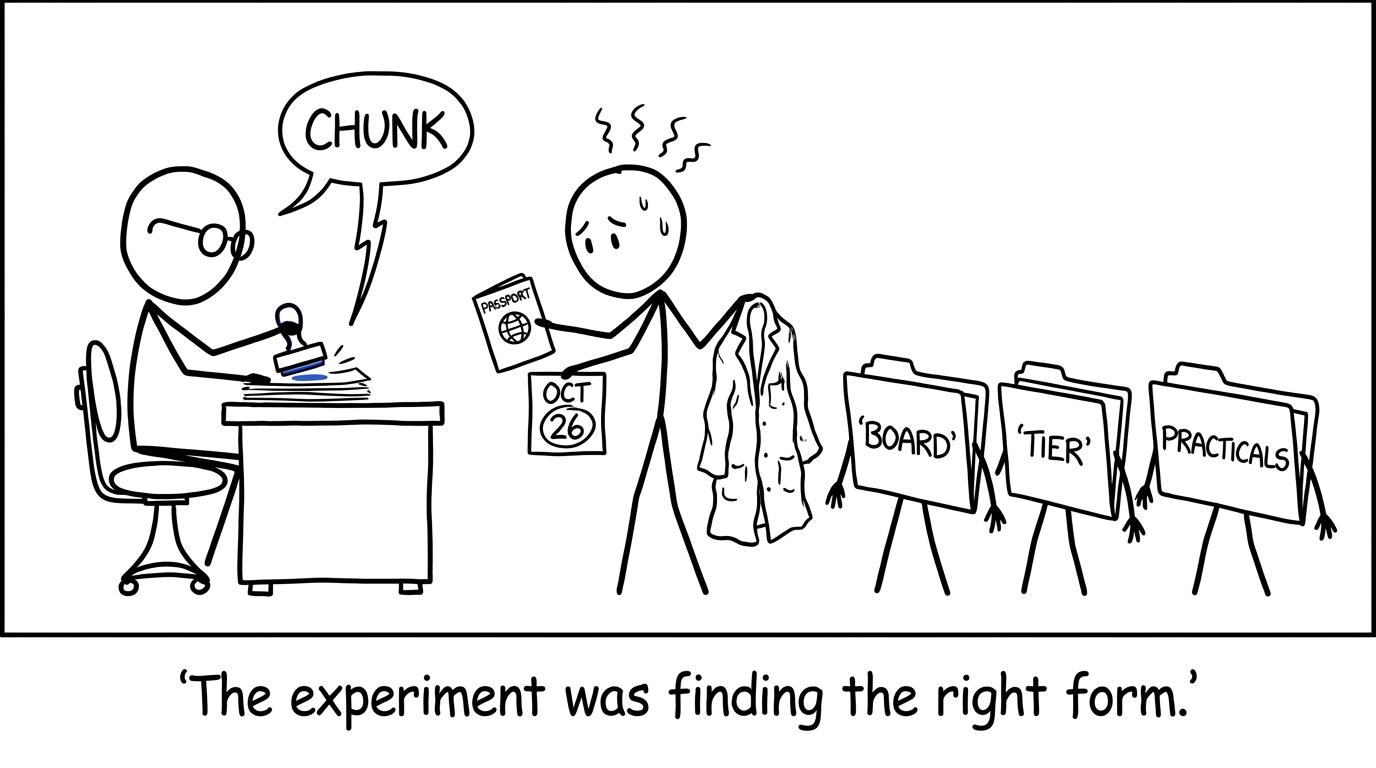 An exams officer stamps forms while a student arrives with identification, a calendar and a lab coat
Register and check your statement of entry
Once the centre accepts you, it will explain its registration process. You may need photographic identification, contact details, payment and information from previous examination entries.
The centre then submits the entry to the awarding organisation. Check your statement of entry carefully when you receive it. Confirm:
- your name is spelt correctly
- your date of birth is correct
- the subject and specification code are right
- your tier is right
- every paper is listed
- your UCI is consistent with previous entries
A small code on a form can determine which paper appears on your desk months later. Administrative accuracy is part of preparation.
Start early and ask about deadlines
Awarding organisations publish entry deadlines, but centres commonly set earlier internal deadlines so their examinations officers have time to process applications. Late entries may attract extra fees, and a centre can stop accepting candidates once its rooms or practical sessions are full.
Begin enquiries as early as possible in the academic year. This is especially important for Chemistry because laboratory sessions may need to be arranged well before the written examinations.
If you require extra time, supervised rest breaks, a reader, a word processor or another access arrangement, tell the centre during your first enquiry. The centre must review the evidence and follow the applicable JCQ process. An arrangement used at your usual school does not transfer automatically without the receiving centre checking and approving it.
Can you use two exam centres in the same series?
It may be possible to sit Chemistry at one approved centre while taking subjects such as GCSE Maths at your school. Each centre must know which qualifications it is entering, and your candidate information must be handled consistently.
Tell both examinations officers about the arrangement and provide your existing UCI. Do not make duplicate entries for the same qualification in the same series. Also compare all examination dates before paying, including contingency arrangements published for the series.
Travel deserves more attention than students often give it. Visit the new venue beforehand if possible. Confirm the entrance, arrival time, identification rules and transport plan. On examination day, familiarity is a quiet advantage.
Keeping chemistry arrangements from disrupting maths revision
Finding a centre can consume attention because every unanswered email feels urgent. Give the administration its own short weekly slot, then return to revision. A useful division is:
- one checklist for examination arrangements
- one timetable for subject revision
- one folder for confirmations, receipts and entry documents
For maths preparation, begin with the free GCSE Maths revision hub, where you can choose resources for Edexcel, AQA, OCR, Eduqas, WJEC and CCEA. Knowing your board and tier matters in maths for the same reason it matters in Chemistry: preparation should match the paper you will actually sit.
If several subjects are competing for time, use a focused one-week GCSE maths revision plan as a model for short, deliberate sessions. The aim is not to let Chemistry administration silently take over every evening.
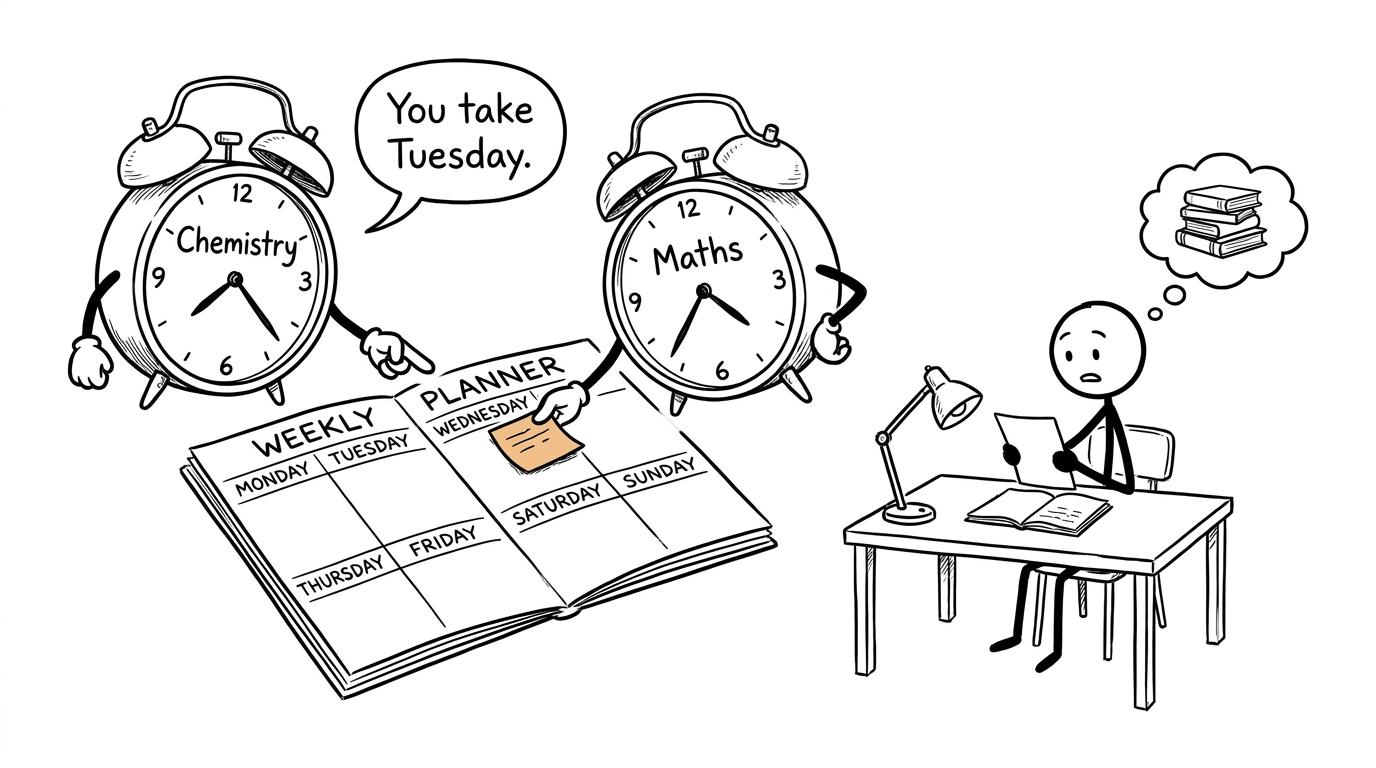 Two clocks labelled Chemistry and Maths negotiate over a student's weekly revision planner
Move from topic revision to papers gradually. The guide to when to start GCSE past papers explains how mini tests, timed sections and complete papers can play different roles. You can also check the GCSE maths topics by exam board and tier before building your timetable.
Nearer the examination, predicted papers should supplement rather than replace official past papers. MathsGenie's guide to using GCSE predicted topics sensibly helps keep the focus on broad specification coverage.
Common mistakes to avoid
Assuming every private centre offers Chemistry
Accepting private candidates does not mean accepting every subject. Confirm the exact board, specification and tier.
Booking written papers without discussing practicals
Chemistry practical provision is central to the arrangement. Ask how the centre meets the awarding organisation's requirements before paying.
Waiting for the awarding-body deadline
Your chosen centre may close applications earlier or fill its laboratory places. Work to the centre's internal deadline.
Revising the wrong specification
Topic order, practical requirements and paper structure vary. Use the specification code, not a generic online course title, to check your materials.
Leaving access arrangements until spring
Tell the centre at the beginning. Evidence, assessment and approval take time, and the receiving centre is responsible for the arrangement.
Forgetting to check the final entry
Read your statement of entry. A wrong tier, subject code or personal detail should be corrected promptly.
Letting logistics replace revision
Securing a seat is necessary, but it does not prepare you for the paper. Once arrangements are confirmed, follow a repeatable cycle: learn, practise, mark, correct and retest. If examination week is approaching, use a calm GCSE maths night-before plan rather than trying to relearn everything at once.
Make the next decision small
Sitting GCSE Chemistry elsewhere can seem like one enormous problem. In practice, it is a sequence of smaller decisions: identify the specification, find approved centres, confirm practical provision, compare fees, register and check the entry.
Begin by speaking to your school's examinations officer. Then contact several private-candidate centres with the same precise questions. Keep every answer in writing and do not pay until you understand the practical arrangements and total cost.
Once the entry is secure, let revision become the main work again. MathsGenie is ready for the maths side of that journey, with free revision lessons, practice questions, mini tests, past papers, predicted papers, mark schemes and video solutions. Open the GCSE Maths revision area, choose your board and tier, and turn today's uncertainty into one clear next task.