Evening Classes GCSE English Literature: Worth It?
Evening classes GCSE English Literature can add structure and feedback. Compare fees, self-study, exam entry and flexibility before you enrol as an adult.
The hardest part of returning to a GCSE is rarely opening the first book. It is keeping the promise to open it again next Tuesday, after work, when everything else feels more urgent.
That is the real case for evening classes GCSE English Literature learners consider: they provide a timetable, expert feedback and other people expecting you to return. For many adults, that makes them worth the time and cost. For a disciplined learner who can obtain reliable essay feedback and arrange an exam centre independently, self-study may be cheaper and more flexible.
The right choice depends less on whether classes are universally “good” and more on which obstacles are most likely to stop you completing the qualification.
The short answer: when are evening classes worth it?
An adult evening class is probably worth considering if you:
- need a fixed weekly routine to remain consistent;
- have not written analytical essays for several years;
- want a teacher to explain assessment objectives and mark your work;
- would benefit from discussing interpretations with other learners;
- need help choosing the correct texts for your exam board;
- prefer a provider that can explain or organise exam entry.
Self-study may offer better value if you:
- already read confidently and understand literary analysis;
- can follow a revision timetable without external accountability;
- have access to constructive essay feedback;
- need to fit learning around shifts, caring or unpredictable work;
- can confirm your specification, texts and private-candidate arrangements yourself.
Before paying, check five things: the exam board, texts taught, teaching hours, total fees and whether exam entry is included. A cheap course that prepares you for the wrong texts is not cheap in any meaningful sense.
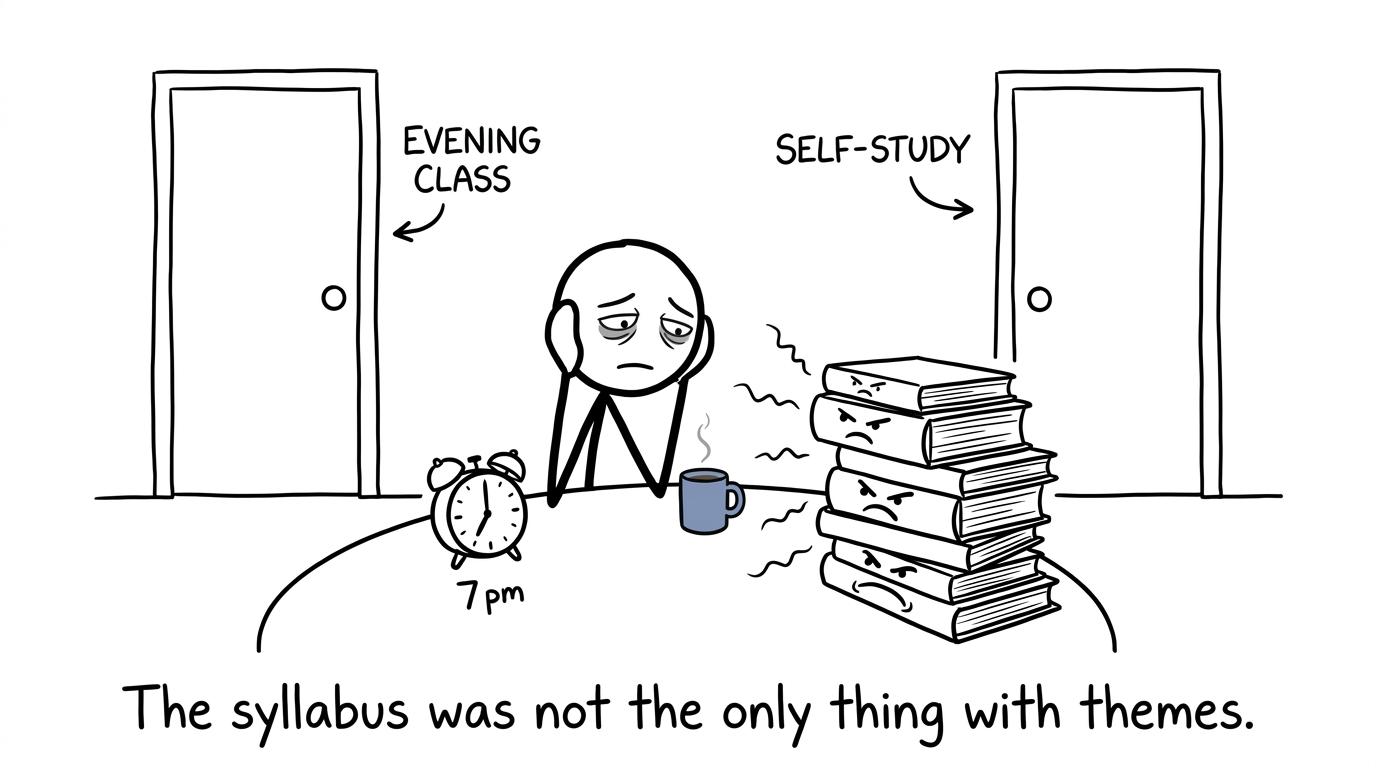 An adult learner choosing between an evening class and self-study
What GCSE English Literature actually requires
GCSE English Literature is not simply a book club with an examination at the end. In England, the required subject content includes a Shakespeare play, a nineteenth-century novel, poetry published since 1789 and British fiction or drama from 1914 onwards. Students must also respond to unseen literature.
The exact texts, paper structure and question wording depend on the specification. AQA, Pearson Edexcel, OCR and Eduqas do not necessarily organise the course in the same way. Unlike GCSE Maths, English Literature has no foundation or higher tier.
Assessment objectives reward several connected skills:
- an informed response supported by textual references;
- analysis of language, form and structure;
- understanding of relationships between texts and their contexts;
- accurate written communication where it is assessed.
This breadth is one reason teaching can help. Reading the novel is only one layer. You must also build an interpretation, select useful evidence and shape an argument under timed conditions.
For example, AQA’s current specification uses two compulsory, closed-book examinations. Other boards have their own arrangements, so always check the current specification rather than assuming that advice for one board applies to another.
What you are really buying from an evening class
The visible product is a lesson. The more valuable product is often a system.
A timetable that survives busy weeks
A scheduled class removes a recurring decision. You do not have to ask whether tonight feels like a good night to revise. The commitment has already been made.
That matters for adults balancing employment, family life and other qualifications. It also matters to students revising English alongside GCSE Maths. A sensible routine protects both subjects rather than allowing the most urgent homework to consume every evening.
MathsGenie’s guide to revising GCSE Maths without wasting time uses a simple loop: learn, practise, mark and revisit. Literature needs a similar rhythm: read, plan, write, receive feedback and improve.
Feedback you cannot easily give yourself
Self-marking an essay is harder than marking a short-answer question. You know what you intended to say, so gaps in the argument can become invisible.
A knowledgeable teacher can identify whether you are analysing a writer’s choices or merely retelling the plot. They can also distinguish a relevant contextual point from a memorised fact that does not answer the question.
This is often the strongest reason to pay for teaching. Resources can supply information. Feedback tells you what to change.
Guided discussion
Literature allows reasoned interpretations rather than one prescribed response. Hearing another learner defend a different reading can reveal assumptions in your own argument. A well-run class turns discussion into better written analysis rather than conversation for its own sake.
Administrative support
Private candidates must enter through a school, college or other approved centre willing to accept them. Availability, deadlines and fees vary. Your course provider may arrange this, recommend a centre or leave the entire process to you.
Ask directly. “Exam preparation included” does not necessarily mean “exam entry included”. You should also confirm that the centre offers your selected board and specification.
Evening classes compared with self-study
| Consideration | Evening class | Self-study |
|---|---|---|
| Structure | Fixed sessions create accountability | You control the timetable |
| Feedback | Regular marking may be included | Must be arranged independently |
| Flexibility | Attendance times are usually fixed | Easier around shifts and caring |
| Cost | May include tuition, materials or entry | Usually cheaper, but entry still costs |
| Pace | Shared with the group | Can accelerate or revisit topics freely |
| Text selection | Usually chosen by the provider | Must match your specification and centre |
| Discussion | Built into a good course | Requires a tutor or revision group |
Neither route removes the need for independent work. An evening class cannot read a whole novel on your behalf, just as watching a maths video cannot replace answering questions.
That distinction is useful across both subjects. The MathsGenie GCSE Maths revision hub combines lessons with exam questions, practice papers and solutions because understanding becomes dependable only when it is tested.
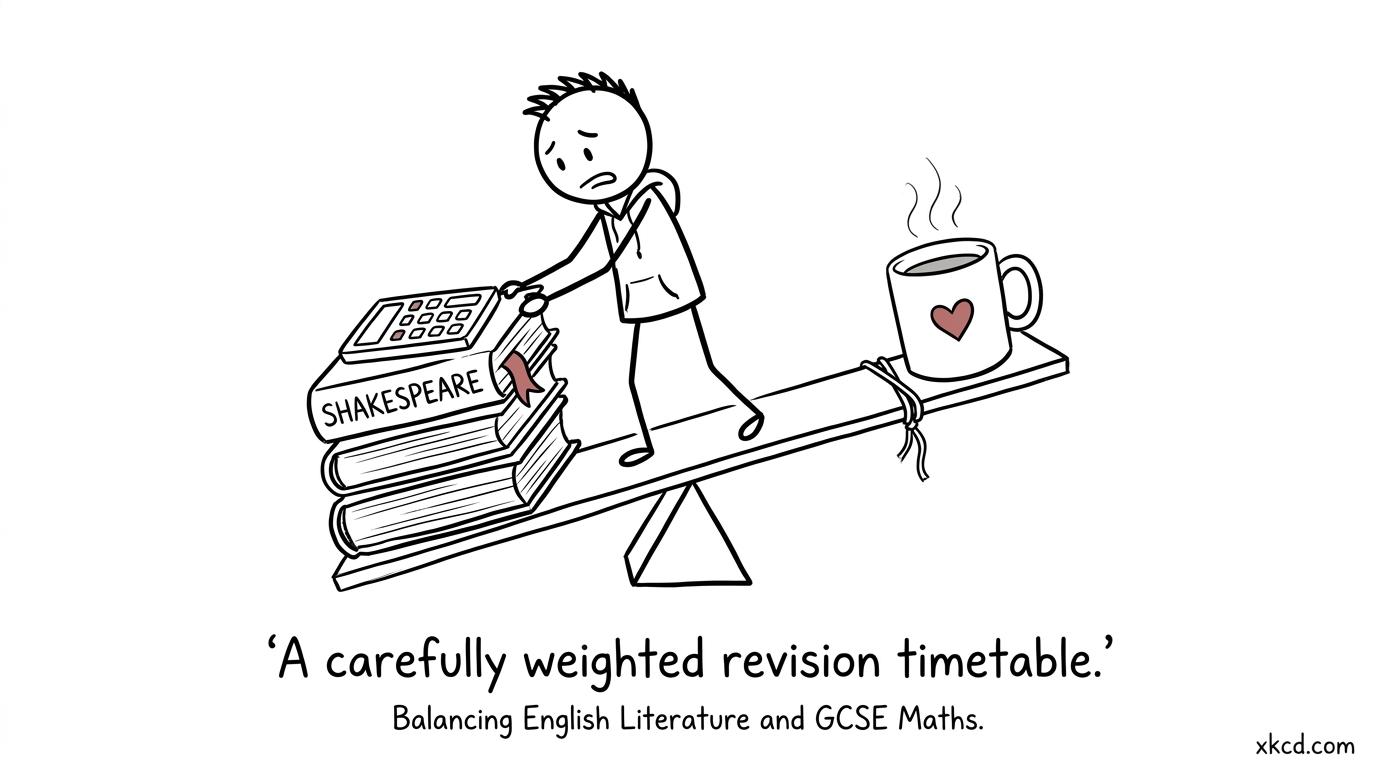 A student balancing English Literature and maths revision
How to judge the time and cost properly
Do not compare the course fee only with the price of a revision guide. Compare complete routes to the examination.
For an evening class, establish whether the advertised amount includes:
- registration or enrolment charges;
- books and anthology materials;
- mock examinations;
- individual essay marking;
- exam-centre entry;
- resit or cancellation charges.
For self-study, budget for the correct texts, revision materials, examination entry and any tutoring or marking support you may need.
Funding requires particular care. Adult education rules differ across England, Wales, Scotland and Northern Ireland, while eligibility can also depend on age, residency, prior qualifications and local funding arrangements. In England, public adult-skills support gives priority to eligible English and maths provision, but you should not assume that a particular GCSE English Literature evening course will be free. Ask the provider to confirm your eligibility and every payable fee in writing.
Time has a cost too. Include travel, preparation, reading and missed sessions. A nearby class that you attend consistently may provide better value than a prestigious course involving a difficult journey.
A practical decision checklist before enrolling
Confirm the qualification
Make sure the course leads to GCSE English Literature, not GCSE English Language, Functional Skills English or a general literature course. These are different qualifications with different purposes.
If your goal is to satisfy an employer, college or university requirement, ask which English qualification is accepted. English Language is more commonly specified, so do not assume Literature will automatically meet the condition.
Match the exam board and texts
Ask for the full specification code and reading list. Confirm that the exam centre accepts entries for the same qualification.
Inspect the feedback offer
“How much marking is included?” is more useful than “Will we write essays?” A course may set frequent work while offering little individual response. Ask whether feedback is written, verbal or both, and how quickly work is returned.
Test whether the timetable is realistic
Look beyond the first enthusiastic week. Can you attend after a difficult day? What happens if you miss a session? Are recordings, notes or catch-up activities available?
Protect your maths revision
If you are also preparing for GCSE Maths, reserve separate sessions for it. Use board-specific GCSE maths resources and alternate focused topic work with timed papers.
The GCSE Maths night-before revision plan is useful near an exam, but steady preparation is better than rescuing two subjects at the last moment. If tier choice is still being discussed, read the guide to moving from foundation to higher tier.
How to make self-study a genuine alternative
Self-study works when it is a system, not merely an intention.
Begin with the current specification and create a reading schedule covering every required text. Then divide revision into textual knowledge, quotation recall, analysis, comparison, unseen practice and timed writing.
Most importantly, build in external feedback. This could come from a qualified tutor, an adult-learning support service or another suitable educator familiar with your specification. A mark scheme helps, but it cannot always explain why an argument lacks precision.
Use past papers only after you have enough knowledge to attempt them purposefully. Complete work under realistic conditions, compare it with the published mark scheme and record recurring weaknesses. The same principle is explained in MathsGenie’s guide to using Edexcel GCSE Maths past papers properly: a paper becomes valuable when its mistakes shape the next revision session.
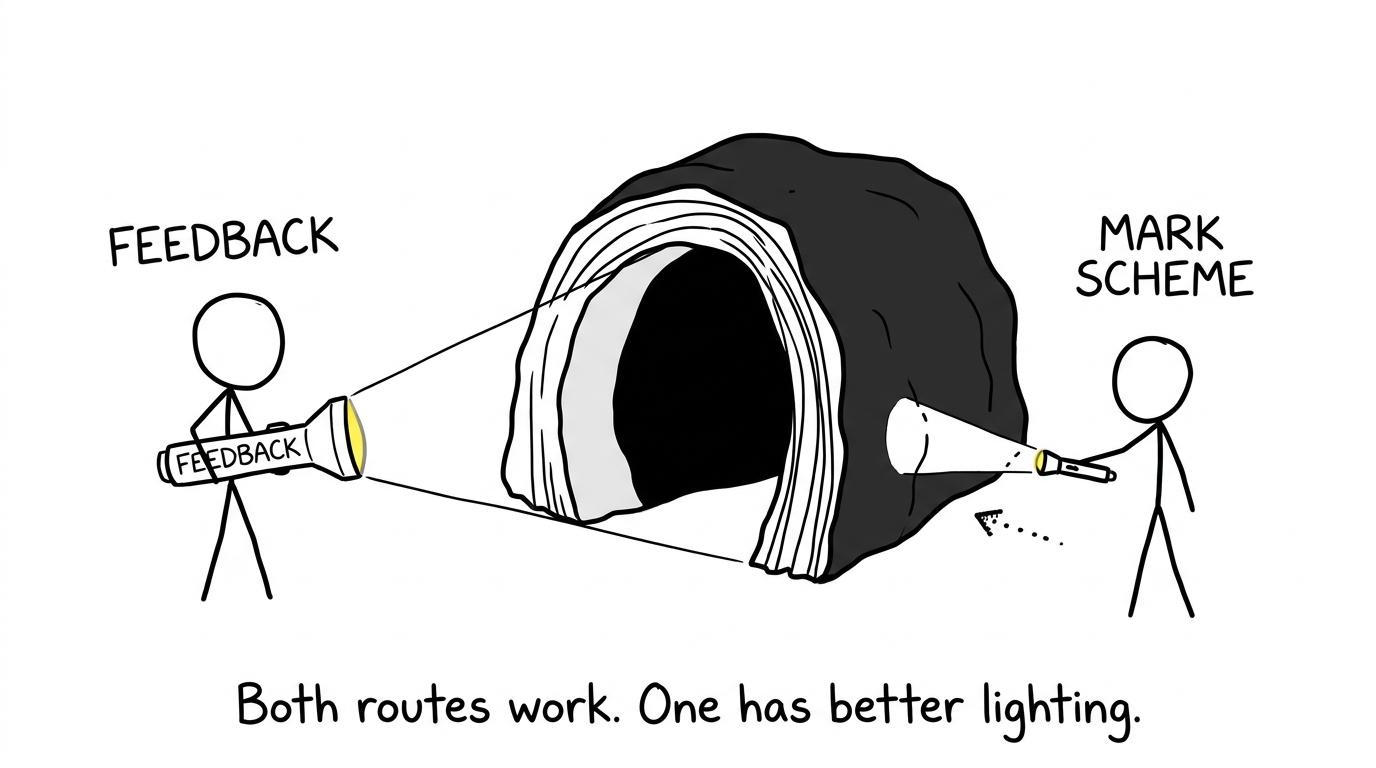 A teacher and self-study learner illuminating an essay with different feedback torches
Common mistakes when choosing an adult course
Confusing Literature with Language
Check the precise qualification. A course with “English GCSE” in its description may not be English Literature.
Assuming the examination is included
Tuition and examination entry can be separate services. Confirm the centre, board, deadline and total fee before enrolling.
Choosing by price alone
A lower fee may mean fewer teaching hours, limited marking or no examination support. Compare what is included rather than the headline amount.
Ignoring the reading commitment
Weekly attendance is only part of the workload. Whole texts require sustained reading outside class.
Treating attendance as revision
A class creates the conditions for progress; it does not guarantee it. You still need to retrieve quotations, plan arguments and write under time pressure.
Letting English displace maths
Busy learners often revise whichever subject feels most immediate. Keep both visible. The guide to Edexcel and AQA GCSE Maths differences can help you identify the correct paper resources, while MathsGenie’s free GCSE Maths revision area supports Edexcel, AQA, OCR, Eduqas and other boards.
Are evening classes GCSE English Literature learners choose worthwhile?
Yes, when the class solves a problem that would otherwise prevent progress. That problem might be weak essay technique, inconsistent revision, isolation or uncertainty about the examination process.
Self-study is the better choice when flexibility matters most and you can reproduce the essential benefits of teaching: a plan, accurate resources, meaningful feedback and timed practice. The cheapest route is not automatically the best value, and the most expensive course is not automatically the most effective.
Before deciding, ask the provider for the specification, reading list, marking arrangements, complete fees and exam-entry details. Then look honestly at your own habits. Choose the structure you are most likely to follow on an ordinary, tiring week, not the one imagined on your most motivated day.
Once your English plan is secure, make MathsGenie your home for free maths revision. Start with revision lessons and practice questions, check progress through mini tests, and build exam confidence using past papers, mark schemes, video solutions and predicted papers. Good revision becomes easier when the next useful step is already waiting.