Cramming vs Learning GCSE English Language & Literature
Cramming vs learning GCSE English Language and Literature: spot the difference, test recall and build flexible exam skills that hold up under pressure.
There is a particular kind of confidence that appears after rereading a quotation five times. The words look familiar. Your notes look organised. For a moment, revision feels complete.
Then you close the book and try to explain why the quotation matters.
Nothing comes.
That gap captures the practical difference between cramming vs learning GCSE English Language and Literature. Cramming makes information feel familiar for a short time. Learning means you can retrieve knowledge, connect it to a question and use it independently. On exam day, the second matters far more.
The quickest test is simple: remove your notes, change the question and add a time limit. If you can still produce a relevant, supported response, you are learning. If your knowledge disappears as soon as the page is hidden, you are probably cramming.
A quick cramming or learning checklist
You are more likely to be cramming if you:
- repeatedly read notes without testing yourself;
- memorise complete paragraphs that fit only one question;
- copy quotations while looking at the text;
- avoid unfamiliar extracts or essay titles;
- measure revision by hours spent rather than work produced;
- mark answers by how polished they sound rather than against the assessment objective.
You are more likely to be learning if you:
- retrieve quotations and ideas without prompts;
- explain the same theme through different characters or moments;
- analyse unfamiliar language and structure;
- adapt knowledge to a question you have not seen before;
- use feedback to improve a second attempt;
- revisit material after a gap rather than once in a long session.
Learning often feels less comfortable. That is not a warning sign. Trying to remember, discovering a gap and correcting it requires more thought than highlighting a page. Productive difficulty is often where useful revision begins.
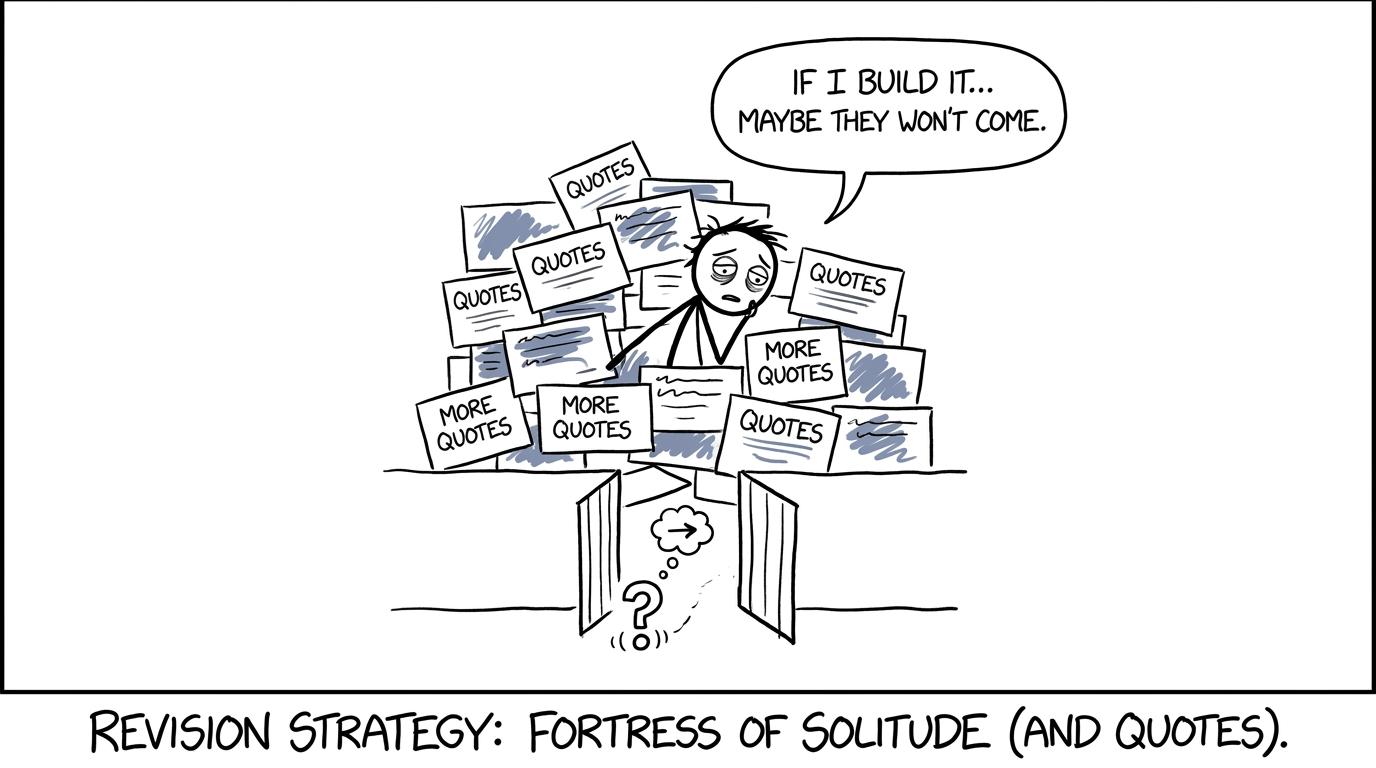 A GCSE student discovers that a fortress of quotation cards cannot stop an unfamiliar exam question
Why cramming feels effective
Cramming offers quick evidence of activity. You can finish a stack of flashcards, colour-code a poetry anthology or read several model essays in one evening. Because the material becomes familiar, it is easy to confuse recognition with recall.
Recognition means an idea looks right when it is in front of you. Recall means you can produce it when the support has gone. An English examination asks for more than either of these in isolation: you must also select what is relevant and apply it to the precise task.
That is why memorising a model paragraph can create brittle confidence. It may survive if the question closely matches the paragraph. Change the theme, extract or viewpoint, and the response may no longer fit.
This is especially important in GCSE English Language, where reading tasks require you to respond to unseen material. Official subject content places equal overall emphasis on reading and writing, although exact paper structures vary between AQA, Edexcel, OCR and Eduqas. You cannot memorise the unseen text. You have to learn transferable skills such as inference, analysis, comparison, evaluation and controlled writing.
What genuine learning looks like in English Language
GCSE English Language is not a collection of phrases to insert mechanically. It tests whether you can read closely and communicate deliberately.
Across exam boards, the assessment objectives cover abilities including:
- identifying explicit and implicit information;
- selecting evidence;
- analysing language and structure;
- comparing ideas and perspectives where required;
- evaluating texts;
- writing for a defined purpose, audience and form;
- controlling vocabulary, spelling, punctuation and grammar.
Knowing the name of a technique is therefore only a beginning. If you identify a metaphor but cannot explain what it suggests, why it was chosen or how it shapes the reader's response, the label has done little work.
Test the skill with unfamiliar material
Choose a fresh extract and attempt a short response without a sentence frame. Afterwards, ask:
- Did I answer this question rather than a remembered one?
- Is my evidence precise?
- Did I explain an effect instead of asserting that it is “effective”?
- Did I consider the whole text where the task required it?
- Can I improve the response after reading the mark scheme or teacher feedback?
A strong method survives a new text. That is the English equivalent of meeting an unfamiliar GCSE maths problem and still recognising the underlying topic.
MathsGenie's GCSE Maths revision hub is built around that same principle: learn a method, attempt questions independently and then check the solution. Although the subject content is different, the learning loop is highly transferable.
What genuine learning looks like in English Literature
Literature needs memory, but memory is not the final destination. You need a usable network of quotations, events, themes, methods and contextual ideas.
The shared GCSE English Literature assessment objectives require students to respond to texts, use textual references, analyse language, form and structure, and show understanding of context. Accurate written expression is also assessed in the relevant part of the qualification. Exact weightings and question formats depend on your specification, so use materials for your own exam board.
A quotation becomes useful when you can do several things with it:
- place it accurately within the text;
- connect it to more than one theme where appropriate;
- analyse a significant word, image or structural choice;
- explain how it contributes to a character or argument;
- select it because it answers the question, not merely because you remember it.
Rather than memorising an entire essay on power, build flexible clusters around power: who possesses it, who lacks it, when it changes, how the writer presents it and what relevant context illuminates the interpretation. This lets you assemble an answer around the actual question.
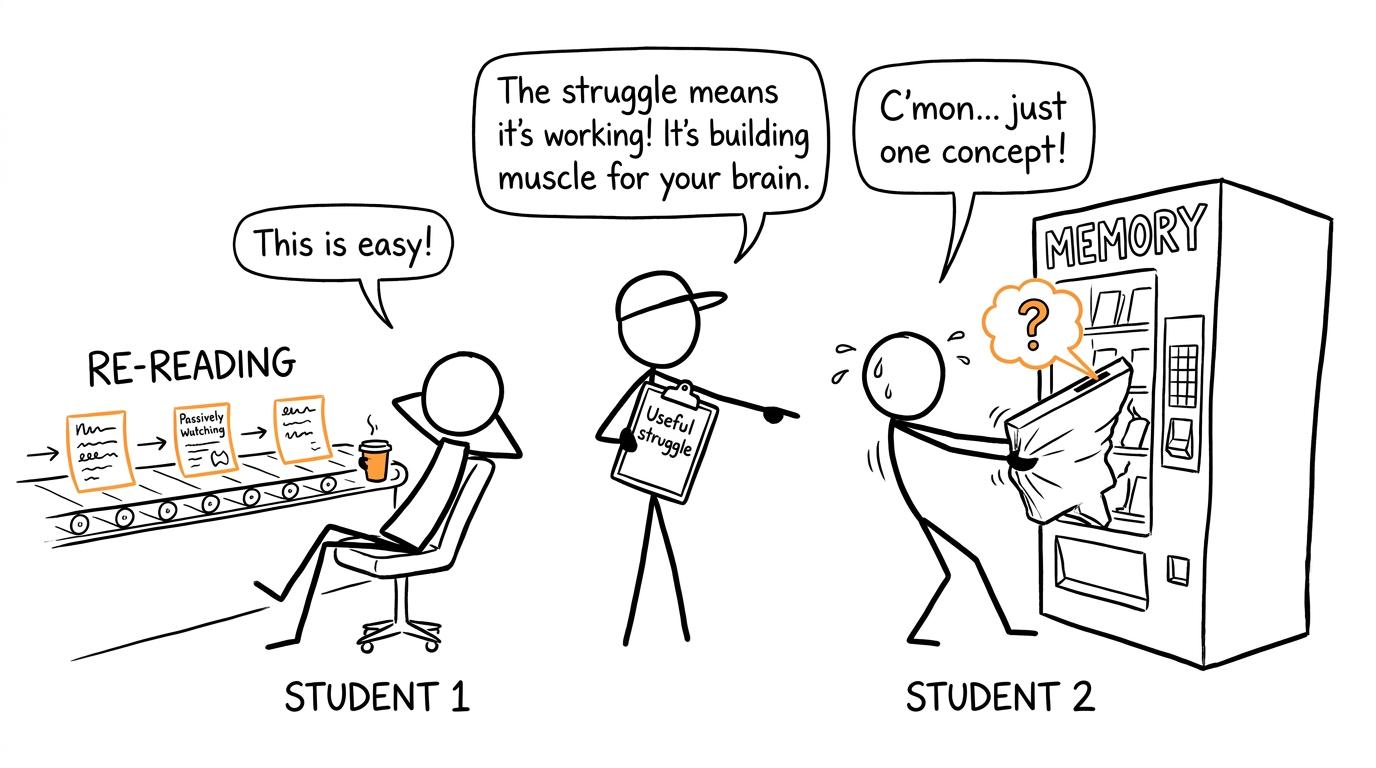 In a revision gym, retrieving an idea from memory proves harder than watching notes pass by
Four tests that reveal whether learning will hold up
The closed-notes test
After revising, put everything away. Write the quotations, themes, structural methods or Language question requirements you can remember. Then check your notes.
The missing material is not evidence that the session failed. It is useful diagnostic information. It tells you what to revisit.
The variation test
Change the task. Use another character, theme, extract, purpose or audience. If your knowledge works only for the original prompt, it has not yet become flexible.
This principle also drives effective maths revision. A student who can copy a demonstrated solution may still struggle when values or wording change. The MathsGenie one-month revision plan combines retrieval, targeted practice and timed papers instead of relying on passive review.
The delay test
Return to the material after a gap. A successful attempt immediately after reading notes may reflect short-term availability. Trying again later gives a more honest picture of what remains accessible.
Spacing does not mean leaving a topic untouched until the week before the examination. It means revisiting it through several shorter encounters. For students balancing English with foundation or higher tier maths, a realistic GCSE revision timetable can protect those repeat visits.
The exam-condition test
Complete a suitable section with the correct time limit and without pausing for notes. Then mark or review it carefully.
Timing reveals problems hidden by relaxed practice: slow planning, overlong introductions, weak paragraph control and insufficient time for checking. Full papers are valuable, but shorter timed sections can diagnose these issues without consuming an entire evening.
A revision cycle that replaces cramming
Use a repeatable sequence rather than waiting for motivation.
Retrieve
Begin without notes. Recall quotations, plot moments, assessment objectives, writing structures or vocabulary. Keep this brief and specific.
Apply
Answer a fresh question, plan an essay or annotate an unseen extract. The task should require a decision, not just copying.
Check
Compare your work with the mark scheme, specification language, teacher feedback or a reliable model response. Ask what the examiner rewards. Do not simply count ticks.
Correct
Rewrite the weakest part. Improvement happens when feedback changes what you produce, not when you merely read it.
Revisit
Schedule another attempt after a gap, preferably with a changed prompt. This final step tests whether the correction lasted.
The same cycle works when English competes with maths for revision time. MathsGenie's 20-minute GCSE revision routine shows how retrieval, exam-style practice and immediate marking can fit into a busy school day. For longer preparation, the GCSE one-week revision plan offers a structured way to diagnose gaps rather than guessing what to revise.
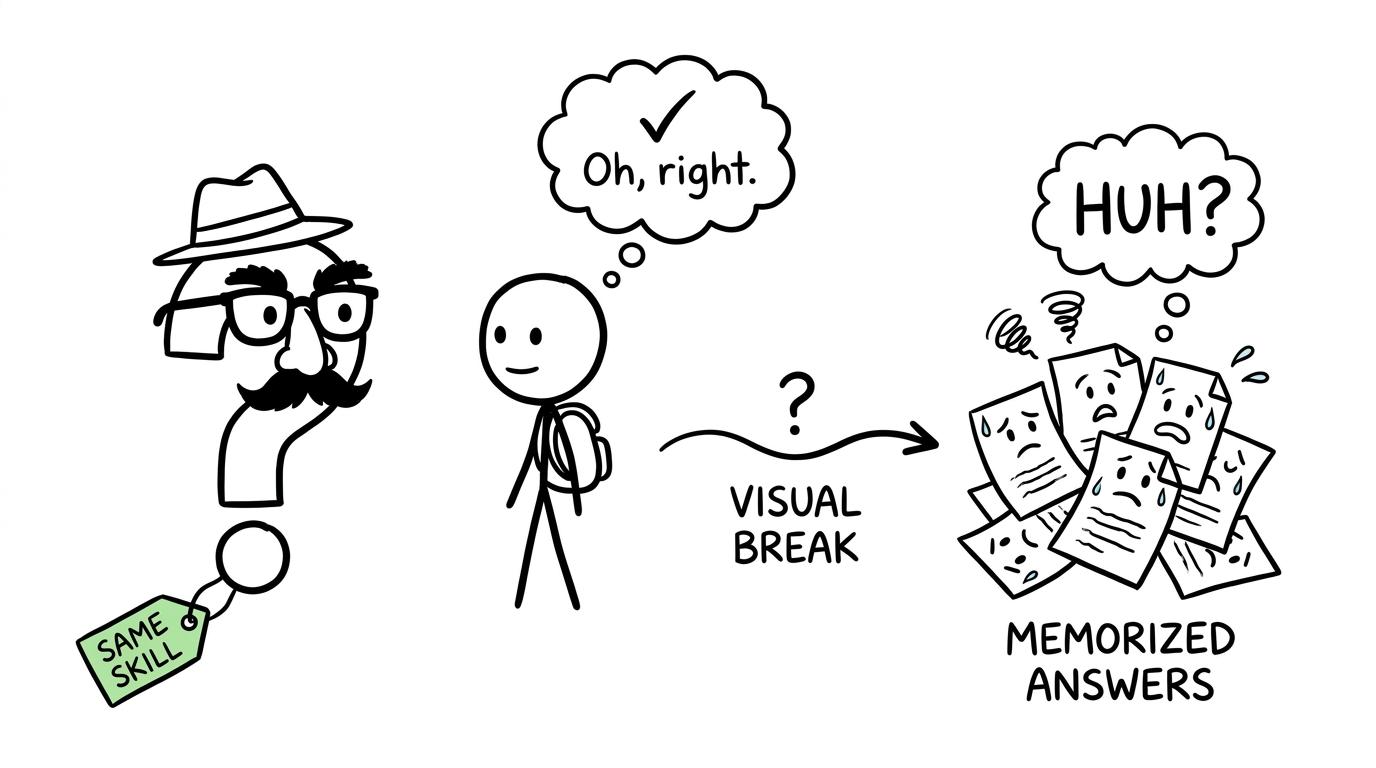 A disguised exam question cannot fool a student who recognises the underlying skill
Common mistakes when trying to stop cramming
Making more resources instead of using them
A beautiful quotation sheet has value only if it supports retrieval and application. Once a resource is clear enough to use, stop redesigning it and start testing yourself.
Memorising generic analysis
Claims such as “this makes the reader want to read on” rarely show precise understanding. Explain the particular meaning, impression or shift created in that moment.
Treating quotations as the whole of Literature
Quotation recall supports an answer, but marks depend on interpretation, analysis and relevance. Learn shorter, versatile references and understand their place in the text.
Practising only favourite tasks
Comfort can hide gaps. If comparison, evaluation or transactional writing repeatedly costs marks, that is where the next session should go.
Completing work without reviewing it
An unmarked answer records performance but does not automatically improve it. The value comes from identifying the weakness, correcting it and testing it again.
This is why MathsGenie's guidance on using GCSE past papers properly emphasises diagnosis and reattempts. You can use the same discipline with English past papers from your own exam board.
Replacing sleep with one more revision session
A very late session may create the feeling that you have rescued the evening, while leaving you less able to concentrate the next day. A calm stopping point, prepared equipment and adequate rest are part of exam preparation, not time stolen from it.
Build knowledge that survives the exam hall
Cramming asks, “Can I get this into my head tonight?” Learning asks a better question: “Can I retrieve and use this when the wording changes and no notes are available?”
For English Language, practise transferable reading and writing decisions on unfamiliar material. For Literature, build flexible connections between quotations, methods, themes, characters and context. In both subjects, retrieve, apply, check, correct and revisit.
Then bring that same approach to maths. Start with the free MathsGenie GCSE revision resources, use revision lessons to repair weak methods, complete practice questions and mini tests, and test your independence with past papers and predicted papers. Mark schemes and video solutions show where your thinking needs to change.
The goal is not to make revision look impressive. It is to make your knowledge available when the paper opens.