

What to Eat Before a GCSE Drama Exam
What to eat before GCSE Drama exam day: balanced breakfast and snack ideas, hydration tips, caffeine guidance and a calm plan for steady focus.
The strange thing about an exam morning is that ordinary decisions suddenly feel important. Toast or cereal? Water or an energy drink? Eat despite the nerves, or wait until afterwards?
If you are wondering what to eat before GCSE Drama exam day, the useful answer is reassuringly simple: choose a familiar meal containing a starchy carbohydrate, some protein and fruit or vegetables, then drink water regularly. Porridge with yoghurt and fruit, eggs on wholemeal toast, or a lower-sugar cereal with milk and a banana are all sensible options.
You do not need an exotic “brain food”. You need predictable energy, comfortable digestion and enough fluid to avoid arriving hungry, thirsty or distracted.
That principle works whether you are sitting a written Drama paper, completing a performance assessment, or preparing for maths later in the exam season.
Your quick pre-exam food checklist
Before leaving home, aim to:
- eat a familiar breakfast or meal rather than experimenting
- include a starchy food such as oats, bread, rice, pasta or potatoes
- add protein such as eggs, yoghurt, milk, beans, tofu or nut butter
- include fruit or vegetables if they normally agree with you
- drink water steadily instead of consuming a large amount at once
- pack a straightforward snack if there will be a long wait
- avoid suddenly increasing your caffeine intake
- follow your school’s rules about food and drinks in the exam room
The goal is not to create a perfect menu. It is to remove hunger and thirst from the list of things competing for your attention.
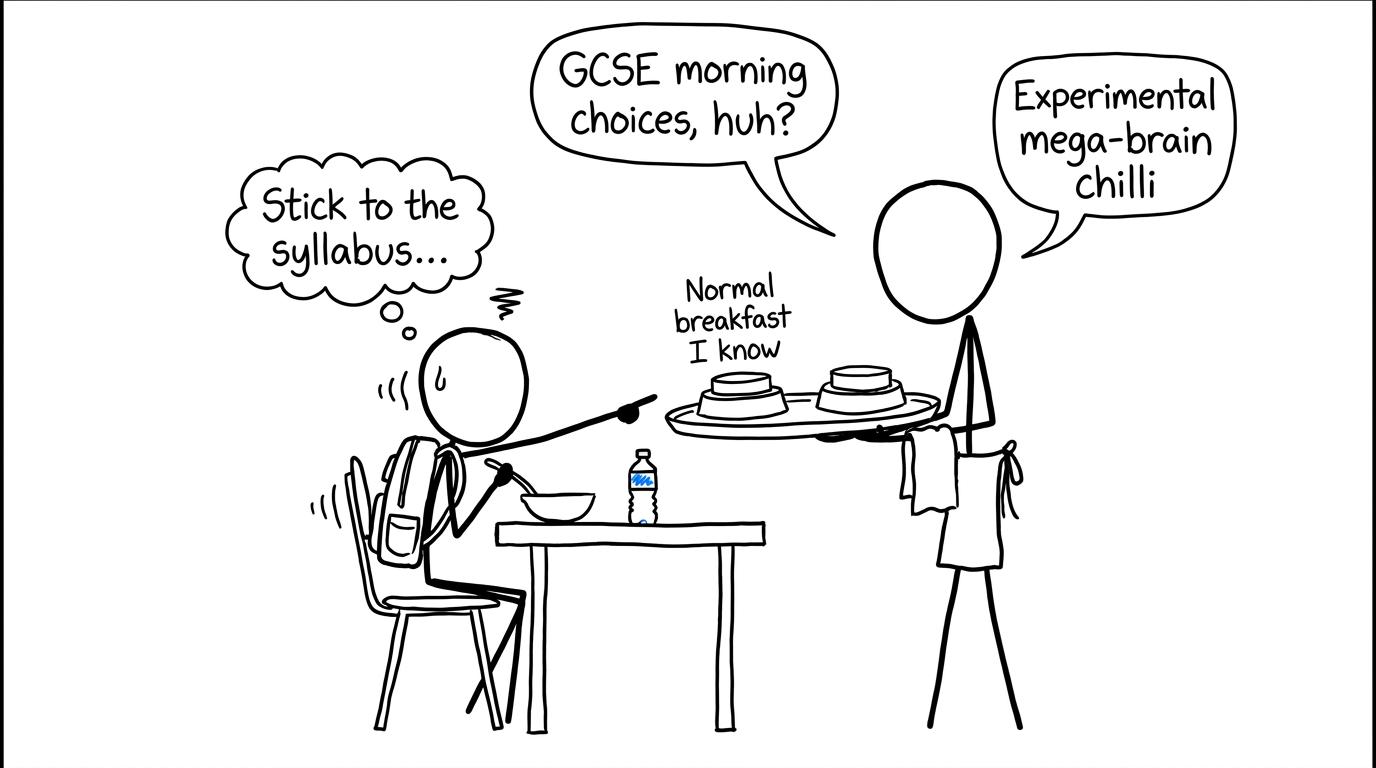 A GCSE student choosing a familiar breakfast instead of an experimental exam-morning meal
What actually supports focus and steady energy?
Food cannot teach you a set text, improve an unfinished portfolio or replace sleep. What it can do is support the conditions in which you recall and communicate what you know.
Combine carbohydrates with protein
Starchy carbohydrates provide the body with energy. Higher-fibre choices such as porridge, wholegrain bread and many wholegrain cereals are often described as slower-release options because they are digested more gradually than highly refined sugary foods.
Adding protein can make the meal more satisfying. Practical combinations include:
- porridge made with milk, topped with banana
- wholemeal toast with eggs
- yoghurt with oats and berries
- beans on toast
- a wholemeal wrap containing egg, chicken, beans or tofu
- lower-sugar cereal with milk and fruit
These are examples, not compulsory recipes. White toast with yoghurt may be a better exam breakfast for you than wholegrain toast with eggs if it is familiar, available and comfortable to eat. Consistency matters more than trying to optimise every ingredient.
Avoid relying on sugar for a dramatic entrance
A sweet food is not forbidden before an exam. The problem comes when sweets, pastries or sugary drinks are expected to do the job of a complete meal.
They may provide energy quickly, but they might not keep you satisfied through travel, registration and the assessment itself. If you enjoy something sweet, have it alongside a more substantial breakfast rather than treating it as your entire strategy.
This is especially useful for a written Drama examination, where sustained concentration matters. The precise format and duration depend on your exam board and specification, so check the details provided by your teacher rather than assuming that AQA, Edexcel, OCR and Eduqas follow identical arrangements.
Treat hydration as preparation, not a rescue mission
NHS guidance recommends drinking regularly through the day, with water, lower-fat milk and sugar-free drinks among the options that count towards fluid intake. A practical sign of adequate hydration is pale yellow urine, although illness, medication and supplements can affect its colour.
Start drinking normally earlier in the day. Downing a huge bottle immediately before the assessment may simply leave you uncomfortable or needing the toilet.
Take water only if your school permits it, and check whether the bottle must be clear with its label removed. Practical Drama assessments may have different arrangements from written papers, so ask in advance.
 A water bottle is the understated hero beside an enormous energy drink
Breakfast ideas for different exam mornings
There is no single best breakfast because students have different appetites, routines, dietary requirements and assessment times. Build your choice around what you already tolerate well.
If your written exam is in the morning
Try to eat before leaving home, allowing enough time that you do not feel rushed. Suitable choices include:
- porridge with milk or a fortified alternative, plus fruit
- wholemeal toast with eggs and a piece of fruit
- yoghurt with oats and banana
- cereal with milk, accompanied by toast
- beans on toast
If anxiety makes a full breakfast difficult, a smaller option is still useful. Yoghurt and a banana, toast with nut butter, or a milky drink with cereal may feel more manageable. Eat slowly and avoid forcing down an unusually large portion.
If the assessment is in the afternoon
Have your usual breakfast, followed by a balanced lunch. A sandwich or wrap with a protein filling, fruit and water is simple and portable. Rice, pasta or potatoes with vegetables and a familiar protein source can also work.
Avoid eating an enormous lunch immediately before a practical performance. Feeling heavily full can be distracting when you need to move, project your voice or concentrate on cues. Your teacher can tell you when breaks occur and whether you will have somewhere appropriate to eat.
If nerves remove your appetite
Exam anxiety can make food feel less appealing. Prepare something small and familiar rather than waiting to see whether hunger appears.
Possible options include:
- toast
- a banana
- yoghurt
- a small bowl of cereal
- a smoothie you have had before
- crackers with cheese or hummus
Liquid food can be easier for some people, but avoid inventing a complicated smoothie on exam morning. New ingredients and large portions are unnecessary risks.
Should you have a snack before GCSE Drama?
A snack can help if there is a long gap between your last meal and the assessment. It is less important if you have recently eaten and feel comfortable.
Useful portable choices include fruit, yoghurt, wholegrain crackers, cheese, a small sandwich or a small portion of unsalted nuts. Be mindful of school allergy policies: some schools are nut-free, and food should never be shared where allergies are concerned.
Eat during an authorised break, not while waiting somewhere food is prohibited. For a performance assessment, choose something that does not leave your mouth uncomfortably dry or create an urgent need for water.
The best snack is often the least exciting one. It exists to keep hunger quiet, not to become the central event of the morning.
Caffeine and energy drinks before an exam
Caffeine affects people differently. A student who regularly drinks tea may respond differently from someone who suddenly consumes a large coffee or energy drink.
Do not increase your usual caffeine intake in an attempt to manufacture concentration. Too much may leave you feeling shaky, agitated or unable to settle, while caffeine later in the day can interfere with sleep. Energy drinks can contain substantial amounts of caffeine and sugar, and NHS guidance for teenagers favours water and milk as healthier everyday choices.
If you do not normally consume caffeine, exam morning is not a sensible time to begin. If you usually have tea or coffee, keep the amount familiar and have water as well.
Food for a practical performance versus a written paper
The nutritional foundations are the same, but the practical details differ.
Before a written paper, your priorities are avoiding hunger, remaining comfortably hydrated and sustaining attention. Before a performance, you also need to consider movement, costume, voice work and the timing of your call.
For a practical assessment:
- finish a normal meal with enough time to feel comfortable
- use a small snack later if the timetable is delayed
- drink regularly before the assessment rather than gulping water at the last moment
- avoid foods that you already know cause reflux, bloating or discomfort
- bring any prescribed medication and follow your school’s arrangements
Do not copy another performer’s routine simply because they appear confident. Familiarity is valuable on a day already containing enough uncertainty.
 Students discover that simple food and water make better exam props than a mountain of wrappers
Common exam-day food mistakes
Skipping food because you feel nervous
Waiting until the assessment is over can mean spending the exam noticing your hunger. If a full meal feels impossible, choose a small, bland and familiar option.
Trying a supposedly perfect breakfast
A meal recommended online is not automatically right for your digestion, allergies, culture or routine. Test breakfast ideas on an ordinary school day, not during the final minutes before an assessment.
Using caffeine instead of sleep
Caffeine may temporarily change how alert you feel, but it does not replace adequate rest. Large or unfamiliar amounts can add physical sensations that feel remarkably similar to anxiety.
Drinking everything immediately before the exam
Hydration works better as a steady habit. Drink across the morning and use the toilet before entering when permitted.
Forgetting the actual timetable
A written examination, rehearsal call and practical assessment may begin at very different times. Confirm where you need to be, when you may eat and what you can bring.
Treating food as a substitute for preparation
Breakfast supports performance; it does not create knowledge. Once your Drama assessment is finished, return to a calm revision routine for your remaining subjects.
For maths, begin at the GCSE Maths revision hub, where you can choose resources for boards including Edexcel, AQA, OCR and Eduqas. If time is limited, the twenty-minute maths revision routine provides a manageable structure.
Build a calmer routine for the whole exam season
One good breakfast helps for one morning. A repeatable routine helps across the exam season.
Prepare your bag, breakfast ingredients and water bottle the night before. Check the assessment time. Then stop making decisions. Predictability reduces the number of small problems you must solve before you reach school.
Apply the same principle to maths revision. Use the GCSE exam week checklist to organise short sessions, then learn how to use past papers properly. Short Edexcel GCSE Maths mini tests can reveal a weak topic without demanding a full paper.
If content keeps slipping from memory, use a combination of active recall, spaced practice and exam questions outlined in the guide to remembering GCSE Maths content. Students approaching the final days can also follow the one-week GCSE Maths revision plan.
A simple decision for exam morning
Choose food you know. Combine a starchy carbohydrate with protein where practical. Add fruit or vegetables, drink water steadily and pack a small snack if the timetable demands one. That is enough.
Once GCSE Drama is complete, let MathsGenie guide the next stage. Use the free revision lessons and practice questions to repair weak topics, then test your progress with mini tests, past papers and predicted papers. Mark your work with the available mark schemes and video solutions, add the next task to your revision plan, and repeat.
A calm exam season is rarely built from one heroic decision. It comes from ordinary choices made early enough to help.










