

What to Eat Before a GCSE Astronomy Exam
What to eat before GCSE Astronomy exam: practical meal ideas, hydration and caffeine guidance for steady energy, calm focus and a settled stomach.

The strange thing about exam mornings is that ordinary decisions suddenly feel important. Toast or cereal? Water now or later? Should an energy drink provide the final push?
If you are wondering what to eat before GCSE Astronomy exam, the useful answer is simple: choose a familiar meal containing starchy carbohydrate, some protein and a little fruit or vegetables, then drink water normally. Avoid experimenting with unfamiliar food, eating an unusually heavy meal or relying on a large hit of caffeine and sugar.
Food cannot replace revision. It can, however, remove avoidable distractions such as hunger, thirst, discomfort and shaky over-stimulation. That matters during an Astronomy paper in which you may need to recall precise facts, interpret data, read graphs and carry out calculations without losing the thread.
Your quick pre-exam food checklist
Before leaving for the exam, aim to:
- eat something familiar rather than searching for a magical “brain food”;
- include a starchy carbohydrate such as oats, bread, rice, pasta or potatoes;
- add protein such as eggs, yoghurt, beans, tofu, fish or nut butter;
- drink water steadily instead of suddenly drinking a large amount;
- take a small familiar snack if there will be a long wait before the paper;
- avoid energy drinks and unusually large amounts of caffeine;
- test your routine on a revision or mock-exam day first;
- check your school’s rules about water bottles in the exam room.
That is the plan. The rest is refinement.
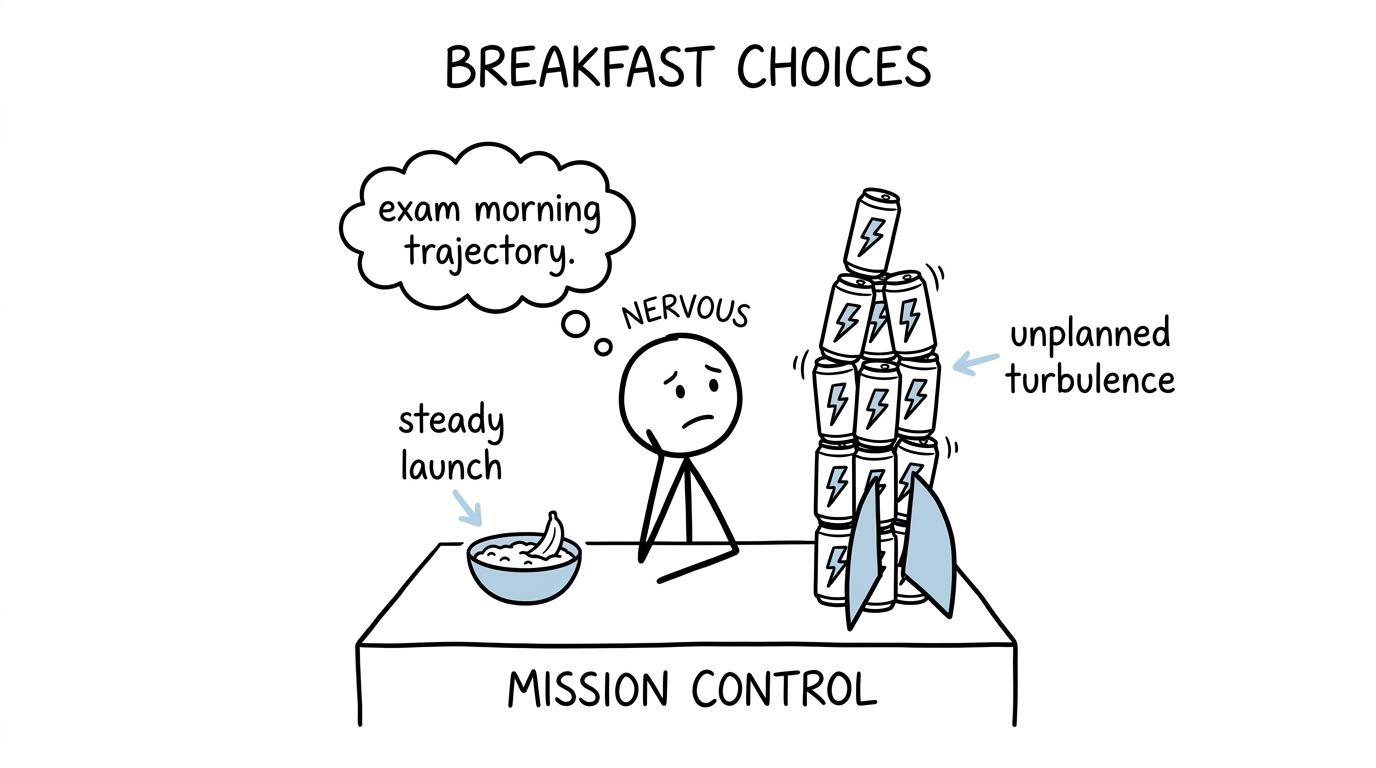 A GCSE student choosing between a steady breakfast launch and an energy drink rocket
What actually supports focus and steady energy?
Government and NHS healthy-eating guidance recommends building meals around starchy carbohydrates, choosing higher-fibre or wholegrain versions where possible, and eating foods from a range of groups over the day. For an exam morning, that creates a practical structure rather than a rigid menu.
Start with a carbohydrate source
Your body breaks down digestible carbohydrate into glucose, which is an important source of energy. Porridge, wholegrain cereal, bread, potatoes and rice can all form the base of a pre-exam meal.
Higher-fibre choices often feel more sustaining than a breakfast made mainly from sweets, pastries or a sugary drink. This does not mean sugar is forbidden, nor that one food determines your result. It means a balanced meal is less likely to leave you distracted by hunger soon afterwards.
Add some protein
Protein makes the meal more substantial. Straightforward options include:
- porridge made with milk or a fortified alternative;
- wholegrain toast with eggs;
- yoghurt with oats and fruit;
- toast with peanut or another nut butter, where allergies permit;
- beans on toast;
- a sandwich containing chicken, tuna, egg, cheese, hummus or tofu.
You do not need a large portion or an expensive specialist product. Ordinary food is enough.
Include fruit or vegetables if they suit you
A banana with porridge, berries with yoghurt or tomato with eggs can add variety without making breakfast complicated. For an afternoon paper, vegetables or salad might sit naturally alongside a sandwich, rice dish or potato.
The important qualification is comfort. If high-fibre food tends to upset your stomach before stressful events, exam morning is not the moment to force an idealised menu. Choose from foods you already tolerate and return to broader nutrition goals after the paper.
Breakfast ideas for a morning Astronomy exam
There is no single best breakfast. A useful breakfast is one you can eat, digest comfortably and repeat without turning the morning into another test.
Good combinations include:
- porridge with milk, banana and a small handful of nuts or seeds;
- wholegrain toast with scrambled egg and fruit;
- lower-sugar cereal with milk or a fortified plant-based alternative;
- natural yoghurt with oats and berries;
- beans on toast;
- a bagel or toast with nut butter and banana;
- a simple cheese, egg or hummus sandwich if traditional breakfast food is unappealing.
If nerves reduce your appetite, make the meal smaller and simpler. Yoghurt and banana, toast with a familiar topping, or a modest bowl of cereal may be more realistic than a large cooked breakfast. Eating something manageable is generally more useful than planning the perfect meal and then eating none of it.
Allow enough time to eat without rushing. Your exact timing should follow the routine that normally leaves you comfortable at school. A student who eats shortly after waking may need a small snack later; another may prefer breakfast closer to departure. Trial this during a timed practice session rather than discovering it on the real morning.
What to eat before an afternoon exam
An afternoon paper needs a slightly different plan because lunch becomes part of the preparation.
Choose a familiar, moderate lunch with carbohydrate and protein. Possibilities include:
- a sandwich or wrap with a protein filling and salad;
- rice with chicken, beans, fish or tofu and vegetables;
- pasta with a familiar sauce and protein source;
- a jacket potato with beans, tuna or cheese;
- soup with wholegrain bread and yoghurt or fruit.
Avoid making lunch so large or rich that digestion becomes the main event of the afternoon. At the other extreme, do not skip lunch because you fear feeling sleepy. A sensible middle ground is usually best: enough food to prevent hunger, but not an unusual feast.
If there is a long gap before the exam, pack a snack you have eaten before. A banana, yoghurt, oatcakes, toast, fruit with a few nuts, or a small sandwich can work. Follow your school’s allergy rules, particularly where nuts are restricted.
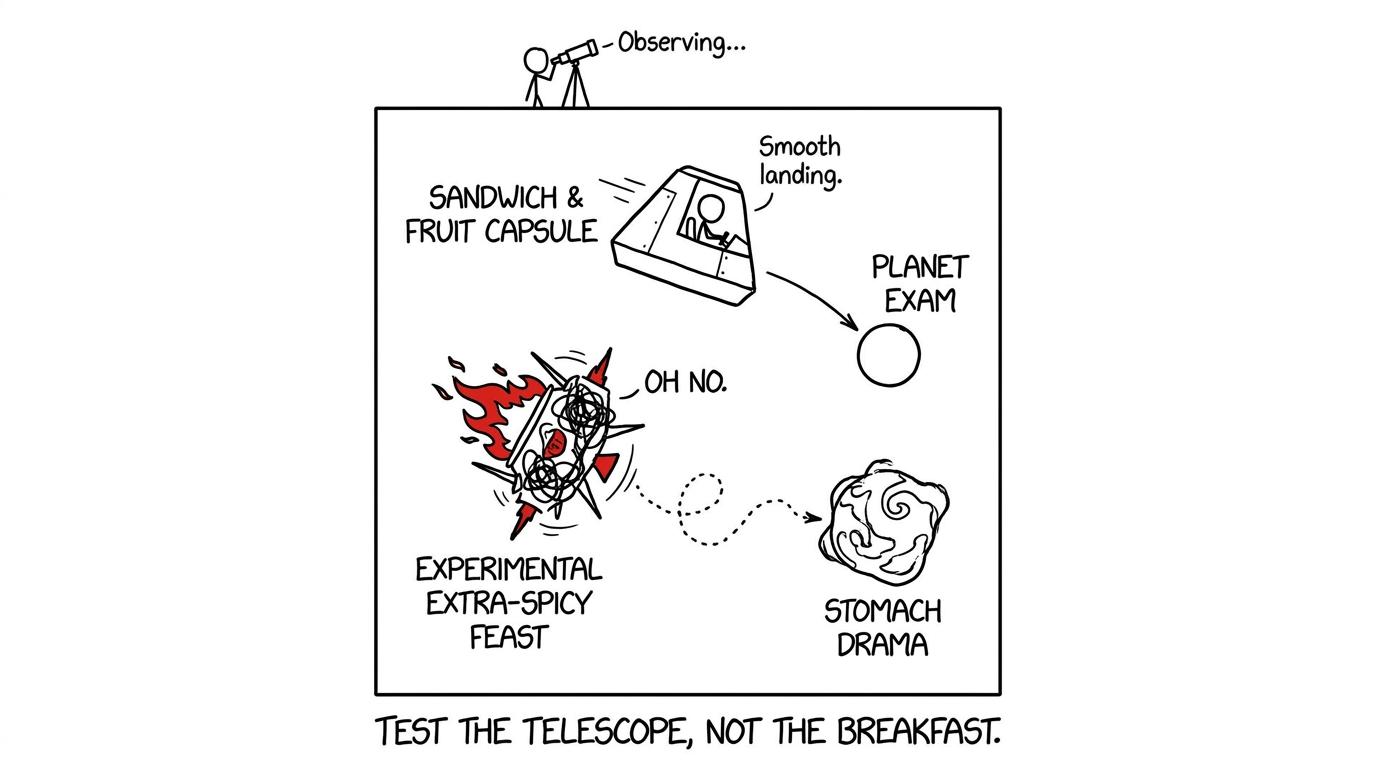 Two lunchbox spacecraft discover why exam day is not the time for an experimental meal
Hydration without overdoing it
Hydration is less dramatic than caffeine, which is one reason students underestimate it. NHS guidance generally recommends six to eight cups or glasses of fluid across the day, although individual needs vary with factors such as weather and activity.
Water is the simplest exam-day choice. Drink regularly from when you wake up rather than trying to “catch up” immediately before entering the hall. Suddenly drinking a great deal may simply leave you uncomfortable and worried about needing the toilet.
If your school permits water in the exam room, check whether the bottle must be clear and have its label removed. Exam-centre instructions take priority.
Do not interpret hydration advice as a target to force down excessive water. The practical aim is ordinary, steady drinking. Pale yellow urine is commonly used as a rough sign of hydration, but medical conditions and medicines can change individual needs.
Caffeine and energy drinks: why more is not better
Caffeine can increase alertness, but it can also contribute to jitteriness, a racing heart, stomach discomfort, anxiety and disrupted sleep. Those effects are particularly unhelpful when exam nerves are already present.
Energy drinks are not a substitute for breakfast or sleep. UK public-health guidance advises that energy drinks are not recommended for children and young people under sixteen, while older students should still be cautious because products may contain substantial caffeine and sugar.
The safest exam-day principle is not to increase your usual caffeine intake. If you do not normally drink coffee, strong tea or caffeinated drinks, do not begin on the morning of GCSE Astronomy. If you regularly have a modest caffeinated drink, avoid suddenly having much more in the hope of unlocking extra concentration.
Also remember the night before. Late caffeine can interfere with sleep, and no breakfast can fully repair a night spent awake.
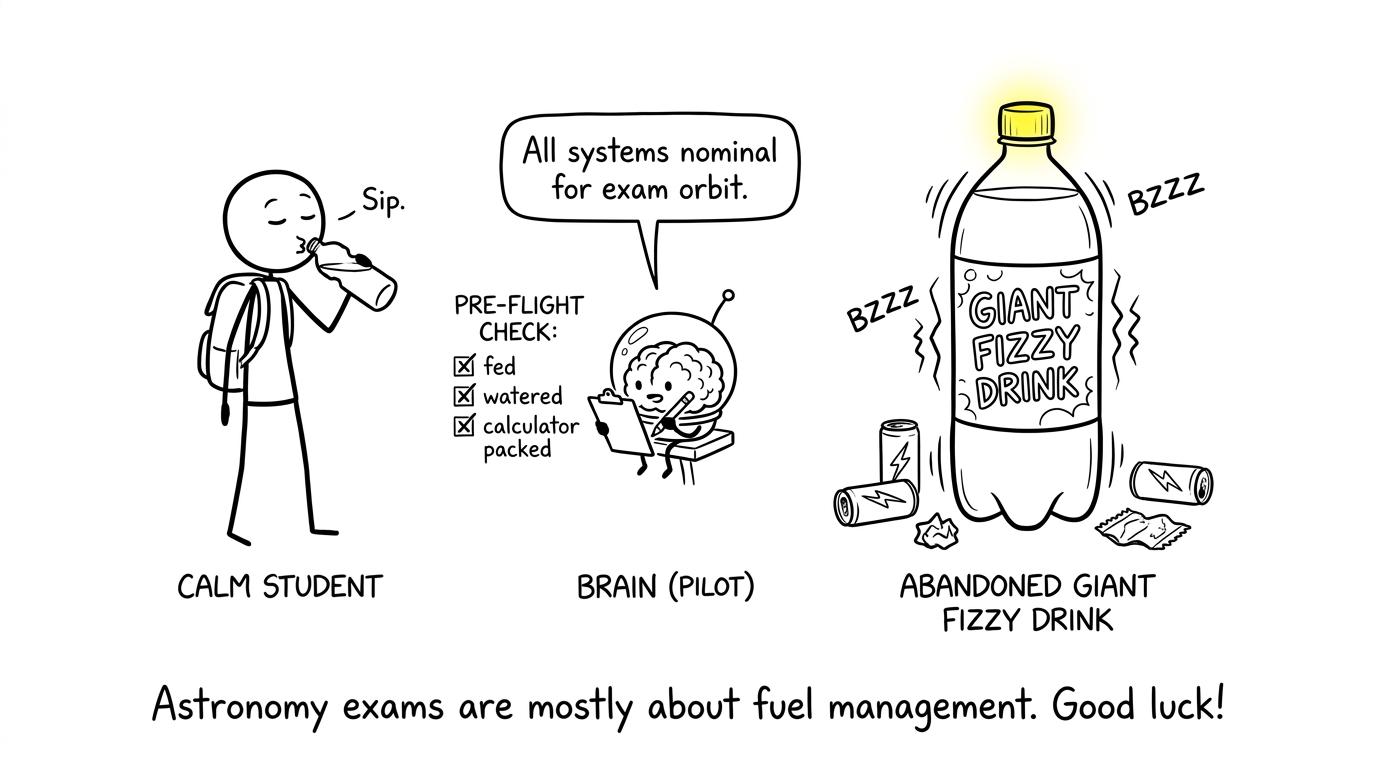 A tiny astronaut brain completes its fed, watered and calculator-packed pre-flight check
Why Astronomy demands calm fuel, not a sugar rush
Pearson Edexcel GCSE Astronomy is assessed through Naked-eye Astronomy and Telescopic Astronomy papers, each lasting one hour and forty-five minutes. The papers can combine recall, calculations, graphs, data interpretation and extended responses.
That range makes sustained attention more valuable than a brief feeling of being energised. You may move from planetary motion to observational data and then to an explanation of stellar evolution. Hunger, thirst or caffeine jitters create extra mental noise when the paper already asks you to switch between different kinds of thinking.
The mathematical skills behind Astronomy deserve separate practice too. Use the GCSE Maths Revision Hub to strengthen calculation fluency and choose the correct board and tier for your maths qualification. Edexcel maths students can move directly to the Edexcel GCSE Maths revision lessons and questions.
Your Astronomy qualification is not divided into foundation and higher tier in the same way as GCSE Maths. Nevertheless, skills such as standard form, rearranging formulae, proportional reasoning and interpreting graphs can help you handle astronomical quantities confidently.
Rehearse the routine before exam day
The best pre-exam meal is not the one that sounds most scientific. It is the one that has already worked during realistic practice.
Before a mock or timed paper:
- eat the breakfast or lunch you intend to use;
- drink as you normally would;
- sit for the full planned practice period;
- notice hunger, thirst, tiredness and stomach comfort;
- adjust one thing at a time.
This turns a vague decision into evidence from your own routine. It is the same principle used in effective revision: attempt, check, adjust and repeat.
MathsGenie’s GCSE exam week checklist can help you coordinate food, equipment and light revision without panic. If the previous evening is the bigger problem, follow the GCSE night-before plan rather than sacrificing sleep for one more exhausted session.
Common mistakes before a GCSE Astronomy exam
Skipping food because of nerves
A large meal may feel impossible, but skipping food completely can leave hunger competing for attention. Prepare a smaller fallback option such as toast, cereal, yoghurt or a banana.
Searching for a miracle food
No berry, supplement or branded drink will retrieve facts you have not revised. Food supports the conditions for concentration; it does not manufacture knowledge.
Trying something new
An unfamiliar smoothie, supplement, protein bar or spicy breakfast introduces uncertainty. Keep experimentation for another day, particularly if you have allergies, intolerances, reflux or digestive problems.
Drinking too much just before the paper
Hydration works better as a steady habit than a last-minute challenge. Drink normally through the morning and take permitted water with you.
Using caffeine to replace sleep
Caffeine may make you feel more awake, but feeling awake is not the same as thinking clearly. Protect the previous night instead. A realistic GCSE maths revision timetable helps prevent late panic by spreading work across the week.
Doing difficult revision over breakfast
Breakfast is not the ideal time to discover an entire weak topic. Use a short fact check if it calms you, then stop. For longer-term preparation, the one-month GCSE revision plan offers a more useful structure.
A calm final plan
Prepare a familiar meal, a permitted water bottle and a small snack if the timetable requires one. Eat enough to feel settled, not stuffed. Keep caffeine modest and familiar. Then let the food decision end.
Your marks will come from what happens next: reading accurately, showing your method, using units carefully and returning to difficult questions with a clear head.
MathsGenie can support the calculation side of that preparation for free. Build skills through revision lessons and practice questions, then use GCSE past-paper guidance to develop timing and stamina. Near the exam, Edexcel GCSE Maths predicted papers can provide fresh practice alongside official past papers, mark schemes, video solutions and mini tests.
Breakfast does not need to be perfect. It only needs to help you arrive fed, hydrated and ready to show what your revision has built.










