Remote Learning GCSE History Results: What Changed?
Remote learning GCSE history results explained through official data, assessment changes and practical lessons for students preparing for maths exams.
The strangest feature of pandemic exam data is that the years with the greatest disruption also produced some of the highest grades. At first glance, remote learning GCSE history results appear to suggest that school closures improved performance. They did not.
GCSE exams were cancelled in England in both 202020202020 and 202120212021. Grades were awarded through alternative arrangements, so those outcomes cannot be compared directly with results from ordinary examination years. Wider research indicates that school closures interrupted learning, with disadvantaged pupils often experiencing greater losses. The apparent rise in grades mainly reflects changes to assessment and grading rather than evidence that remote learning made pupils better at History.
That distinction matters beyond History. If you are preparing for GCSE maths, it offers an important lesson: data never speaks without context.
The evidence at a glance
Here is the short version:
- Schools closed to most pupils in March 202020202020, and substantial periods of remote education followed.
- GCSE exams were cancelled in summer 202020202020 and summer 202120212021.
- Results in those years were based on alternative arrangements rather than normal national examinations.
- Exams returned in 202220222022, with adaptations and more generous grading.
- England returned to pre-pandemic grading standards in 202320232023, with protection recognising national disruption.
- GCSE History outcomes in 202420242024 were close to, and slightly above at key thresholds, the comparable UK figures from 201920192019.
- These statistics show what happened to grades, but they cannot isolate the effect of remote learning from grading policy, changed assessment and differences between cohorts.
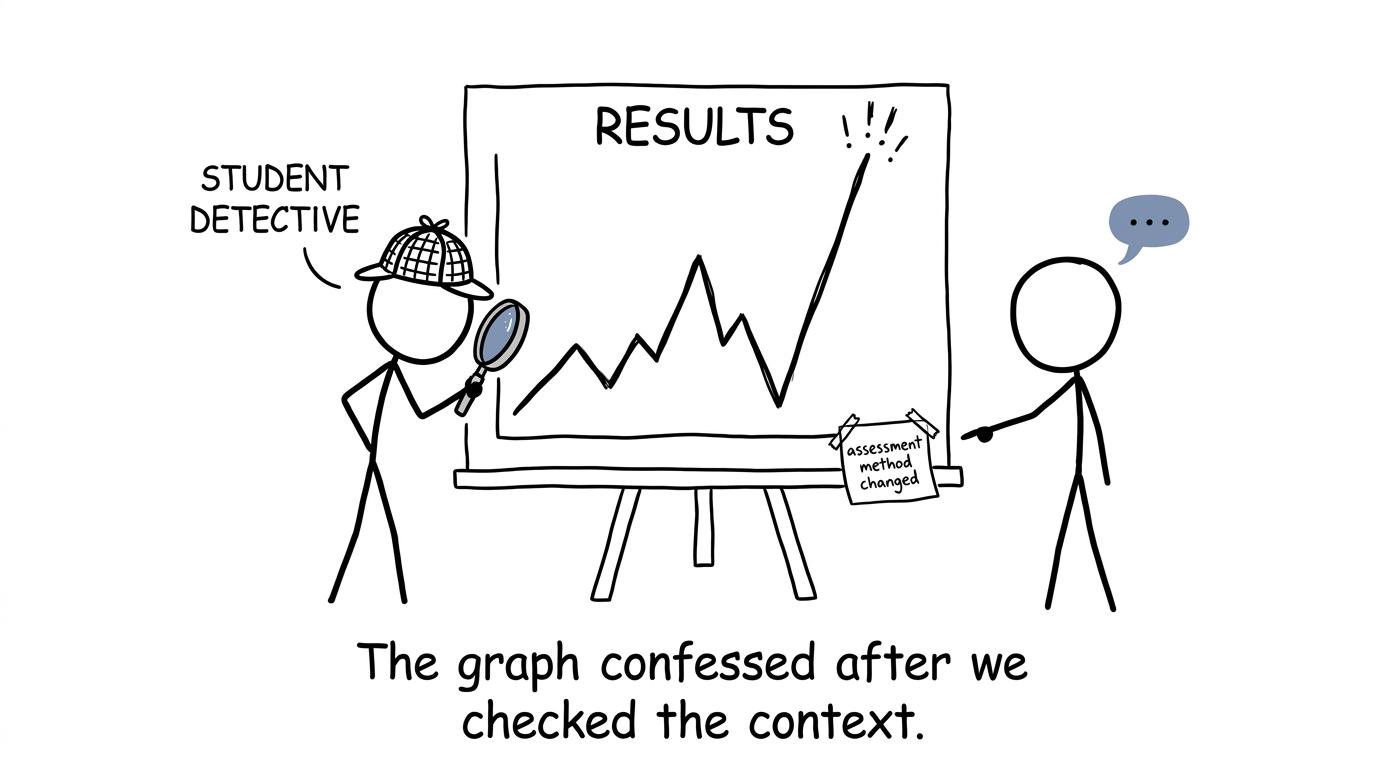 A student detective discovers that assessment context explains a dramatic results graph
What happened during school closures?
Schools across the UK closed to most pupils in March 202020202020. In England, most pupils did not return to normal classroom attendance until the autumn term, although limited provision remained available for vulnerable children, children of critical workers and selected year groups.
A second major period of remote learning began in January 202120212021. Most pupils in England returned from March 202120212021, but disruption continued through illness, isolation and uneven attendance.
Remote education was not one identical experience. Some pupils had live lessons, reliable technology, quiet space and regular feedback. Others depended on shared devices, printed work or intermittent internet access. Official reviews found that the quality of provision generally improved during the second closure, but access and engagement remained uneven.
This is why an average can hide as much as it reveals. Two pupils may both be described as having received remote education while experiencing very different amounts of teaching, feedback and independent practice.
Why the highest pandemic grades do not prove better learning
The central problem is comparability.
In a normal year, pupils take common examinations under controlled conditions. Their scripts are marked using shared mark schemes, and grade boundaries are set after examiners review performance. In 202020202020 and 202120212021, summer exams did not take place in the usual way.
Across all GCSE subjects in England, the proportion of results at grade 444 or above was:
| Year | Grade 444 or above | Assessment context |
|---|---|---|
| 201920192019 | 67.0%67.0\%67.0% | Normal summer examinations |
| 202020202020 | 75.9%75.9\%75.9% | Exams cancelled; alternative awarding arrangements |
| 202120212021 | 76.9%76.9\%76.9% | Exams cancelled; teacher-assessed grades |
| 202220222022 | 73.0%73.0\%73.0% | Exams returned with adaptations and generous grading |
| 202320232023 | 67.8%67.8\%67.8% | Return to pre-pandemic grading with protection |
| 202420242024 | 67.4%67.4\%67.4% | Outcomes broadly aligned with pre-pandemic standards |
The jump from 201920192019 to 202020202020 was 8.98.98.9 percentage points:
75.9%−67.0%=8.9%75.9\% - 67.0\% = 8.9\%75.9%−67.0%=8.9%But that calculation describes the difference in reported outcomes. It does not measure additional learning. The assessment system changed at the same time, so the years do not form a controlled comparison.
Ofqual itself treats 202020202020 and 202120212021 as a break in the results time series. Any chart that joins those years without explaining the cancellation of exams risks giving a misleading impression.
What the GCSE History data suggests
Joint Council for Qualifications data provides a clearer comparison between the last normal pre-pandemic series and later examined cohorts. Across UK candidates taking full-course GCSE History, the key figures were:
| GCSE History outcome | 201920192019 | 202420242024 |
|---|---|---|
| Grade 777 or above | 25.0%25.0\%25.0% | 26.2%26.2\%26.2% |
| Grade 444 or above | 64.3%64.3\%64.3% | 64.6%64.6\%64.6% |
| Number of entries | 278,759278{,}759278,759 | 325,437325{,}437325,437 |
The grade 444 threshold was therefore only 0.30.30.3 percentage points higher in 202420242024 than in 201920192019:
64.6%−64.3%=0.3%64.6\% - 64.3\% = 0.3\%64.6%−64.3%=0.3%At grade 777 or above, the difference was 1.21.21.2 percentage points:
26.2%−25.0%=1.2%26.2\% - 25.0\% = 1.2\%26.2%−25.0%=1.2%These figures suggest that GCSE History outcomes had settled close to their pre-pandemic pattern by 202420242024. They do not show a lasting collapse in national History results, but neither do they prove that every learning gap disappeared.
The number of entries also grew substantially. That matters because a different or larger group of candidates can alter the overall distribution. Results may additionally vary by nation, exam board, centre and pupil background, so the scope printed beside any dataset should always be checked.
The latest JCQ figures for England show a similar degree of stability. In 202520252025, 26.17%26.17\%26.17% of GCSE History results were at grade 777 or above, compared with 25.80%25.80\%25.80% in 202420242024. At grade 444 or above, the figures were 64.18%64.18\%64.18% and 63.86%63.86\%63.86% respectively. These are small year-to-year movements, not evidence of a fresh pandemic effect.
What changed when examinations returned?
The return to ordinary assessment happened gradually rather than overnight.
The adapted examination year
In 202220222022, GCSE History examinations returned, but pupils received pandemic-related support. Exams covered less content than usual, choices between topics were introduced and grading was deliberately more generous than before the pandemic.
History did not receive the same form of advance information used in many other subjects because optional content had already been introduced. This is an important detail when comparing History with GCSE maths or science.
The return to pre-pandemic grading
In 202320232023, England returned to full subject content and pre-pandemic grading standards. Ofqual also included grading protection to recognise the disruption experienced by that cohort. National results consequently moved closer to 201920192019 levels and were lower than the exceptional outcomes of 202020202020 to 202220222022.
That fall did not mean pupils suddenly knew less than the previous year. It largely reflected the planned restoration of the earlier grading standard.
By 202420242024 and 202520252025, national History results were comparatively stable. The more defensible conclusion is therefore that school closures disrupted learning, alternative assessment temporarily lifted reported grades, and later examined results returned towards the pre-pandemic pattern.
Where remote learning probably had the greatest effect
Official research found that pupils generally made less progress during closure periods than expected, although estimates varied by age, subject and dataset. Evidence also indicated that disadvantaged pupils often experienced larger losses.
History-specific national grades cannot reveal precisely where knowledge was lost. However, disruption could reasonably affect:
- chronological knowledge and links across a long specification;
- extended writing completed under time pressure;
- source and interpretation analysis;
- recall of precise evidence;
- teacher feedback on structured answers;
- confidence and independent revision habits.
A pupil could still receive a strong assessed grade in 202120212021 while having gaps that became visible later. Equally, some pupils worked effectively at home and developed useful independence. National averages cannot describe every individual experience.
What maths students can learn from the History results
The most useful lesson is not about memorising pandemic statistics. It is about learning how to interrogate evidence.
Check what is being measured
A grade distribution measures awarded grades. It is not automatically a direct measure of knowledge, teaching quality or effort. Before comparing values, ask whether the assessment conditions stayed the same.
This habit helps with GCSE statistics questions involving samples, misleading graphs and correlation. It also helps you interpret your own revision scores. A mark from an untimed paper completed with notes is not directly comparable with a closed-book paper completed under exam conditions.
Build comparable evidence in your revision
Keep the conditions consistent when tracking progress:
- use the correct foundation or higher tier paper;
- follow the stated time limit;
- avoid notes unless the resource permits them;
- mark with the official mark scheme;
- record marks rather than relying on how the paper felt;
- repeat weak topics before testing yourself again.
MathsGenie’s Edexcel GCSE Maths revision hub brings lessons, questions and revision resources together. If you need to diagnose weaknesses first, use the guide to finding your weakest GCSE maths topics, then turn the results into a realistic GCSE maths revision timetable.
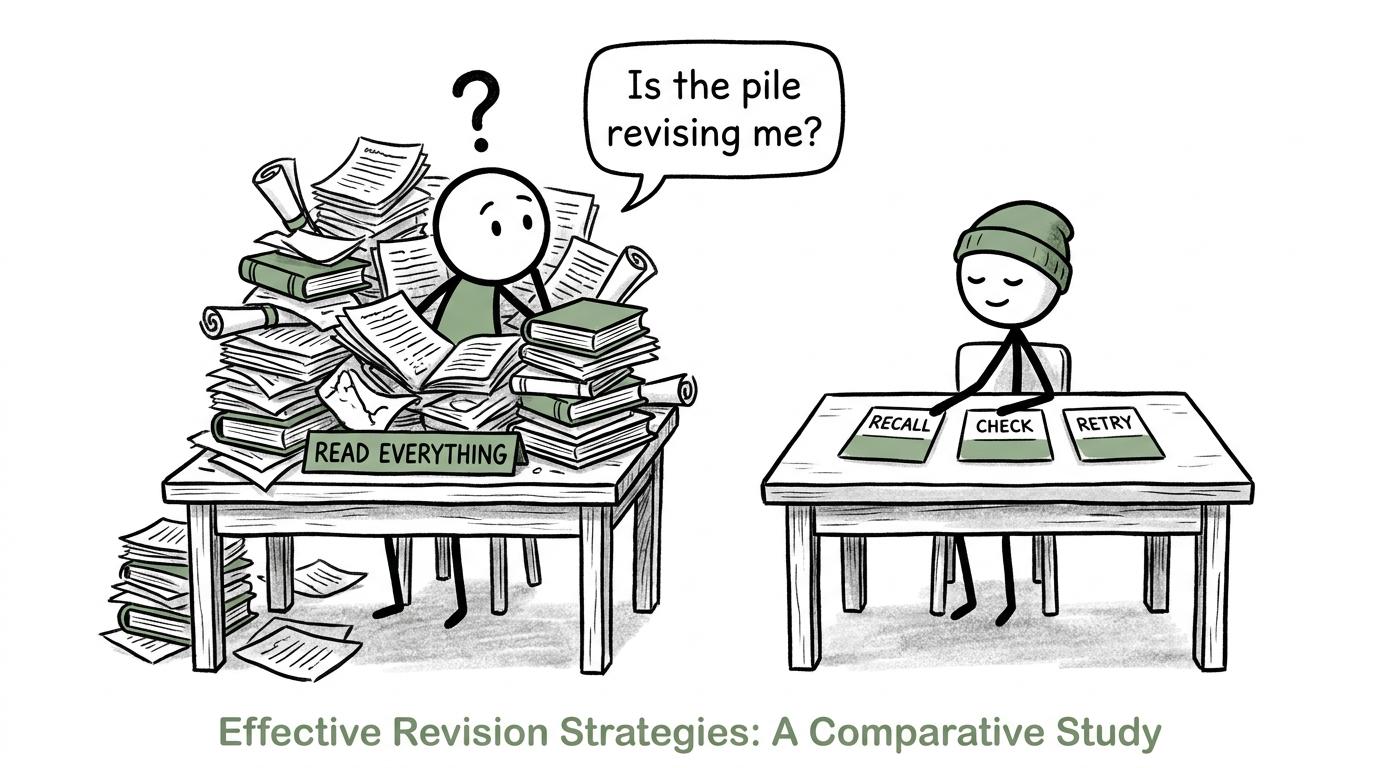 One student discovers that recall, checking and retrying beat an enormous pile of notes
Treat mistakes as information
Remote learning often required pupils to organise more of their own work. That independence remains valuable, but it works best when paired with feedback.
For maths, use a simple loop: learn the method, answer questions, mark them, identify the exact error and retry. The one-month GCSE maths revision plan shows how to make this routine manageable. As examinations approach, move from topic practice to timed papers using MathsGenie’s GCSE predicted papers. The guide to when you should start GCSE past papers can help you judge the timing.
Common mistakes when interpreting the results
Assuming that higher grades mean more learning
Grades rose sharply when normal exams were cancelled. This does not demonstrate that remote education improved attainment. The method of awarding grades changed.
Comparing percentages without checking the population
UK figures and England-only figures are not interchangeable. Neither are all-age results and results for 161616-year-olds. Always check the dataset's geographical and candidate coverage.
Ignoring changes to examinations
The 202220222022 History course included optional content and generous grading. The 202320232023 series restored full content and pre-pandemic standards with protection. Those conditions must be considered before explaining a rise or fall.
Treating correlation as causation
School closures happened before later results, but many factors changed simultaneously: assessment rules, grade standards, attendance, curriculum coverage and cohort composition. Results alone cannot isolate one cause.
Turning national averages into personal predictions
National data does not decide your grade. Your preparation, specification knowledge and examination performance remain the factors you can influence.
From disrupted data to deliberate preparation
The story of remote learning GCSE History results is not that pupils became dramatically better and then suddenly worse. It is that the measuring system changed during an extraordinary period. When examinations and grading returned towards their previous form, results also moved towards their pre-pandemic pattern.
For a maths student, that is both a statistics lesson and a revision lesson. Use comparable tests. Work under honest conditions. Study the mistakes rather than the mood they create.
Start at MathsGenie’s free GCSE and A Level maths revision site. Use revision lessons to rebuild uncertain methods, practice questions and mini tests to strengthen them, and mark schemes and video solutions to understand lost marks. Then use past papers and predicted papers to make examination conditions familiar. Good revision is not a single judgement; it is a reliable feedback system repeated until the evidence changes.