Online GCSE Statistics Revision Course: Worth It?
Online GCSE statistics revision course: learn when paying is worthwhile, when free resources are enough, and how to choose the right exam support.
A revision course can feel like a reassuring purchase. You gain a timetable, a teacher and the sense that somebody else has organised the difficult weeks ahead. But an online GCSE statistics revision course is only worth paying for if it solves a problem that free resources cannot solve for you.
For many students, free revision lessons, practice questions and past papers provide everything needed to improve. A paid course becomes valuable when you need live feedback, firm deadlines, individual explanations or external accountability. The important question is not simply, “Is this course good?” It is, “Will this course change what I actually do?”
The quick decision checklist
Before paying, ask:
- Is the course matched to your exam board, qualification and tier?
- Does it include active question practice rather than mainly videos?
- Will a teacher diagnose and explain your mistakes?
- Are lessons recorded if you miss one?
- Can you already access equivalent explanations and questions for free?
- Have you tried following a structured free plan consistently?
- Is there a clear cancellation or refund policy?
- Can the course fit around your schoolwork without creating overload?
If you mainly need content, begin with free resources. If you understand the content but repeatedly postpone practice, misunderstand mark schemes or need personal feedback, paid support may be more useful.
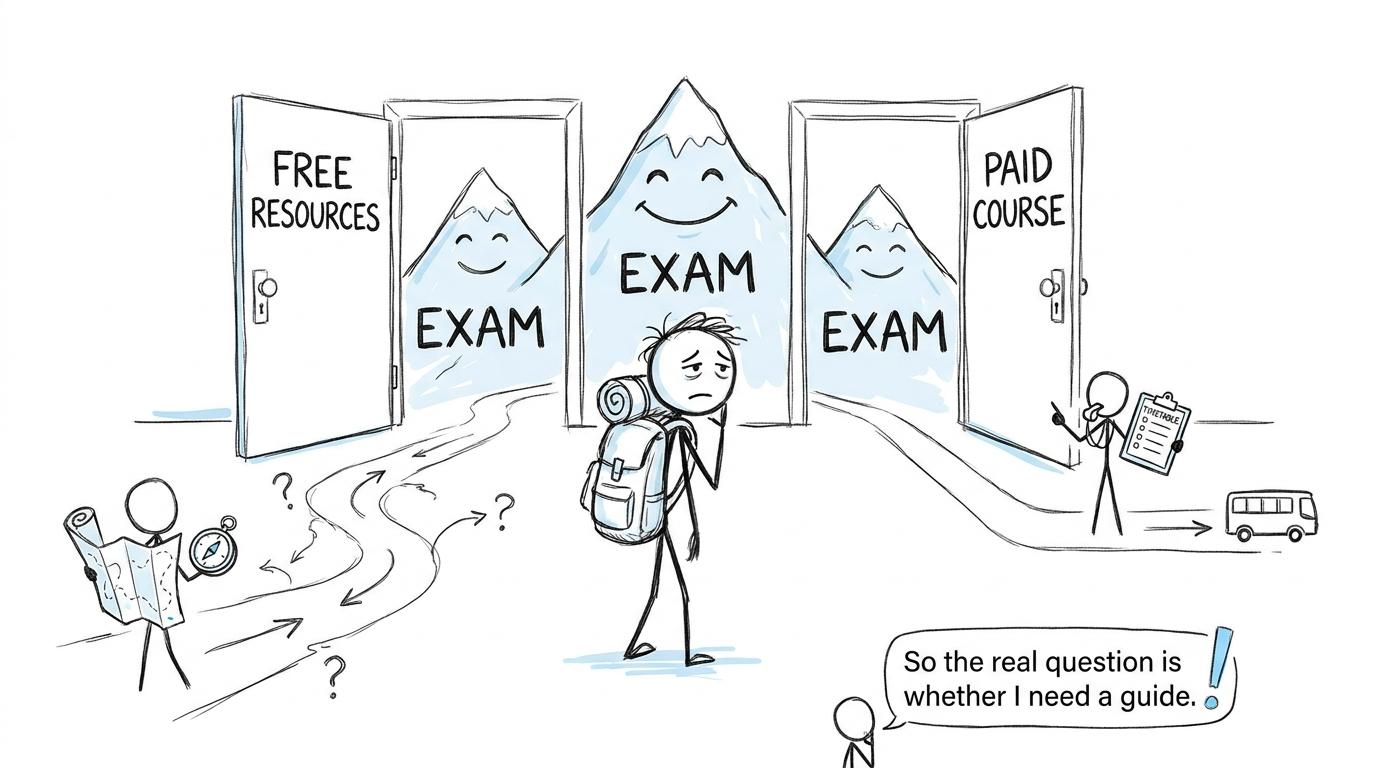 A student choosing between free revision resources and a paid course
First, identify which qualification you are revising
“GCSE statistics” can mean two different things. Some students mean the statistics strand within GCSE Maths. Others are taking the separate GCSE Statistics qualification.
For GCSE Maths, statistics includes areas such as sampling, charts, averages, measures of spread, scatter graphs, cumulative frequency and histograms. The precise tier content matters. For example, higher-tier material includes more work with grouped data, histograms and cumulative frequency. Across GCSE Maths, probability and statistics together account for an approximate 15%15\%15% of assessment at both foundation and higher tier, although this is an overall weighting rather than a promise about an individual paper.
The separate GCSE Statistics qualification goes further. It covers the statistical enquiry cycle, data collection, sampling, representation, interpretation and probability in greater depth. Current AQA and Pearson Edexcel specifications use foundation and higher tiers and assess students through two written papers. Official assessment objectives also place substantial emphasis on interpreting results and evaluating statistical methods, not merely performing calculations.
That distinction should guide your search. A general GCSE Maths course containing a few statistics lessons is not necessarily sufficient for the separate qualification. Start by checking the MathsGenie GCSE Statistics revision hub, then confirm the qualification code, exam board and tier shown on your school documents.
When a paid online course can be worth it
You need explanations tailored to your mistakes
A recorded lesson explains a method once. A responsive teacher can discover why your method went wrong.
Perhaps you calculate an estimated mean correctly but fail to explain why it is an estimate. Perhaps your histogram bars look plausible, but you have treated frequency as height rather than area. Those are different misunderstandings and require different feedback.
For a histogram, the central relationship is:
frequency density=frequencyclass width.\text{frequency density}=\frac{\text{frequency}}{\text{class width}}.frequency density=class widthfrequency.A course earns some of its cost when a teacher reads your working, identifies the precise misconception and gives you a suitable follow-up task. If “feedback” means only an automatically displayed answer, free question banks may already provide comparable value.
You benefit from external structure
Some students can create a revision timetable and follow it independently. Others continually reorganise their notes while avoiding difficult questions.
A scheduled course may help because it turns a vague intention into an appointment. Deadlines, homework and regular checks can reduce the number of decisions you must make. This is useful only if the timetable is realistic. A course that collides with school assessments, other GCSE subjects and sleep creates pressure rather than structure.
You have a specific gap that school support has not resolved
Targeted help can be worthwhile when one topic remains stubbornly unclear despite repeated independent attempts. Common examples include comparing distributions, interpreting cumulative frequency graphs and explaining the limitations of sampling.
Before buying a broad course, test whether a narrower free resource solves the problem. MathsGenie has focused material for cumulative frequency revision and box plots. A single weak topic does not always justify purchasing an entire programme.
The course provides genuine exam-board alignment
Edexcel, AQA, OCR and Eduqas GCSE Maths share nationally defined subject content, but their papers do not look identical. The separate GCSE Statistics qualification also has its own specification and question style.
A worthwhile provider should state clearly what it covers. Look for:
- the qualification and specification;
- foundation or higher tier coverage;
- lessons mapped to the current content;
- exam-style questions;
- marking guidance and model reasoning;
- opportunities to practise independently;
- explicit coverage of interpretation and evaluation.
“Suitable for every exam board” may be reasonable for teaching a general concept, but board-specific papers still matter when preparing for the examination itself.
When free GCSE statistics resources are enough
Free resources are usually enough when your main needs are explanation, repetition and realistic exam practice, provided you use them actively.
The Edexcel GCSE Statistics revision area brings together lessons, exam-style questions, worksheets, past papers, mark schemes and revision tools. For individual GCSE Maths topics, you can also use resources such as scatter graph revision and probability revision.
What free resources do not automatically provide is a routine. You must create that part yourself.
A productive revision session has three phases:
- learn or review one idea;
- answer questions without notes;
- mark the work and record why marks were lost.
That final phase matters. If you only record the score, you know that something went wrong. If you label the error as missing knowledge, incorrect method, weak interpretation or carelessness, you know what to do next. The MathsGenie guide to finding weak GCSE topics explains how to turn lost marks into a focused plan.
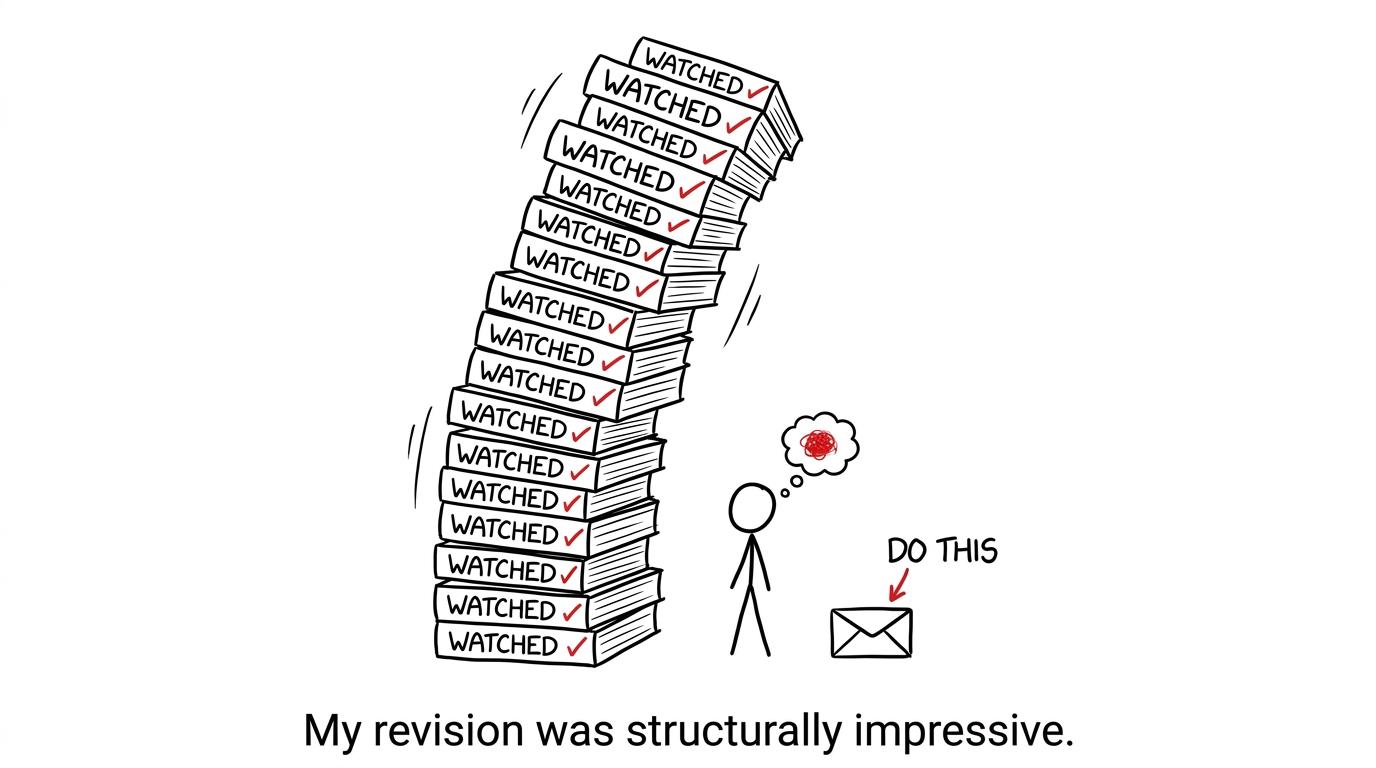 A huge tower of watched videos beside one unopened practice paper
Free resources versus a paid revision course
The meaningful difference is not usually the quantity of content. The internet already contains more explanation than any student can finish. The difference is support around the content.
Free revision is likely to suit you if you can:
- decide what to revise next;
- work independently without a live lesson;
- mark your answers honestly;
- revisit mistakes rather than hiding them;
- ask a teacher when you reach a genuine barrier.
A paid course may suit you if you need:
- scheduled live teaching;
- direct access to a tutor;
- personalised marking or feedback;
- deadlines and progress checks;
- a small group in which you can ask questions;
- support adapting revision to your starting point.
Do not pay merely for a large video library. Also be cautious of guarantees, dramatic grade promises or claims that a provider knows exactly which questions will appear. Predicted papers can support revision, but they should complement full specification coverage rather than replace it.
Test free revision before making a decision
Run a short trial before purchasing anything. Choose one statistics topic and follow a disciplined free plan for a week.
Begin with a revision lesson, then complete topic questions without help. Mark them carefully. Two or three days later, answer a different set on the same skill. Finally, attempt part of a past paper under timed conditions.
Track more than your total mark. Record:
- whether you selected the correct method;
- whether calculations were accurate;
- whether conclusions referred to the context;
- whether graph scales and labels were correct;
- whether the same error returned later.
For instance, comparing distributions normally requires suitable measures of centre and spread. The interquartile range is:
IQR=Q3−Q1.\operatorname{IQR}=Q_3-Q_1.IQR=Q3−Q1.Knowing that formula is only the beginning. You must also interpret what a larger or smaller spread means in the stated context.
If your marks improve and you can maintain the routine, continue with free resources. If you repeatedly become stuck and cannot diagnose why, a course offering proper feedback may be a sensible investment.
What to inspect before joining a course
Ask for enough information to judge the teaching rather than the advertising.
Lesson format
Find out whether sessions are live, recorded or both. Check group size and whether students can ask questions. A live class with no meaningful interaction may function much like a recording.
Practice and marking
The course should require you to produce answers. Ask whether written reasoning and graphs receive feedback, and whether mark schemes are explained. Statistics questions often reward interpretation in context, so a final numerical answer does not reveal every weakness.
Coverage and sequence
Look for a visible curriculum plan. It should cover the appropriate specification rather than a collection of popular topics. The sequence should leave time for mixed questions and complete papers, not finish teaching on the eve of the exam.
Tutor and practical details
Check the tutor's relevant teaching experience, lesson arrangements, safeguarding procedures, technical requirements and payment terms. Read the cancellation and refund conditions before paying. These details are less exciting than a sample lesson, but they often determine whether the course is workable.
Common mistakes when choosing and using a course
Buying structure instead of following it
A timetable has no value unless you attend, complete the questions and correct your work. Paying can create commitment, but it cannot replace it.
Watching instead of practising
Statistics can look straightforward when somebody else draws the graph or chooses the average. Understanding becomes visible only when you make those decisions independently.
Choosing the wrong qualification or tier
Confirm whether you are revising GCSE Maths statistics or the separate GCSE Statistics course. Then check the board and tier. Similar topic names can conceal meaningful differences in depth.
Ignoring interpretation marks
Students often focus on calculations such as the mean:
xˉ=∑fx∑f.\bar{x}=\frac{\sum fx}{\sum f}.xˉ=∑f∑fx.But an exam may also ask what the result suggests, whether a sample is representative or why a conclusion is unreliable. A useful course must teach statistical reasoning as well as procedures.
Replacing past papers with predictions
Predicted papers are useful for fresh practice, not certainty about future questions. Complete official past papers too, use the mark schemes and return to weak topics. The MathsGenie GCSE Statistics resit plan offers a practical model for moving from diagnosis to topic practice and then full papers.
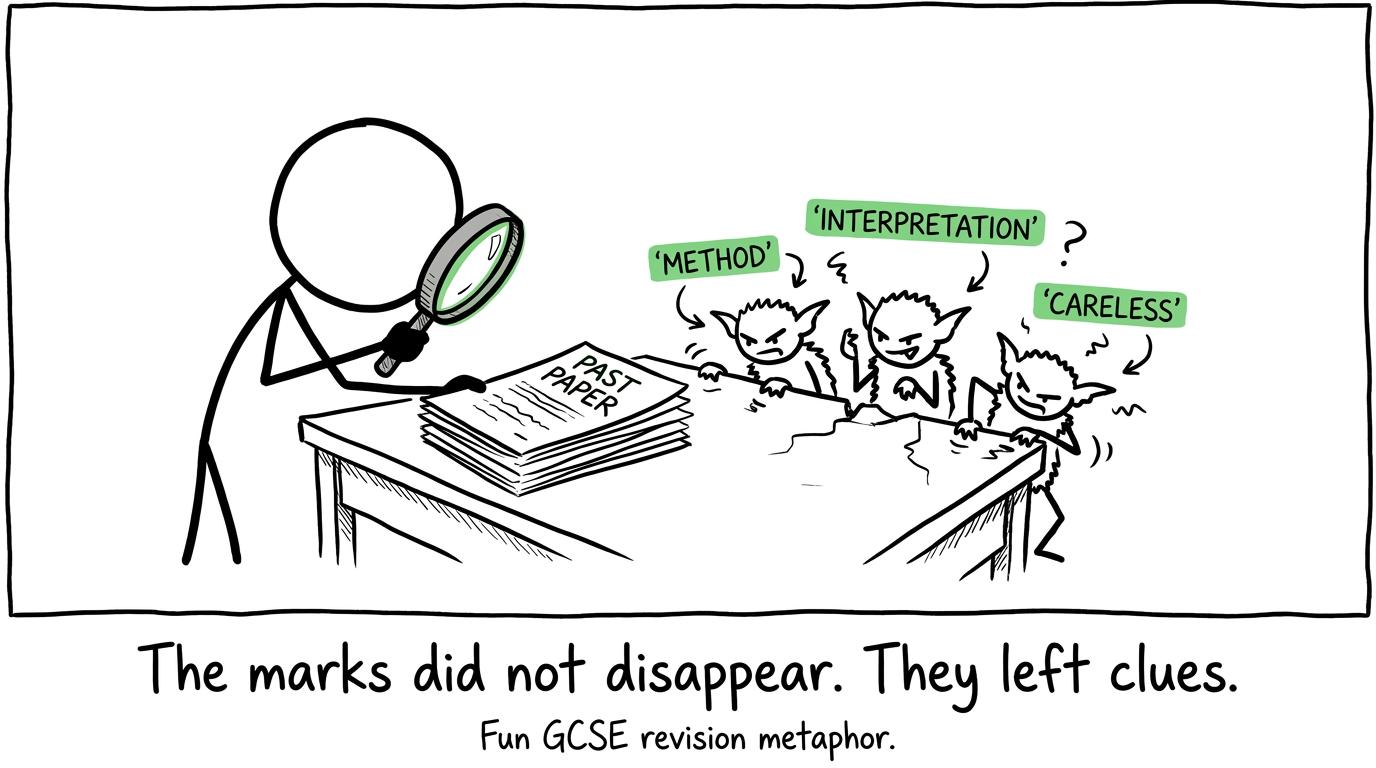 A student detective investigating where lost marks went
So, is an online GCSE statistics revision course worth it?
Yes, sometimes. It can be worth paying for when it provides personal feedback, reliable structure and board-specific teaching that you genuinely need. It is probably not worth paying for when it mainly repackages explanations and questions that you can access freely, especially if you have not yet tested a consistent independent routine.
Start with evidence rather than anxiety. Use MathsGenie's free revision lessons, practice questions, worksheets and mini tests to identify your gaps. Move on to mark schemes, video solutions and past papers, then use predicted papers as additional practice. Put each task into your revision planner and monitor whether the same mistakes return.
Begin at the GCSE Statistics revision hub. If free, structured practice moves your marks, keep going. If it reveals a need for individual explanation or accountability, you can then choose paid support for a clear reason rather than simply hoping that a purchase will create progress.