GCSE Sociology Exam Time of Day: Does It Matter?
GCSE sociology exam time of day can affect alertness, but it does not decide your grade. Learn how to prepare for morning and afternoon papers calmly.
The same question can feel very different at 9.00 am9.00\text{ am}9.00 am and 1.30 pm1.30\text{ pm}1.30 pm. In the morning, your mind may still be waking up. In the afternoon, waiting can turn ordinary nerves into a full day of worry.
So, does the GCSE sociology exam time of day actually affect performance? Potentially, but usually not in a simple or decisive way. Research suggests that alertness and cognitive performance can vary with time of day and individual body clocks. However, there is no universal rule that morning or afternoon GCSE Sociology exams produce better marks. Sleep, preparation, food, stress, exam technique and familiarity with the paper are all important.
More importantly, you normally cannot choose the session. The useful question is therefore not, “Which time is best?” It is, “How can I perform well at the time I have been given?”
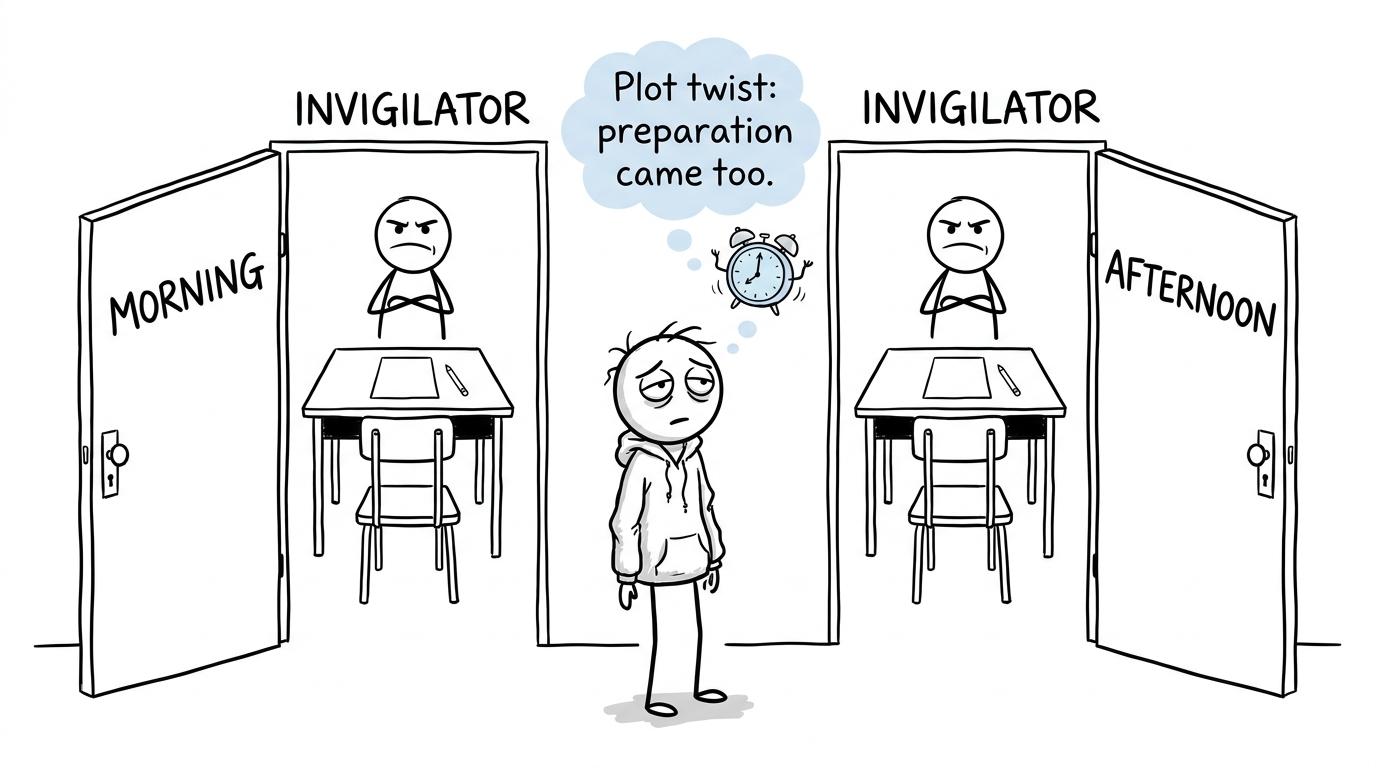 A student discovers that preparation follows them into both morning and afternoon exams
The short answer and your exam-day checklist
An afternoon paper may suit students who naturally become alert later, while a morning paper may favour those who work well early. Research involving adolescents has found evidence of a synchrony effect: some people perform better when a task matches their preferred time of day. But findings vary between tasks, age groups and research settings, so they cannot tell an individual student what mark they will receive.
Use this checklist instead:
- Check whether the paper is listed as a morning or afternoon session.
- Confirm your school’s arrival and start time rather than assuming.
- Keep your sleep and waking routine consistent during the exam period.
- Practise some timed work in the same part of the day as the real exam.
- Eat familiar food and drink enough water.
- Avoid exhausting last-minute revision before an afternoon paper.
- Prepare for other exams, including maths, without letting one timetable slot disrupt the whole week.
The slot may influence how alert you feel. It does not change the questions, the mark scheme or the knowledge required.
What the research says about morning and afternoon performance
Teenagers do not all reach peak alertness at the same time. A student who wakes naturally and thinks clearly early may experience a morning paper differently from someone whose concentration develops later.
Reviews of adolescent research have found associations between chronotype, a person’s natural preference for earlier or later activity, and cognitive or academic performance. Some studies have observed better performance when testing takes place at a student’s preferred time. Other school-based findings are more limited or show that the effect depends on the kind of thinking being tested.
That distinction matters. GCSE Sociology involves several demands at once:
- recalling terminology, evidence and sociological perspectives;
- interpreting a source or item;
- selecting material relevant to the question;
- constructing developed explanations;
- evaluating arguments under time pressure.
Research into a general reasoning task does not automatically predict performance on this particular combination. Nor does an average difference between groups determine what will happen to one student in one exam hall.
The sensible conclusion is modest: time of day can affect alertness, but it is only one condition surrounding performance. It is not a reason to expect failure in a morning exam or assume success in an afternoon one.
How official GCSE exam sessions work
For the academic year from September 2025 to August 2026, Joint Council for Qualifications instructions set the published starting times for most UK awarding-body examinations at 9.00 am9.00\text{ am}9.00 am for morning sessions and 1.30 pm1.30\text{ pm}1.30 pm for afternoon sessions. Centres may ordinarily begin up to 303030 minutes earlier or later within the permitted arrangements.
That is why your school’s timetable matters more than a time copied from social media. It will tell you when to arrive, where to report and when your centre intends to begin.
The published 2026 AQA timetable also illustrates why students should check each paper separately: AQA GCSE Sociology Paper 1 was scheduled in a morning session, while Paper 2 was scheduled in an afternoon session. A subject is not necessarily assigned one permanent time of day across all its components or future series.
Always use the final timetable supplied by your school or college. If you have a clash, access arrangement or supervised timetable variation, speak to the exams officer. Do not try to reorganise an official examination yourself.
Preparing for a morning GCSE Sociology exam
A morning examination reduces the waiting, but it makes the previous evening and your waking routine more important.
Protect sleep rather than chasing one more topic
NHS guidance says that most teenagers need around eight to ten hours of sleep and advises against all-night cramming before an exam. The exact amount varies between individuals, but the principle is clear: revision that removes most of your sleep can damage the alertness you were trying to improve.
Finish demanding work early enough to wind down. Pack your equipment, set an alarm and check your journey before bed. If maths is also part of your exam week, the GCSE maths night-before plan provides a calm model: use a short, focused review instead of opening every topic you have ever learnt.
Wake your brain before entering the hall
Give yourself time to become fully awake. Eat a familiar breakfast if you normally do, drink water and arrive without rushing. A brief recall activity can help, but keep it contained: review a small set of concepts or essay structures rather than attempting to relearn the specification at the school gate.
If morning performance worries you, rehearse it in advance. Complete some sociology planning or timed writing at roughly the same time on several days. Maths students can apply the same principle by sitting a suitable paper from the AQA GCSE Maths past-paper collection under realistic morning conditions.
Preparing for an afternoon GCSE Sociology exam
Afternoon exams offer more waking time, but more time is not automatically more useful. The danger is turning the entire morning into an anxious revision marathon.
Use the morning without draining yourself
Choose a stopping point. A sensible morning might include a short retrieval session, a break and a final check of a few priorities. Avoid completing a full paper immediately before leaving unless your teacher has specifically built that into your plan.
The purpose of last-minute review is to activate knowledge, not measure everything you still do not know. You can borrow the focused approach from MathsGenie’s one-week GCSE maths revision plan: diagnose weaknesses early, then keep the final review narrow and deliberate.
Keep lunch ordinary
Eat something familiar that gives you enough energy without leaving you uncomfortable. Bring water if your centre permits it under its examination rules. Exam day is not the ideal moment to experiment with an unusually large meal, skip food deliberately or consume far more caffeine than usual.
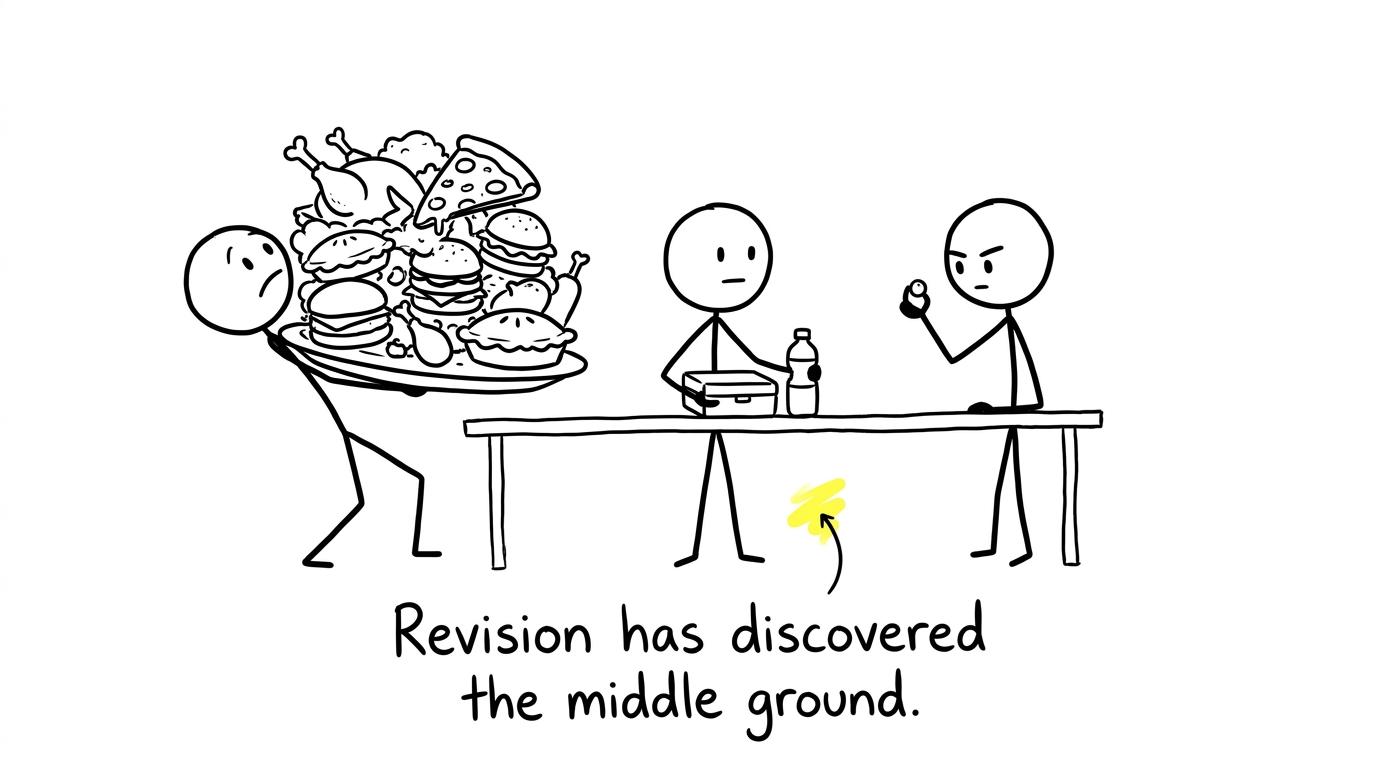 Three students discover that an ordinary lunch is less dramatic but more useful
Manage the waiting period
Afternoon nerves often grow because there is time to discuss predictions. Other students may confidently announce what “must” appear or compare how many hours they revised. None of this changes your paper.
Step away from speculation. Use a short checklist, then stop. Conserving attention is part of preparation.
Does the session matter when you also have maths exams?
This question is especially relevant when Sociology sits inside a crowded GCSE timetable. A morning Sociology paper may be followed by another subject later that day. An afternoon paper may occupy the time you normally use for maths revision.
Do not let one session erase the rest of your plan. Move the affected revision block rather than abandoning it. The GCSE maths revision timetable guide explains how to build repeatable topic sessions, timed practice and review around real commitments.
For board-specific preparation, begin at the GCSE Maths revision hub. It covers Edexcel, AQA, OCR and Eduqas, as well as other UK boards, with foundation and higher-tier resources. OCR students can go directly to OCR GCSE Maths revision.
A practical exam-season rhythm is:
- before the exam day, complete the demanding maths practice;
- on the Sociology exam day, use only a short maths maintenance task if energy allows;
- after the paper, take a genuine break before deciding whether more revision is useful;
- return to your normal plan the following day rather than trying to “repay” every missed minute.
This protects consistency. One rearranged session is harmless; several days of panic-driven revision are much harder to recover from.
Train for the clock you have been given
You cannot normally change the official session, but you can make it feel less unfamiliar. Once you know the timetable, schedule a small number of timed practices at the relevant time of day.
This is not about proving that you are a “morning person” or an “afternoon person”. It is about noticing practical issues. Perhaps you need longer to wake up, a less distracting lunch location or a clearer stopping time for revision.
For maths, build from topic practice towards realistic papers. MathsGenie’s guide to when to start GCSE past papers explains why paper practice works best in phases. Near the exam, GCSE predicted papers can provide fresh exam-style rehearsal, but they should complement rather than replace official past papers.
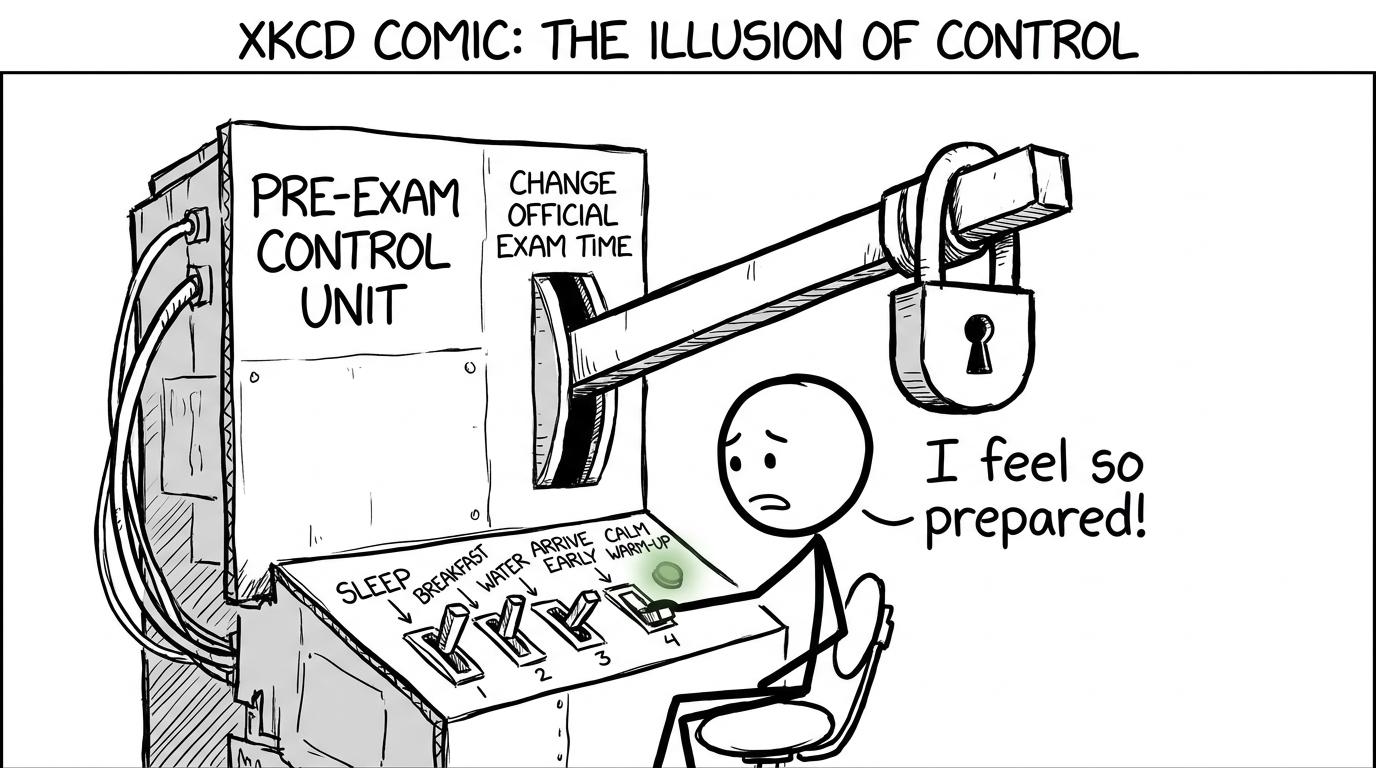 A student controls sleep, food and preparation while the official exam-time lever remains locked
Common mistakes when worrying about exam time
Assuming afternoon always means better performance
Some later chronotypes may feel more alert in the afternoon, but there is no universal afternoon advantage. Personal routines, the task and the wider exam day all matter.
Staying up late because the exam is after lunch
An afternoon start is not permission to shift the entire night. A disrupted sleep routine may leave you tired despite the later paper.
Doing too much revision before an afternoon exam
Hours of continuous recall and essay planning can consume the concentration you need in the hall. Stop while the review is still useful.
Copying an online timetable without checking school information
Published sessions can be translated into slightly different centre start times within official rules. Your school’s final instructions are the ones you must follow.
Treating tiredness as evidence that the exam will go badly
Feeling sleepy or nervous before the paper does not determine the result. Begin with the question in front of you, identify its command word and build the answer one decision at a time.
Focus on the conditions you can control
The GCSE sociology exam time of day may shape how alert you feel, particularly if it clashes with your natural routine. But it does not decide your grade. There is no reliable rule that every student performs better in the morning or every teenager performs better after lunch.
Check the timetable, rehearse the session, protect your sleep and keep exam-day revision brief. Then turn your attention back to preparation.
For your maths papers, make MathsGenie’s free GCSE revision resources your starting point. Use revision lessons and practice questions to repair weak topics, mini tests to build recall, and past papers with mark schemes and video solutions to develop timing. Add predicted papers near the end for fresh practice.
You may not control the clock on the wall. You can control much of what you bring into the room.