GCSE French Half Term Revision That Gets Done
GCSE French half term revision made manageable: use short, active sessions for vocabulary, listening, speaking and writing without losing your whole break.
Half-term creates a strange kind of pressure. There is enough free time to imagine transforming your French, but enough freedom to postpone starting until Sunday evening. Effective GCSE French half term revision does not require surrendering the whole break. It requires a small plan built around active recall, all four language skills and honest feedback.
The practical answer is simple: schedule a few focused sessions, decide exactly what each session will produce and stop when the work is complete. A half-term plan should leave room for sleep, friends, hobbies and other GCSE subjects. Rest is not evidence that revision has failed. It is one reason the plan remains possible.
Your half-term revision checklist
Before the week begins, keep the plan deliberately small:
- Confirm your exam board, specification and tier.
- Choose two or three weak areas rather than revising everything.
- Plan short sessions for vocabulary, listening, speaking, reading and writing.
- Retrieve information before opening your notes.
- Check every task and record specific errors.
- Revisit difficult material later in the week.
- Protect substantial parts of the break from revision.
The revised GCSE French qualifications taught from September 2024 have their first assessments in summer 2026. They continue to assess listening, speaking, reading and writing, while the updated content also places clear emphasis on grammar, vocabulary, pronunciation, translation, dictation and reading aloud. Exact tasks and timings vary by board and tier, so use the specification and sample assessment materials for your own course rather than a generic online checklist.
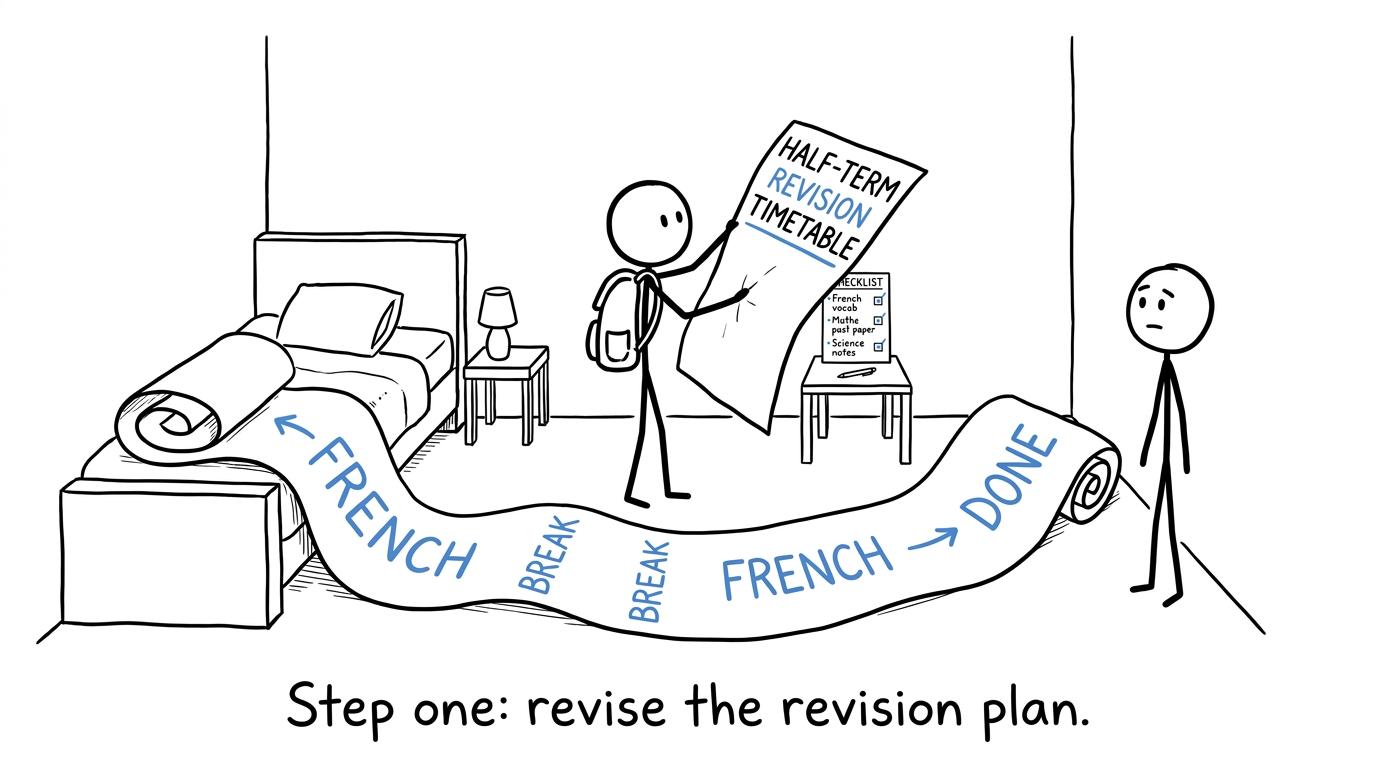 A student discovers that planning revision has become a revision task of its own
Start with decisions, not a beautiful timetable
A complicated timetable can feel productive because it turns uncertainty into coloured boxes. Yet a timetable is only useful if it tells you what to do when you sit down.
Write a simple list with three columns:
| Priority | Revision action | Evidence it is finished |
|---|---|---|
| Vocabulary | Recall words from two weak themes | Incorrect words recorded and tested again |
| Listening | Complete one short exam-style task | Answers checked and difficult sounds noted |
| Speaking | Record answers without reading a script | Recording reviewed for clarity and accuracy |
| Writing | Complete one timed response | Grammar and task coverage checked |
“Revise French” is vague. “Recall vocabulary for school and future plans, then retest mistakes” is actionable. The smaller instruction reduces the effort needed to begin.
Choose the sessions before the week starts, but do not fill every day. A realistic plan might contain four or five focused blocks spread across half-term. If your school has set work, place that first. Then add independent revision where it addresses a genuine weakness.
Build each session around active recall
Re-reading a vocabulary list can create familiarity without reliable recall. The words look obvious while they are on the page, then disappear when you have to produce them independently.
A stronger session follows a short cycle:
- Recall: write, say or translate what you can without notes.
- Check: compare your attempt with an accurate source.
- Correct: record the precise error rather than merely adding a cross.
- Retest: try the same material later without prompts.
This approach reflects established guidance on retrieval practice: the attempt to recall matters, but feedback matters too. Otherwise, an incorrect spelling, gender or verb form can become more familiar through repetition.
Keep an error list with categories such as vocabulary, accent, agreement, tense, word order and misunderstood question. Patterns are more useful than a raw score. If adjective agreement appears repeatedly, your next action is clear.
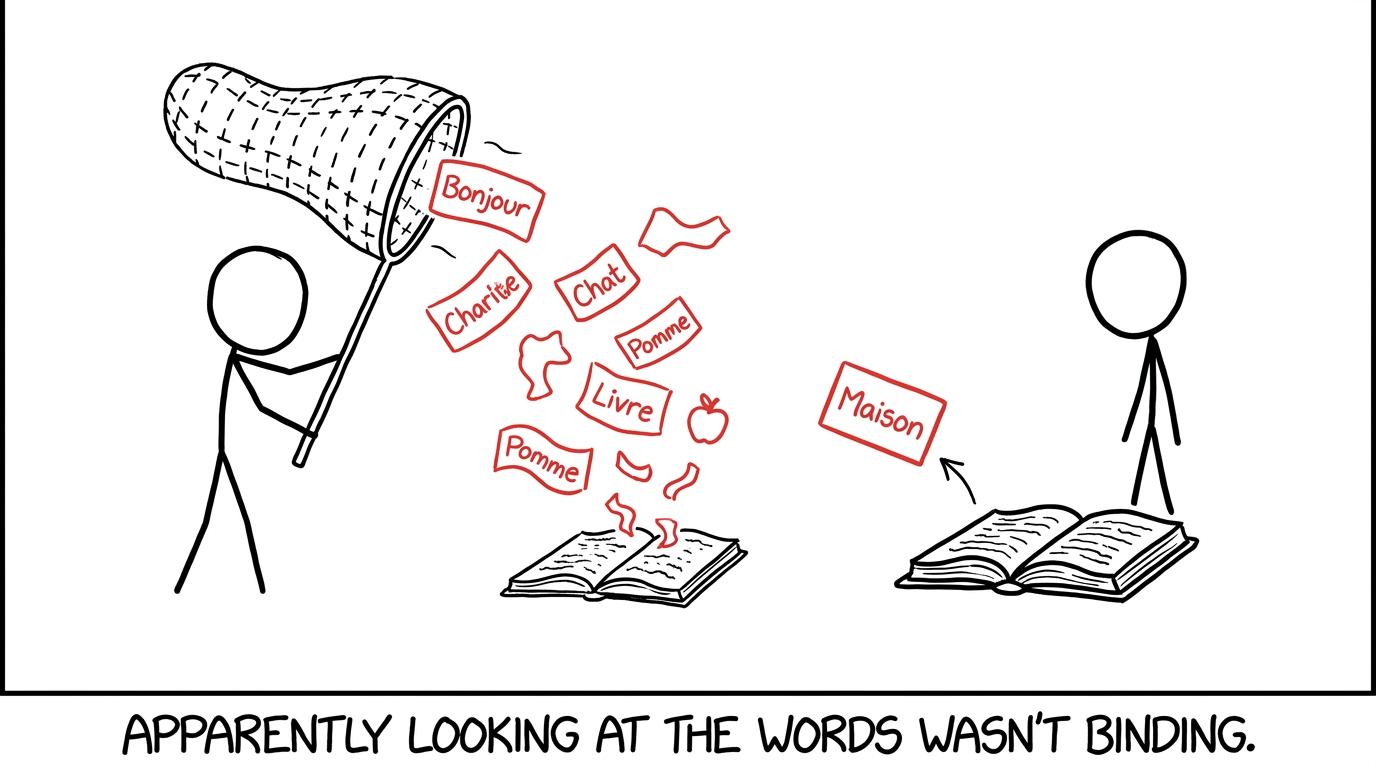 French vocabulary escapes while one useful flashcard returns for another test
Revise all four French skills without doing everything daily
GCSE French is not one large memory test. It asks you to understand and produce language in different forms. Your half-term plan should therefore include every skill, but each session does not need to include all four.
Vocabulary and grammar
Learn vocabulary in usable chunks rather than isolated words. Include an article with a noun, a preposition with a phrase and a subject with a verb form. This makes the language easier to retrieve accurately in speaking and writing.
For grammar, select one recurring weakness. You might focus on tense formation, adjective agreement, negatives, question forms or the difference between infinitives and conjugated verbs. Retrieve the rule, complete a small task, check it and return to it on another day.
Use your board's current vocabulary list where one is prescribed. Foundation and higher tier expectations differ, and students must be entered for the same tier across the assessments. Your teacher can confirm which materials apply to you.
Listening and dictation
Listening improves through close attention, not by leaving French audio in the background. Use a short, suitable recording and listen for a defined purpose: time phrases, negatives, opinions, numbers or changes of tense.
For dictation practice, play a short extract, write exactly what you hear and then compare it with the transcript. Mark missing sounds, incorrect accents and word boundaries. In the updated GCSE, dictation is an assessed feature, so accurate sound-to-spelling knowledge deserves deliberate practice.
Speaking and reading aloud
Speaking revision must involve speaking. Silently reading a prepared answer does not test whether you can retrieve language under pressure.
Record a short response, listen back and ask:
- Did I answer the question directly?
- Could each word be understood?
- Did I give and justify an opinion?
- Did I use accurate verbs?
- Where did I pause because the language was not secure?
Reading aloud is also part of the revised GCSE arrangements. Practise with material appropriate to your specification, paying attention to common sound-spelling relationships. Do not chase a theatrical accent. Aim for clear, comprehensible French.
Reading, translation and writing
For reading, avoid translating every word. Identify the purpose of the text, locate evidence and pay particular attention to negatives, time frames and contrast words. Then check whether your answer says more than the text supports.
Translation exposes small gaps efficiently. After checking, classify each error. Was the problem vocabulary, grammar or English interpretation?
Writing practice should be brief enough to mark properly. Cover every required element, then inspect verbs, agreements, spelling and whether your language communicates what you intended. One carefully reviewed response is worth more than several unmarked pages.
Use a half-term rhythm you can repeat
The best plan is rarely the most ambitious one. It is the one that still happens after a late morning or an unexpected day out.
Try this rhythm:
Early in the break
Complete a short diagnostic task in two skills. Use the results to choose priorities. Do not spend the first day manufacturing resources for topics you already know.
In the middle
Run two or three focused sessions. Separate them across different days so that vocabulary and grammar must be retrieved after a delay. Spaced retrieval is more informative than repeating a list immediately while it remains in short-term memory.
Near the end
Retest the material that caused difficulty. Complete one short mixed task and decide what should return to your normal weekly revision routine. Half-term should produce a useful next step, not an exhausted promise to “work harder”.
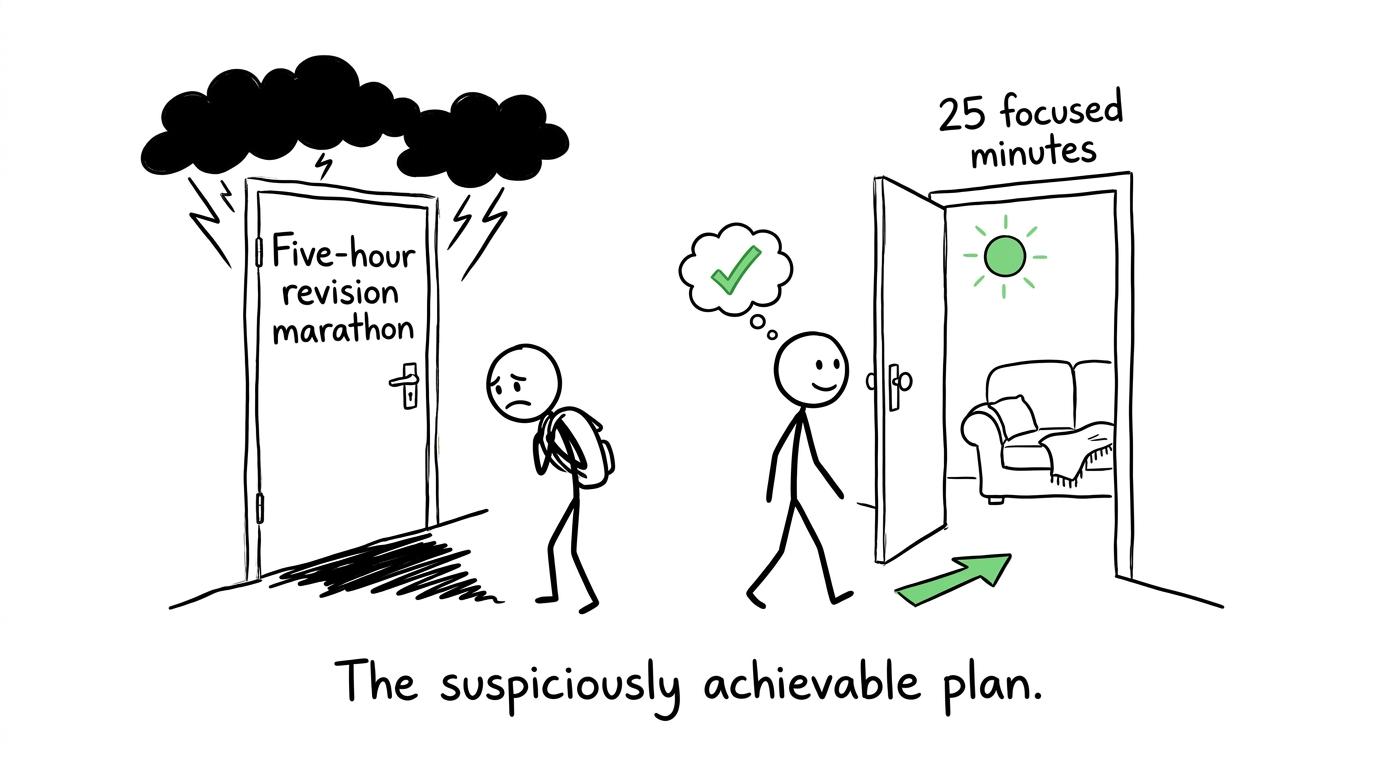 A student wisely chooses a short focused session over a revision marathon
Balance French with GCSE maths and the rest of your break
French may be your priority, but it is probably not your only subject. Instead of assigning every subject an equal amount of time, ask which next action is most valuable. A looming speaking assessment may justify more French. A weak algebra topic may need a short maths repair session.
For maths, MathsGenie's free GCSE and A Level revision reduces preparation time by keeping lessons, questions and solutions together. If a full paper would overwhelm the week, Edexcel GCSE Maths mini tests provide a shorter diagnostic task. You can then use Edexcel GCSE Maths past papers and mark schemes when a complete timed paper is genuinely useful.
The same principle works across subjects: test, diagnose, repair and retest. The guide to using Edexcel maths past papers properly explains why marking and follow-up matter more than simply completing another paper. Students balancing several subjects may also find the advice on starting GCSE past papers at the right time useful.
Predicted papers should be treated as additional practice, not a promise about the real examination. Maths students can use Edexcel GCSE Maths predicted papers after identifying and repairing topic gaps.
Most importantly, set a finish time. A focused session that ends leaves the rest of the day intact. Revision expands when it has no boundary.
Common GCSE French half-term revision mistakes
Planning every hour
A rigid schedule breaks as soon as one session moves. Plan a small number of essential blocks and leave space around them.
Making resources instead of retrieving language
Neat flashcards are not the same as knowing the vocabulary. Spend more time testing cards than designing them.
Revising only favourite themes
Confidence is comforting, but weak areas usually offer more useful information. Begin with a diagnostic task and let the errors choose the work.
Ignoring speaking and listening
These skills can feel harder to revise independently, so students retreat to reading and writing. Record yourself, use appropriate audio and check against reliable transcripts or teacher guidance.
Completing tasks without feedback
An unmarked translation or writing response cannot show what needs changing. Build checking into the session, not into a vague plan for later.
Sacrificing the entire break
Long, tired sessions often produce passive work. If motivation is low, use the smaller-session approach described in GCSE maths revision when you feel stuck. The subject differs, but the principle holds: choose one weakness, practise actively, check it and repeat.
Finish half-term with evidence, not guilt
A successful half-term does not need to end with every French theme mastered. It should leave you with stronger recall, a clearer error list and a routine you can continue when school resumes.
Choose your first short task now. Put it in the calendar, decide how you will check it and protect the rest of the day. Then use the same disciplined cycle for your other subjects. MathsGenie can support the maths side with free revision lessons, practice questions, mini tests, past papers, predicted papers, mark schemes and video solutions. If exams are close, the GCSE night-before revision plan also shows how to keep last-minute work controlled.
The aim is not to lose half-term to revision. It is to return knowing that a manageable plan was completed, and that you know exactly what to do next.