

GCSE English Language and Literature Tutor Guide
GCSE English language and literature tutor advice: learn when tuition helps, what to ask, and how to balance English support with focused maths revision too.
The hardest part of asking for help is deciding whether you genuinely need it. A disappointing mock result can make a GCSE English language and literature tutor seem like the obvious answer, especially when English essays feel less predictable than maths questions. But tutoring is most useful when it solves a specific problem. It is not automatically necessary, and it should not consume the time you need for maths and your other GCSEs.
The short answer is this: consider a tutor if you repeatedly lose marks for identifiable reasons, cannot correct those problems through school support and independent practice, and would benefit from regular, individual feedback. Before paying for tuition, diagnose the gap. Sometimes the answer is a tutor. Sometimes it is a better revision routine.
A quick decision checklist
A tutor may be worthwhile if several of these statements are true:
- Your teacher has identified recurring weaknesses, but you are unsure how to correct them.
- You struggle to plan or complete timed responses independently.
- Your analysis retells the text instead of explaining a writer's choices.
- You receive feedback but cannot translate it into a better next answer.
- You have significant gaps caused by absence, a school move or interrupted learning.
- You are working consistently but your marked responses are not improving.
- You need accountability to practise regularly.
You may not need tuition if your main problem is incomplete homework, irregular revision, weak text knowledge or avoiding timed practice. A tutor cannot make practice optional.
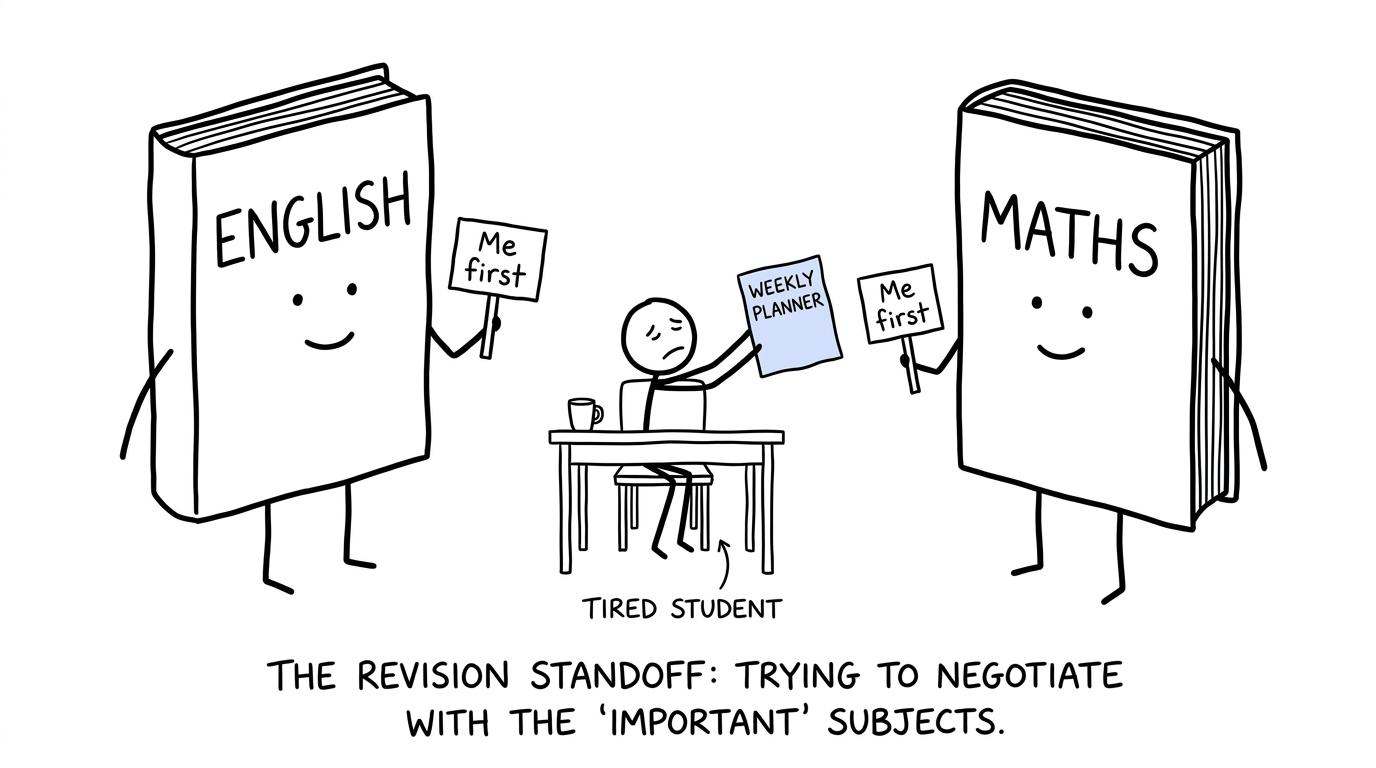 A student negotiates a revision peace treaty between English and maths
Understand what support you actually need
English Language and English Literature are normally assessed as separate GCSE qualifications. Although both require clear writing, they reward different kinds of preparation.
GCSE English Language assesses your ability to understand unseen texts, analyse language and structure, compare perspectives, evaluate writing and produce effective writing for a specified purpose and audience. The qualification is untiered. Official assessment objectives also require accurate spelling, punctuation and grammar, with technical accuracy accounting for a substantial part of the written assessment.
English Literature focuses on informed responses to set texts, analysis of writers' methods, relevant contextual understanding and, depending on the specification, comparison. Your novels, plays, poetry anthology and paper structure depend on your exam board and your school's choices.
A student who knows Macbeth well but struggles with unseen Language extracts needs different support from someone who cannot recall useful references from their Literature texts. Saying “I am bad at English” is too broad to guide good tuition.
Diagnose the pattern before hiring anyone
Gather two or three marked responses, your latest mock paper and the relevant mark schemes. Ask:
- Which assessment objectives repeatedly receive the weakest marks?
- Is the problem knowledge, interpretation, paragraph development, accuracy, timing or confidence?
- Can I explain my teacher's feedback in my own words?
- Does the same weakness appear across several pieces of work?
- What have I already tried, and for how long?
This is similar to diagnosing a maths paper. A total mark tells you how the paper went; it does not tell you what to do next. MathsGenie's guide to using GCSE maths past papers properly explains how to classify lost marks and turn them into specific actions. The same principle works in English: identify the leak before trying to repair it.
When a GCSE English language and literature tutor can help
Research reviewed by the Education Endowment Foundation suggests that one-to-one tuition can improve attainment on average, particularly when it is targeted, regular and explicitly connected to classroom learning. Effects vary, however, and an average finding is not a promise about an individual student.
The value is not simply having another adult explain the course. It comes from a short feedback loop:
- attempt a response;
- receive precise feedback;
- improve a particular weakness;
- attempt another response independently;
- check whether the improvement has transferred.
English is especially dependent on feedback because students can write a plausible-looking paragraph without fully meeting the assessment objective. A skilled tutor can identify where analysis becomes vague, where quotations are poorly selected, or where an argument loses direction.
Useful reasons to seek tuition
A tutor may provide worthwhile support when you need:
- diagnostic feedback on complete exam responses;
- help understanding how your exam board frames questions;
- structured practice after a prolonged absence;
- support moving from general comments to precise analysis;
- timed writing practice with immediate review;
- a consistent routine that complements school lessons.
Tuition should add to your teacher's work, not create a rival version of the course. If your teacher uses particular terminology, paragraph structures or text interpretations, a tutor should understand that context rather than insisting there is only one acceptable method.
When a tutor may not be the best answer
Most students do not need private tuition simply because GCSE English is difficult. Difficulty is part of learning, and ordinary lessons may be enough when they are supported by purposeful independent practice.
Try school-based options first. Ask your teacher for one priority rather than requesting general advice. Attend revision sessions, complete a timed paragraph, use the mark scheme and submit an improved version. If your school offers mentoring, intervention lessons or supervised study, these may provide the structure you need without an additional cost.
A tutor is also unlikely to solve a motivation problem alone. If you do not read the set texts, learn key references or complete work between sessions, tuition can become an expensive hour of temporary reassurance.
There is an opportunity cost too. GCSE students have limited time. English support that displaces essential maths practice may simply move the problem from one subject to another. Keep your maths preparation visible through the GCSE maths revision hub, where you can choose resources suited to your board and current level.
What to look for in an English tutor
A good tutor does not promise a grade before seeing your work. They begin with questions.
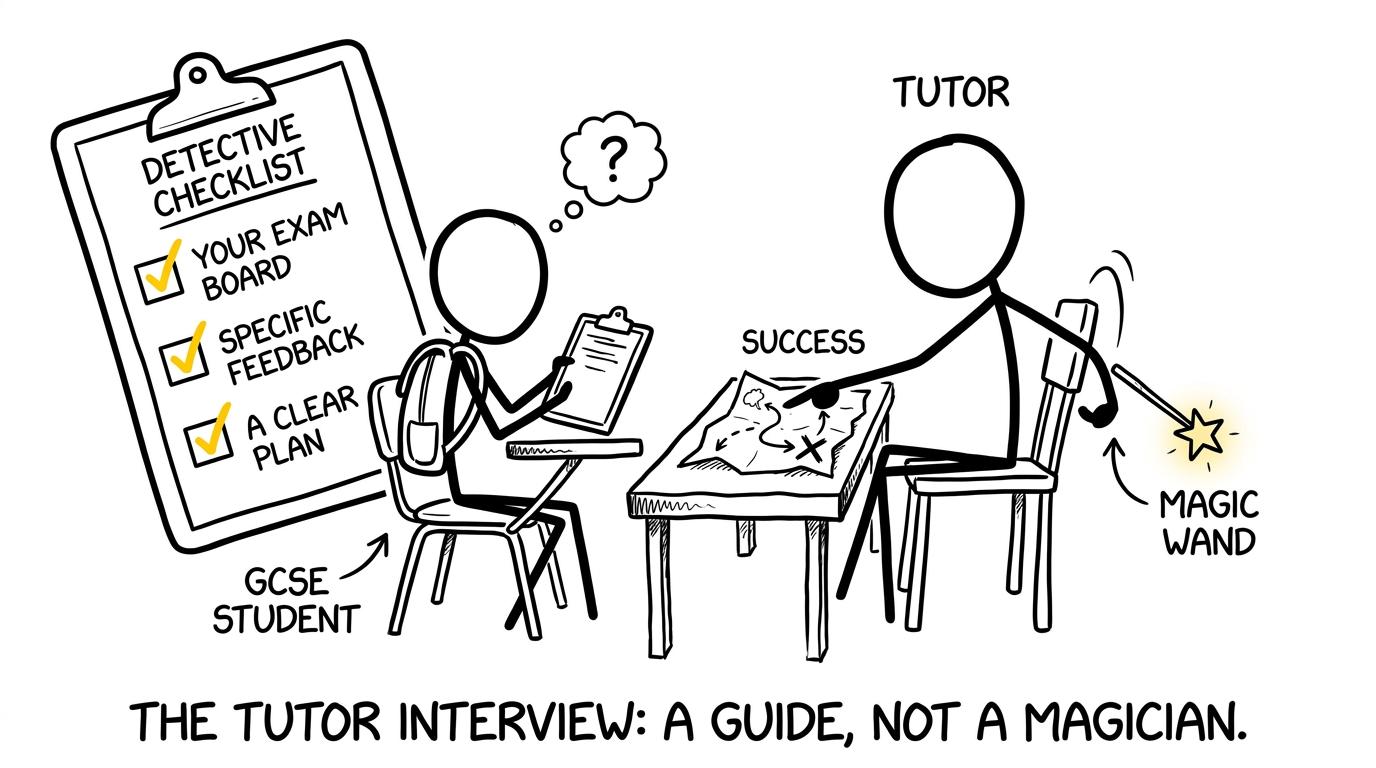 A student checks whether a tutor offers a map rather than a magic wand
Knowledge of your exact specification
Confirm that the tutor knows whether you take AQA, Edexcel, OCR or Eduqas and understands the current paper structure. For Literature, they must also know your set texts and poetry collection.
Exam boards share national assessment objectives, but question formats, timings, set-text choices and mark schemes differ. Generic essay advice is not enough.
Evidence of diagnostic teaching
Ask what the first few sessions would involve. A credible answer should mention reviewing marked work, identifying specific needs and setting a focused plan. Be cautious if every student receives the same worksheets regardless of their starting point.
Precise, usable feedback
“Add more detail” is not a useful destination. Effective feedback should help you understand what is missing, why it matters and what to change in your next independent attempt.
Ask whether you will write during sessions and between them. English improves through producing and revising responses, not merely discussing what a strong answer might contain.
A plan for independence
The goal is not to need a tutor indefinitely. A strong tutor gradually reduces prompts and checks whether you can plan, write and evaluate your own work. They should be willing to explain how progress will be reviewed and when tuition might stop.
Safe and professional arrangements
A parent or carer should be involved in arranging tuition. Clarify safeguarding procedures, communication, cancellation terms, session length, online arrangements and how work will be shared. Relevant teaching experience can be valuable, but a title alone does not guarantee that someone will suit your needs. A trial session and a clear plan reveal more than confident marketing.
Questions to ask before the first session
Use a short interview rather than choosing the first available name:
- Have you taught my exam board and these Literature texts recently?
- How will you identify my weakest assessment objectives?
- Will you use my school feedback and current classwork?
- How often will I complete timed writing?
- What work will I need to do between sessions?
- How will we measure improvement?
- How will you help me become less dependent on support?
Listen for specificity. Good tuition should sound like a plan, not a promise.
Protect your maths revision while improving English
English and maths demand different performances, but effective revision follows a similar rhythm: retrieve, attempt, check, correct and return later.
Create a weekly plan that assigns short, deliberate blocks to both subjects. An English session might focus on one timed response and its revision. A maths session might use a lesson, targeted questions and a mini test. The MathsGenie homepage brings together free revision lessons, exam questions and solutions, while the guide to turning notes into active recall can help you replace passive reading with retrieval.
As exams approach, use GCSE predicted papers alongside official past papers rather than instead of them. Edexcel students can find papers, mark schemes and worked solutions in the Edexcel GCSE maths past-paper collection. If time feels compressed, the GCSE one-week maths revision plan offers a practical way to prioritise without trying to revise everything at once.
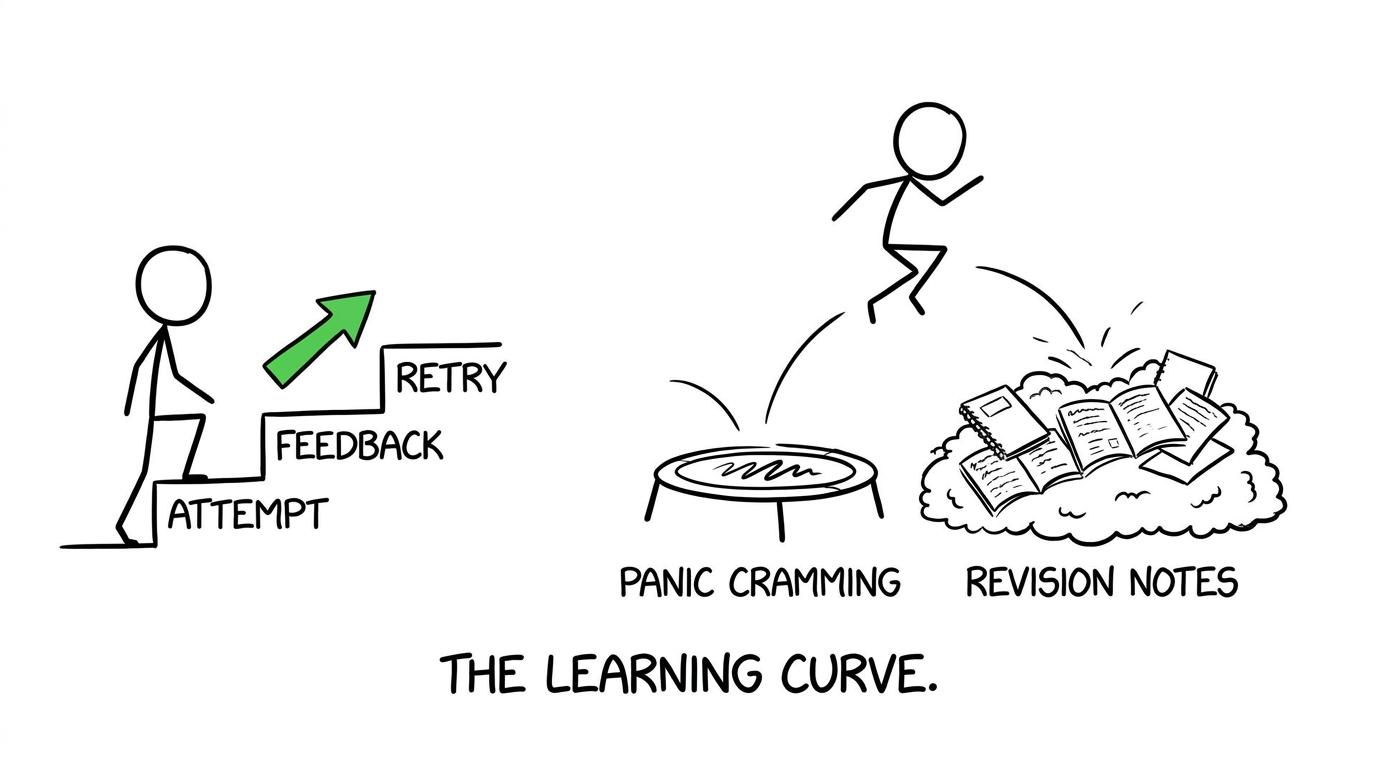 Steady feedback steps beat a trampoline labelled panic cramming
Common mistakes when choosing tuition
Hiring before identifying the problem
Without a diagnosis, sessions can drift into broad revision. Begin with marked work and one or two measurable priorities.
Choosing confidence over competence
A persuasive tutor may still lack knowledge of your board, texts or assessment objectives. Ask detailed questions before committing.
Expecting model answers to create independence
Reading polished essays can be useful, but copying phrases does not teach you to handle an unfamiliar question. You need repeated independent attempts.
Ignoring school feedback
Conflicting advice creates confusion. Share teacher comments and make sure tuition supports the curriculum you are actually following.
Sacrificing every other subject
English matters, but so do the maths papers you are preparing to sit. Review your timetable weekly and protect focused practice in both subjects.
Make the decision based on evidence
A GCSE English tutor can be a sensible investment when the support is targeted, aligned with school lessons and built around frequent practice and feedback. It is less useful when the underlying issue is inconsistent effort, unclear priorities or a lack of independent practice.
Start small. Diagnose your weaknesses, speak to your English teacher and try a defined period of focused improvement. If you choose tuition, agree on the goal, the evidence of progress and the point at which you will review whether it is working.
Then keep the rest of your revision moving. Use MathsGenie's free GCSE maths resources for revision lessons, practice questions, mini tests, past papers, predicted papers, mark schemes and video solutions. The best support does not make you dependent. It gives you a clearer next step and helps you take it yourself.











