Drop GCSE Citizenship Studies? A Mid-Year Guide
Drop GCSE Citizenship Studies mid-year? Learn what changes, what stays unaffected and how to judge whether you need support or a smaller workload.
A subject can feel manageable in September and impossible by February. Lessons have moved quickly, unfinished work is accumulating, and every Citizenship Studies revision session seems to take time away from maths. If you are wondering whether to drop GCSE Citizenship Studies, the short answer is this: you may be able to, but only your school can approve the change, and you should check the academic and timetable consequences first.
Dropping the qualification does not automatically improve your other grades. Nor does it directly change your GCSE maths grade. It removes one assessed course, but your school may still be required to provide citizenship education, and the released lesson time may not become private maths revision.
The sensible decision is therefore not simply, “Is Citizenship difficult?” It is, “Is continuing this qualification the best use of my limited time, given the support available and the courses I want to take next?”
The mid-year decision checklist
Before asking to leave the course, find clear answers to these questions:
- Is Citizenship Studies an optional GCSE at your school, or has the school made it compulsory?
- Which exam board are you following: AQA, Edexcel or OCR?
- Have you completed the required citizenship investigation or action?
- Has the school already entered you for the examination?
- Would dropping it reduce the number of GCSEs needed for your sixth-form, college or apprenticeship plans?
- Is Citizenship itself the problem, or is your total workload unmanageable?
- What lessons or supervised work would replace it?
- Could targeted support make the course manageable without withdrawing?
Do not rely on a friend’s arrangement. Schools set different option policies and timetables, while examination-entry procedures and deadlines vary by board and series.
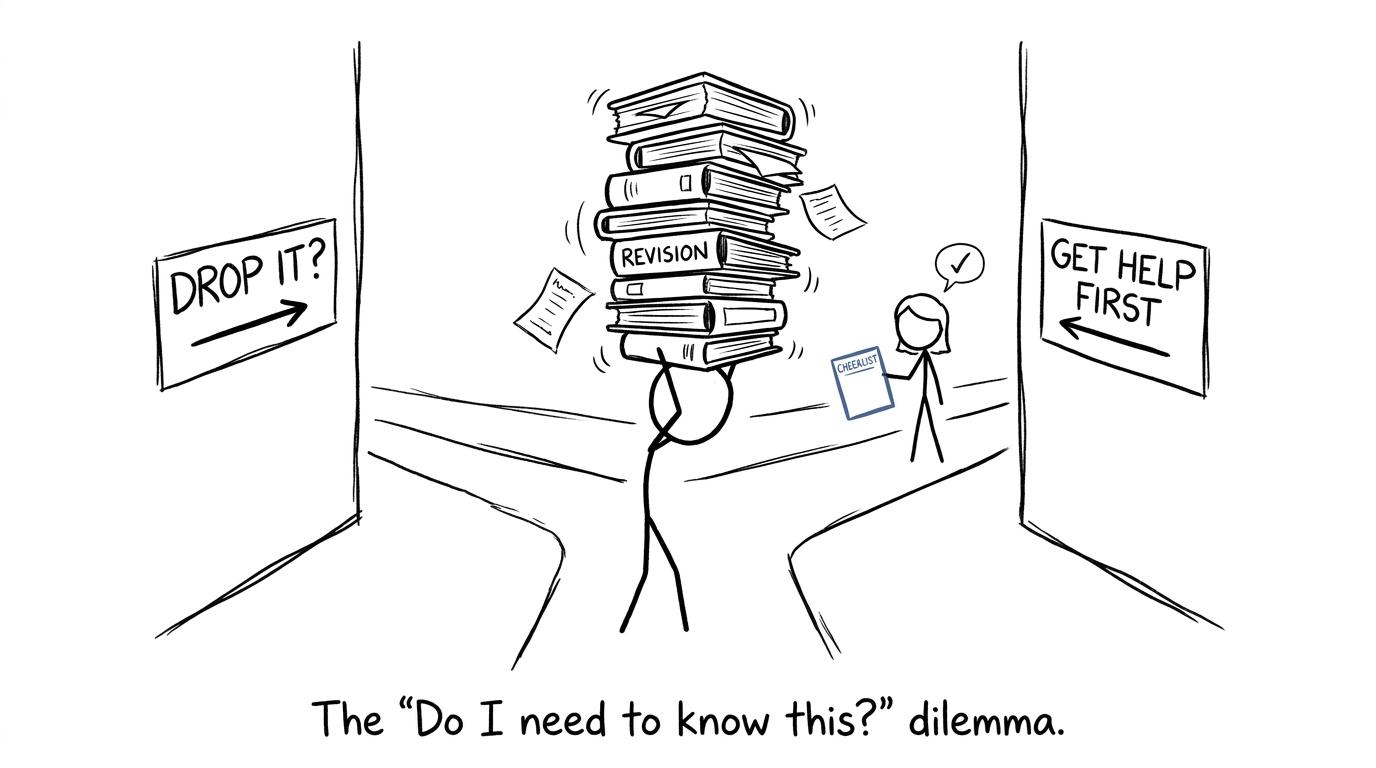 A GCSE student chooses between dropping a subject and getting help first
Can you drop GCSE Citizenship Studies mid-year?
Possibly, but it is not usually a decision a student makes alone. Start with your Citizenship teacher, form tutor, head of year or options lead. A parent or carer may also need to take part in the discussion.
In England, citizenship is a Key Stage 444 foundation subject in the national curriculum for local-authority-maintained schools. That does not mean every pupil must take the GCSE examination. The statutory curriculum and the optional GCSE qualification are different things. Academies have different curriculum arrangements, although they must provide a broad and balanced curriculum and may set their own compulsory courses.
Your school may therefore allow you to stop taking the GCSE while continuing some non-examined citizenship provision. Alternatively, its curriculum policy may require the qualification. Students elsewhere in the UK should ask their school because curriculum and qualification arrangements differ across nations.
Timing matters too. Schools and colleges make examination entries through approved centres and must follow awarding-body procedures. If an entry has already been submitted, withdrawal may still be administratively possible, but fees, internal deadlines and the school’s policy may affect the answer. Do not assume that sitting no examination is the same as being formally withdrawn.
How to tell whether you are actually in over your head
One poor assessment is evidence that something went wrong. It is not proof that the entire subject is beyond you.
Citizenship Studies requires more than remembering political vocabulary. Official subject content includes government, democracy, law, rights, responsibilities, financial awareness and active citizenship. Specifications also reward the ability to examine evidence, compare viewpoints, construct arguments and reach supported conclusions. A student can know the content yet lose marks because their written evaluation is too vague.
Signs that the difficulty may be repairable
The course may still be manageable if:
- your knowledge is broadly sound but your longer answers lack structure;
- one missed unit or period of absence created a specific gap;
- you understand feedback but have not acted on it consistently;
- your result improves when you answer under untimed conditions;
- you have not yet used the specification, model materials or mark schemes carefully;
- Citizenship is receiving irregular bursts of revision rather than short, planned sessions.
These are technique or organisation problems. They deserve intervention before withdrawal.
Signs that the workload may be genuinely unsustainable
A stronger case for dropping exists when several factors continue together:
- you remain unable to explain core ideas after regular teaching and additional help;
- unfinished Citizenship work is repeatedly displacing preparation for essential subjects;
- your attendance, health or additional learning needs make the overall programme unrealistic;
- your teacher believes the remaining content and assessment cannot be completed securely;
- reducing the course would create a supervised, agreed plan for protecting other qualifications;
- the change would not block your intended post-161616 route.
The distinction matters. “I dislike this week’s topic” is not the same as “my full programme is no longer academically sustainable”.
Test support before making the decision permanent
Give yourself a short, defined trial rather than promising to “try harder”. Ask your teacher for three things: the most important content gap, the most important exam-technique gap and one task that would demonstrate improvement.
At the same time, diagnose your maths rather than assuming it needs every available hour. The GCSE Maths revision hub lets you choose your board and tier, while the GCSE maths topics by exam board and tier guide can turn “I need more time for maths” into a specific list of weaknesses.
Then review the evidence after an agreed period. If Citizenship improves when the support becomes precise, the subject may not be the real problem. If it remains unmanageable despite attendance, completed tasks and appropriate help, your conversation about withdrawal will be based on evidence rather than panic.
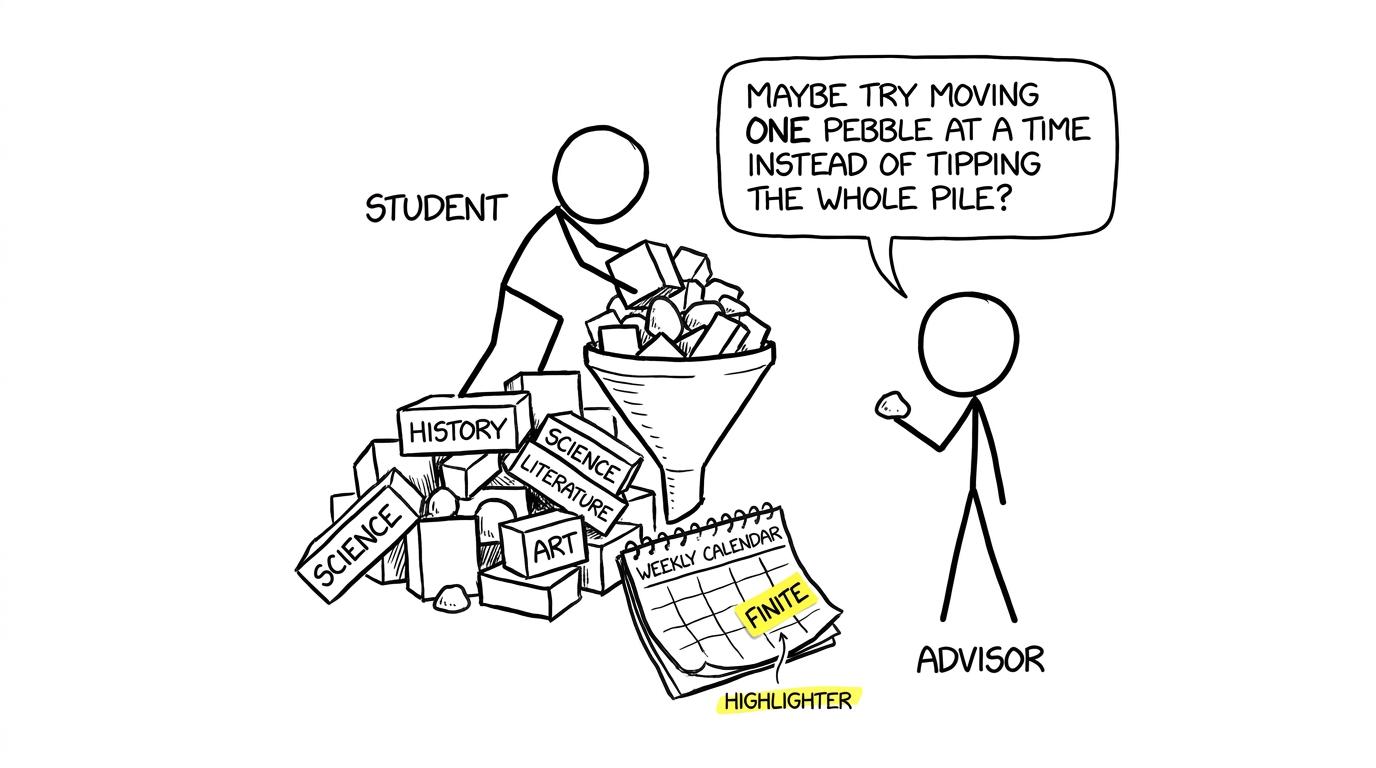 A student's subjects compete for space in a finite weekly calendar
What dropping Citizenship Studies may affect
Your total number of qualifications
If you withdraw, you will normally finish with one fewer GCSE qualification. That can matter because sixth forms and colleges often set minimum requirements based on a particular number of GCSEs at specified grades. Their rules vary considerably.
Check the published requirements for every realistic destination, including subject-specific conditions. For A Level Maths, the required GCSE Maths grade is usually more relevant than Citizenship, but the provider may also require a minimum overall GCSE profile.
School performance measures
Citizenship Studies is not an English Baccalaureate subject. Dropping it therefore does not remove an EBacc subject in the way that leaving history, geography or a qualifying language might.
An eligible Citizenship Studies result may, depending on a pupil’s full set of qualifications and the current accountability rules, contribute within the open part of Attainment 888. These measures are primarily school accountability measures, however. Your personal priorities should be your completed qualifications, grades and next-step requirements. Ask your school how the change applies to your exact programme rather than trying to calculate it from general guidance.
Your timetable and examination entry
Withdrawal does not guarantee free study periods. You might remain in lessons, move to supervised study, receive intervention elsewhere or follow non-examined citizenship provision. Get the replacement timetable in writing before treating the change as extra maths time.
The examinations officer should also confirm whether your entry has been made and whether it will be withdrawn formally.
Your future subject choices
For many post-161616 routes, Citizenship Studies is not a named entry requirement. Yet that does not make the result irrelevant everywhere. Politics, law, humanities or social-science courses may value related knowledge, and individual providers can set their own conditions.
The correct question is not whether universities “care about Citizenship” in general. It is whether your likely sixth form, college, apprenticeship or later course has a requirement that your changed GCSE profile would no longer satisfy.
What dropping the subject does not affect automatically
Dropping Citizenship Studies does not automatically:
- increase your GCSE maths grade;
- change your maths exam board or foundation or higher tier entry;
- remove the need to learn citizenship content provided through your school’s curriculum;
- create independent revision periods;
- erase missed work from attendance or progress records;
- guarantee admission to a sixth form or college;
- solve poor sleep, anxiety, procrastination or an overloaded schedule.
Time has value only when it receives a job. If withdrawal releases two lessons but those lessons disappear into scrolling or vague rereading, nothing important has changed.
If the aim is to protect your GCSE maths grade
Build the maths plan before you leave the other course. Start with one paper or mini test matching your board and tier. Use GCSE past papers to identify the questions you cannot start, not merely those where arithmetic went wrong.
Turn the result into a short list of topics. MathsGenie’s guidance on creating a GCSE maths revision timetable helps convert those gaps into repeatable sessions. If full papers feel overwhelming, the advice for students stuck at a GCSE maths pass grade explains how to combine short lessons, practice questions and mini tests.
A useful revision loop is:
- learn or refresh one method;
- complete targeted exam questions;
- mark them immediately;
- record the exact cause of each lost mark;
- revisit the same skill later;
- test it within mixed paper practice.
Official past papers should remain central. Nearer the examinations, Edexcel GCSE Maths predicted papers can provide fresh practice, but predicted papers should supplement rather than replace past papers. If time is short, use the one-month GCSE maths revision plan to organise revision lessons, questions, marking and retesting.
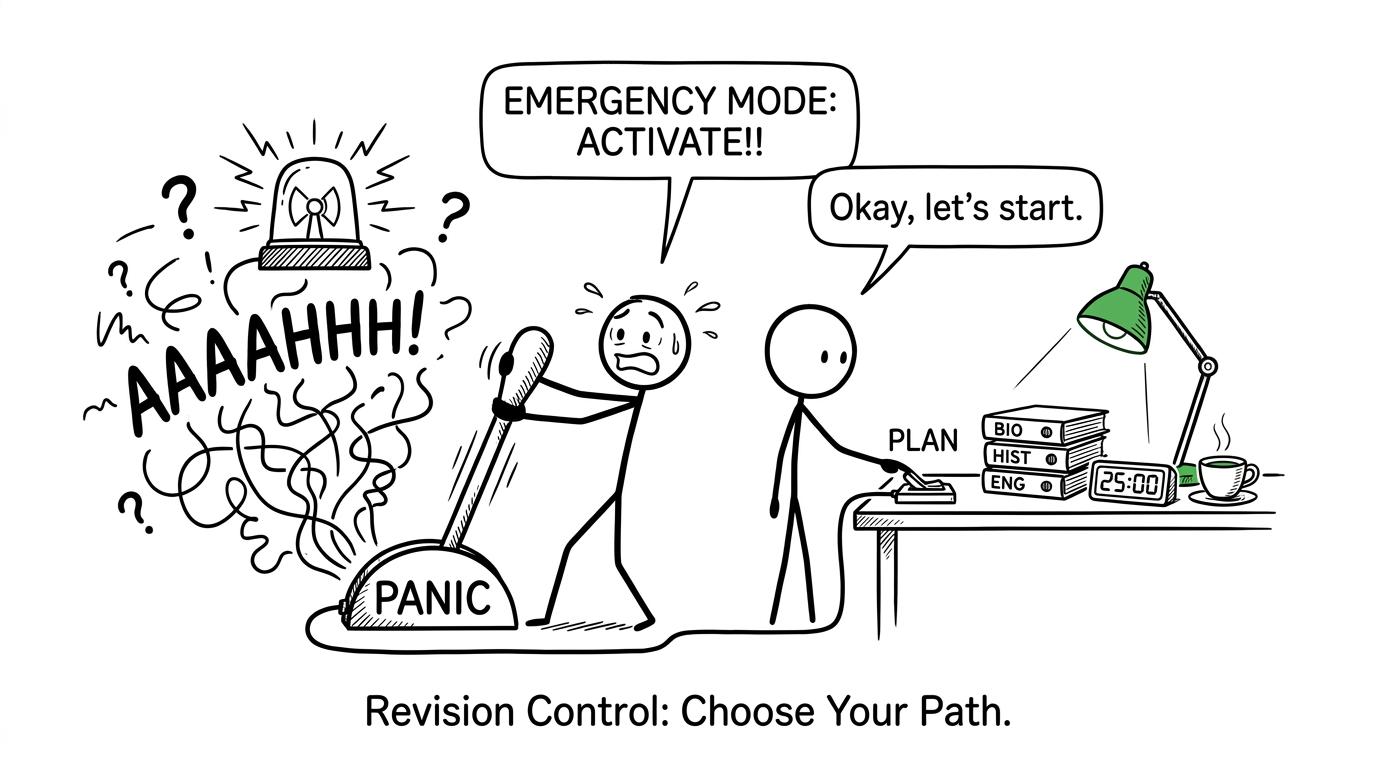 An exam revision control room offers a choice between panic and a plan
Common mistakes when considering withdrawal
Deciding immediately after a disappointing result
A low mark can reveal missing knowledge, weak evaluation or poor timing. Identify which one occurred before making a permanent decision.
Assuming an extra subject always harms core grades
Sometimes a broad programme is manageable and dropping one subject changes little. The issue is not the number of subjects alone, but whether your available time, support and health can sustain them.
Treating all Citizenship specifications as identical
The national subject content creates substantial common ground, but AQA, Edexcel and OCR organise and assess material differently. Check your exact specification and required citizenship action before judging what remains.
Ignoring admissions requirements
Do not withdraw first and investigate sixth-form entry later. Check the required number of GCSEs, minimum grades and any course-specific conditions.
Having no plan for the released time
Write the replacement timetable before withdrawal. If maths is the priority, decide which lessons, practice questions, mini tests and papers will occupy that time. MathsGenie’s guide to when you should start GCSE past papers can help place paper practice at the right stage.
Make the decision from evidence, not exhaustion
There is no prize for carrying a course that has become genuinely unmanageable. There is also no benefit in abandoning a qualification because one difficult month made the whole future look darker than it was.
Speak to your teacher and options lead. Confirm the school policy, examination-entry position, replacement timetable and post-161616 consequences. Try a short support plan if recovery remains realistic. If withdrawal is approved, give every released hour a specific purpose.
For maths, make MathsGenie that structure: begin with free revision lessons and practice questions, check understanding through mini tests, then move into past papers, mark schemes, video solutions and predicted papers. A smaller timetable helps only when it becomes a better plan; and the next useful step is one you can start today.